Cell Factory Research Center, Korea Research Institute of Bioscience and Biotechnology (KRIBB), Yuseong-gu, Daejeon, 305-806, Republic of Korea.
Green Chemistry and Environmental Biotechnology, University of Science and Technology (UST), Yuseong-gu, Daejeon, 305-350, Republic of Korea.
Sci Rep. 2017 May 16;7(1):1979. doi: 10.1038/s41598-017-02139-8.
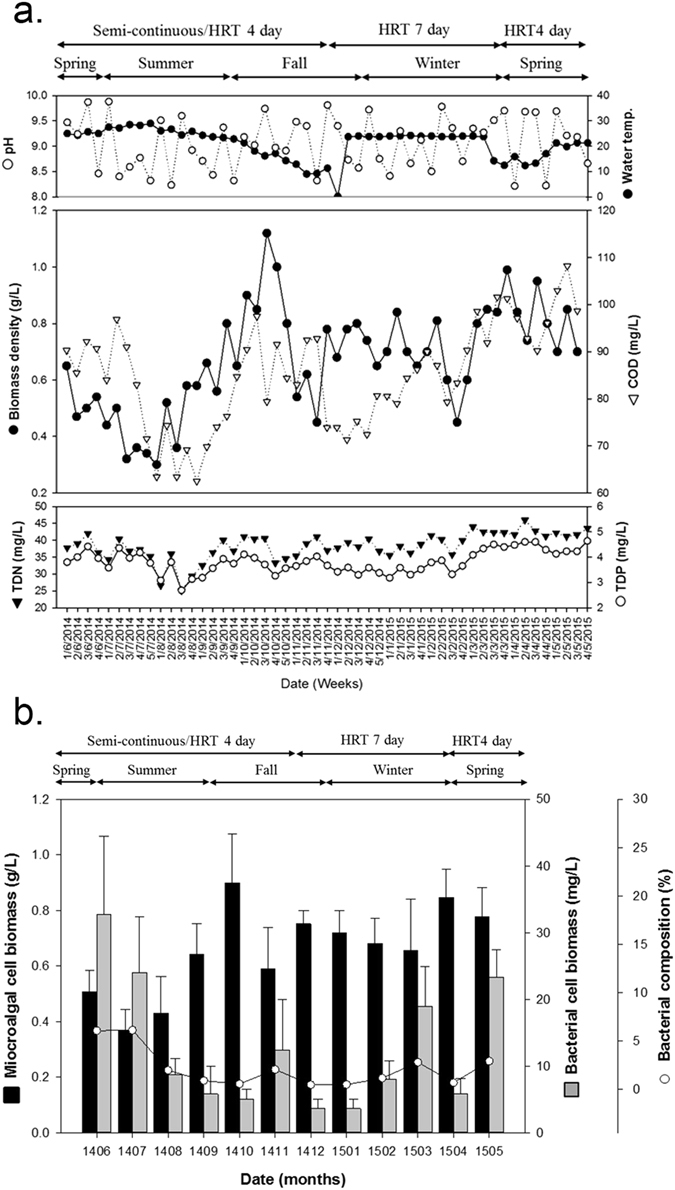
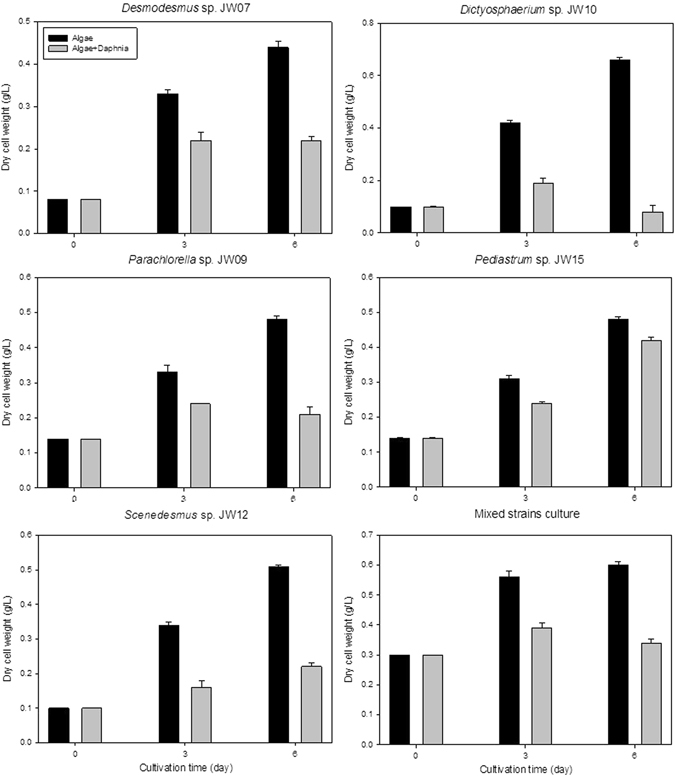
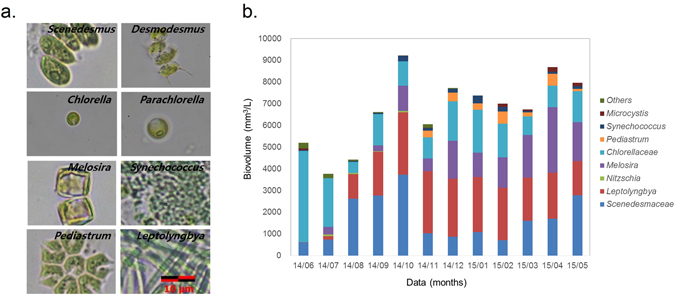
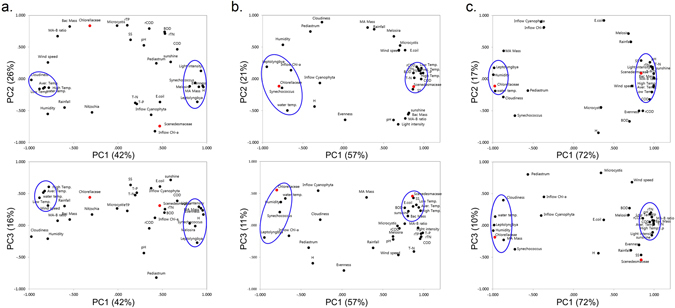
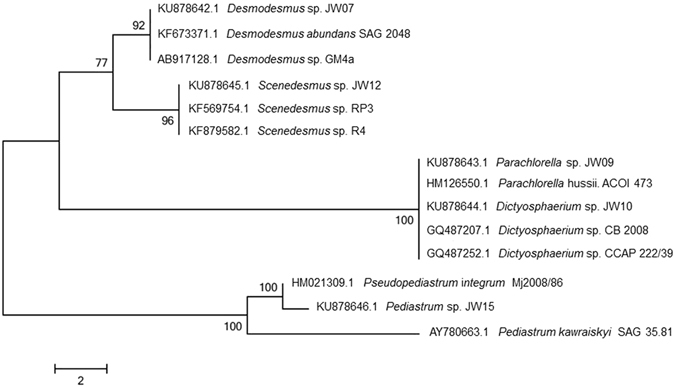
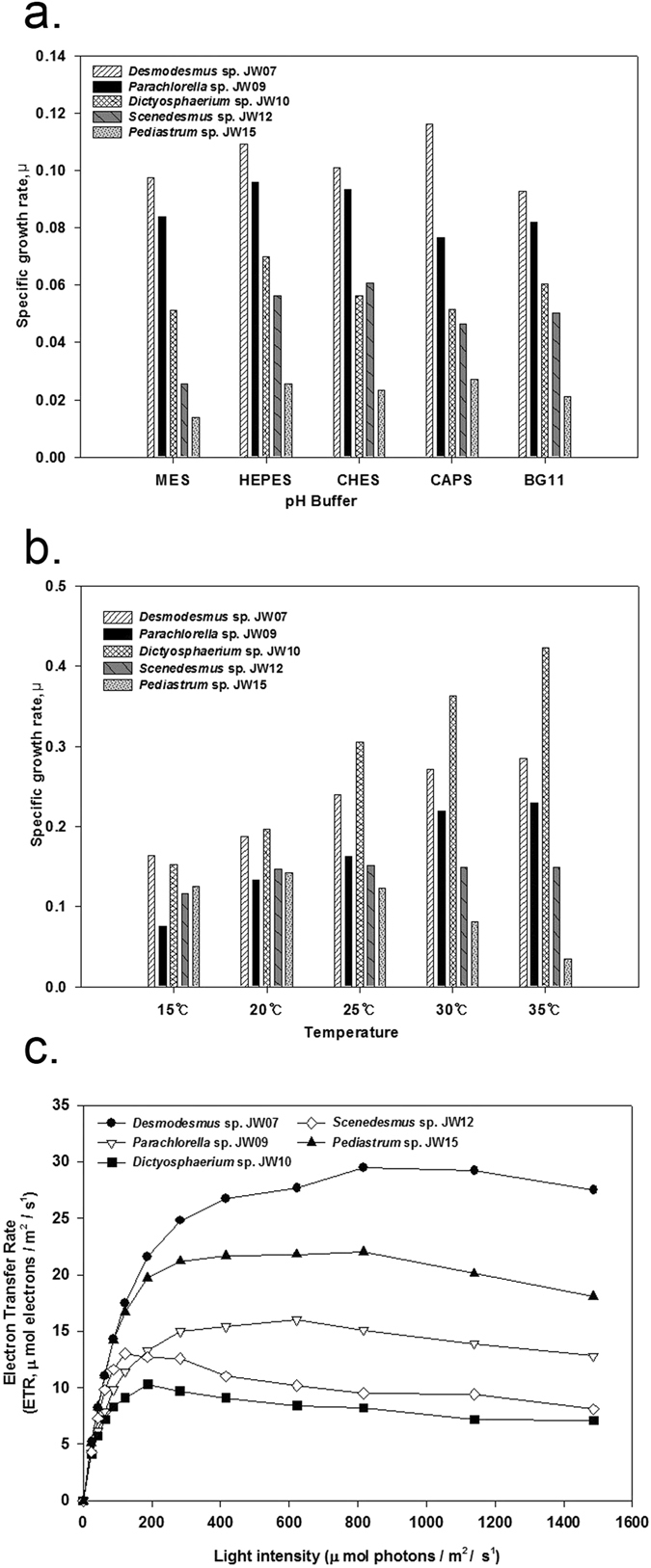
It is established that biodiversity determines productivity of natural ecosystems globally. We have proved that abiotic factors influenced biomass productivity in engineered ecosystems i.e. high rate algal ponds (HRAPs), previously. This study demonstrates that biotic factors, particularly microalgal diversity, play an essential role in maintaining stable biomass productivity in HRAP treating municipal wastewater by mutualistic adaptation to environmental factors. The current study examined data from the second year of a two-year study on HRAP treating municipal wastewater. Microalgal diversity, wastewater characteristics, treatment efficiency and several environmental and meteorological factors were documented. Multivariate statistical analyses reveal that microalgae in uncontrolled HRAPs adapt to adverse environmental conditions by fostering diversity. Subsequently, five dominant microalgal strains by biovolume were isolated, enriched, and optimum conditions for high biomass productivity were ascertained. These laboratory experiments revealed that different microalgal strains dominate in different conditions and a consortium of these diverse taxa help in sustaining the algae community from environmental and predatory pressures. Diversity, niche or seasonal partitioning and mutualistic growth are pertinent in microalgal cultivation or wastewater treatment. Therefore, enrichment of selective species would deprive the collective adaptive ability of the consortium and encourage system vulnerability especially in wastewater treatment.
已证实生物多样性决定了全球自然生态系统的生产力。我们之前已经证明,生物因素会影响工程生态系统(即高速藻类塘)中的生物量生产力,如 abiotic factors influenced biomass productivity in engineered ecosystems i.e. high rate algal ponds (HRAPs), previously. 本研究表明,生物因素,特别是微藻多样性,通过与环境因素的互利适应,在维持处理城市污水的高速藻类塘(HRAP)稳定的生物量生产力方面发挥着重要作用。This study demonstrates that biotic factors, particularly microalgal diversity, play an essential role in maintaining stable biomass productivity in HRAP treating municipal wastewater by mutualistic adaptation to environmental factors. 本研究以处理城市污水的高速藻类塘(HRAP)两年研究的第二年的数据为研究对象。The current study examined data from the second year of a two-year study on HRAP treating municipal wastewater. 记录了微藻多样性、污水特性、处理效率以及几个环境和气象因素。Multivariate statistical analyses reveal that microalgae in uncontrolled HRAPs adapt to adverse environmental conditions by fostering diversity. 多元统计分析表明,不受控制的 HRAP 中的微藻通过促进多样性来适应不利的环境条件。Subsequently, five dominant microalgal strains by biovolume were isolated, enriched, and optimum conditions for high biomass productivity were ascertained. 随后,通过生物量分离、富集了五个优势微藻菌株,并确定了高生物量生产力的最佳条件。These laboratory experiments revealed that different microalgal strains dominate in different conditions and a consortium of these diverse taxa help in sustaining the algae community from environmental and predatory pressures. 这些实验室实验表明,不同的微藻菌株在不同的条件下占主导地位,这些不同类群的共生体有助于维持藻类群落免受环境和捕食压力的影响。Diversity, niche or seasonal partitioning and mutualistic growth are pertinent in microalgal cultivation or wastewater treatment. 多样性、生态位或季节性划分和互利生长在微藻培养或废水处理中是相关的。Therefore, enrichment of selective species would deprive the collective adaptive ability of the consortium and encourage system vulnerability especially in wastewater treatment. 因此,选择性物种的富集会剥夺共生体的集体适应能力,并鼓励系统的脆弱性,特别是在废水处理中。