Zhang Haonan, Qiao Anna, Yang Dehua, Yang Linlin, Dai Antao, de Graaf Chris, Reedtz-Runge Steffen, Dharmarajan Venkatasubramanian, Zhang Hui, Han Gye Won, Grant Thomas D, Sierra Raymond G, Weierstall Uwe, Nelson Garrett, Liu Wei, Wu Yanhong, Ma Limin, Cai Xiaoqing, Lin Guangyao, Wu Xiaoai, Geng Zhi, Dong Yuhui, Song Gaojie, Griffin Patrick R, Lau Jesper, Cherezov Vadim, Yang Huaiyu, Hanson Michael A, Stevens Raymond C, Zhao Qiang, Jiang Hualiang, Wang Ming-Wei, Wu Beili
CAS Key Laboratory of Receptor Research, Shanghai Institute of Materia Medica, Chinese Academy of Sciences, 555 Zuchongzhi Road, Pudong, Shanghai 201203, China.
University of Chinese Academy of Sciences, No. 19A Yuquan Road, Beijing 100049, China.
Nature. 2017 Jun 8;546(7657):259-264. doi: 10.1038/nature22363. Epub 2017 May 17.
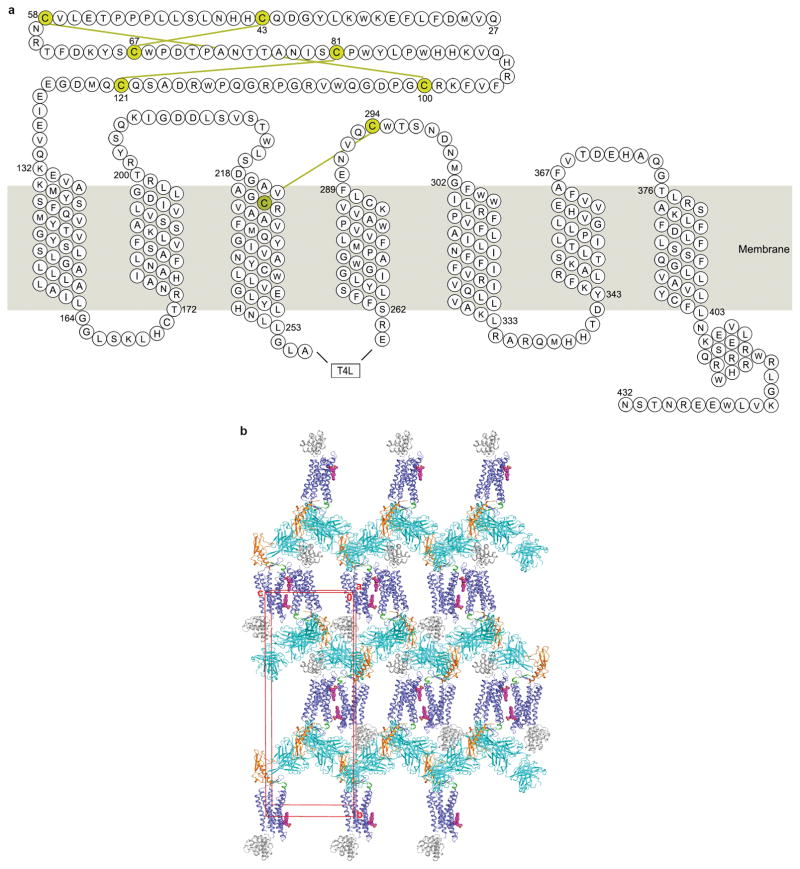
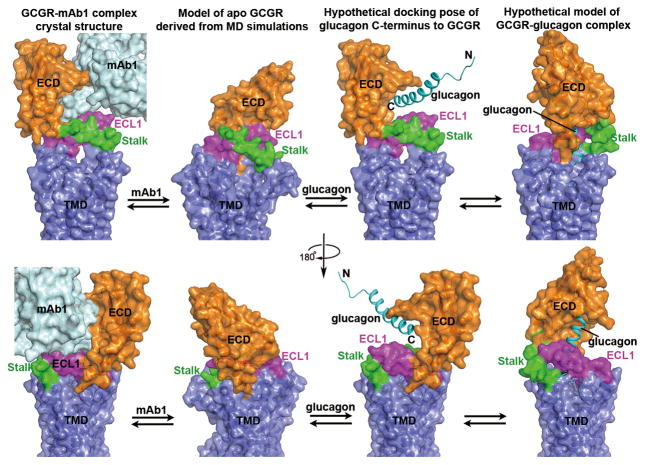
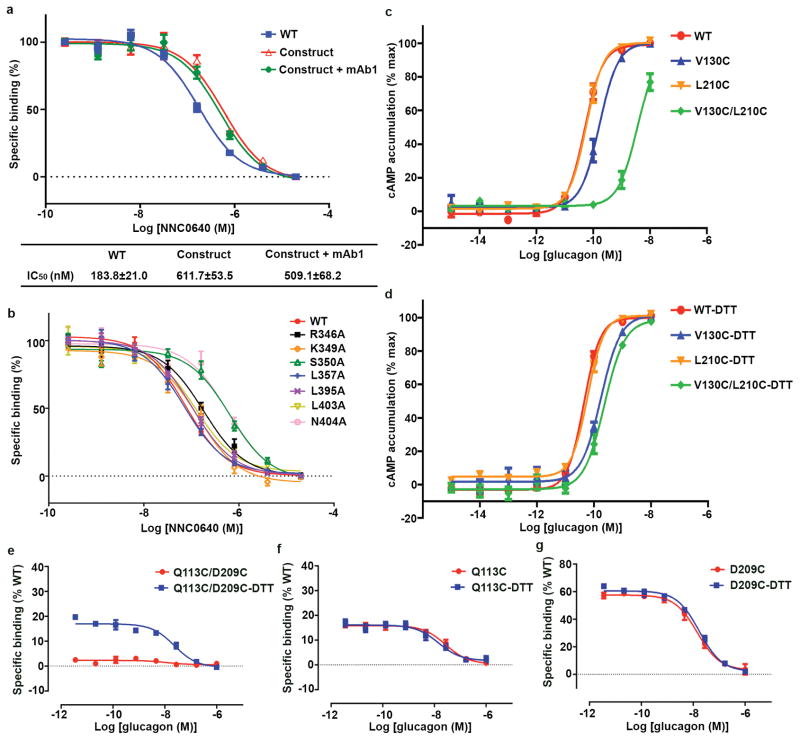
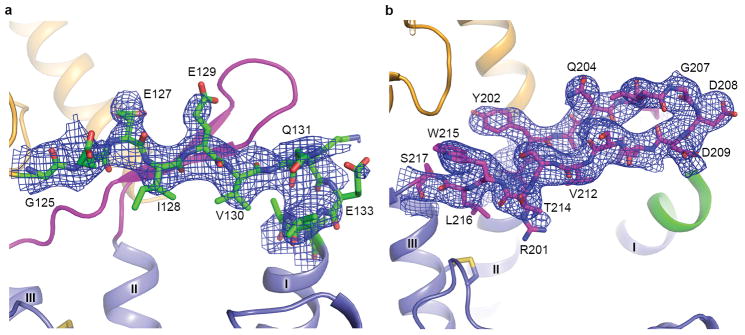
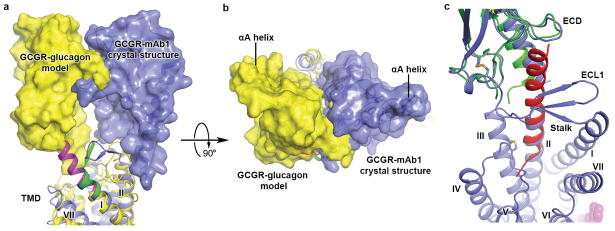
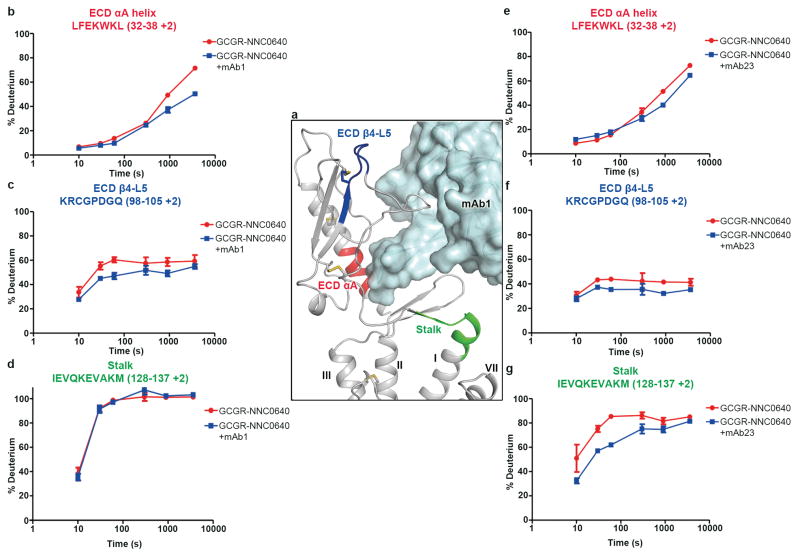
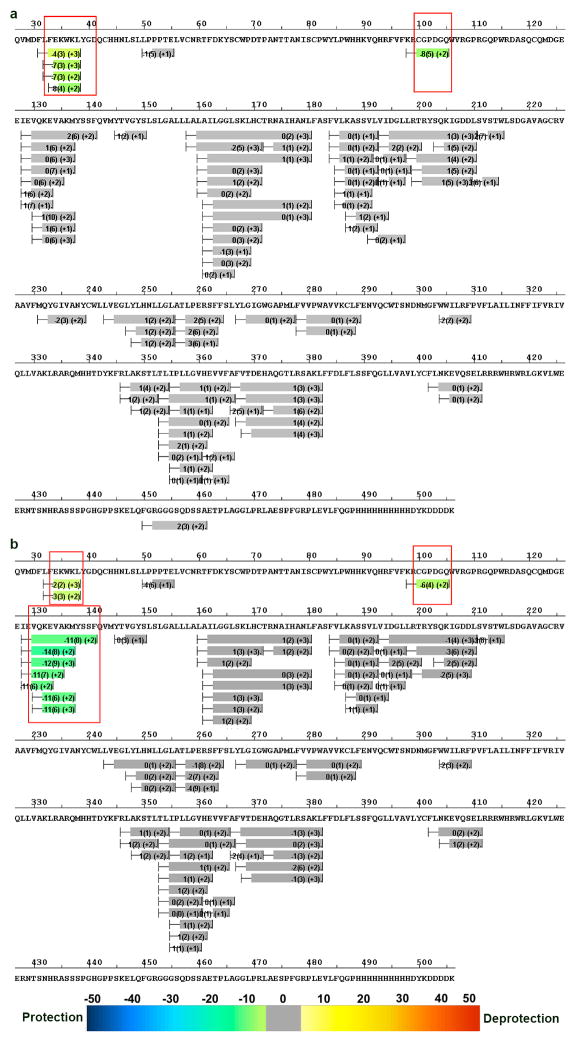
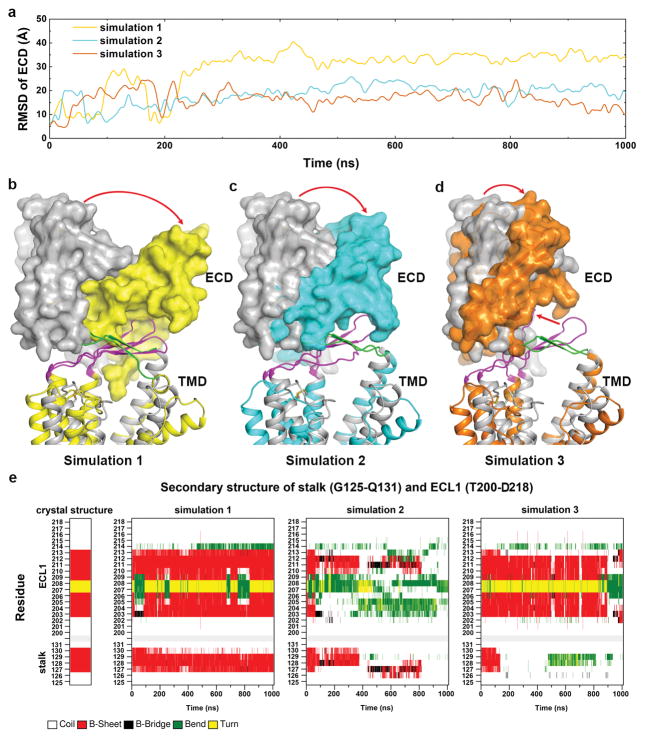
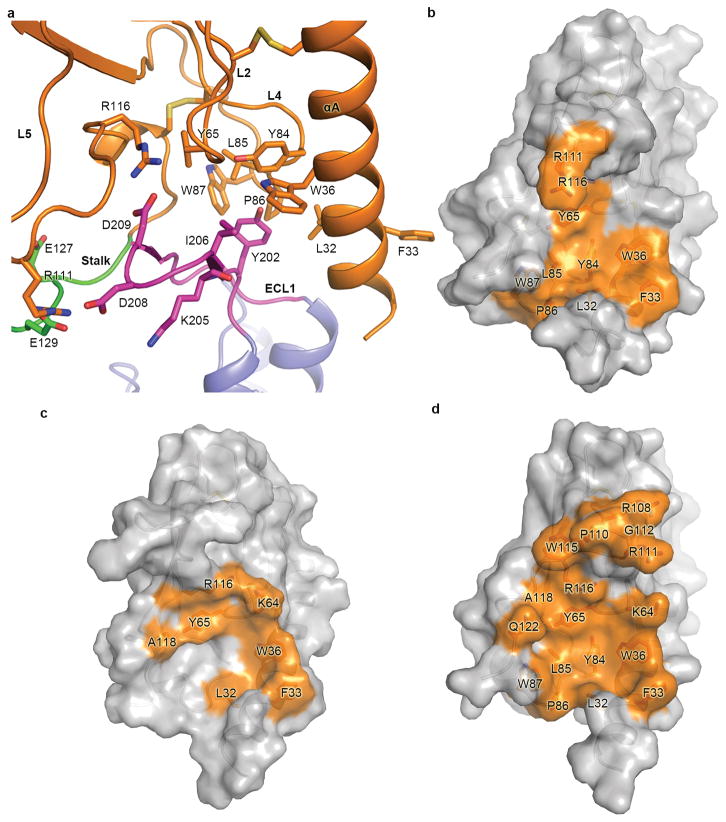
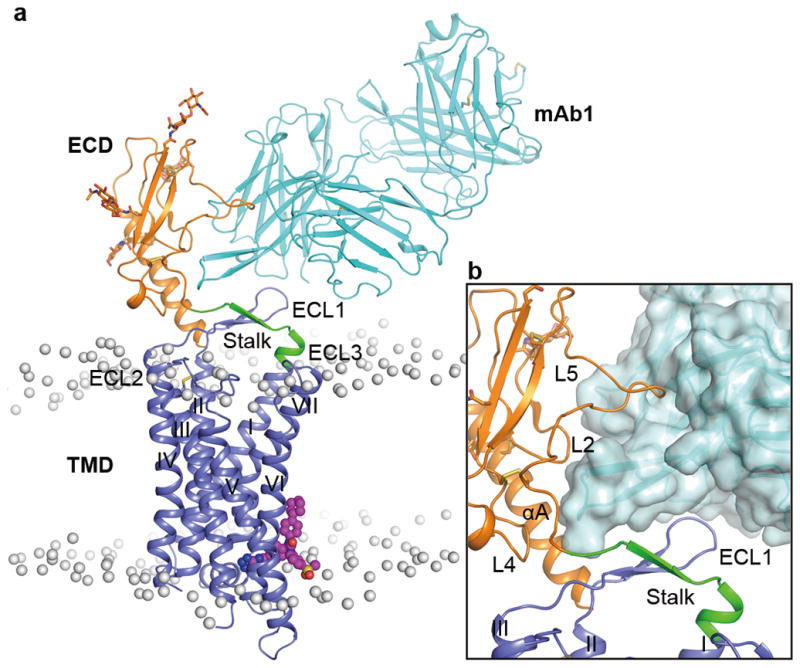
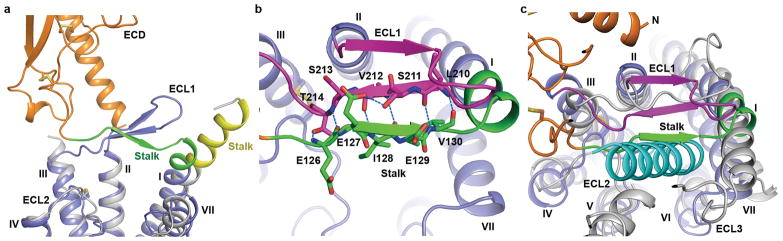
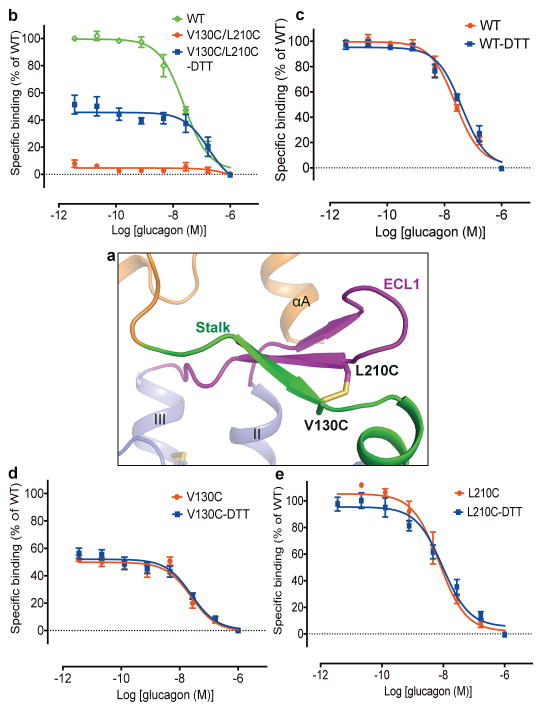
The human glucagon receptor, GCGR, belongs to the class B G-protein-coupled receptor family and plays a key role in glucose homeostasis and the pathophysiology of type 2 diabetes. Here we report the 3.0 Å crystal structure of full-length GCGR containing both the extracellular domain and transmembrane domain in an inactive conformation. The two domains are connected by a 12-residue segment termed the stalk, which adopts a β-strand conformation, instead of forming an α-helix as observed in the previously solved structure of the GCGR transmembrane domain. The first extracellular loop exhibits a β-hairpin conformation and interacts with the stalk to form a compact β-sheet structure. Hydrogen-deuterium exchange, disulfide crosslinking and molecular dynamics studies suggest that the stalk and the first extracellular loop have critical roles in modulating peptide ligand binding and receptor activation. These insights into the full-length GCGR structure deepen our understanding of the signalling mechanisms of class B G-protein-coupled receptors.
人胰高血糖素受体(GCGR)属于B类G蛋白偶联受体家族,在葡萄糖稳态和2型糖尿病的病理生理学中起关键作用。在此,我们报告了全长GCGR处于无活性构象时包含胞外结构域和跨膜结构域的3.0埃晶体结构。这两个结构域由一个称为柄部的12个残基片段连接,该片段采用β链构象,而不是像之前解析的GCGR跨膜结构域结构那样形成α螺旋。第一个胞外环呈现β发夹构象,并与柄部相互作用形成紧密的β片层结构。氢氘交换、二硫键交联和分子动力学研究表明,柄部和第一个胞外环在调节肽配体结合和受体激活中起关键作用。对全长GCGR结构的这些见解加深了我们对B类G蛋白偶联受体信号传导机制的理解。