Lim Ryan G, Quan Chris, Reyes-Ortiz Andrea M, Lutz Sarah E, Kedaigle Amanda J, Gipson Theresa A, Wu Jie, Vatine Gad D, Stocksdale Jennifer, Casale Malcolm S, Svendsen Clive N, Fraenkel Ernest, Housman David E, Agalliu Dritan, Thompson Leslie M
Department of Biological Chemistry, University of California, Irvine, Irvine, CA 92697, USA; UCI MIND, University of California, Irvine, Irvine, CA 92697, USA.
Department of Molecular Biology and Biochemistry, University of California, Irvine, Irvine, CA 92697, USA; Department of Biological Sciences, California State University, Long Beach, 1250 Bellflower Boulevard, Long Beach, CA 90840, USA.
Cell Rep. 2017 May 16;19(7):1365-1377. doi: 10.1016/j.celrep.2017.04.021.
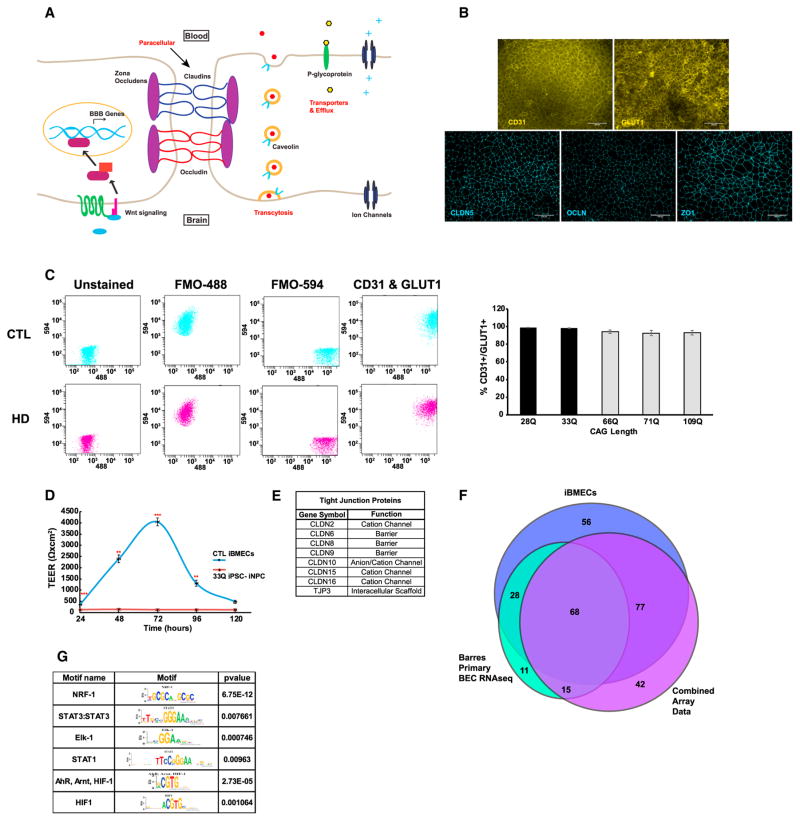
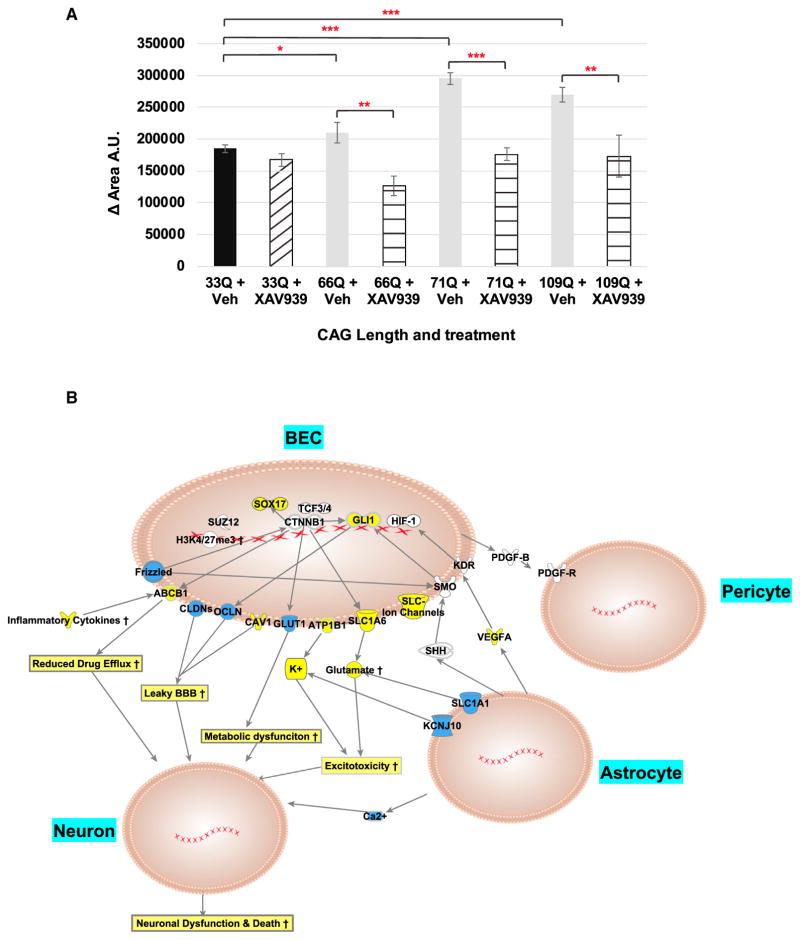
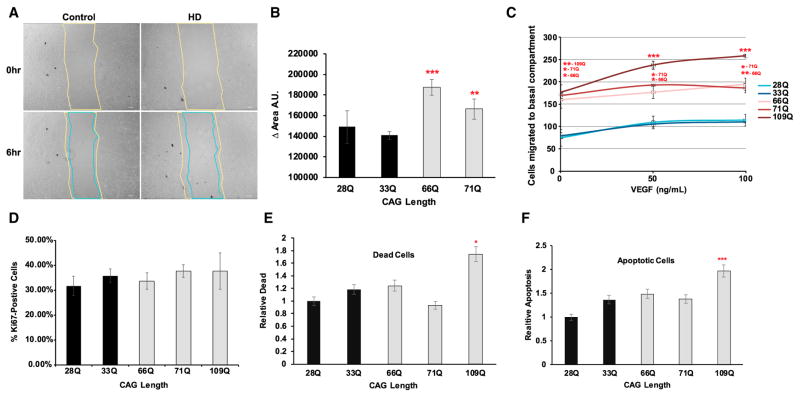
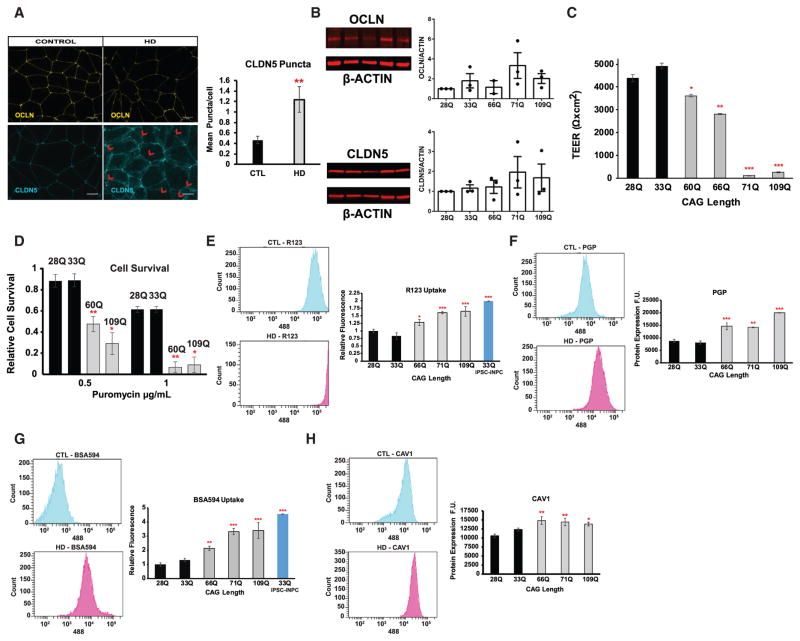
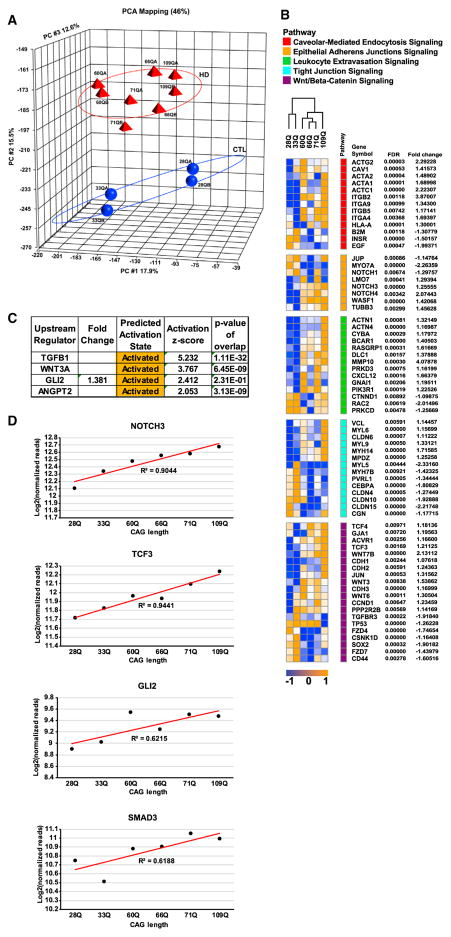
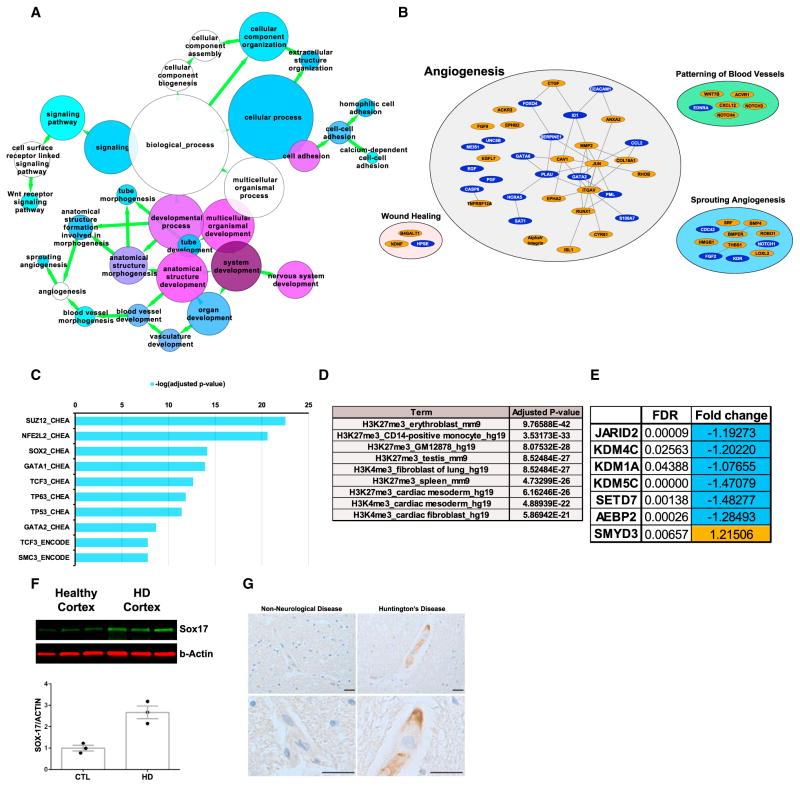
Brain microvascular endothelial cells (BMECs) are an essential component of the blood-brain barrier (BBB) that shields the brain against toxins and immune cells. While BBB dysfunction exists in neurological disorders, including Huntington's disease (HD), it is not known if BMECs themselves are functionally compromised to promote BBB dysfunction. Further, the underlying mechanisms of BBB dysfunction remain elusive given limitations with mouse models and post-mortem tissue to identify primary deficits. We undertook a transcriptome and functional analysis of human induced pluripotent stem cell (iPSC)-derived BMECs (iBMEC) from HD patients or unaffected controls. We demonstrate that HD iBMECs have intrinsic abnormalities in angiogenesis and barrier properties, as well as in signaling pathways governing these processes. Thus, our findings provide an iPSC-derived BBB model for a neurodegenerative disease and demonstrate autonomous neurovascular deficits that may underlie HD pathology with implications for therapeutics and drug delivery.
脑微血管内皮细胞(BMECs)是血脑屏障(BBB)的重要组成部分,血脑屏障可保护大脑免受毒素和免疫细胞的侵害。虽然包括亨廷顿舞蹈症(HD)在内的神经疾病中存在血脑屏障功能障碍,但尚不清楚BMECs自身在功能上是否受损从而导致血脑屏障功能障碍。此外,鉴于小鼠模型和尸检组织在识别原发性缺陷方面存在局限性,血脑屏障功能障碍的潜在机制仍不明确。我们对来自HD患者或未受影响对照的人诱导多能干细胞(iPSC)衍生的BMECs(iBMEC)进行了转录组和功能分析。我们证明,HD iBMECs在血管生成、屏障特性以及调控这些过程的信号通路方面存在内在异常。因此,我们的研究结果为一种神经退行性疾病提供了一个iPSC衍生的血脑屏障模型,并证明了自主神经血管缺陷可能是HD病理的基础,这对治疗和药物递送具有重要意义。