Department of Neuroimaging, Institute of Psychiatry, Psychology and Neuroscience, King's College London, London SE5 8AF, United Kingdom; Centre for the Developing Brain, Division of Imaging Sciences and Biomedical Engineering, St. Thomas' Hospital, King's College London, London SE1 7EH, United Kingdom.
Oxford Centre for Functional MRI of the Brain, University of Oxford, Oxford OX3 9DU, United Kingdom.
Neuroimage. 2018 Apr 15;170:296-306. doi: 10.1016/j.neuroimage.2017.05.012. Epub 2017 May 14.
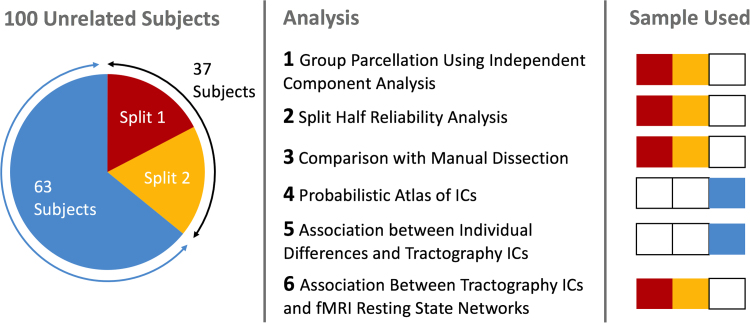
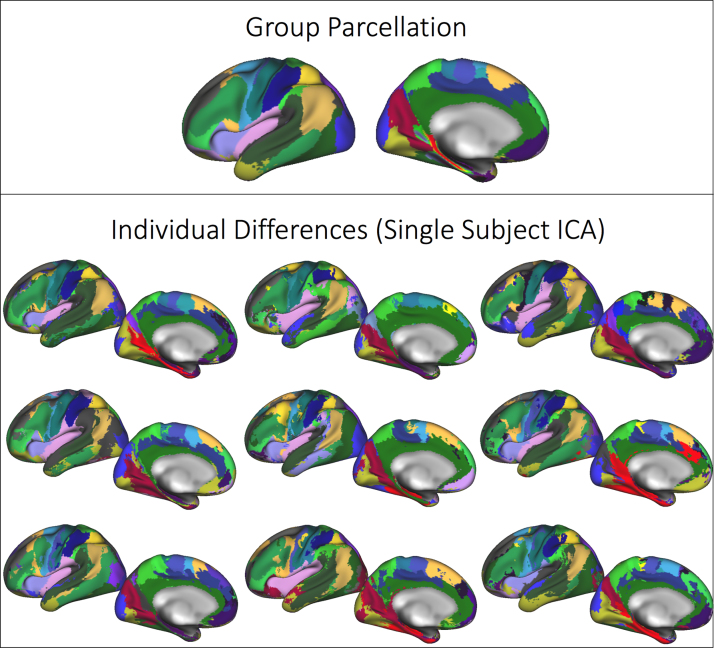
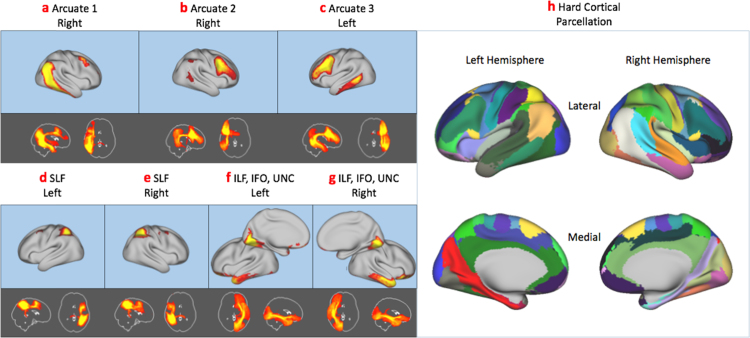
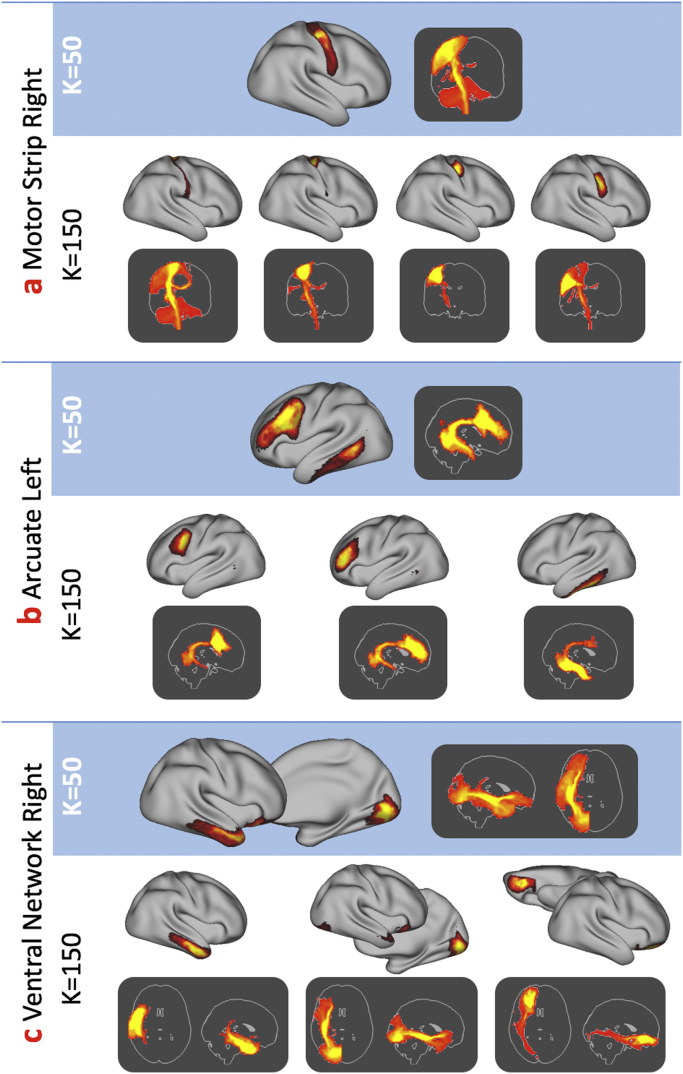
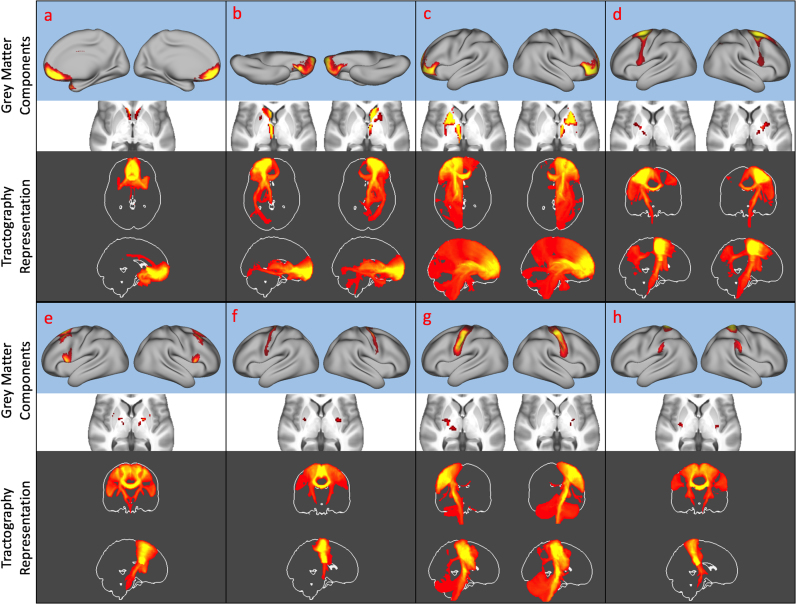
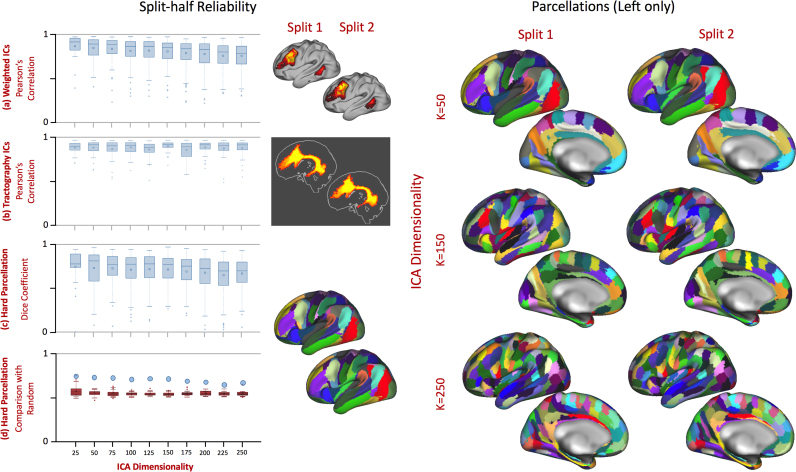
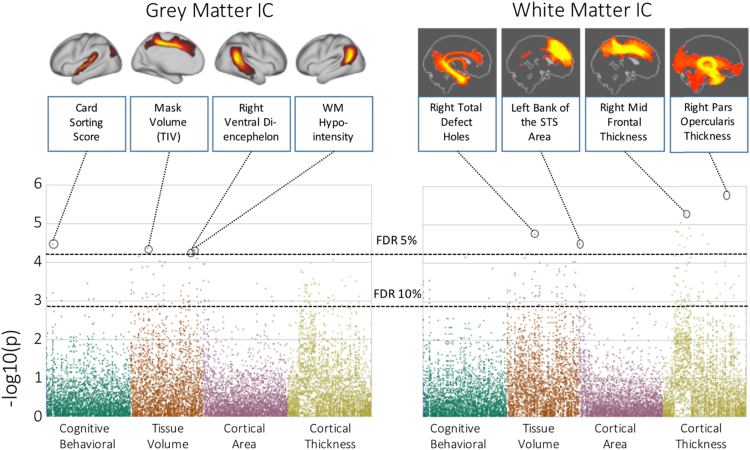
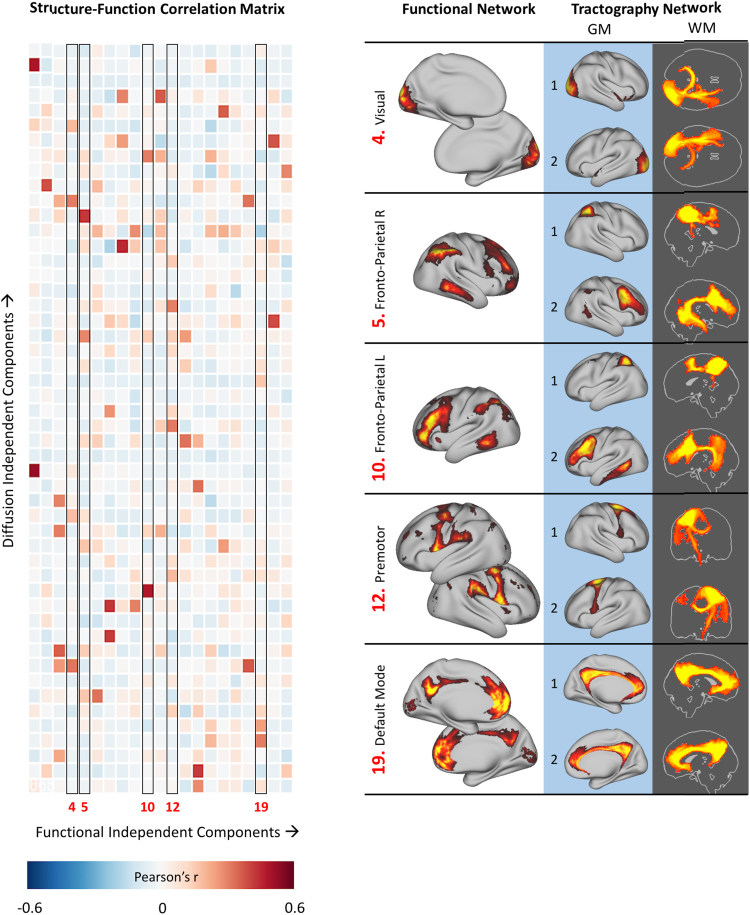
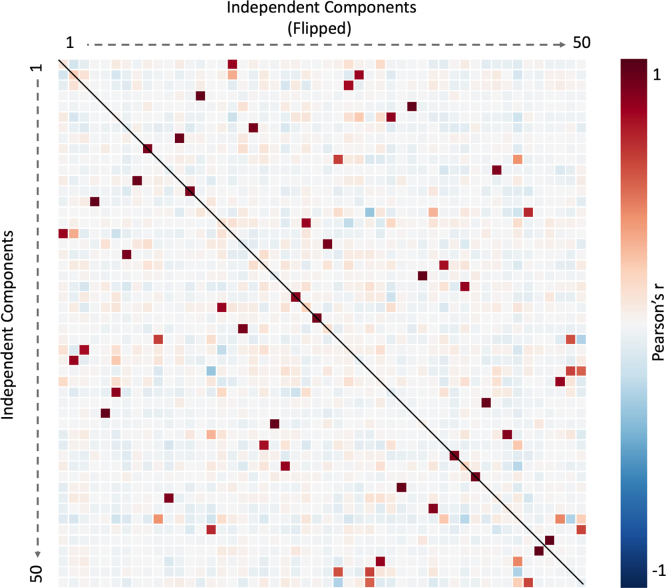
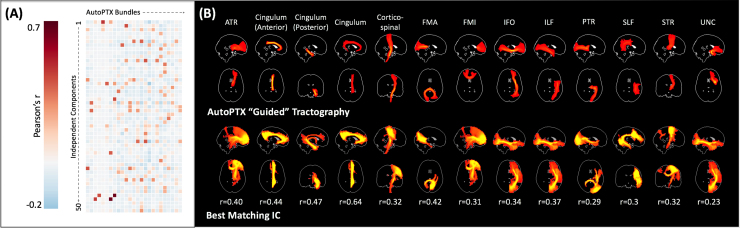
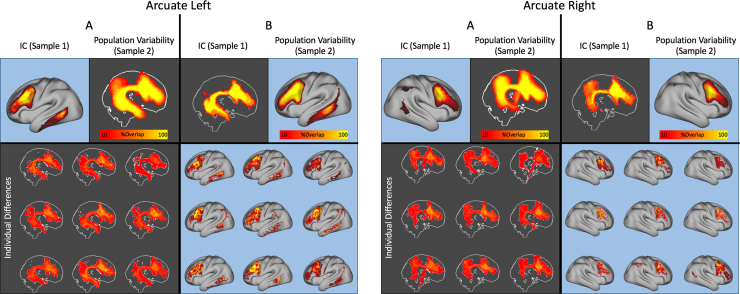
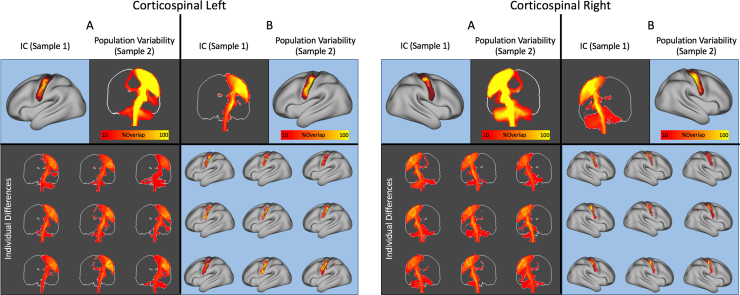
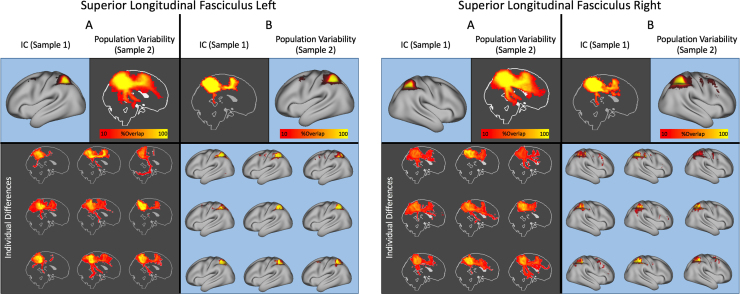
Developments in non-invasive diffusion MRI tractography techniques have permitted the investigation of both the anatomy of white matter pathways connecting grey matter regions and their structural integrity. In parallel, there has been an expansion in automated techniques aimed at parcellating grey matter into distinct regions based on functional imaging. Here we apply independent component analysis to whole-brain tractography data to automatically extract brain networks based on their associated white matter pathways. This method decomposes the tractography data into components that consist of paired grey matter 'nodes' and white matter 'edges', and automatically separates major white matter bundles, including known cortico-cortical and cortico-subcortical tracts. We show how this framework can be used to investigate individual variations in brain networks (in terms of both nodes and edges) as well as their associations with individual differences in behaviour and anatomy. Finally, we investigate correspondences between tractography-based brain components and several canonical resting-state networks derived from functional MRI.
非侵入性扩散 MRI 轨迹追踪技术的发展使得人们能够研究连接灰质区域的白质通路的解剖结构及其结构完整性。与此同时,基于功能成像将灰质分割成不同区域的自动化技术也在不断扩展。在这里,我们将独立成分分析应用于全脑轨迹追踪数据,根据相关的白质通路自动提取大脑网络。该方法将轨迹追踪数据分解为由配对灰质“节点”和白质“边缘”组成的成分,并自动分离主要的白质束,包括已知的皮质-皮质和皮质下束。我们展示了如何使用该框架来研究大脑网络(在节点和边缘方面)的个体差异及其与行为和解剖个体差异的关联。最后,我们研究了基于轨迹追踪的大脑成分与从功能 MRI 得出的几个经典静息状态网络之间的对应关系。