Wang Bin, Park Bosoon, Xu Bingqian, Kwon Yongkuk
Single Molecule Study Laboratory, College of Engineering and Nanoscale Science and Engineering Center, University of Georgia, Athens, GA, 30602, USA.
USDA-ARS, U.S. National Poultry Research Center, Athens, GA, 30605, USA.
J Nanobiotechnology. 2017 May 17;15(1):40. doi: 10.1186/s12951-017-0273-6.
The emerging nanotechnologies have greatly facilitated the development of label-free biosensors. The atomic force microscopy (AFM) has been used to study the molecular mechanism of the reactions for protein and aptamers. The surface plasmon resonance (SPR) have been used in fast detections of various pathogens such as bacteria. This study used both AFM and SPR to investigate the complex reactions between aptamers and outer membrane proteins (OMPs) on the surface of S. typhimurium.
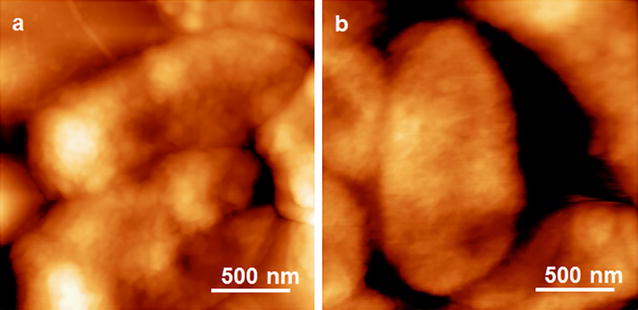
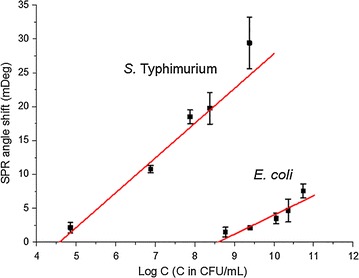
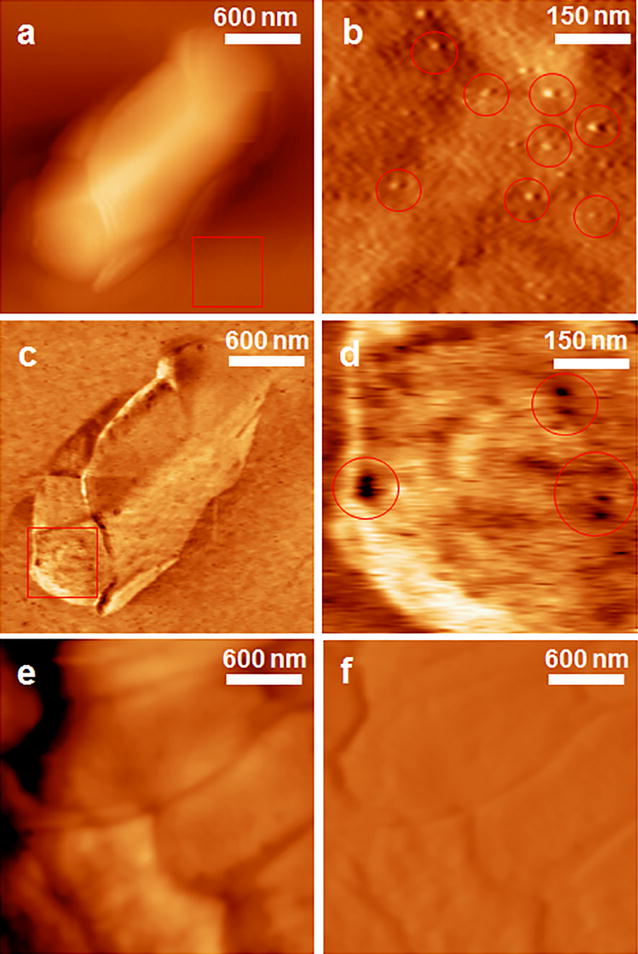
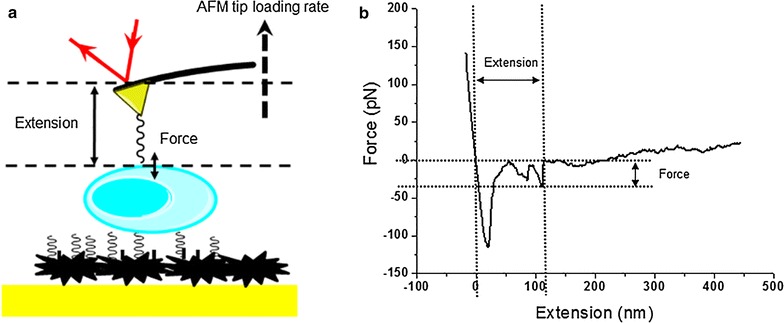
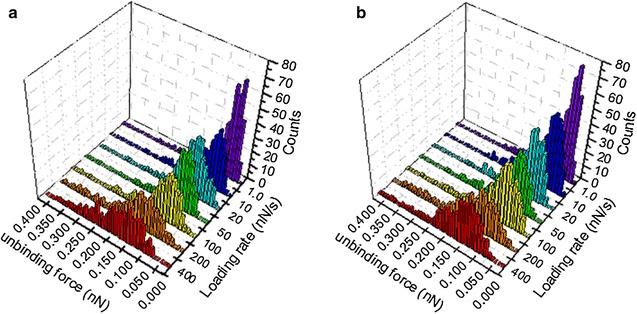
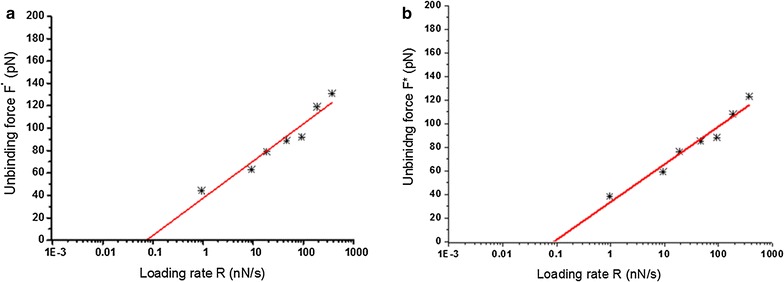
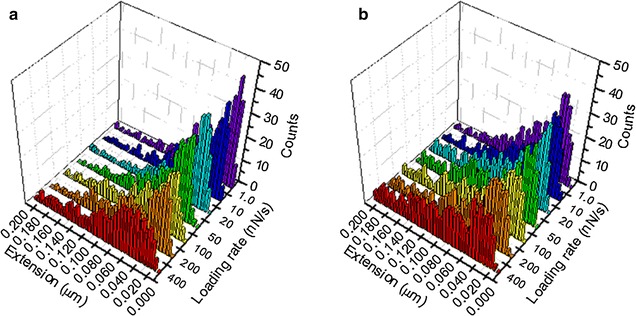
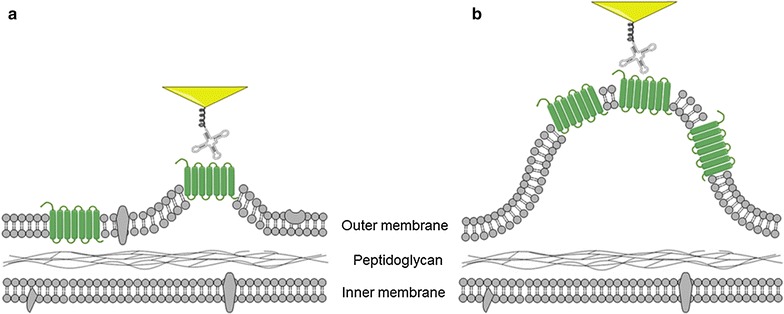
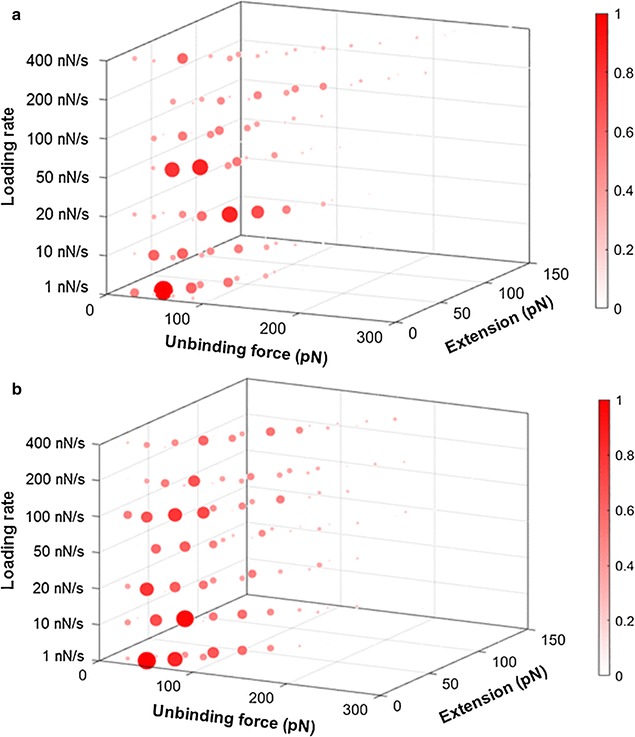
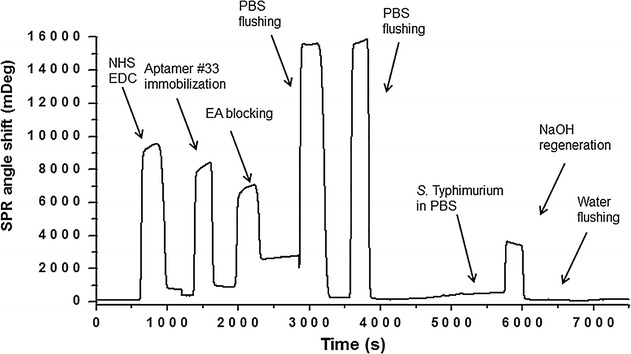
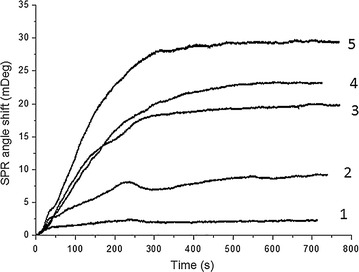
Two DNA aptamers were used for the label-free detections of S. typhimurium by AFM and SPR. The aptamers have specific binding affinities to the OMPs of S. typhimurium. At single-molecule level, the high resolution AFM topography and recognition images distinguished the OMPs on the bacteria surface, which is the first time the location of individual outer membrane protein have been determined on Salmonella surface. E. coli in the control experiments didn't generate recognition signals, which proved the specificity of these two aptamers to S. typhimurium. The off-rate values for the interactions of these two aptamers to the OMPs were estimated as 5.2 × 10 and 7.4 × 10 s, respectively, by the AFM dynamic force microscopy (DFS). The force and extension values form DFS measurements were used to distinguish the two aptamers. The surface membrane model was proposed to explain the complex correlations among force and extension values. Next, these two aptamers were used in the bulk solution detections of S. typhimurium. The gold chips in SPR experiments were modified with carboxymethylated-dextran (CD), followed by aptamers immobilization, to reduce the non-specific binding signals. The limit of detection (LOD) was determined as 3 × 10 CFU mL.
The AFM single-molecule study revealed detailed information about the unbinding force and extension of the aptamer in complex biological reactions. The careful analysis of the experimental results provide better understanding of the molecular mechanism of OMPs reactions. The single-molecule measurements are helpful in evaluating the specificity of binding reagents, such as aptamers, in bulk solution detections. The protocols used in the SPR detections can be expanded into the label-free detections of other bacterial pathogens.
新兴的纳米技术极大地促进了无标记生物传感器的发展。原子力显微镜(AFM)已被用于研究蛋白质和适配体反应的分子机制。表面等离子体共振(SPR)已被用于快速检测各种病原体,如细菌。本研究使用AFM和SPR来研究适配体与鼠伤寒沙门氏菌表面外膜蛋白(OMPs)之间的复杂反应。
使用两种DNA适配体通过AFM和SPR对鼠伤寒沙门氏菌进行无标记检测。这些适配体对鼠伤寒沙门氏菌的OMPs具有特异性结合亲和力。在单分子水平上,高分辨率的AFM形貌和识别图像区分了细菌表面的OMPs,这是首次在沙门氏菌表面确定单个外膜蛋白的位置。对照实验中的大肠杆菌未产生识别信号,这证明了这两种适配体对鼠伤寒沙门氏菌的特异性。通过AFM动态力显微镜(DFS)估计这两种适配体与OMPs相互作用的解离速率值分别为5.2×10和7.4×10 s。DFS测量得到的力和伸长值用于区分这两种适配体。提出了表面膜模型来解释力和伸长值之间的复杂相关性。接下来,将这两种适配体用于鼠伤寒沙门氏菌的本体溶液检测。SPR实验中的金芯片用羧甲基化葡聚糖(CD)修饰,然后固定适配体,以减少非特异性结合信号。检测限(LOD)确定为3×10 CFU mL。
AFM单分子研究揭示了复杂生物反应中适配体的解离力和伸长的详细信息。对实验结果的仔细分析有助于更好地理解OMPs反应的分子机制。单分子测量有助于评估本体溶液检测中结合试剂(如适配体)的特异性。SPR检测中使用的方案可扩展到其他细菌病原体的无标记检测。