Kinnula Hanna, Mappes Johanna, Valkonen Janne K, Pulkkinen Katja, Sundberg Lotta-Riina
Department of Biological and Environmental Science Centre of Excellence in Biological Interactions University of Jyvaskyla Jyvaskyla Finland.
Evol Appl. 2017 Mar 30;10(5):462-470. doi: 10.1111/eva.12466. eCollection 2017 Jun.
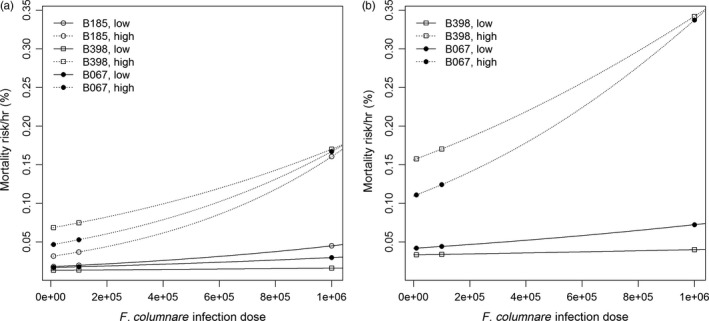
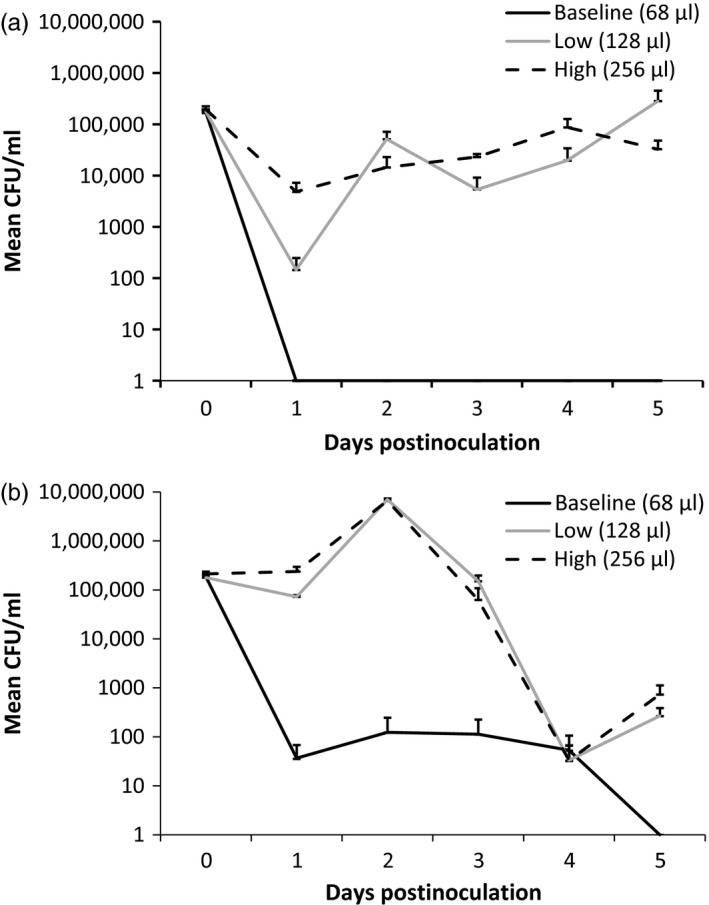
Diseases have become a primary constraint to sustainable aquaculture, but remarkably little attention has been paid to a broad class of pathogens: the opportunists. Opportunists often persist in the environment outside the host, and their pathogenic features are influenced by changes in the environment. To test how environmental nutrient levels influence virulence, we used strains of , an environmentally transmitted fish pathogen, to infect rainbow trout and zebra fish in two different nutrient concentrations. To separate the effects of dose and nutrients, we used three infective doses and studied the growth of bacteria in vitro. High nutrient concentration promoted both the virulence and the outside-host growth of the pathogen, most notably in a low-virulence strain. The increase in virulence could not be exhaustively explained by the increased dose under higher nutrient supply, suggesting virulence factor activation. In aquaculture settings, accumulation of organic material in rearing units can locally increase water nutrient concentration and therefore increase disease risk as a response to elevated bacterial density and virulence factor activation. Our results highlight the role of increased nutrients in outside-host environment as a selective agent for higher virulence and faster evolutionary rate in opportunistic pathogens.
疾病已成为可持续水产养殖的主要制约因素,但一类广泛的病原体——机会致病菌却极少受到关注。机会致病菌常常在宿主体外的环境中存活,其致病特性会受到环境变化的影响。为了测试环境营养水平如何影响毒力,我们使用了一种通过环境传播的鱼类病原体的菌株,在两种不同的营养浓度下感染虹鳟鱼和斑马鱼。为了区分剂量和营养的影响,我们使用了三种感染剂量,并研究了细菌在体外的生长情况。高营养浓度促进了病原体的毒力和体外生长,在低毒力菌株中表现尤为明显。在高营养供应下,毒力的增加不能完全用剂量增加来解释,这表明毒力因子被激活。在水产养殖环境中,养殖单元中有机物质的积累会局部提高水体营养浓度,从而因细菌密度增加和毒力因子激活而增加疾病风险。我们的研究结果凸显了宿主外环境中营养增加作为机会致病菌更高毒力和更快进化速度的选择因子的作用。