Tokuhiro Shin-Ichi, Tokuoka Miki, Kobayashi Kenji, Kubo Atsushi, Oda-Ishii Izumi, Satou Yutaka
Department of Zoology, Graduate School of Science, Kyoto University, Kyoto, Japan.
PLoS Genet. 2017 May 17;13(5):e1006741. doi: 10.1371/journal.pgen.1006741. eCollection 2017 May.
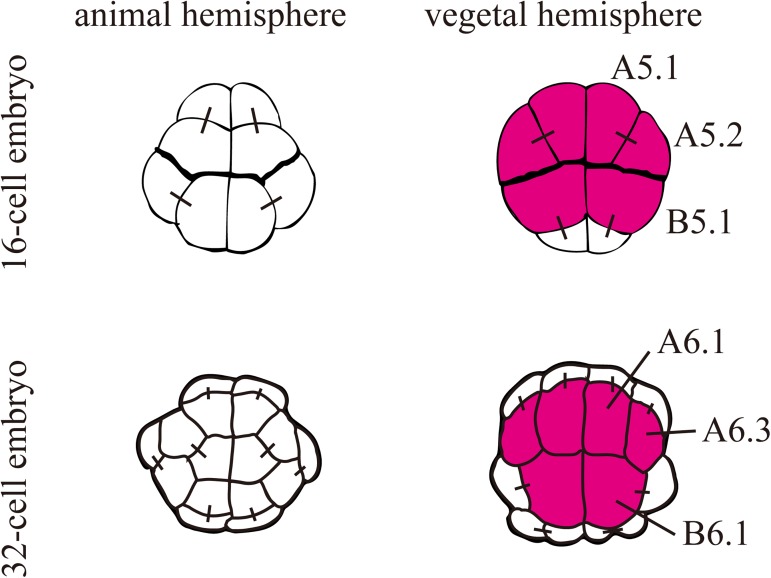
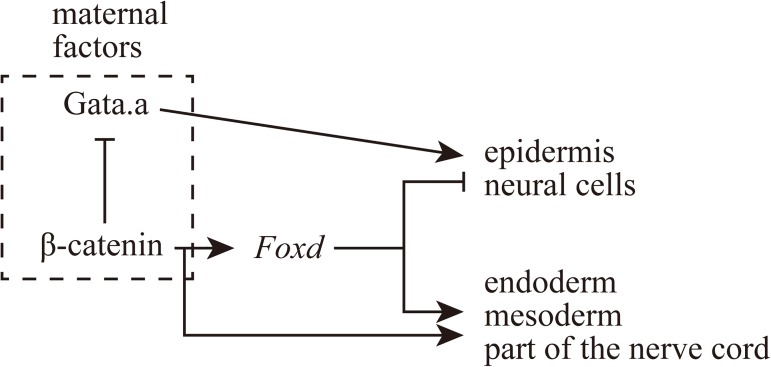
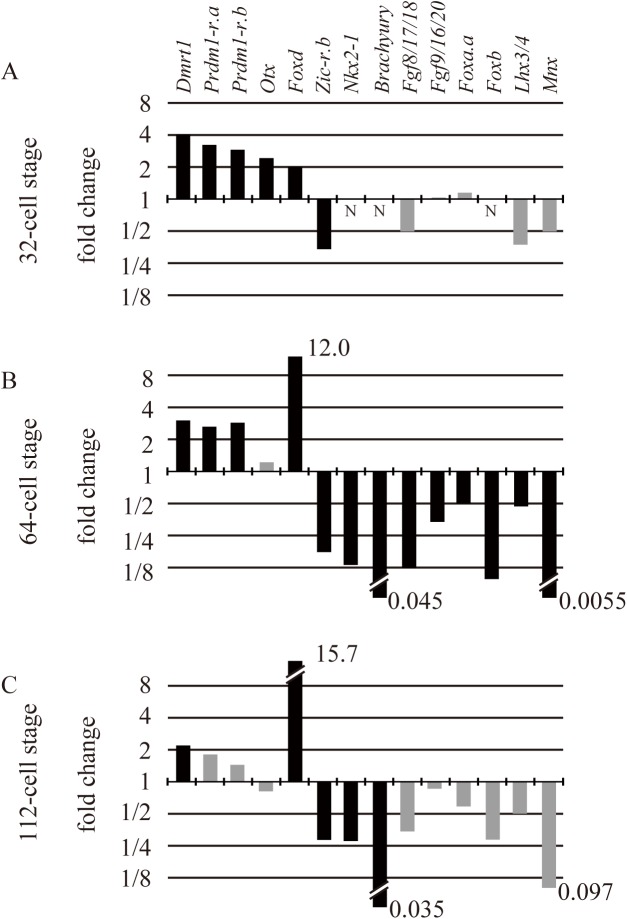
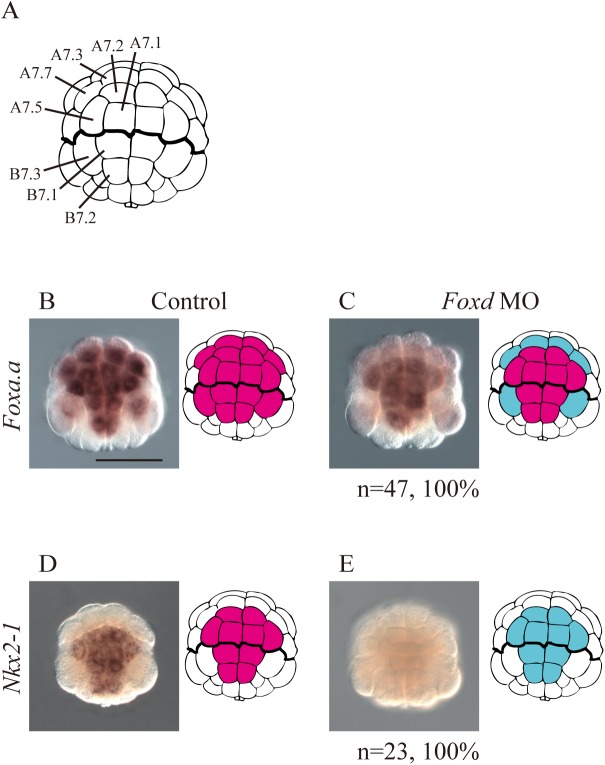
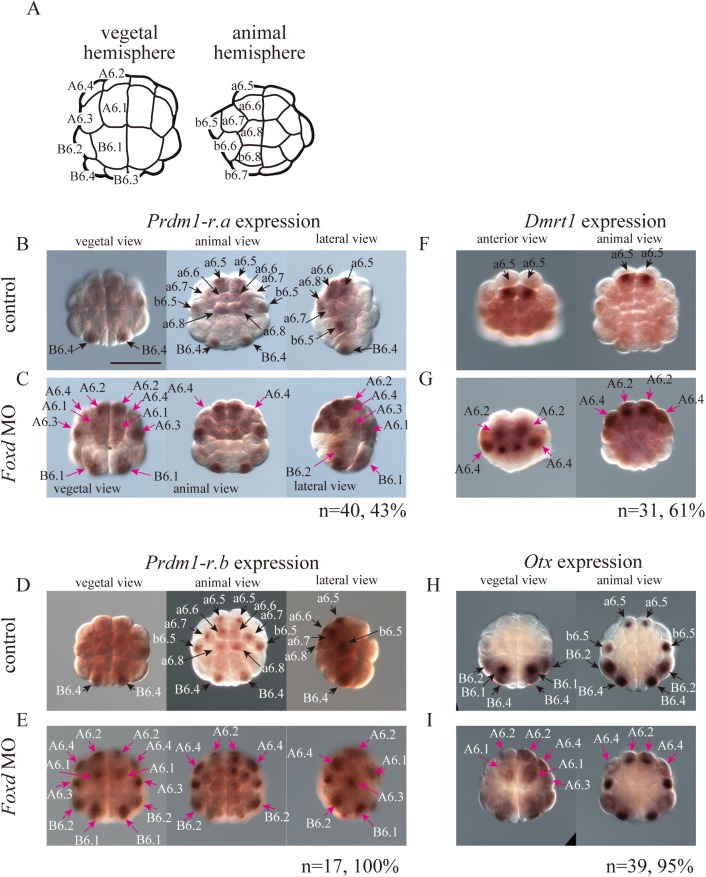
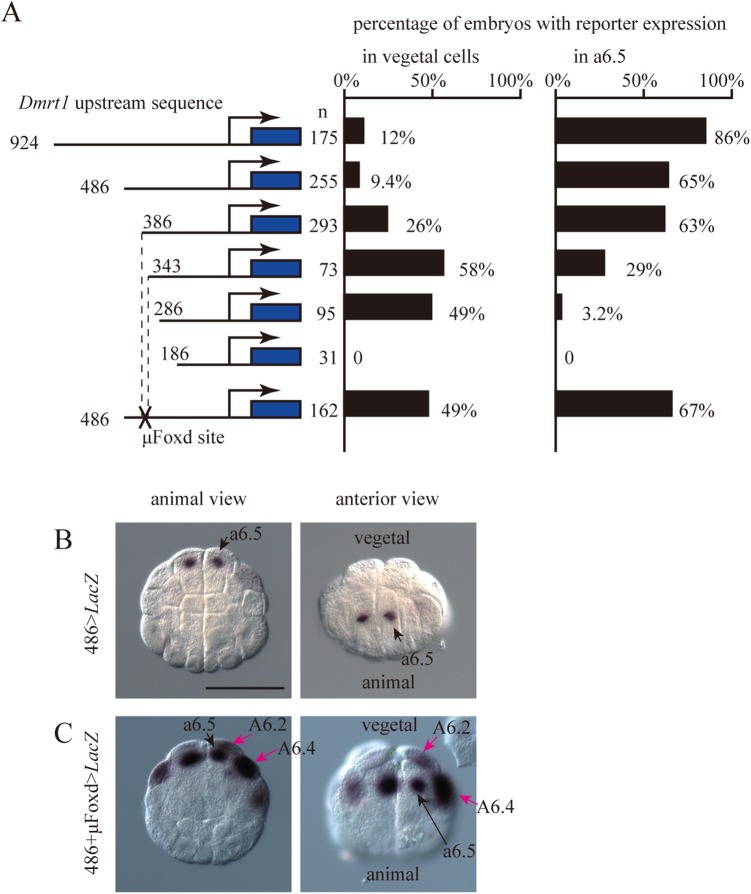
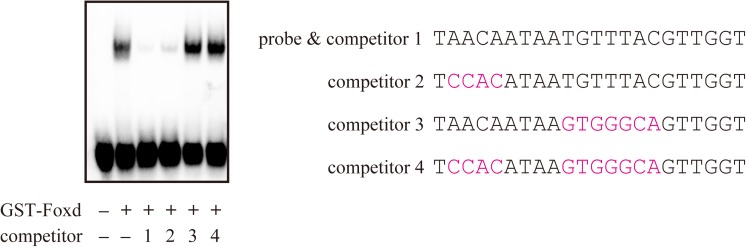
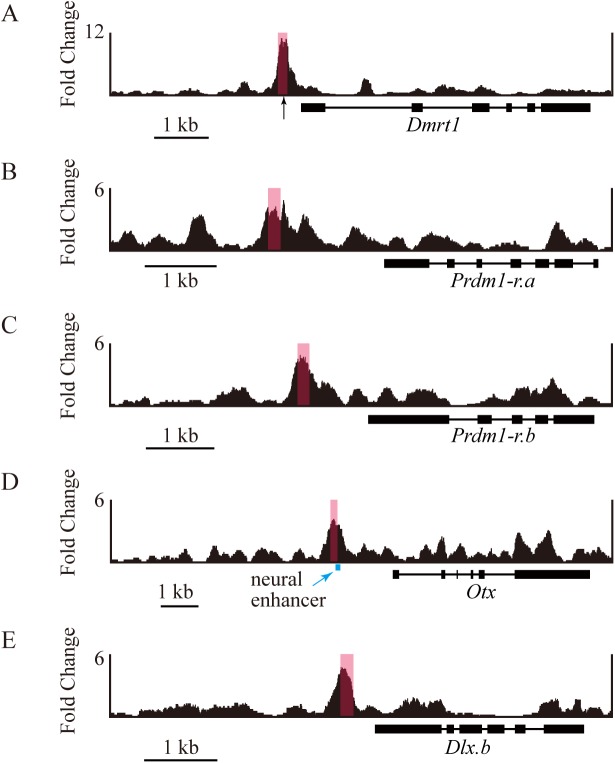
In many animal embryos, a specific gene expression pattern is established along the animal-vegetal axis soon after zygotic transcription begins. In the embryo of the ascidian Ciona intestinalis, soon after the division that separates animal and vegetal hemispheres into distinct blastomeres, maternal Gata.a and β-catenin activate specific genes in the animal and vegetal blastomeres, respectively. On the basis of these initial distinct gene expression patterns, gene regulatory networks promote animal cells to become ectodermal tissues and vegetal cells to become endomesodermal tissues and a part of the nerve cord. In the vegetal hemisphere, β-catenin directly activates Foxd, an essential transcription factor gene for specifying endomesodermal fates. In the present study, we found that Foxd also represses the expression of genes that are activated specifically in the animal hemisphere, including Dmrt1, Prdm1-r.a (Bz1), Prdm1-r.b (Bz2), and Otx. A reporter assay showed that Dmrt1 expression was directly repressed by Foxd, and a chromatin immunoprecipitation assay showed that Foxd was bound to the upstream regions of Dmrt1, Prdm1-r.a, Prdm1-r.b, and Otx. Thus, Foxd has a dual function of activating specific gene expression in the vegetal hemisphere and of repressing the expression of genes that are normally expressed in the animal hemisphere. This dual function stabilizes the initial patterning along the animal-vegetal axis by β-catenin and Gata.a.
在许多动物胚胎中,合子转录开始后不久,沿动物-植物轴就会建立特定的基因表达模式。在海鞘肠鳃纲动物的胚胎中,将动物半球和植物半球分隔成不同卵裂球的分裂发生后不久,母体Gata.a和β-连环蛋白分别激活动物和植物卵裂球中的特定基因。基于这些最初不同的基因表达模式,基因调控网络促使动物细胞发育成外胚层组织,植物细胞发育成内胚层中胚层组织和部分神经索。在植物半球,β-连环蛋白直接激活Foxd,这是一个决定内胚层中胚层命运的关键转录因子基因。在本研究中,我们发现Foxd还抑制在动物半球特异性激活的基因的表达,包括Dmrt1、Prdm1-r.a(Bz1)、Prdm1-r.b(Bz2)和Otx。报告基因检测表明Dmrt1的表达被Foxd直接抑制,染色质免疫沉淀检测表明Foxd与Dmrt1、Prdm1-r.a、Prdm1-r.b和Otx的上游区域结合。因此,Foxd具有双重功能,即在植物半球激活特定基因表达,以及抑制通常在动物半球表达的基因的表达。这种双重功能通过β-连环蛋白和Gata.a稳定了沿动物-植物轴的初始模式。