Okumu Denis O, East Michael P, Levine Merlin, Herring Laura E, Zhang Raymond, Gilbert Thomas S K, Litchfield David W, Zhang Yanping, Graves Lee M
Department of Pharmacology, School of Medicine, University of North Carolina, Chapel Hill, North Carolina, United States of America.
Lineberger Comprehensive Cancer Center, University of North Carolina, Chapel Hill, North Carolina, United States of America.
PLoS One. 2017 May 16;12(5):e0177871. doi: 10.1371/journal.pone.0177871. eCollection 2017.
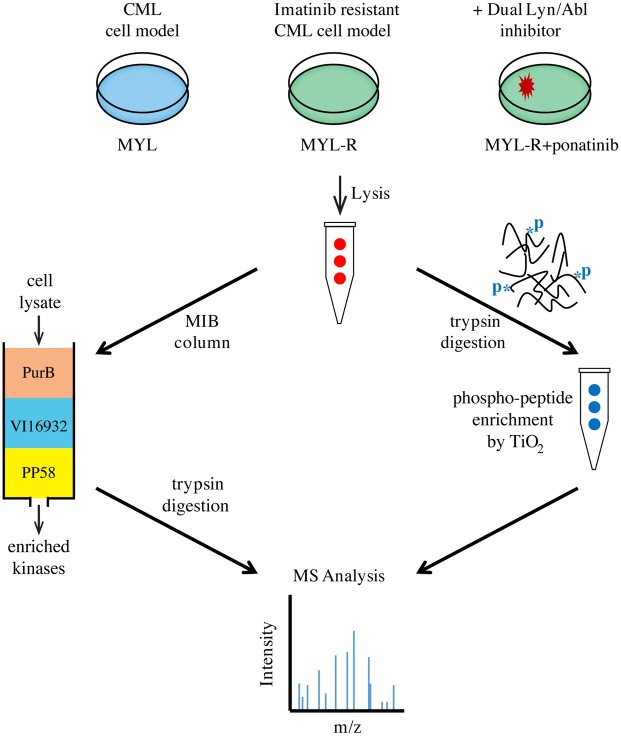
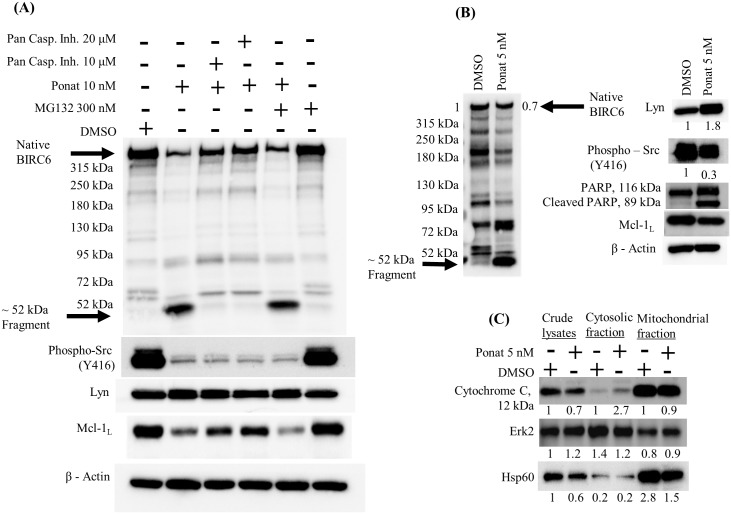
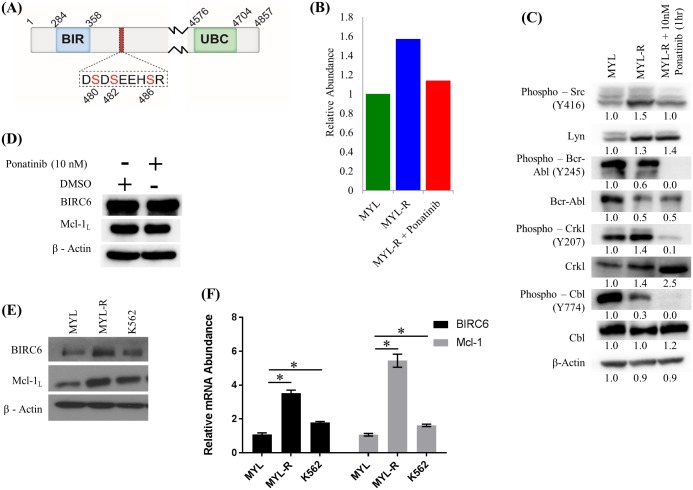
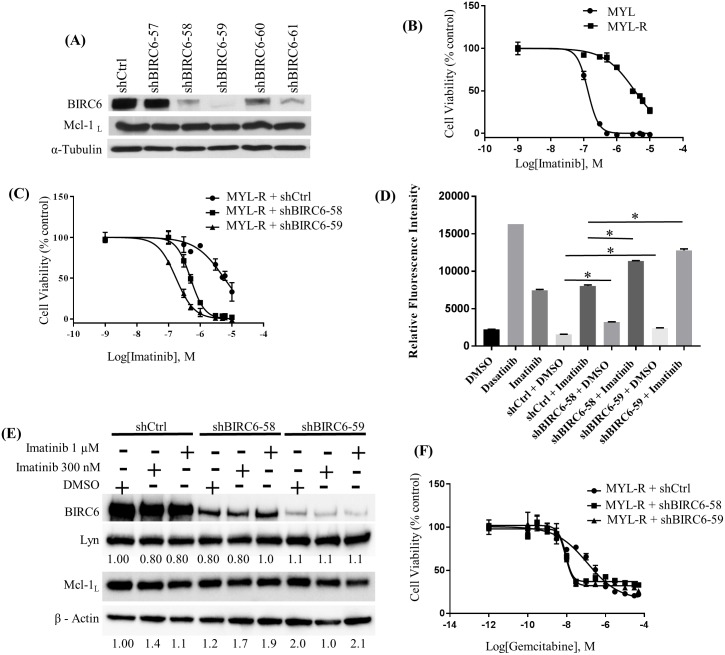
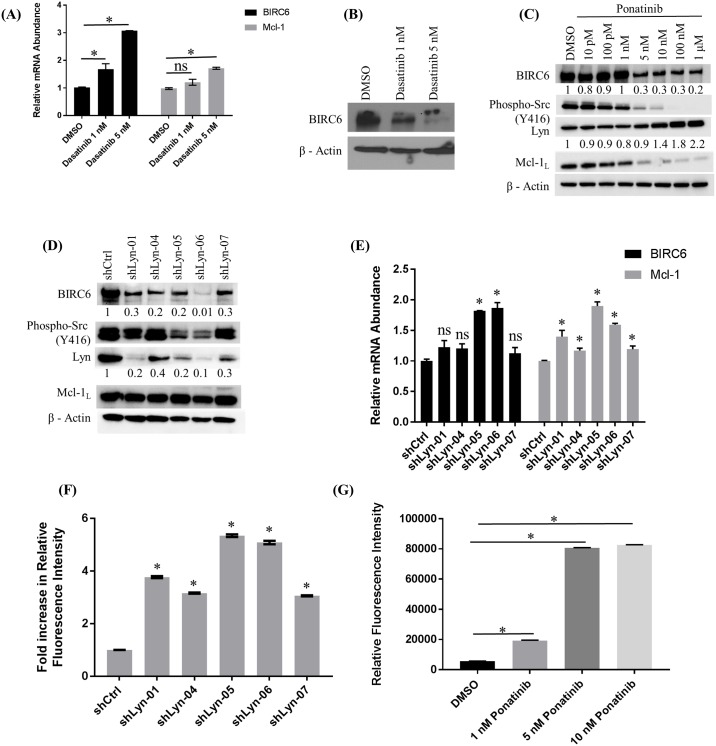
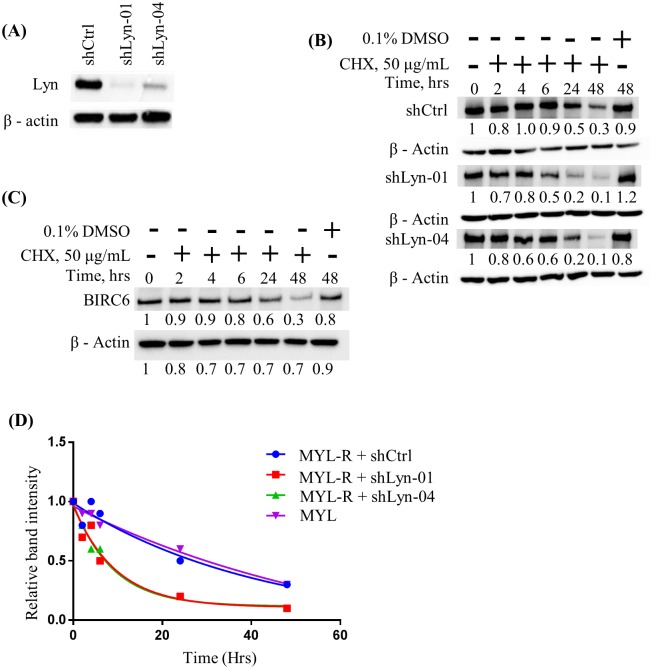
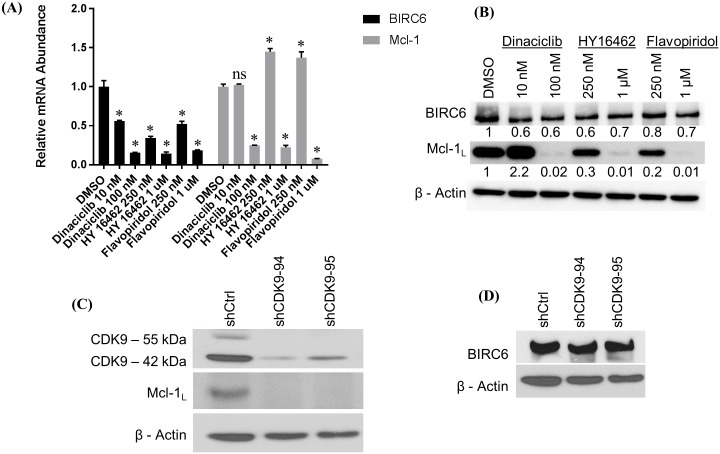
Baculoviral IAP repeat containing 6 (BIRC6) is a member of the inhibitors of apoptosis proteins (IAPs), a family of functionally and structurally related proteins that inhibit apoptosis. BIRC6 has been implicated in drug resistance in several different human cancers, however mechanisms regulating BIRC6 have not been extensively explored. Our phosphoproteomic analysis of an imatinib-resistant chronic myelogenous leukemia (CML) cell line (MYL-R) identified increased amounts of a BIRC6 peptide phosphorylated at S480, S482, and S486 compared to imatinib-sensitive CML cells (MYL). Thus we investigated the role of BIRC6 in mediating imatinib resistance and compared it to the well-characterized anti-apoptotic protein, Mcl-1. Both BIRC6 and Mcl-1 were elevated in MYL-R compared to MYL cells. Lentiviral shRNA knockdown of BIRC6 in MYL-R cells increased imatinib-stimulated caspase activation and resulted in a ~20-25-fold increase in imatinib sensitivity, without affecting Mcl-1. Treating MYL-R cells with CDK9 inhibitors decreased BIRC6 mRNA, but not BIRC6 protein levels. By contrast, while CDK9 inhibitors reduced Mcl-1 mRNA and protein, they did not affect imatinib sensitivity. Since the Src family kinase Lyn is highly expressed and active in MYL-R cells, we tested the effects of Lyn inhibition on BIRC6 and Mcl-1. RNAi-mediated knockdown or inhibition of Lyn (dasatinib/ponatinib) reduced BIRC6 protein stability and increased caspase activation. Inhibition of Lyn also increased formation of an N-terminal BIRC6 fragment in parallel with reduced amount of the BIRC6 phosphopeptide, suggesting that Lyn may regulate BIRC6 phosphorylation and stability. In summary, our data show that BIRC6 stability is dependent on Lyn, and that BIRC6 mediates imatinib sensitivity independently of Mcl-1 or CDK9. Hence, BIRC6 may be a novel target for the treatment of drug-resistant CML where Mcl-1 or CDK9 inhibitors have failed.
杆状病毒IAP重复序列包含蛋白6(BIRC6)是凋亡抑制蛋白(IAPs)家族的成员,IAPs是一类在功能和结构上相关的抑制细胞凋亡的蛋白质。BIRC6与几种不同人类癌症的耐药性有关,然而,调节BIRC6的机制尚未得到广泛研究。我们对伊马替尼耐药的慢性髓性白血病(CML)细胞系(MYL-R)进行的磷酸化蛋白质组分析发现,与伊马替尼敏感的CML细胞(MYL)相比,在S480、S482和S486位点磷酸化的BIRC6肽的量增加。因此,我们研究了BIRC6在介导伊马替尼耐药中的作用,并将其与特征明确的抗凋亡蛋白Mcl-1进行了比较。与MYL细胞相比,MYL-R细胞中BIRC6和Mcl-1均升高。在MYL-R细胞中通过慢病毒shRNA敲低BIRC6可增加伊马替尼刺激的半胱天冬酶激活,并导致伊马替尼敏感性增加约20-25倍,而不影响Mcl-1。用CDK9抑制剂处理MYL-R细胞可降低BIRC6 mRNA水平,但不影响BIRC6蛋白水平。相比之下,虽然CDK9抑制剂可降低Mcl-1 mRNA和蛋白水平,但它们不影响伊马替尼敏感性。由于Src家族激酶Lyn在MYL-R细胞中高度表达且具有活性,我们测试了Lyn抑制对BIRC6和Mcl-1的影响。RNAi介导的Lyn敲低或抑制(达沙替尼/波纳替尼)可降低BIRC6蛋白稳定性并增加半胱天冬酶激活。抑制Lyn还会增加N端BIRC6片段的形成,同时减少BIRC6磷酸肽的量,这表明Lyn可能调节BIRC6的磷酸化和稳定性。总之,我们的数据表明BIRC6的稳定性依赖于Lyn,并且BIRC6独立于Mcl-1或CDK9介导伊马替尼敏感性。因此,在Mcl-1或CDK9抑制剂治疗失败的耐药CML治疗中,BIRC6可能是一个新的靶点。