Morel Adrien, Baguet Aurélie, Perrard Jérôme, Demeret Caroline, Jacquin Elise, Guenat David, Mougin Christiane, Prétet Jean-Luc
EA3181, Université Bourgogne Franche-Comté, LabEx LipSTIC ANR-11-LABX-0021, Besançon, France.
Département de Virologie, Institut Pasteur, Unité de Génétique Moléculaire des Virus à ARN, CNRS UMR 3569, Université Paris Diderot, Sorbonne Paris Cité, Paris, France.
Oncotarget. 2017 Jul 11;8(28):46163-46176. doi: 10.18632/oncotarget.17575.
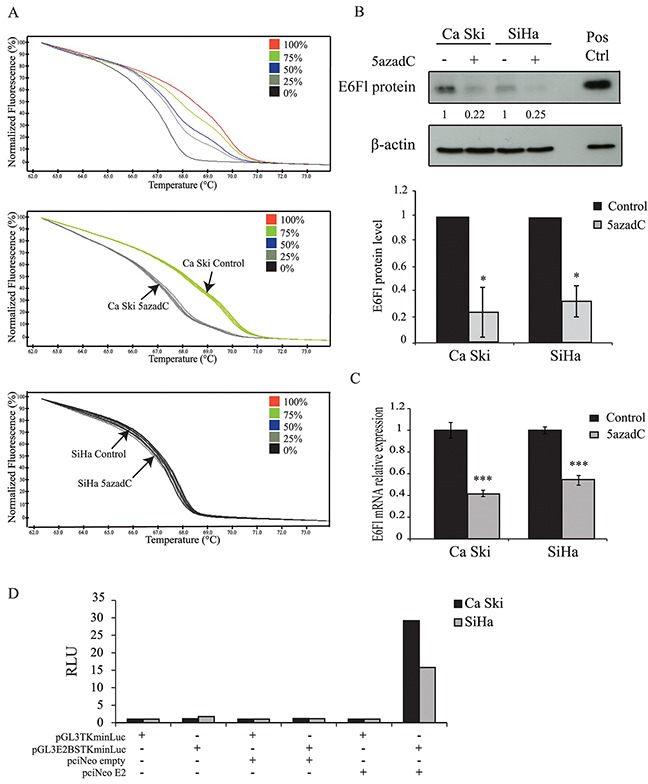
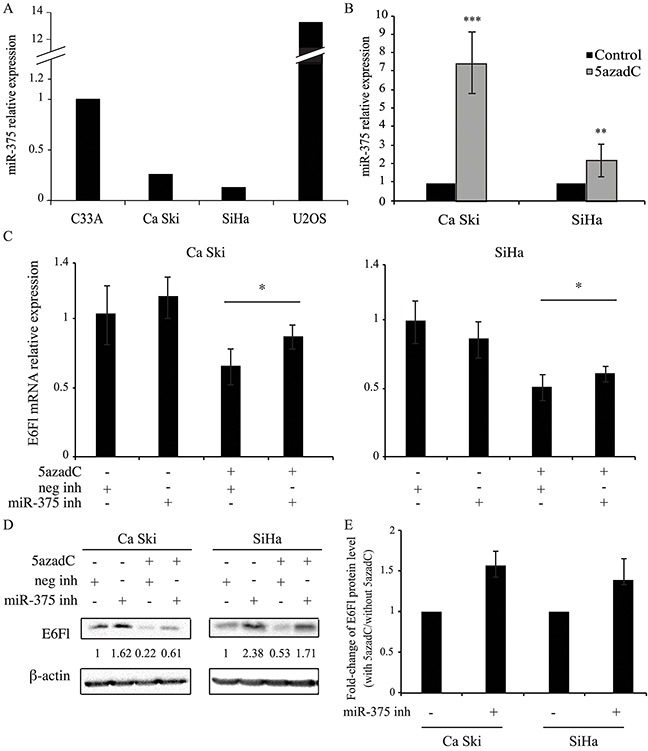
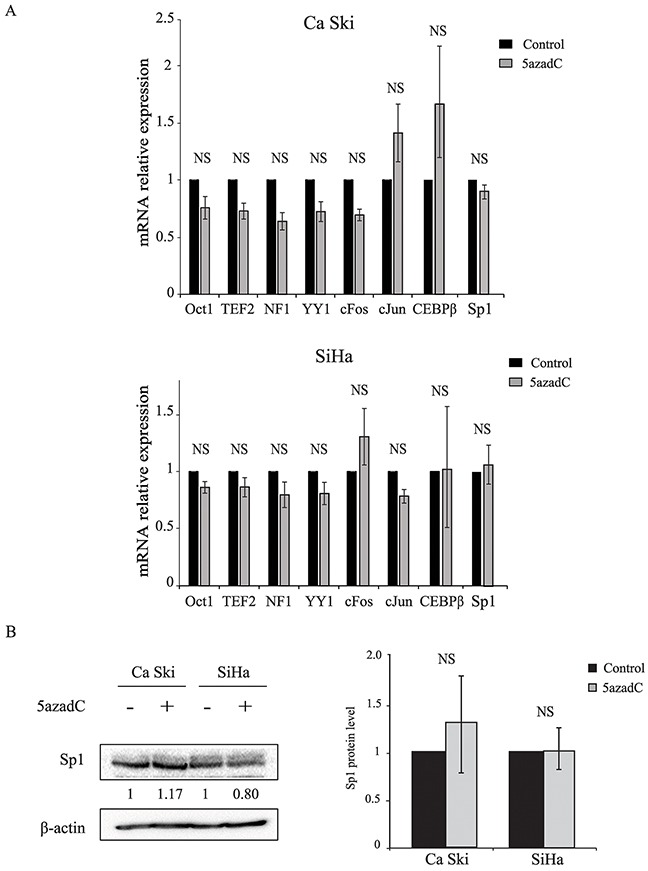
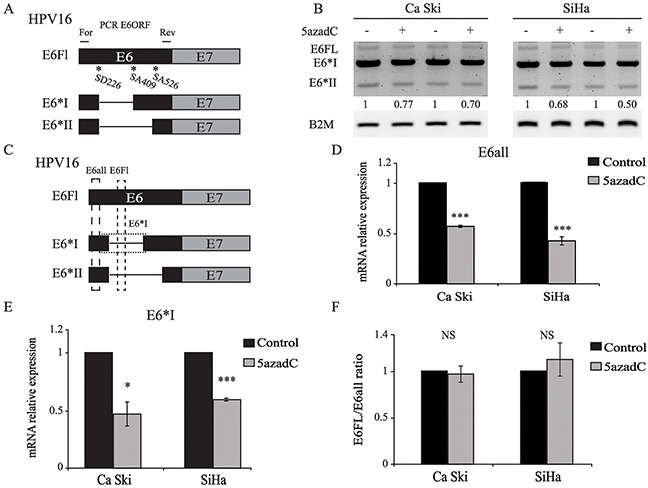
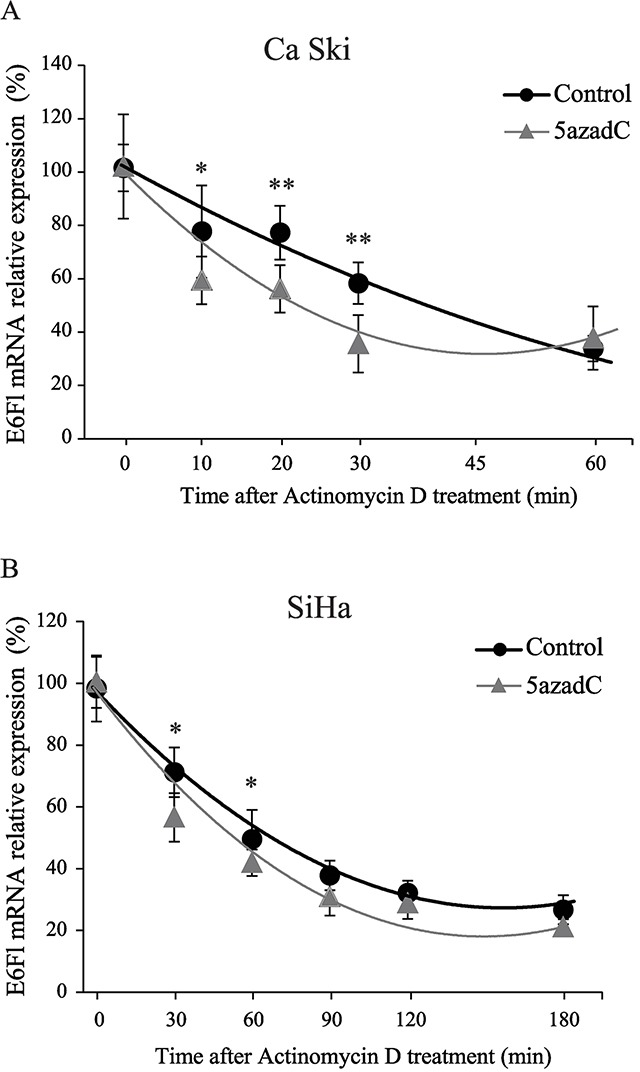
High-risk human papillomaviruses are the etiological agents of cervical cancer and HPV16 is the most oncogenic genotype. Immortalization and transformation of infected cells requires the overexpression of the two viral oncoproteins E6 and E7 following HPV DNA integration into the host cell genome. Integration often leads to the loss of the E2 open reading frame and the corresponding protein can no longer act as a transcriptional repressor on p97 promoter. Recently, it has been proposed that long control region methylation also contributes to the regulation of E6/E7 expression.To determine which epigenetic mechanism is involved in HPV16 early gene regulation, 5-aza-2'-deoxycytidine was used to demethylate Ca Ski and SiHa cell DNA. Decreased expression of E6 mRNA and protein levels was observed in both cell lines in an E2-independent manner. E6 repression was accompanied by neither a modification of the main cellular transcription factor expression involved in long control region regulation, nor by a modification of the E6 mRNA splicing pattern. In contrast, a pronounced upregulation of miR-375, known to destabilize HPV16 early viral mRNA, was observed. Finally, the use of miR-375 inhibitor definitively proved the involvement of miR-375 in E6 repression. These results highlight that cellular DNA methylation modulates HPV16 early gene expression and support a role for epigenetic events in high-risk HPV associated-carcinogenesis.
高危型人乳头瘤病毒是宫颈癌的病原体,而HPV16是最具致癌性的基因型。在HPV DNA整合入宿主细胞基因组后,受感染细胞的永生化和转化需要两种病毒癌蛋白E6和E7的过表达。整合常常导致E2开放阅读框的缺失,相应的蛋白不再能作为p97启动子的转录抑制因子。最近,有人提出长控制区甲基化也有助于E6/E7表达的调控。为了确定哪种表观遗传机制参与HPV16早期基因调控,使用5-氮杂-2'-脱氧胞苷使Ca Ski和SiHa细胞DNA去甲基化。在两种细胞系中均观察到E6 mRNA和蛋白水平以不依赖E2的方式降低。E6的抑制既不伴随着参与长控制区调控的主要细胞转录因子表达的改变,也不伴随着E6 mRNA剪接模式的改变。相反,观察到已知会使HPV16早期病毒mRNA不稳定的miR-375明显上调。最后,使用miR-375抑制剂明确证明了miR-375参与E6的抑制。这些结果突出表明细胞DNA甲基化调节HPV16早期基因表达,并支持表观遗传事件在高危型HPV相关致癌作用中的作用。