Wejbera Martin, Müller Kai W, Becker Jan, Beutel Manfred E
Department of Psychosomatic Medicine and Psychotherapy, University Medical Center, Mainz, Germany.
BMC Psychiatry. 2017 May 18;17(1):188. doi: 10.1186/s12888-017-1349-4.
Published diagnostic questionnaires for gambling disorder in German are either based on DSM-III criteria or focus on aspects other than life time prevalence. This study was designed to assess the usability of the DSM-IV criteria based Berlin Inventory of Gambling Behavior Screening tool in a clinical sample and adapt it to DSM-5 criteria.
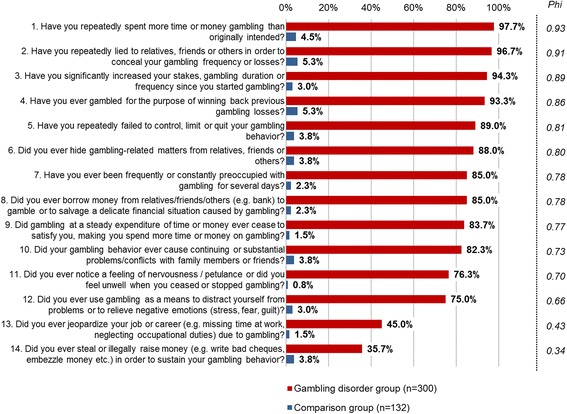
In a sample of 432 patients presenting for behavioral addiction assessment at the University Medical Center Mainz, we checked the screening tool's results against clinical diagnosis and compared a subsample of n=300 clinically diagnosed gambling disorder patients with a comparison group of n=132.
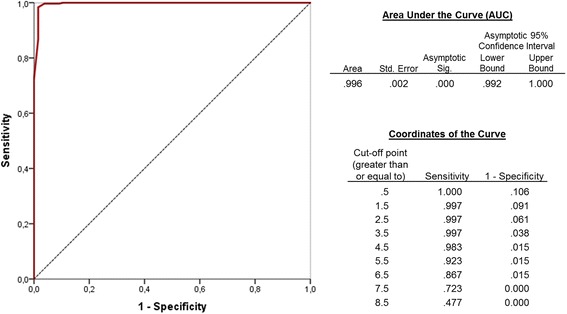
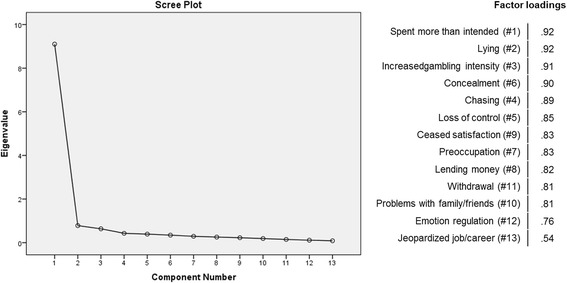
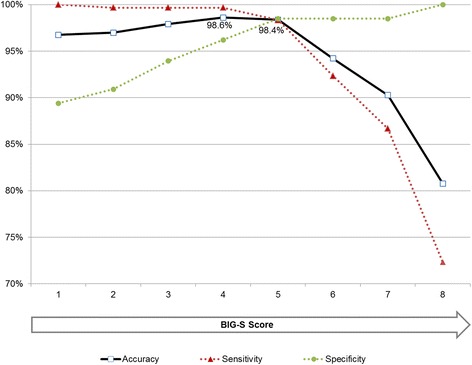
The BIG-S produced a sensitivity of 99.7% and a specificity of 96.2%. The instrument's unidimensionality and the diagnostic improvements of DSM-5 criteria were verified by exploratory and confirmatory factor analysis as well as receiver operating characteristic analysis.
The BIG-S is a reliable and valid screening tool for gambling disorder and demonstrated its concise and comprehensible operationalization of current DSM-5 criteria in a clinical setting.
已发表的德语赌博障碍诊断问卷要么基于《精神疾病诊断与统计手册》第三版(DSM-III)标准,要么侧重于除终生患病率之外的其他方面。本研究旨在评估基于《精神疾病诊断与统计手册》第四版(DSM-IV)标准的柏林赌博行为筛查工具在临床样本中的可用性,并使其符合DSM-5标准。
在美因茨大学医学中心进行行为成瘾评估的432名患者样本中,我们将筛查工具的结果与临床诊断进行核对,并将n = 300名临床诊断为赌博障碍的患者子样本与n = 132名对照组进行比较。
柏林赌博行为筛查工具(BIG-S)的灵敏度为99.7%,特异度为96.2%。通过探索性和验证性因素分析以及受试者工作特征分析,验证了该工具的单维度性和DSM-5标准的诊断改进。
BIG-S是一种可靠且有效的赌博障碍筛查工具,并在临床环境中展示了其对当前DSM-5标准简洁且可理解的操作化。