Huang Chunlan, Chen Jing, Wang Jingjing, Zhou Hui, Lu Yingying, Lou Lihong, Zheng Junyuan, Tian Ling, Wang Xingpeng, Cao Zhongwei, Zeng Yue
Department of Gastroenterology, Shanghai General Hospital, Shanghai Jiao Tong University School of MedicineShanghai, China.
Shanghai Key Laboratory of Pancreatic Diseases, Shanghai General Hospital, Shanghai Jiao Tong University School of MedicineShanghai, China.
Front Microbiol. 2017 May 4;8:776. doi: 10.3389/fmicb.2017.00776. eCollection 2017.
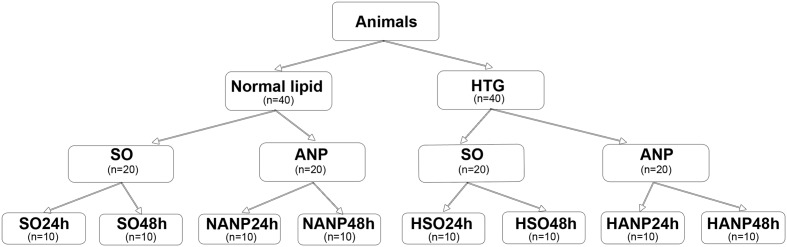
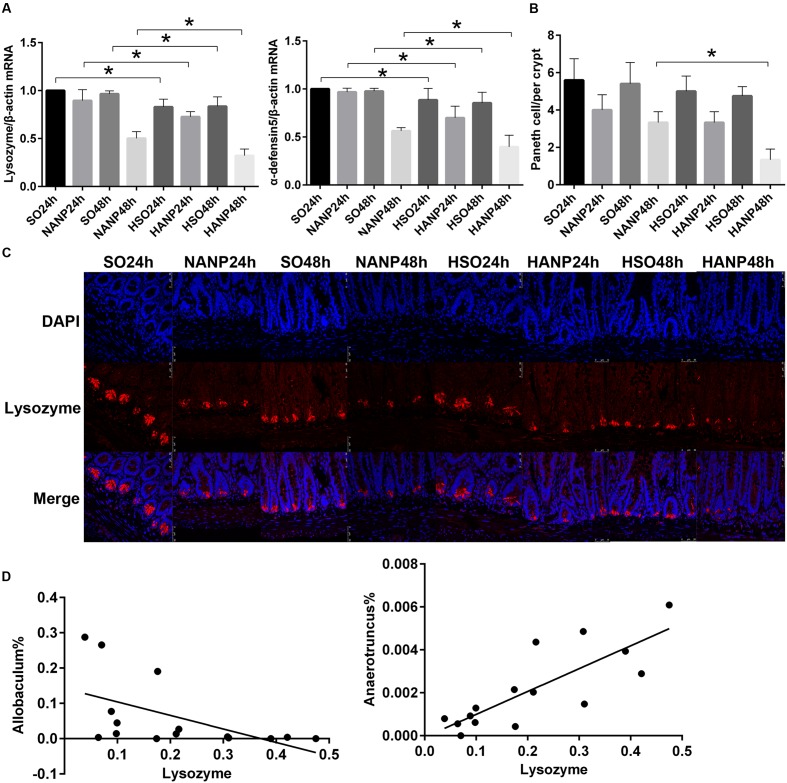
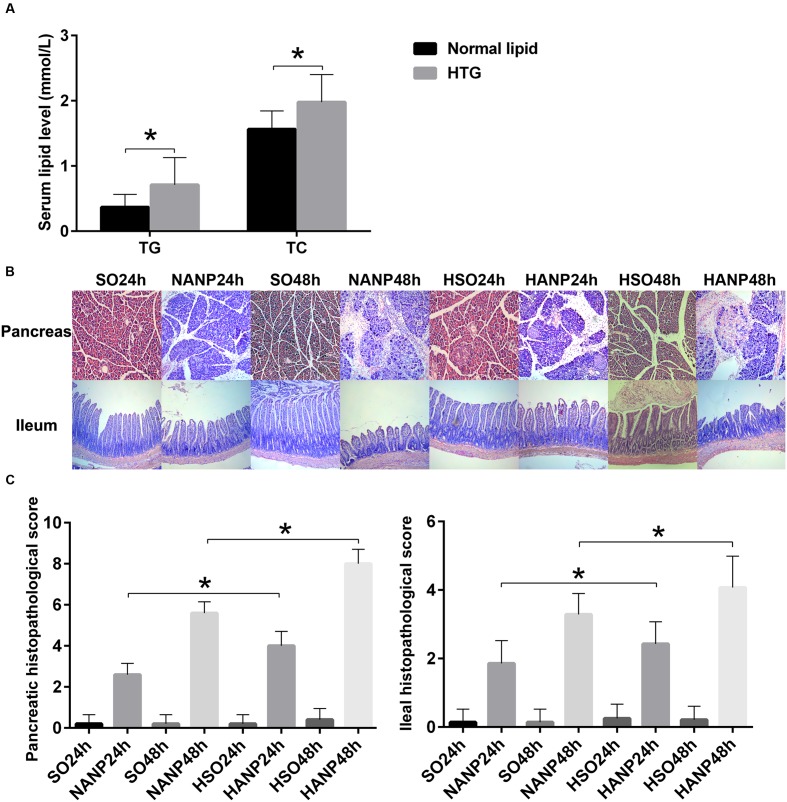
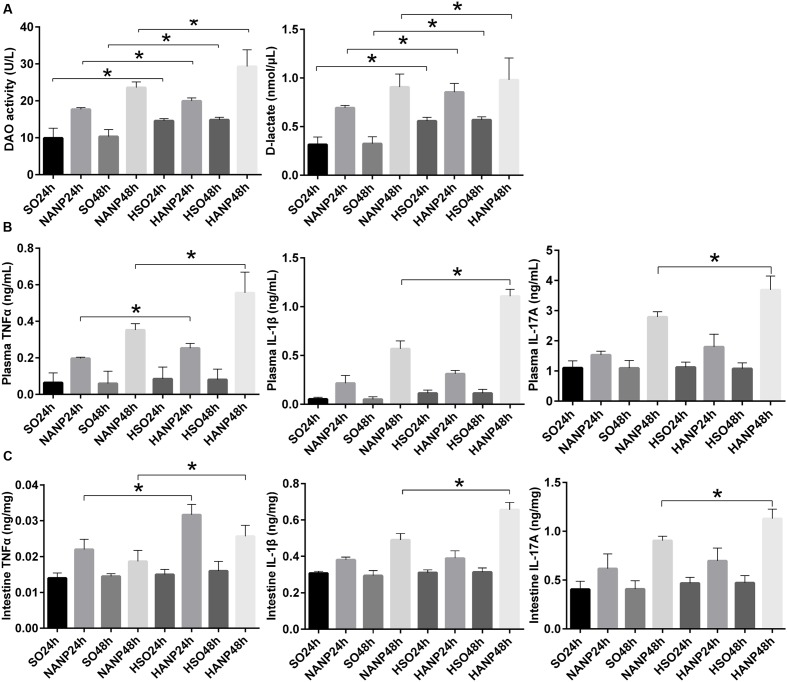
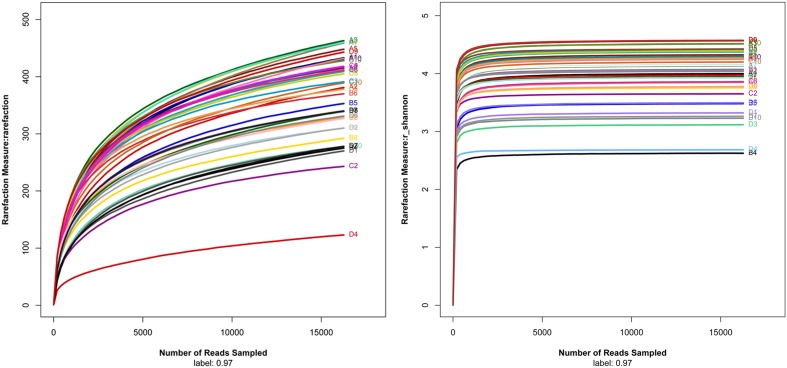
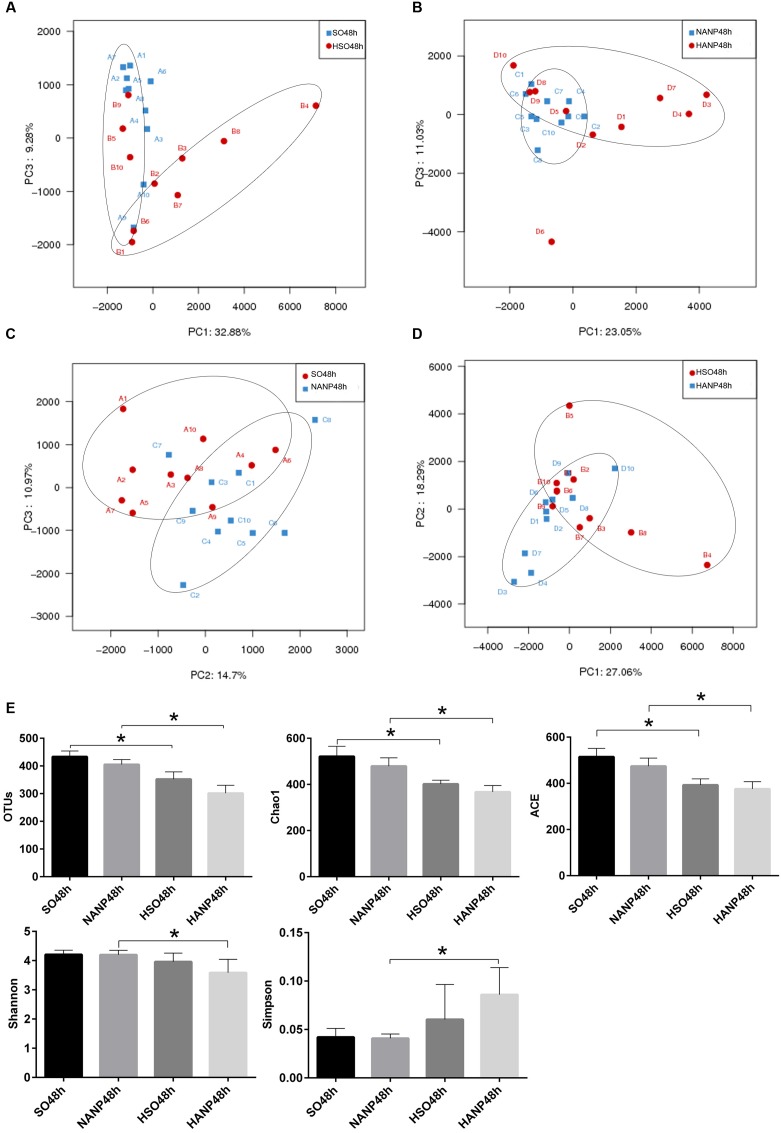
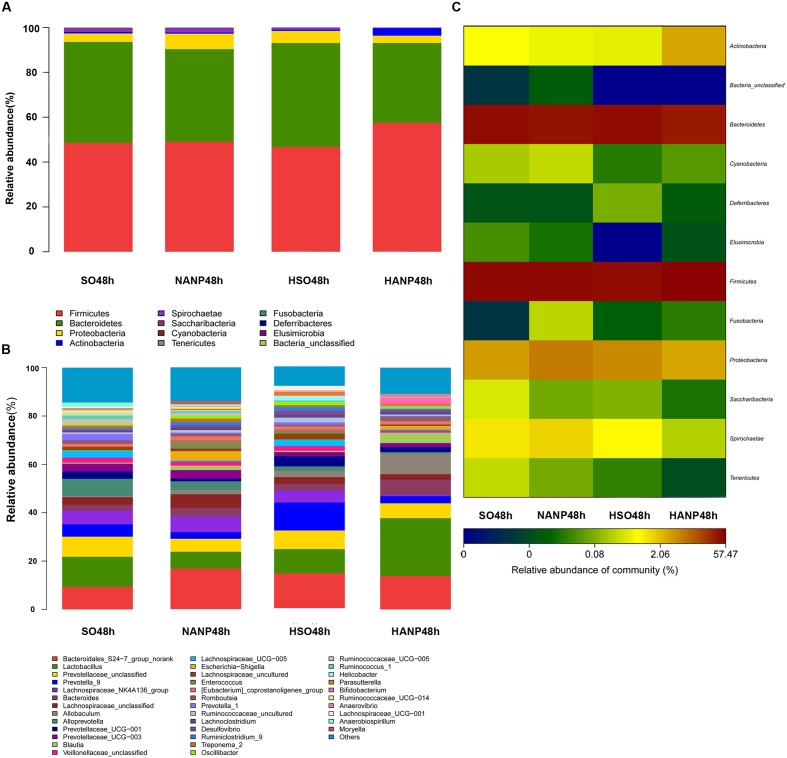
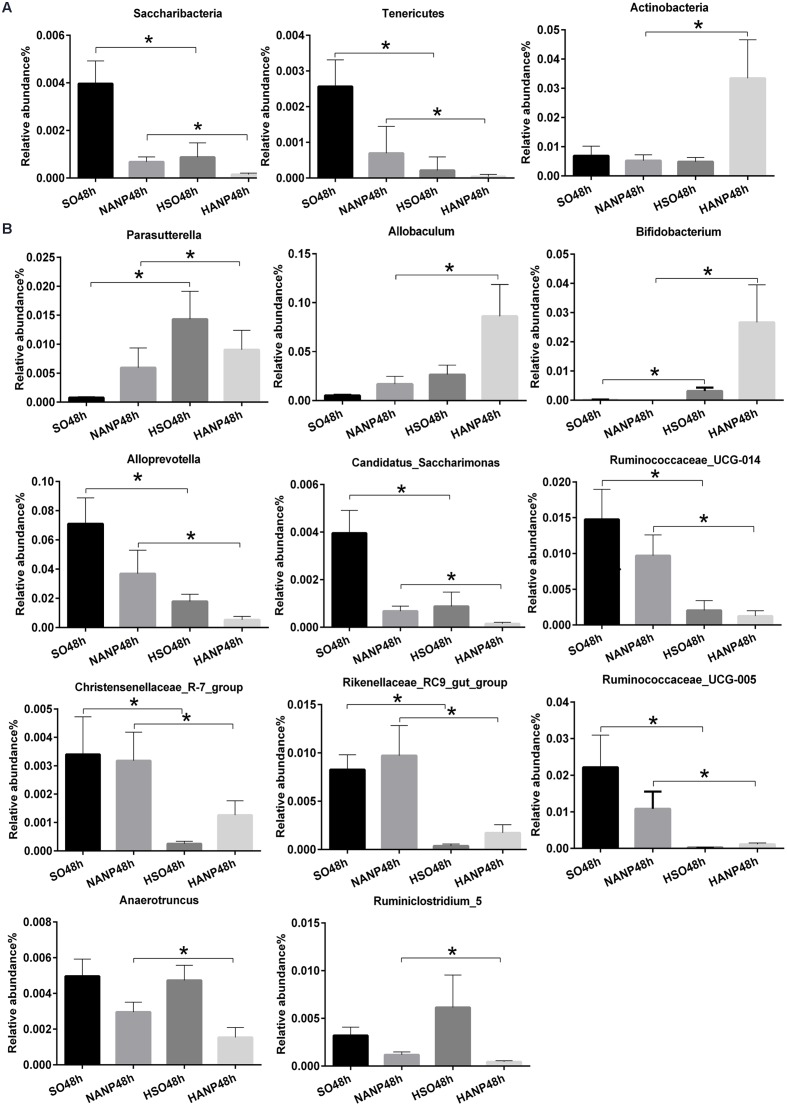
Hypertriglyceridemia (HTG) aggravates the course of acute pancreatitis (AP). Intestinal barrier dysfunction is implicated in the pathogenesis of AP during which dysbiosis of intestinal microbiota contributes to the dysfunction in intestinal barrier. However, few studies focus on the changes in intestine during HTG-related acute necrotizing pancreatitis (ANP). Here, we investigated the changes in intestinal microbiota and Paneth cell antimicrobial peptides (AMPs) in HTG-related ANP (HANP) in rats. Rats fed a high-fat diet to induce HTG and ANP was induced by retrograde injection of 3.5% sodium taurocholate into biliopancreatic duct. Rats were sacrificed at 24 and 48 h, respectively. Pancreatic and ileal injuries were evaluated by histological scores. Intestinal barrier function was assessed by plasma diamine oxidase activity and D-lactate level. Systemic and intestinal inflammation was evaluated by tumor necrosis factor alpha (TNFα), interleukin (IL)-1β, and IL-17A expression. 16S rRNA high throughput sequencing was used to investigate changes in intestinal microbiota diversity and structure. AMPs (α-defensin5 and lysozyme) expression was measured by real-time polymerase chain reaction (PCR) and immunofluorescence. The results showed that compared with those of normal-lipid ANP (NANP) groups, the HANP groups had more severe histopathological injuries in pancreas and distal ileum, aggravated intestinal barrier dysfunction and increased TNFα, IL-1β, and IL-17A expression in plasma and distal ileum. Principal component analysis showed structural segregation between the HANP and NANP group. α-Diversity estimators in the HANP group revealed decreased microbiota diversity compared with that in NANP group. Taxonomic analysis showed dysbiosis of intestinal microbiota structure. In the HANP group, at phyla level, and Tenericutes decreased significantly, whereas Actinobacteria increased. At genus level, , , and increased significantly, while , , , , , , , and decreased. Compared with those in the NANP rats, mRNA expression of lysozyme and α-defensin5 and protein expression of lysozyme decreased significantly in the HANP rats. Moreover, in the NANP rats and the HANP rats, abundance was inversely correlated with lysozyme expression, while abundance was positively correlated with it by Spearman test. In conclusion, intestinal microbiota dysbiosis and decreased AMPs of Paneth cells might participate in the pathogenesis of intestinal barrier dysfunction in HANP.
高甘油三酯血症(HTG)会加重急性胰腺炎(AP)的病程。肠道屏障功能障碍与AP的发病机制有关,在此过程中肠道微生物群失调会导致肠道屏障功能障碍。然而,很少有研究关注HTG相关急性坏死性胰腺炎(ANP)期间肠道的变化。在此,我们研究了大鼠HTG相关ANP(HANP)中肠道微生物群和潘氏细胞抗菌肽(AMPs)的变化。给大鼠喂食高脂饮食以诱导HTG,通过向胆胰管逆行注射3.5%牛磺胆酸钠诱导ANP。分别在24小时和48小时处死大鼠。通过组织学评分评估胰腺和回肠损伤。通过血浆二胺氧化酶活性和D-乳酸水平评估肠道屏障功能。通过肿瘤坏死因子α(TNFα)、白细胞介素(IL)-1β和IL-17A的表达评估全身和肠道炎症。采用16S rRNA高通量测序研究肠道微生物群多样性和结构的变化。通过实时聚合酶链反应(PCR)和免疫荧光检测AMPs(α-防御素5和溶菌酶)的表达。结果显示,与正常脂质ANP(NANP)组相比,HANP组胰腺和回肠末端的组织病理学损伤更严重,肠道屏障功能障碍加重,血浆和回肠末端TNFα、IL-1β和IL-17A的表达增加。主成分分析显示HANP组和NANP组之间存在结构分离。HANP组的α多样性估计值显示其微生物群多样性低于NANP组。分类学分析显示肠道微生物群结构失调。在HANP组中,在门水平上,柔膜菌门和无壁菌门显著减少,而放线菌门增加。在属水平上,埃希氏菌属、志贺氏菌属、克雷伯氏菌属、肠杆菌属、柠檬酸杆菌属、摩根氏菌属、变形杆菌属和假单胞菌属显著增加,而乳杆菌属、双歧杆菌属、拟杆菌属、梭菌属、瘤胃球菌属、粪杆菌属、罗斯氏菌属和普雷沃氏菌属减少。与NANP大鼠相比,HANP大鼠中溶菌酶和α-防御素5的mRNA表达以及溶菌酶的蛋白表达显著降低。此外,通过Spearman检验,在NANP大鼠和HANP大鼠中,大肠杆菌丰度与溶菌酶表达呈负相关,而双歧杆菌丰度与溶菌酶表达呈正相关。总之,肠道微生物群失调和潘氏细胞AMPs减少可能参与了HANP中肠道屏障功能障碍的发病机制。