Guo Xiulan, Li Jinchao, Tang Renyong, Zhang Guodong, Zeng Huawei, Wood Richard J, Liu Zhenhua
School of Pharmacy and Biological Engineering, Chengdu University, Sichuan, China; School of Public Health and Health Sciences, University of Massachusetts, Amherst, MA, USA.
School of Public Health and Health Sciences, University of Massachusetts, Amherst, MA, USA.
Mediators Inflamm. 2017;2017:9474896. doi: 10.1155/2017/9474896. Epub 2017 Feb 21.
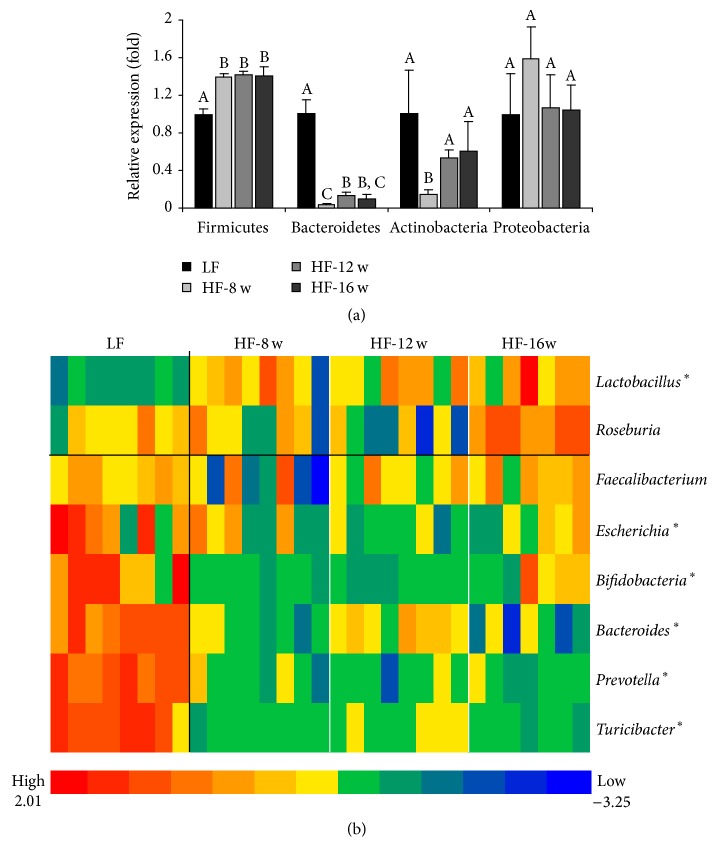
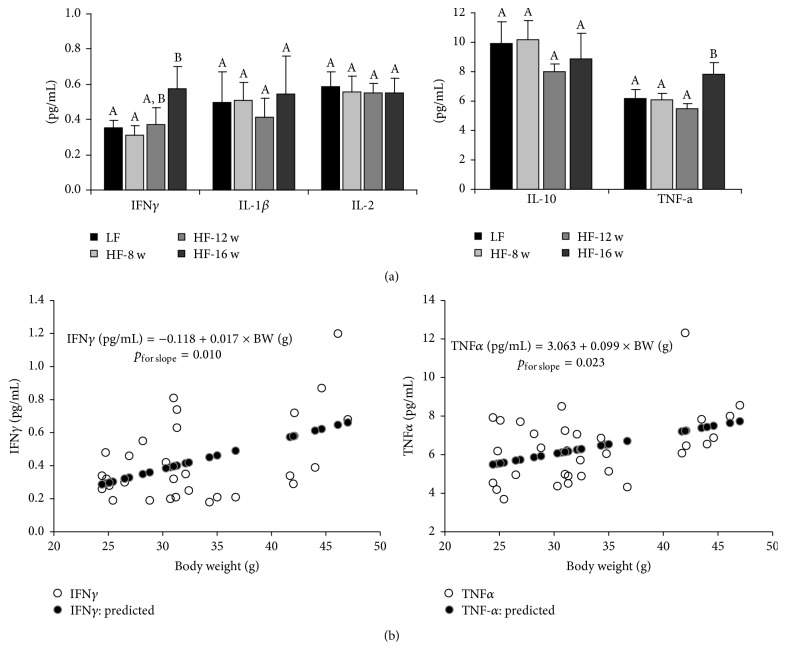
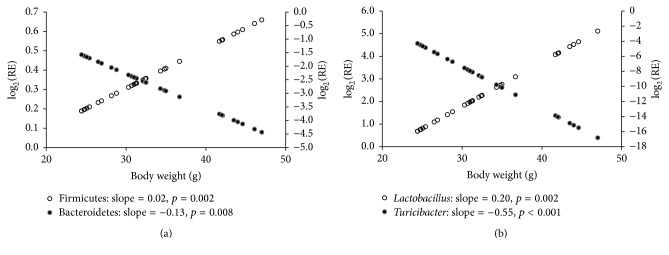
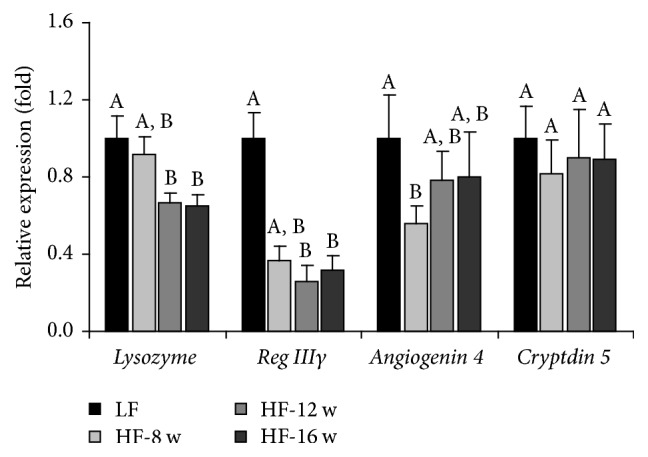
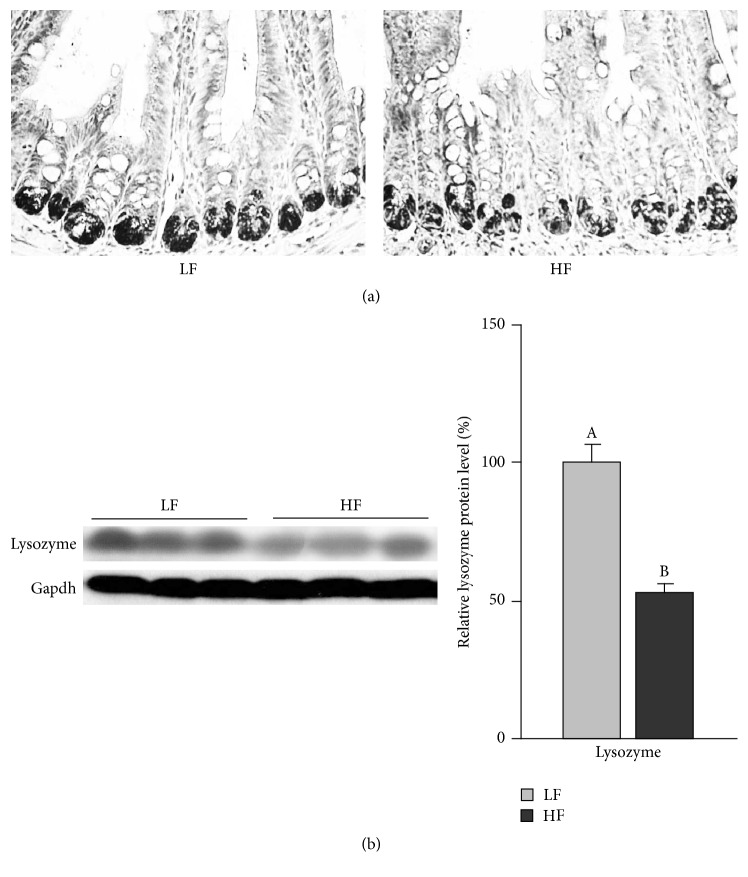
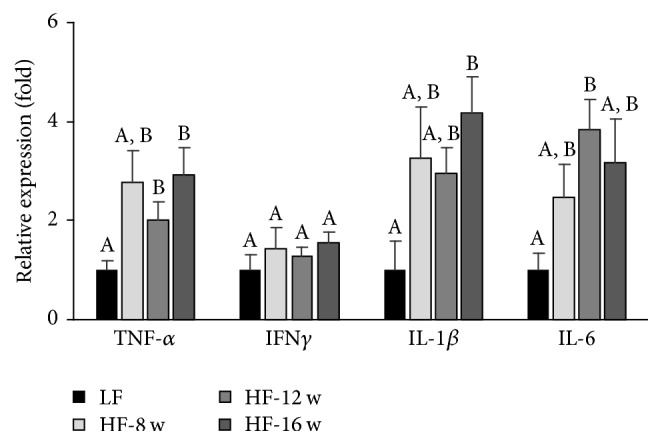
Obesity is an established risk factor for many diseases including intestinal cancer. One of the responsible mechanisms is the chronic inflammation driven by obesity. However, it remains to be defined whether diet-induced obesity exacerbates the intestinal inflammatory status by cytokines produced in adipose tissue or the high fat diet first alters the gut microbiota and then drives intestinal inflammation. To address this question, we fed C57BL/6 mice with a high fat diet (HF, 60%) and sacrificed them sequentially after 8, 12, and 16 weeks, and then compositions of gut microbiota and expressions of antimicrobial peptides were determined. The compositions of gut microbiota were altered at 8 wk HF feeding, followed with reduced Paneth antimicrobial peptides lysozyme and Reg III after 12 and 16 wk HF feeding ( < 0.05), whereas elevations of circulating inflammatory cytokines IFN and TNF- were observed until feeding a HF diet for 16 weeks ( < 0.05). These results indicated that high fat diet may stimulate intestinal inflammation via altering gut microbiota, and it occurs prior to the potential influence by circulating inflammatory cytokines. These findings emphasized the importance of microbiota, in addition to adipose tissue per se, in driving intestinal inflammation, which may thereafter promote intestinal tumorigenesis.
肥胖是包括肠癌在内的多种疾病的既定风险因素。其中一个相关机制是肥胖引发的慢性炎症。然而,饮食诱导的肥胖是否通过脂肪组织产生的细胞因子加剧肠道炎症状态,或者高脂肪饮食是否首先改变肠道微生物群,然后引发肠道炎症,仍有待确定。为了解决这个问题,我们用高脂肪饮食(HF,60%)喂养C57BL/6小鼠,并在8周、12周和16周后依次处死它们,然后测定肠道微生物群的组成和抗菌肽的表达。在高脂肪饮食喂养8周时肠道微生物群的组成发生改变,在高脂肪饮食喂养12周和16周后,潘氏抗菌肽溶菌酶和Reg III减少(<0.05),而直到喂养高脂肪饮食16周时才观察到循环炎症细胞因子IFN和TNF-升高(<0.05)。这些结果表明,高脂肪饮食可能通过改变肠道微生物群刺激肠道炎症,并且这发生在循环炎症细胞因子产生潜在影响之前。这些发现强调了微生物群除了脂肪组织本身之外,在引发肠道炎症中的重要性,而肠道炎症此后可能促进肠道肿瘤发生。