Taguchi Keiko, Yamamoto Masayuki
Department of Medical Biochemistry, Graduate School of Medicine, Tohoku University, Sendai, Japan.
Front Oncol. 2017 May 4;7:85. doi: 10.3389/fonc.2017.00085. eCollection 2017.
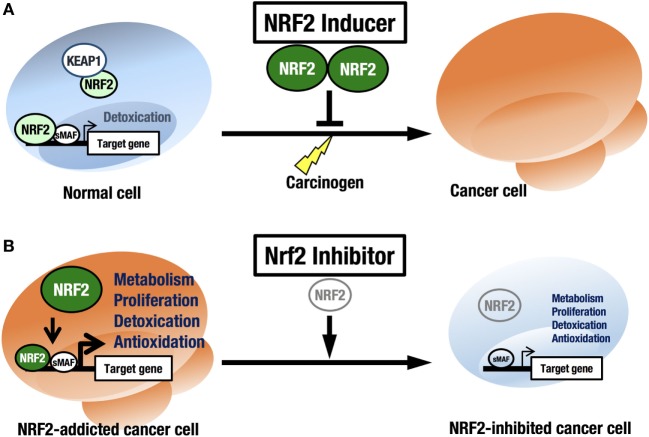
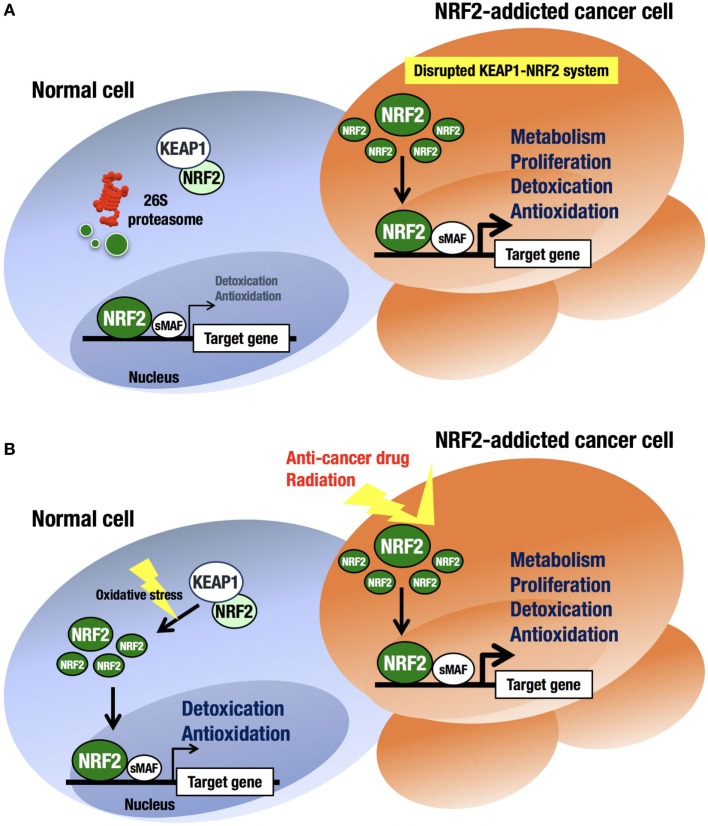
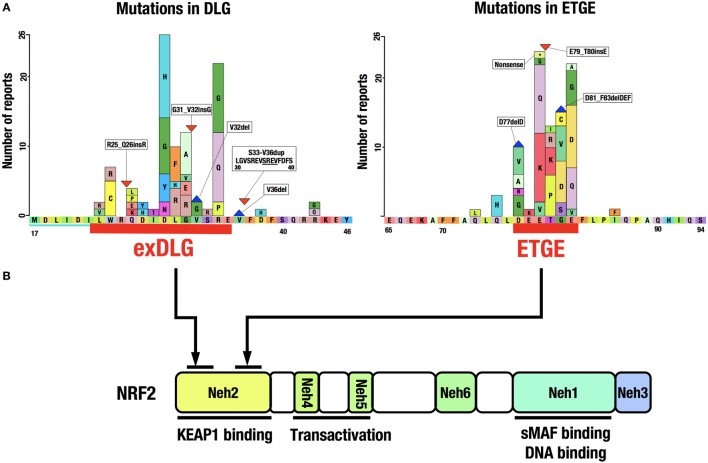
Cancer cells first adapt to the microenvironment and then propagate. Mutations in tumor suppressor genes or oncogenes are frequently found in cancer cells. Comprehensive genomic analyses have identified somatic mutations and other alterations in the or genes and in well-known tumor suppressor genes or oncogenes, such as , and , in various types of cancer. Aberrant NRF2 activation in cancer cells occurs through somatic mutations in the or gene as well as through other mechanisms that disrupt the binding of KEAP1 to NRF2. Unregulated NRF2 confers on cancer cells high-level resistance to anticancer drugs and reactive oxygen species (ROS) and directs cancer cells toward metabolic reprogramming. Therefore, NRF2 has been studied as a therapeutic target molecule in cancer. Two strategies have been used to target NRF2 via therapeutic drugs: inhibition of NRF2 and induction of NRF2. NRF2 inhibitors may be effective against NRF2-addicted cancer cells in which NRF2 is aberrantly activated. These inhibitors have not yet been established as NRF2-targeted anticancer drugs for the treatment of human cancers. Diagnosis of NRF2 activation could facilitate the use of NRF2 inhibitors for the treatment of patients with NRF2-addicted cancers. Conversely, NRF2 inducers have been used or are being developed for non-cancer diseases. In addition, NRF2 inducers may be useful for cancer chemotherapy in combination with conventional anticancer agents or even NRF2 inhibitors.
癌细胞首先适应微环境,然后增殖。肿瘤抑制基因或癌基因的突变在癌细胞中经常被发现。全面的基因组分析已经在各种类型的癌症中鉴定出 或 基因以及著名的肿瘤抑制基因或癌基因(如 、 和 )中的体细胞突变和其他改变。癌细胞中异常的NRF2激活通过 或 基因的体细胞突变以及通过破坏KEAP1与NRF2结合的其他机制发生。不受调控的NRF2赋予癌细胞对抗癌药物和活性氧(ROS)的高水平抗性,并引导癌细胞进行代谢重编程。因此,NRF2已被作为癌症治疗的靶标分子进行研究。通过治疗药物靶向NRF2有两种策略:抑制NRF2和诱导NRF2。NRF2抑制剂可能对NRF2异常激活的NRF2成瘾癌细胞有效。这些抑制剂尚未被确立为用于治疗人类癌症的NRF2靶向抗癌药物。NRF2激活的诊断可以促进NRF2抑制剂用于治疗NRF2成瘾癌症患者。相反,NRF2诱导剂已被用于或正在开发用于非癌症疾病。此外,NRF2诱导剂可能与传统抗癌药物甚至NRF2抑制剂联合用于癌症化疗。