Kasap Bahadir, van Opstal A John
Department of Biophysics, Donders Institute for Brain, Cognition and Behaviour, Radboud University, HG00.800, Heyendaalseweg 135, 6525 AJ, Nijmegen, The Netherlands.
Biol Cybern. 2017 Aug;111(3-4):249-268. doi: 10.1007/s00422-017-0719-9. Epub 2017 May 20.
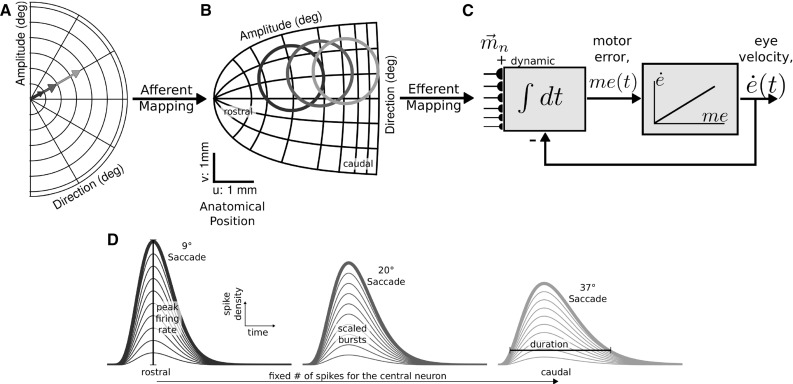
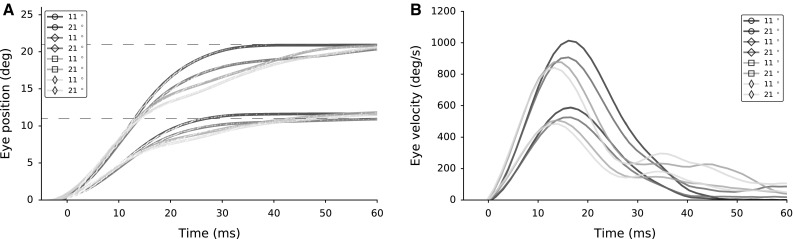
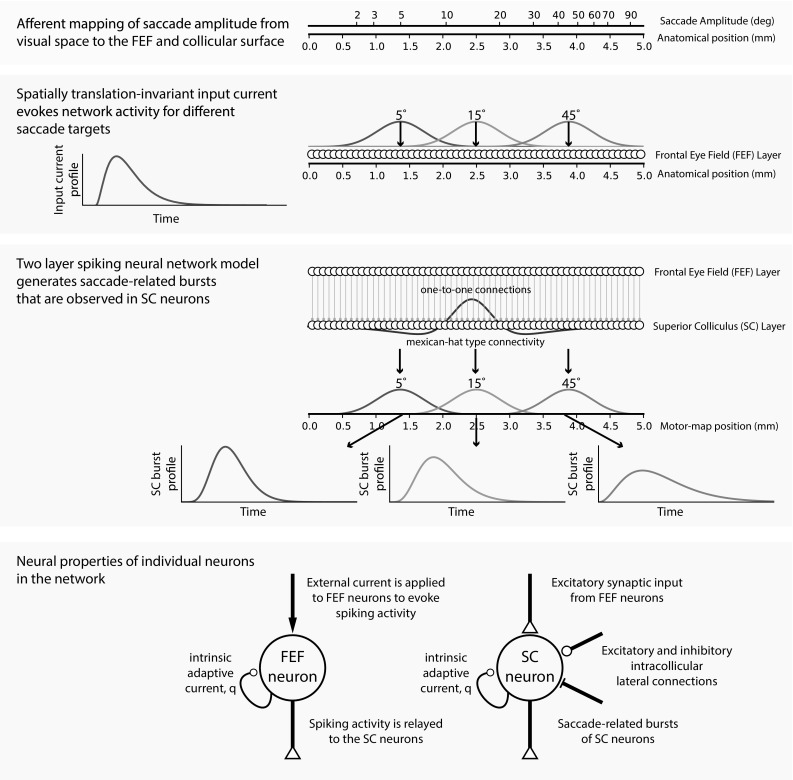
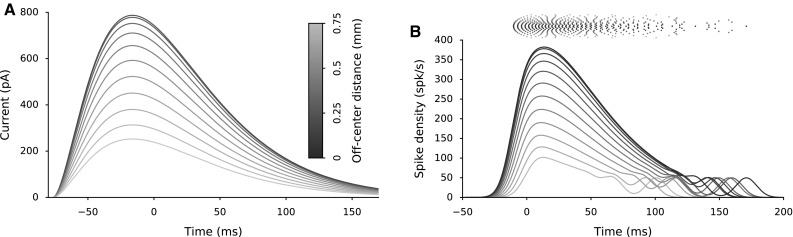
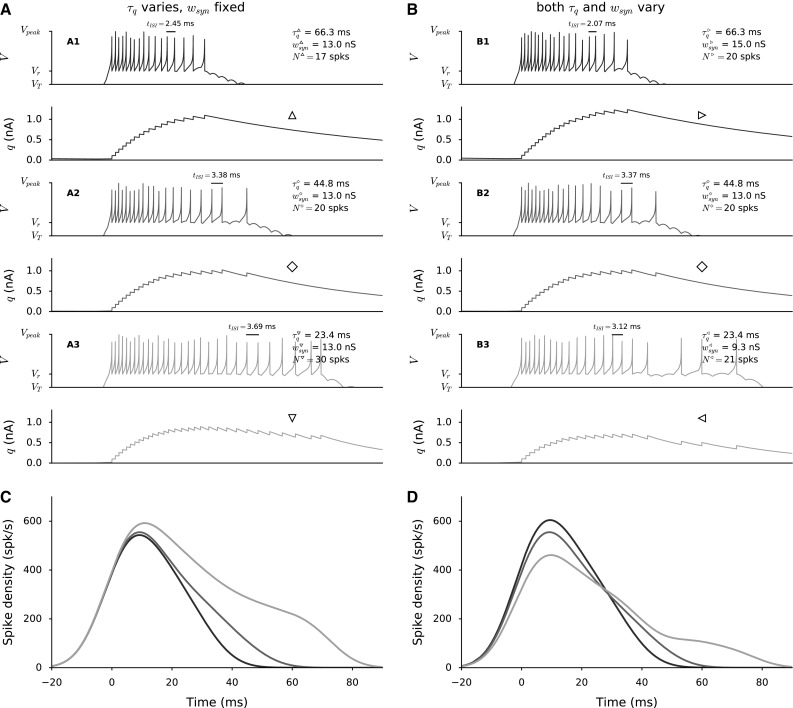
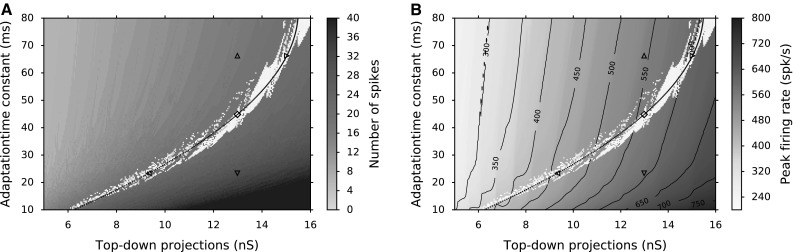
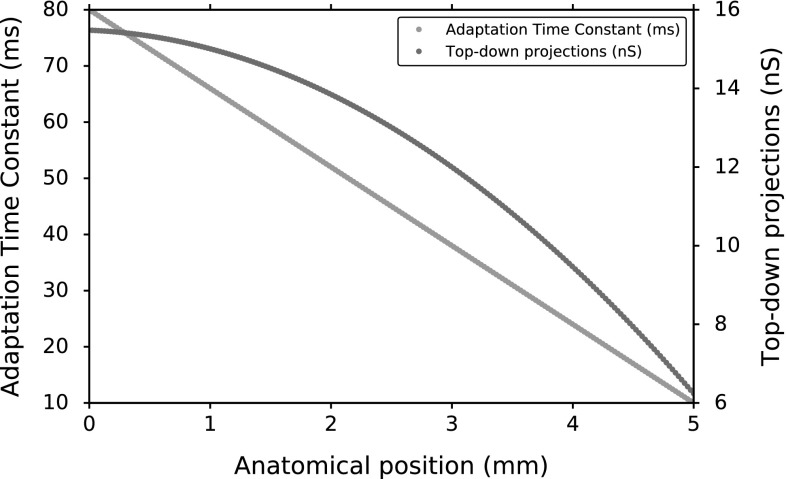
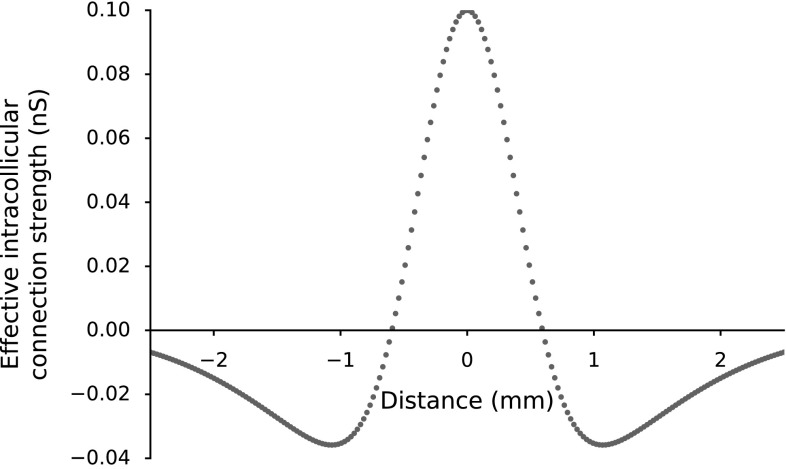
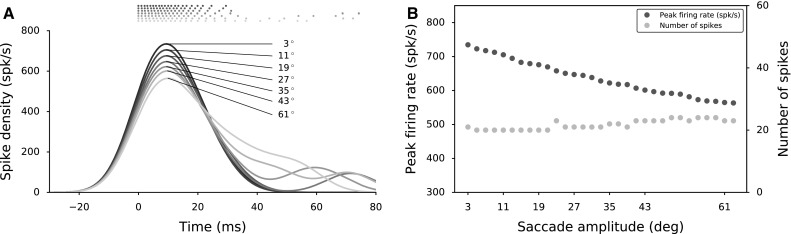
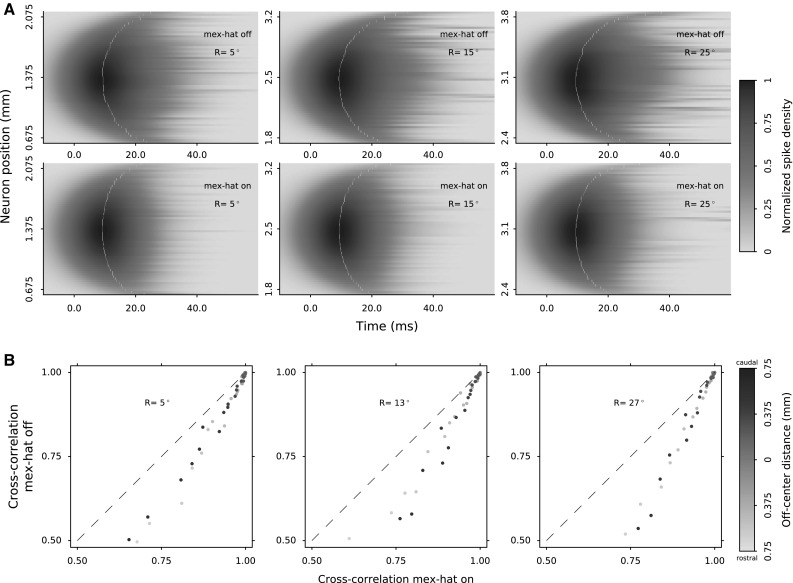
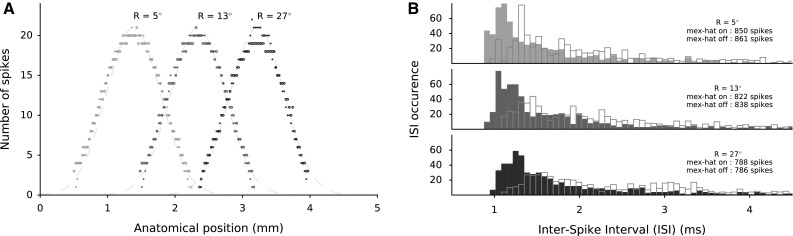
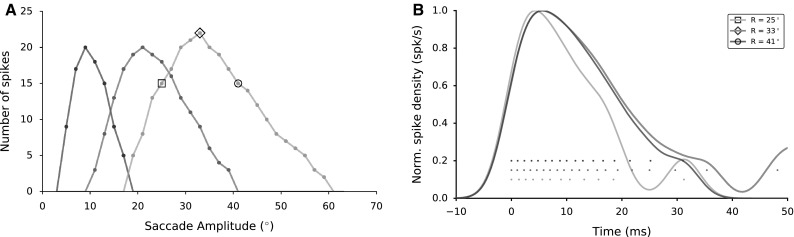
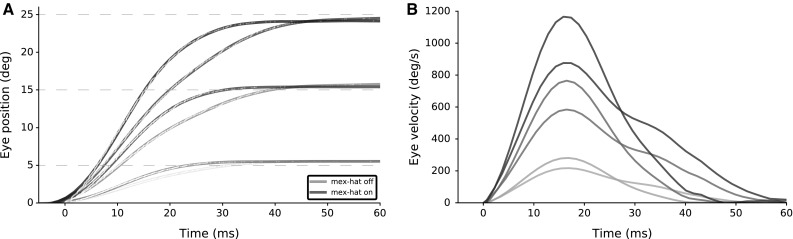
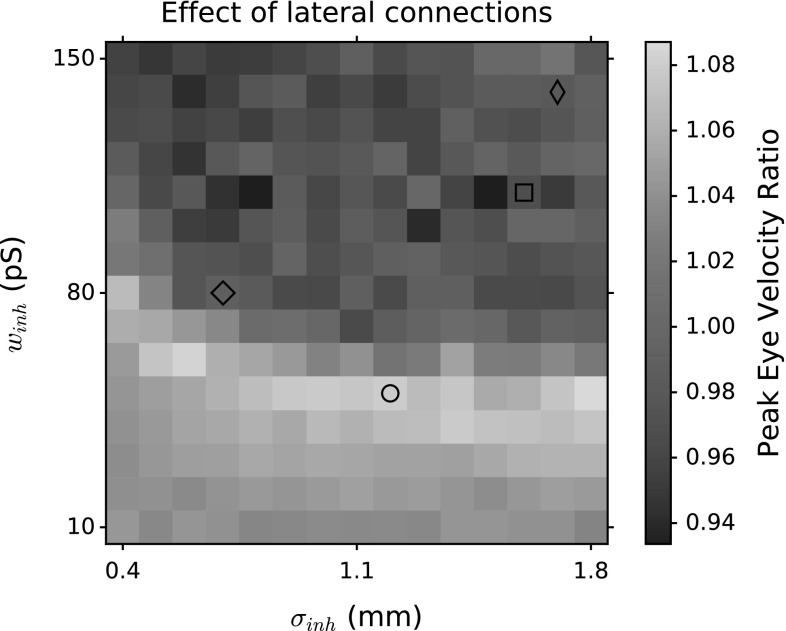
Single-unit recordings suggest that the midbrain superior colliculus (SC) acts as an optimal controller for saccadic gaze shifts. The SC is proposed to be the site within the visuomotor system where the nonlinear spatial-to-temporal transformation is carried out: the population encodes the intended saccade vector by its location in the motor map (spatial), and its trajectory and velocity by the distribution of firing rates (temporal). The neurons' burst profiles vary systematically with their anatomical positions and intended saccade vectors, to account for the nonlinear main-sequence kinematics of saccades. Yet, the underlying collicular mechanisms that could result in these firing patterns are inaccessible to current neurobiological techniques. Here, we propose a simple spiking neural network model that reproduces the spike trains of saccade-related cells in the intermediate and deep SC layers during saccades. The model assumes that SC neurons have distinct biophysical properties for spike generation that depend on their anatomical position in combination with a center-surround lateral connectivity. Both factors are needed to account for the observed firing patterns. Our model offers a basis for neuronal algorithms for spatiotemporal transformations and bio-inspired optimal controllers.
单神经元记录表明,中脑上丘(SC)充当扫视眼动的最佳控制器。有人提出,上丘是视觉运动系统中进行非线性空间到时间转换的部位:神经元群体通过其在运动图谱中的位置(空间)对预期的扫视向量进行编码,并通过发放率的分布对其轨迹和速度进行编码(时间)。神经元的爆发模式随其解剖位置和预期的扫视向量而系统地变化,以解释扫视的非线性主序列运动学。然而,当前的神经生物学技术无法探究可能导致这些放电模式的潜在丘系机制。在此,我们提出一个简单的脉冲神经网络模型,该模型可再现扫视期间中脑上丘中间层和深层与扫视相关细胞的脉冲序列。该模型假定,上丘神经元具有不同的用于产生脉冲的生物物理特性,这些特性取决于它们的解剖位置,并结合中心-外周侧向连接性。这两个因素都是解释所观察到的放电模式所必需的。我们的模型为时空转换的神经元算法和受生物启发的最佳控制器提供了基础。