Doyle Elizabeth, Simmance Natalie, Wilding Helen, Porter Judi
Nutrition DepartmentSt Vincent's Hospital MelbourneMelbourneVictoriaAustralia.
Carl de Gruchy LibrarySt Vincent's Hospital MelbourneMelbourneVictoriaAustralia.
Nutr Diet. 2017 Apr;74(2):116-128. doi: 10.1111/1747-0080.12342. Epub 2017 Mar 29.
An understanding of effective foodservice interventions on nutrition outcomes in adult patients with cancer is required to support clinical decision making. This systematic review aimed to determine the effect of foodservice interventions across a range of nutritional outcomes and satisfaction of hospitalised and ambulatory adult oncology patients.
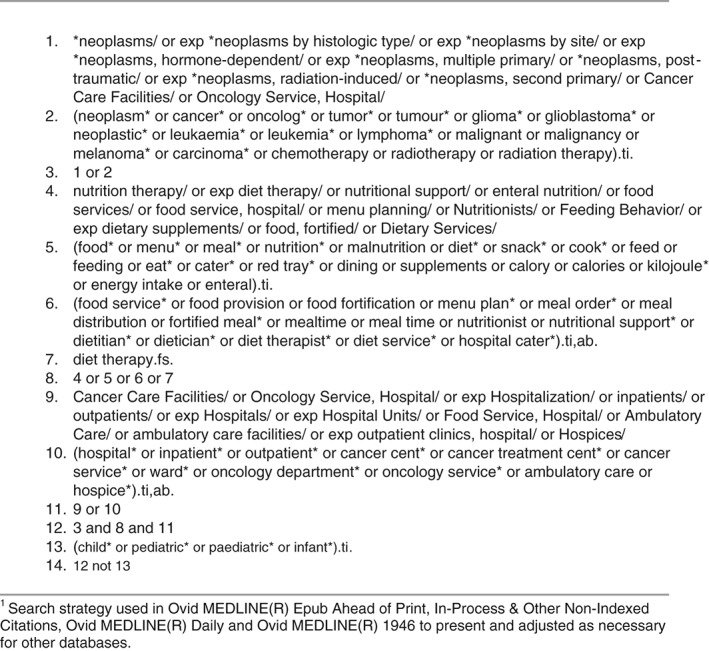
The review protocol was registered with PROSPERO (CRD42016045772). Six databases were searched using search terms associated with the intervention and population. No date or language restrictions were applied. Authors applied the inclusion criteria to titles and abstracts and then full-text papers. The final library was assessed for risk of bias. Outcome data were combined narratively and, where possible, by meta-analysis.
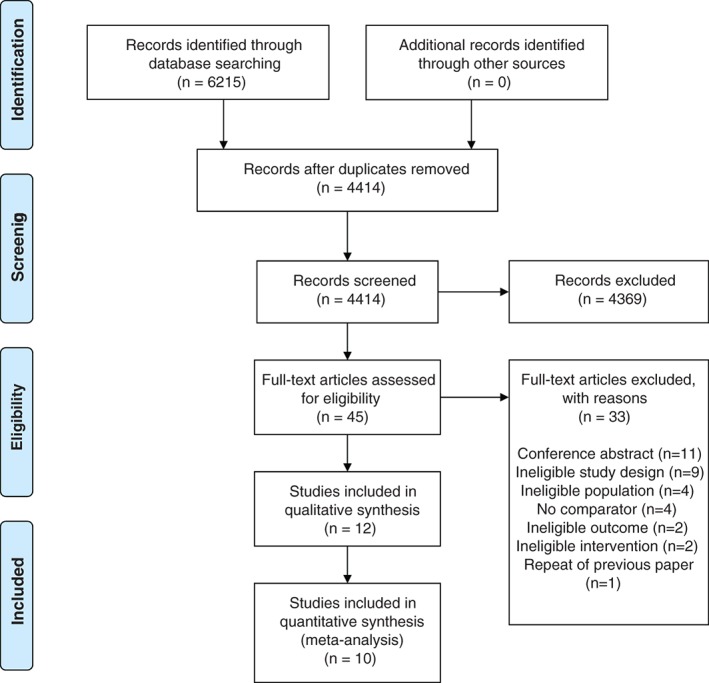
From the title and abstract review of 4414 studies, 12 studies testing the effect of foodservice interventions were included in this review. Meta-analyses demonstrated significantly greater energy (mean difference 1.54 MJ/day; 95% CI 0.85-2.23 MJ/day) and protein (mean difference 18.98 g/day; 95% CI 11.58-26.39 g/day) intake through the addition of oral nutrition supplements. Other positive effects on anthropometric outcomes were also recorded. Patient satisfaction was enhanced through other foodservice interventions.
Limited original research was found exploring the effect of foodservice interventions in oncology patients. Significant findings were found in favour of the intervention across a range of nutritional outcomes, suggesting that foodservice interventions may improve clinical outcomes and satisfaction in this population. Effective foodservice interventions for oncology patients remain under-researched, so we encourage dietitians and foodservice staff to implement rigorous study designs to evaluate and publish interventions in this clinical group.
为支持临床决策,需要了解有效的餐饮服务干预措施对成年癌症患者营养状况的影响。本系统评价旨在确定餐饮服务干预措施对一系列营养指标以及住院和门诊成年肿瘤患者满意度的影响。
该评价方案已在国际前瞻性系统评价注册库(PROSPERO,注册号:CRD42016045772)登记。使用与干预措施和研究对象相关的检索词对六个数据库进行了检索。未设定日期或语言限制。作者先对标题和摘要应用纳入标准,然后对全文进行筛选。对最终纳入的文献进行偏倚风险评估。结果数据采用叙述性综合分析,并在可能的情况下进行荟萃分析。
通过对4414项研究的标题和摘要进行筛选,本评价纳入了12项检验餐饮服务干预效果的研究。荟萃分析表明,通过添加口服营养补充剂,能量摄入量(平均差值1.54兆焦/天;95%置信区间0.85 - 2.23兆焦/天)和蛋白质摄入量(平均差值18.98克/天;95%置信区间11.58 - 26.39克/天)显著增加。还记录了对人体测量指标的其他积极影响。通过其他餐饮服务干预措施,患者满意度得到提高。
发现探索餐饮服务干预措施对肿瘤患者影响的原始研究有限。在一系列营养指标方面发现了支持该干预措施的显著结果,表明餐饮服务干预措施可能改善该人群的临床结局和满意度。针对肿瘤患者的有效餐饮服务干预措施仍研究不足,因此我们鼓励营养师和餐饮服务人员采用严谨的研究设计来评估并发表针对该临床群体的干预措施研究。