Zamir Mair, Badrov Mark B, Olver T Dylan, Shoemaker J Kevin
Department of Applied Mathematics, Western UniversityLondon, ON, Canada.
Department of Medical Biophysics, Western UniversityLondon, ON, Canada.
Front Physiol. 2017 May 5;8:246. doi: 10.3389/fphys.2017.00246. eCollection 2017.
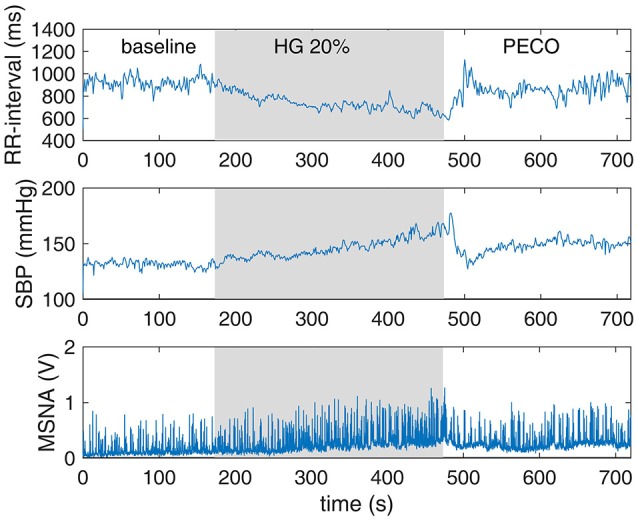
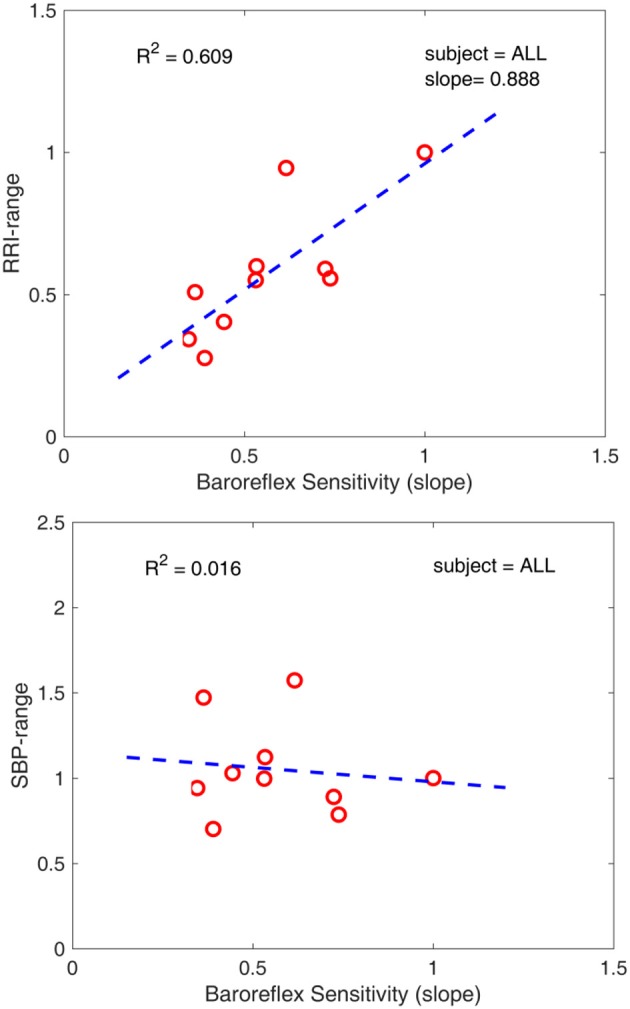
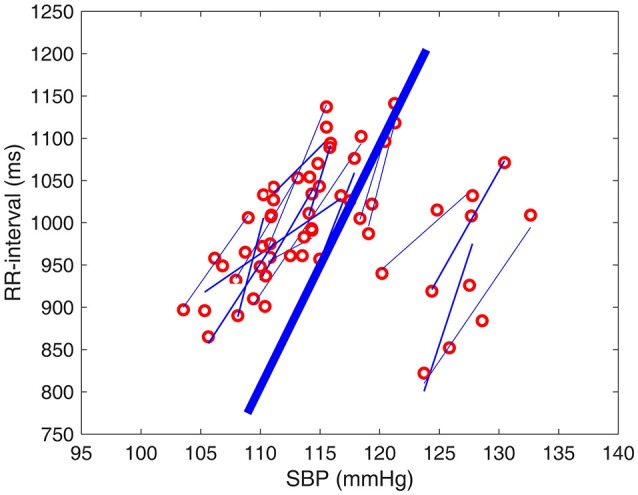
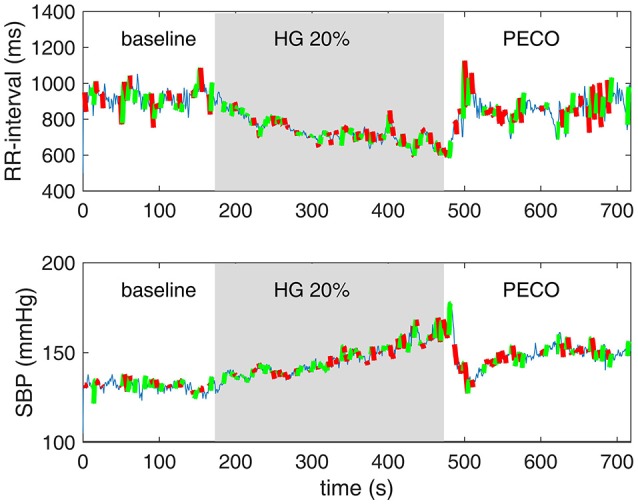
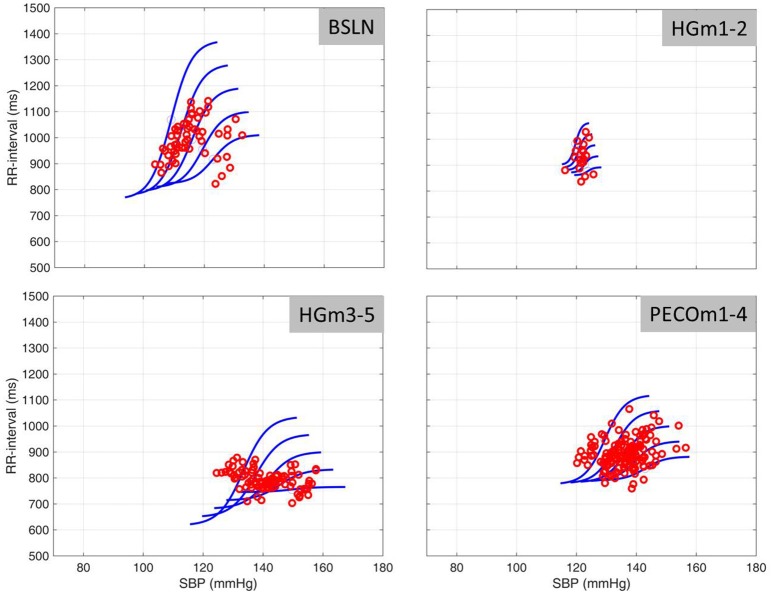
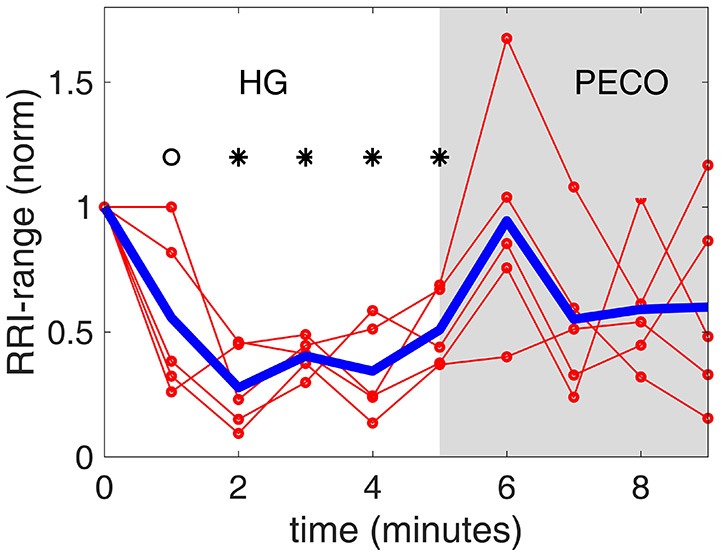
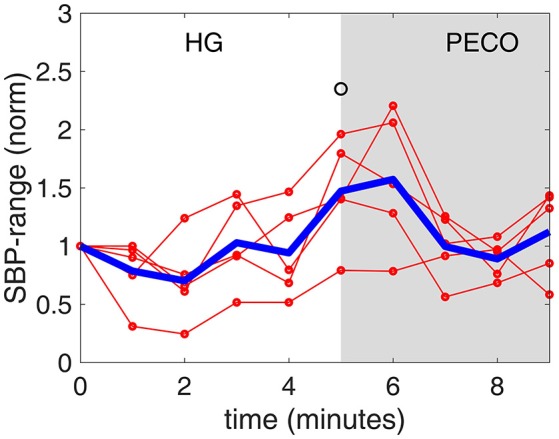
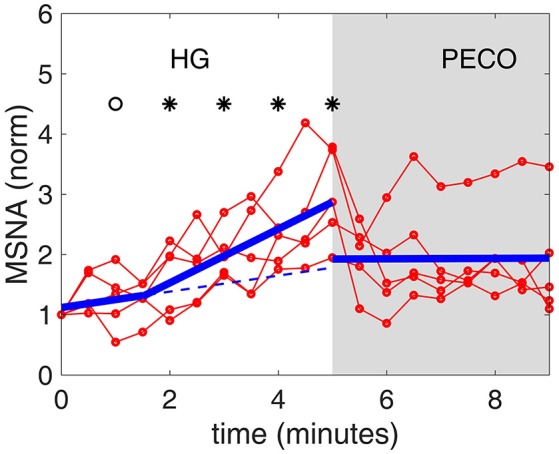
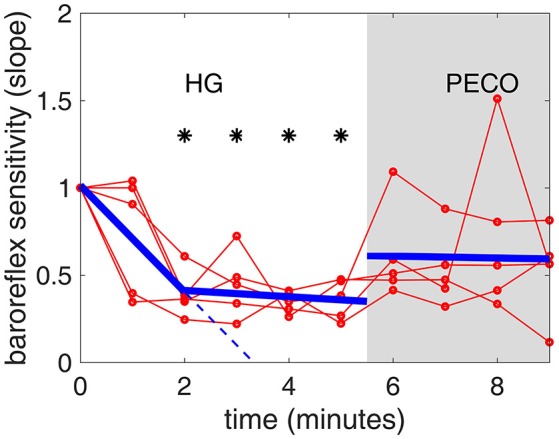
This exploratory study assessed the pattern of closed-loop baroreflex resetting using multi-logistic-curve analysis. Operating point gain and ranges of RR-interval (RRI) and systolic blood pressure (SBP) are derived to examine how these relate to sympathetic activation. Sustained low-intensity isometric handgrip exercise, with a period of post-exercise circulatory occlusion (PECO), provided a model to study baroreflex resetting because the progression toward fatigue at constant tension induces a continuous increase in volitional contribution to neuro-cardiovascular control. Continuous measurements of muscle sympathetic nerve activity (MSNA), blood pressure, and RRI were made simultaneously throughout the experimental session. Spontaneous sequence analysis was used to detect episodes of baroreflex "engagements", but the results are examined with a view to the fundamental difference between experimental conditions that isolate the carotid sinus (open-loop) and intact physiological conditions (closed-loop). While baroreflex function under open-loop conditions can be described in terms of a single logistic curve, intact physiologic conditions require a . The results suggest that the baroreflex is in a "floating" state whereby it is continuously resetting during the timeline of the experiment but with minute-by-minute average values that mimic the less complex step-wise resetting pattern reported under open-loop conditions. Furthermore, the results indicate that baroreflex function and resetting of the operating point gain is reflected not in terms of change in the of blood pressure or RR-interval but in terms of change in the of these variables prevailing under different experimental conditions.
本探索性研究使用多逻辑曲线分析评估了闭环压力反射重调定模式。推导了工作点增益以及RR间期(RRI)和收缩压(SBP)的范围,以研究它们与交感神经激活之间的关系。持续的低强度等长握力运动以及运动后循环阻断(PECO)阶段,提供了一个研究压力反射重调定的模型,因为在恒定张力下逐渐疲劳会导致对神经心血管控制的自主贡献持续增加。在整个实验过程中同时连续测量肌肉交感神经活动(MSNA)、血压和RRI。使用自发序列分析来检测压力反射“参与”事件,但鉴于隔离颈动脉窦的实验条件(开环)和完整生理条件(闭环)之间的根本差异来审视结果。虽然开环条件下的压力反射功能可以用单一逻辑曲线来描述,但完整生理条件需要一个……结果表明,压力反射处于一种“浮动”状态,即在实验时间轴上它不断重调定,但其逐分钟平均值模仿了开环条件下报道的较简单的逐步重调定模式。此外,结果表明压力反射功能和工作点增益的重调定不是通过血压或RR间期的……变化来反映,而是通过不同实验条件下这些变量的……变化来反映。