Gao Shegan, Wang Dan, Kong Guoqiang, Li Shuoguo, Wang Wei, Wang Huizhi, Zhou Fuyou
Henan Key Laboratory of Cancer Epigenetics, Cancer Institute, The First Affiliated Hospital, College of Clinical Medicine and Medical College of Henan University of Science and Technology, Luoyang, Henan 471003, P.R. China.
Department of Oral Immunology and Infectious Diseases, School of Dentistry, University of Louisville, Louisville, KY 40202, USA.
Oncol Lett. 2017 May;13(5):3572-3578. doi: 10.3892/ol.2017.5927. Epub 2017 Mar 27.
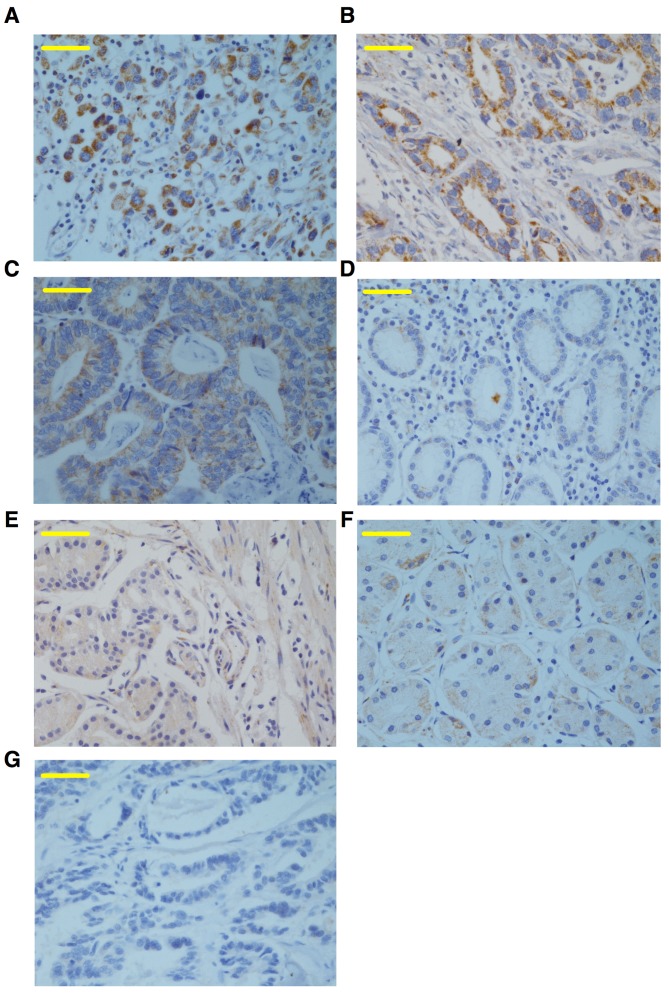
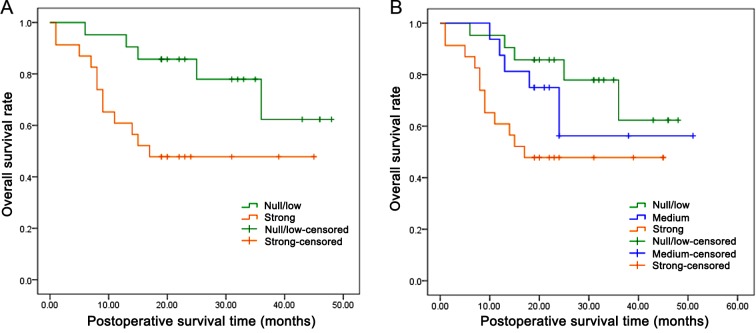
While the aberrant expression and the controversial results of serum- and glucocorticoid-regulated kinase (SGK1) have been reported in a number of malignancies, the expression of SGK1 and its possible association with the progression of adenocarcinoma in the esophagogastric junction (AEG) remain to be elucidated. To the best of our knowledge, the expression and localization of SGK1 was examined for the first time in the present study in cancerous and adjacent tissue from 60 patients with AEG, and compared with 20 healthy mucosa control tissue samples. Furthermore, the association between SGK1 expression and the clinicopathological characteristics, and prognosis of patients with AEG was statistically analyzed. The expression level of SGK1 was identified to be significantly higher (P<0.0001) in the cancerous AEG tissue samples (65%) compared with that of the adjacent tissue (31.7%) and healthy control (10%) samples. Enhanced SGK1 was primarily localized in the cytoplasm and the expression level of SGK1 was associated with the differentiation (P=0.045) and lymph node metastasis (P=0.006) of AEG. Notably, increased expression of SGK1 was demonstrated to be significantly correlated with poor overall survival (P=0.027). The results of the present study revealed the expression profile of SGK1 in AEG and demonstrated that SGK1 expression in cancerous tissue is an indicator for the progression of AEG. Thus, SGK1 may be a potential molecular marker for the diagnosis, interference therapy and prognosis of AEG.
虽然在许多恶性肿瘤中已报道了血清和糖皮质激素调节激酶(SGK1)的异常表达及存在争议的结果,但SGK1在食管胃交界腺癌(AEG)中的表达及其与该腺癌进展的可能关联仍有待阐明。据我们所知,本研究首次检测了60例AEG患者癌组织及癌旁组织中SGK1的表达和定位,并与20例健康黏膜对照组织样本进行比较。此外,对SGK1表达与AEG患者临床病理特征及预后之间的关联进行了统计学分析。结果发现,与癌旁组织(31.7%)和健康对照样本(10%)相比,癌组织中SGK1的表达水平显著更高(P<0.0001)(65%)。SGK1表达增强主要定位于细胞质中,且SGK1的表达水平与AEG的分化(P=0.045)及淋巴结转移(P=0.006)相关。值得注意的是,SGK1表达增加与总体生存率差显著相关(P=0.027)。本研究结果揭示了SGK1在AEG中的表达谱,并表明癌组织中SGK1的表达是AEG进展的一个指标。因此,SGK1可能是AEG诊断、干预治疗及预后评估的一个潜在分子标志物。