Hayashi Naoki, Iwamoto Takayuki, Qi Yuan, Niikura Naoki, Santarpia Libero, Yamauchi Hideko, Nakamura Seigo, Hortobagyi Gabriel N, Pusztai Lajos, Symmans W Fraser, Ueno Naoto T
Department of Breast Medical Oncology, The University of Texas MD Anderson Cancer Center, Houston, TX, USA.
Department of Bioinformatics and Computational Biology, The University of Texas MD Anderson Cancer Center, Houston, TX, USA.
J Cancer. 2017 Apr 9;8(6):1045-1052. doi: 10.7150/jca.13690. eCollection 2017.
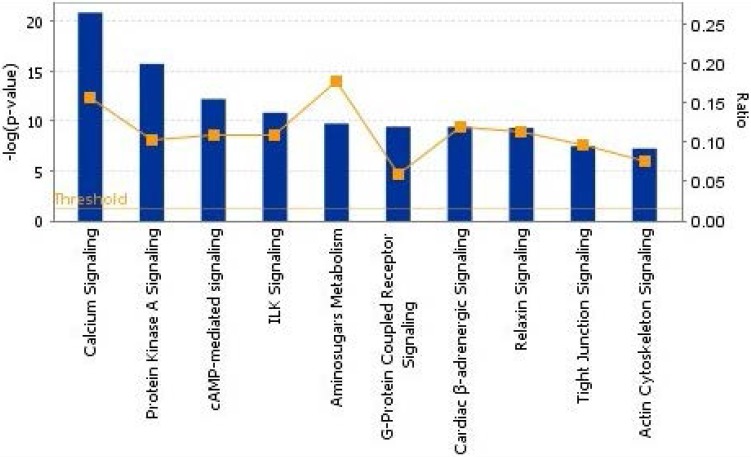
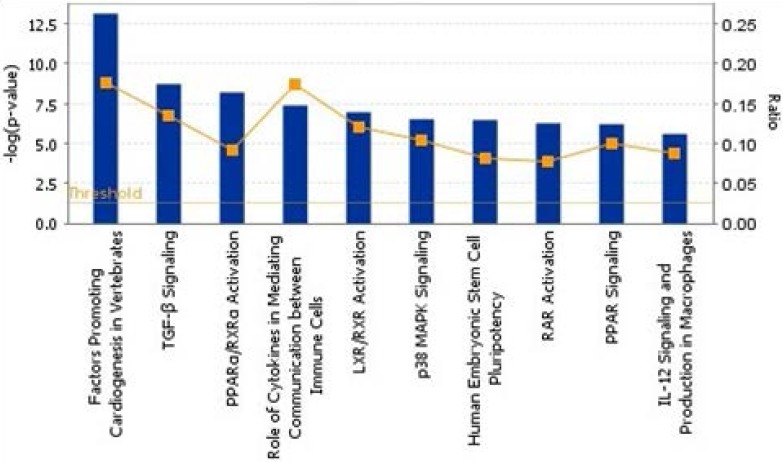
Breast cancer bone metastasis (BCBM)-specific genes have been reported without considering biological differences based on estrogen receptor (ER) status. The aims of this study were to identify BCBM-specific genes using our patient dataset and validate previously reported BCBM-specific genes, and to determine whether ER-status-related biological differences matter in identification of BCBM-specific genes. We used Affymetrix GeneChips to analyze 365 primary human epidermal growth factor receptor 2 (HER2)-negative invasive breast cancer specimens. Genes that were differentially expressed between patients who developed bone metastasis and those who developed non-bone metastasis were identified using Cox proportional hazards model, and differential expression of gene sets was assessed using gene set analysis. We performed gene set analysis to determine whether biological function associated with bone metastasis were different by ER status using 2,246 functionally annotated gene sets assembled from Gene Ontology data base. Among 16,712 probe sets, 592 were overexpressed in the bone metastasis cohort compared to the non-bone-metastasis cohort (false discovery rate ≤ 0.05). However, no BCBM-specific genes met our significance tests when the cancers were stratified by ER status. In ER-positive and ER-negative breast cancers, 151 and 125 gene sets, respectively, were overexpressed for BCBM and the majority of BCBM-related pathways were different. Of significant gene sets, only 13 gene sets were overlapped between ER-positive and -negative cohorts. ER-positive and ER-negative breast cancers have different biological pathways in BCBM development. We have yet to explore BCBM-related biomarkers and targets considering the biological features associated with BCBM depending on the ER status.
乳腺癌骨转移(BCBM)特异性基因已有报道,但未考虑基于雌激素受体(ER)状态的生物学差异。本研究的目的是使用我们的患者数据集鉴定BCBM特异性基因并验证先前报道的BCBM特异性基因,以及确定ER状态相关的生物学差异在BCBM特异性基因的鉴定中是否重要。我们使用Affymetrix基因芯片分析了365例原发性人表皮生长因子受体2(HER2)阴性浸润性乳腺癌标本。使用Cox比例风险模型鉴定发生骨转移的患者和发生非骨转移的患者之间差异表达的基因,并使用基因集分析评估基因集的差异表达。我们使用从基因本体数据库组装的2246个功能注释基因集进行基因集分析,以确定与骨转移相关的生物学功能是否因ER状态而异。在16712个探针集中,与非骨转移队列相比,592个在骨转移队列中过表达(错误发现率≤0.05)。然而,当根据ER状态对癌症进行分层时,没有BCBM特异性基因符合我们的显著性检验。在ER阳性和ER阴性乳腺癌中,分别有151个和125个基因集在BCBM中过表达,并且大多数与BCBM相关的途径不同。在显著的基因集中,ER阳性和阴性队列之间只有13个基因集重叠。ER阳性和ER阴性乳腺癌在BCBM发展中具有不同的生物学途径。我们尚未根据ER状态探索考虑与BCBM相关的生物学特征的BCBM相关生物标志物和靶点。