Salati Simona, Salvestrini Valentina, Carretta Chiara, Genovese Elena, Rontauroli Sebastiano, Zini Roberta, Rossi Chiara, Ruberti Samantha, Bianchi Elisa, Barbieri Greta, Curti Antonio, Castagnetti Fausto, Gugliotta Gabriele, Rosti Gianantonio, Bergamaschi Micaela, Tafuri Agostino, Tagliafico Enrico, Lemoli Roberto, Manfredini Rossella
Center for Regenerative Medicine, University of Modena and Reggio Emilia, Modena, Italy.
Department of Experimental, Diagnostic and Specialty Medicine, Institute of Hematology "L. and A. Seràgnoli", University of Bologna, S.Orsola-Malpighi Hospital, Bologna, Italy.
Oncotarget. 2017 Jul 25;8(30):49451-49469. doi: 10.18632/oncotarget.17706.
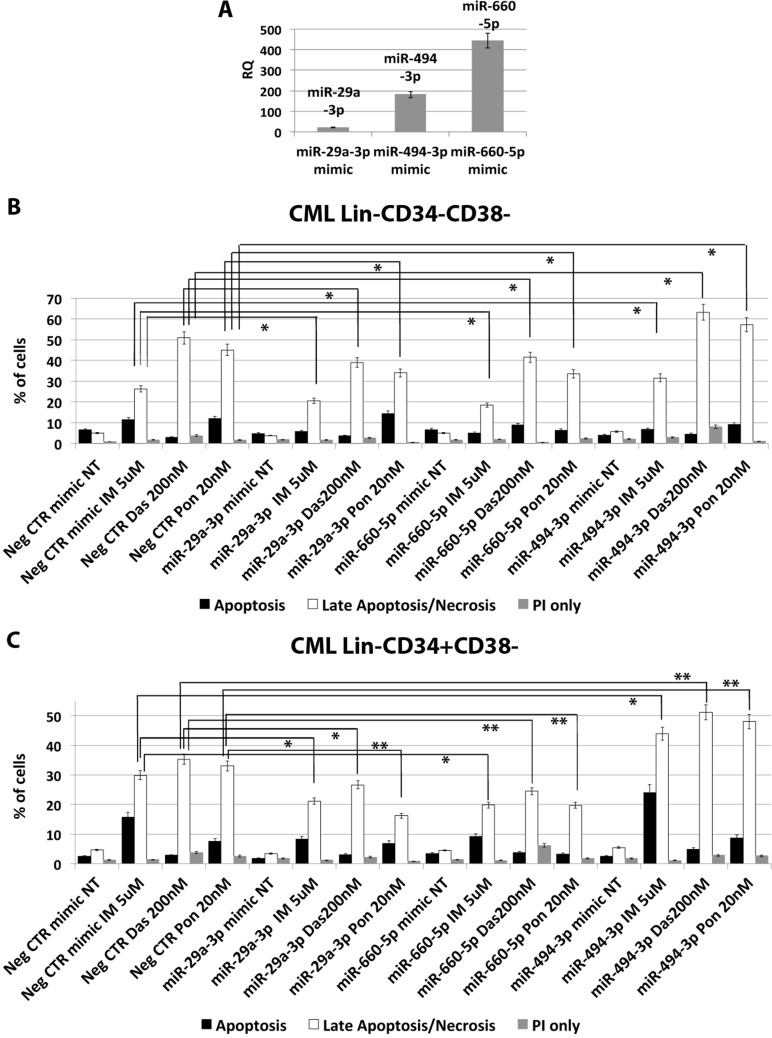
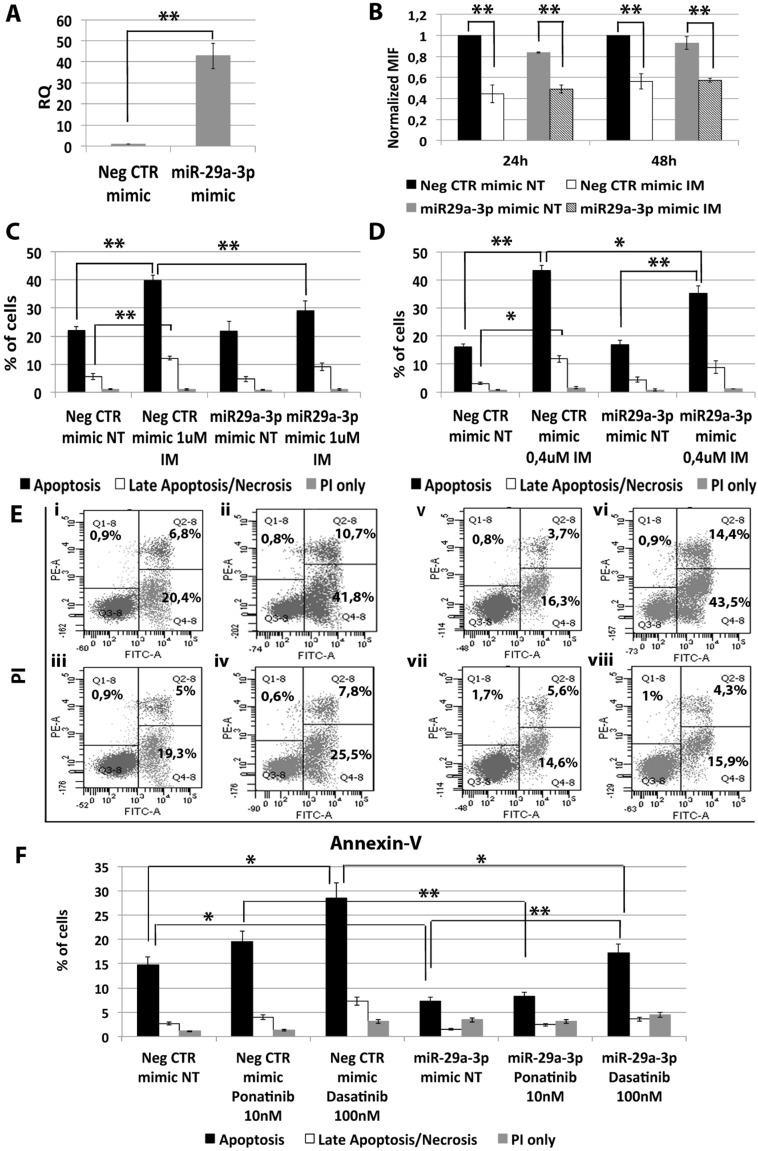
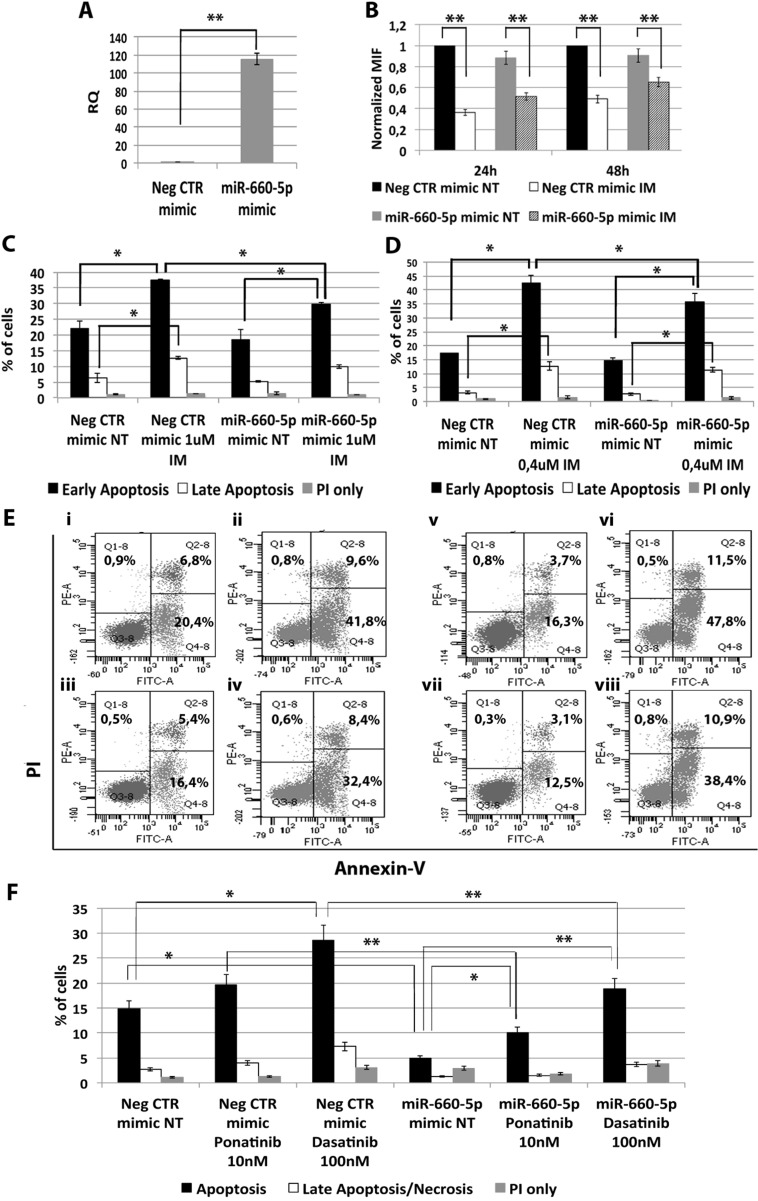
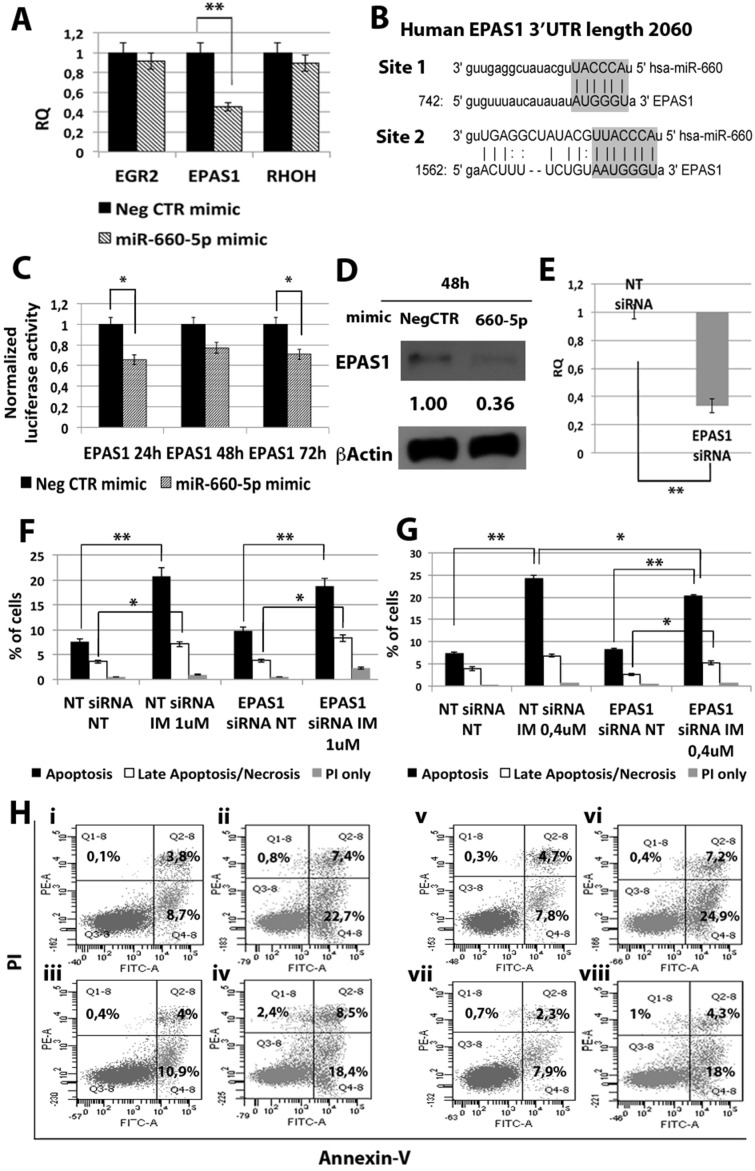
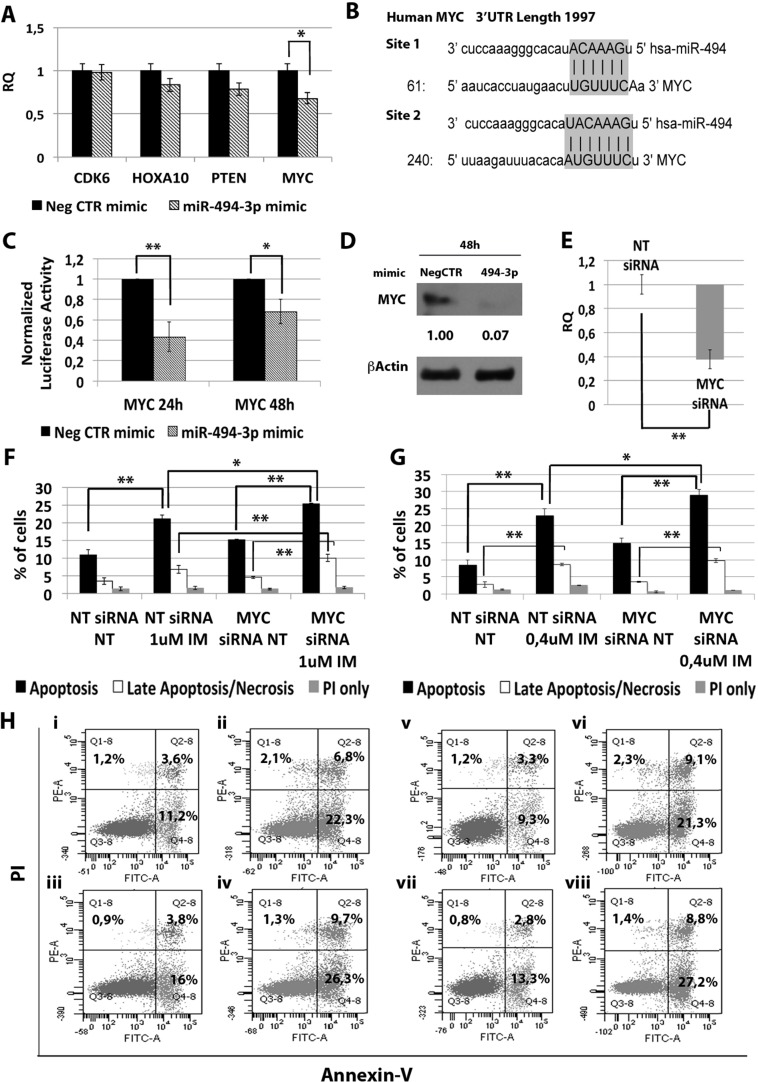
The development of Imatinib mesylate (IM), which targets the oncogenic BCR-ABL fusion protein, has greatly improved the outcome of Chronic Myeloid Leukemia (CML) patients. However, BCR-ABL-positive progenitors can be detected in CML patients in complete cytogenetic response. Several evidence suggests that CML stem cells are intrinsically resistant to Tyrosine Kinase Inhibitors (TKI), and therefore they represent the most likely candidate responsible for disease relapse.In this work, we investigated the microRNA (miRNA) expression profile of different subpopulations of CML Leukemic Stem Cells (LSCs): Lin-CD34+CD38- and Lin-CD34-CD38- cells. These cell fractions have been previously shown to be endowed with TKI intrinsic resistance. Our analysis identified 33 common deregulated miRNAs in CML LSCs. Among those, 8 miRNAs were deregulated in CML independently from BCR-ABL kinase activity and therefore are likely to be involved in the BCR-ABL-independent resistance to TKI that characterizes CML LSCs. In particular, the up-regulation of miR-29a-3p and miR-660-5p observed in CML LSCs, led to the down-regulation of their respective targets TET2 and EPAS1 and conferred TKI-resistance to CML LSCs in vitro. On the other hand, miR-494-3p down-regulation in CML LSCs, leading to c-MYC up-regulation, was able to decrease TKI-induced apoptosis. These results demonstrate that aberrant miRNA expression in CML LSCs could contribute to the intrinsic TKI-resistance observed in these cell populations, and support the development of novel therapies aimed at targeting aberrantly regulated miRNAs or their targets in order to effectively eradicate CML LSCs.
甲磺酸伊马替尼(IM)靶向致癌性BCR-ABL融合蛋白,其研发极大地改善了慢性髓性白血病(CML)患者的治疗结果。然而,在完全细胞遗传学缓解的CML患者中仍可检测到BCR-ABL阳性祖细胞。多项证据表明,CML干细胞对酪氨酸激酶抑制剂(TKI)具有内在抗性,因此它们是疾病复发最可能的原因。在这项研究中,我们调查了CML白血病干细胞(LSC)不同亚群的微小RNA(miRNA)表达谱:Lin-CD34+CD38-和Lin-CD34-CD38-细胞。这些细胞亚群先前已被证明具有TKI内在抗性。我们的分析确定了CML LSC中33种常见的失调miRNA。其中,8种miRNA在CML中失调,与BCR-ABL激酶活性无关,因此可能参与了CML LSC特有的对TKI的BCR-ABL非依赖性抗性。特别是,在CML LSC中观察到的miR-29a-3p和miR-660-5p上调,导致其各自靶点TET2和EPAS1下调,并在体外赋予CML LSC TKI抗性。另一方面,CML LSC中miR-494-3p下调导致c-MYC上调,能够减少TKI诱导的细胞凋亡。这些结果表明,CML LSC中异常的miRNA表达可能导致这些细胞群体中观察到的内在TKI抗性,并支持开发旨在靶向异常调节的miRNA或其靶点的新疗法,以有效根除CML LSC。