Boonstra Rudy, Andreassen Harry P, Boutin Stan, Hušek Jan, Ims Rolf A, Krebs Charles J, Skarpe Christina, Wabakken Petter
Rudy Boonstra (
Bioscience. 2016 Sep 1;66(9):722-734. doi: 10.1093/biosci/biw080. Epub 2016 Jul 20.
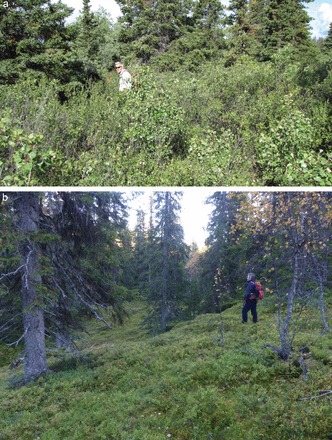
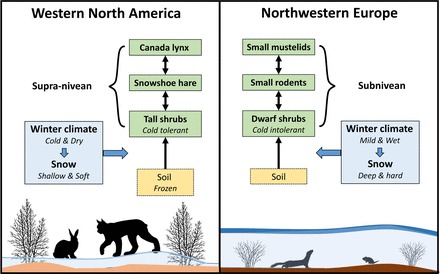
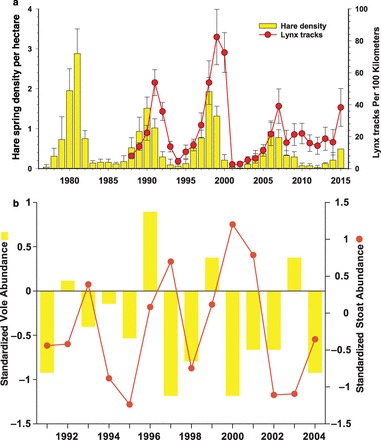
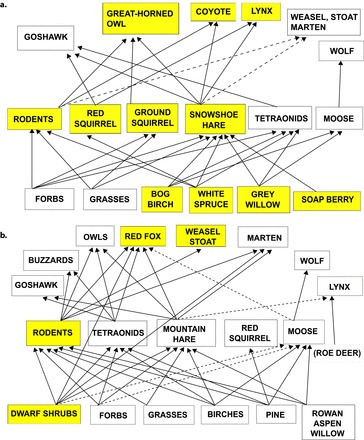
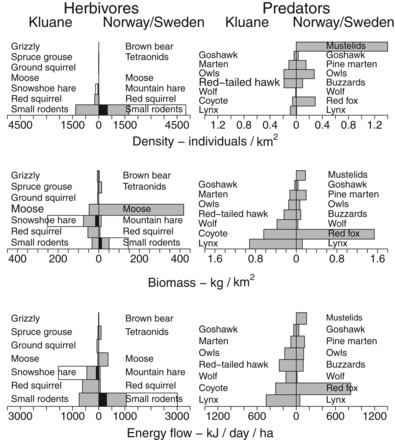
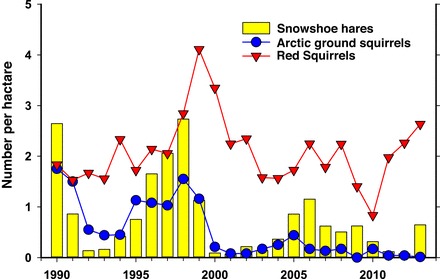
The boreal forest is one of the largest terrestrial biomes on Earth. Conifers normally dominate the tree layer across the biome, but other aspects of ecosystem structure and dynamics vary geographically. The cause of the conspicuous differences in the understory vegetation and the herbivore-predator cycles between northwestern Europe and western North America presents an enigma. Ericaceous dwarf shrubs and 3- to 4-year vole-mustelid cycles characterize the European boreal forests, whereas tall deciduous shrubs and 10-year snowshoe hare-lynx cycles characterize the North American ones. We discuss plausible explanations for this difference and conclude that it is bottom-up: Winter climate is the key determinant of the dominant understory vegetation that then determines the herbivore-predator food-web interactions. The crucial unknown for the twenty-first century is how climate change and increasing instability will affect these forests, both with respect to the dynamics of individual plant and animal species and to their community interactions.
北方森林是地球上最大的陆地生物群落之一。针叶树通常在整个生物群落的树木层中占主导地位,但生态系统结构和动态的其他方面在地理上有所不同。欧洲西北部和北美西部林下植被以及食草动物-捕食者循环存在显著差异的原因仍是个谜。欧洲北方森林的特征是石南科矮灌木以及3至4年的田鼠-鼬科动物循环,而北美北方森林的特征是高大的落叶灌木以及10年的雪兔-猞猁循环。我们讨论了造成这种差异的合理原因,并得出结论,这是由自下而上的因素导致的:冬季气候是决定优势林下植被的关键因素,而林下植被随后又决定了食草动物-捕食者的食物网相互作用。21世纪的关键未知因素是气候变化和日益增加的不稳定性将如何影响这些森林,这既涉及单个动植物物种的动态,也涉及它们的群落相互作用。