Nanotechnology Research Center, Department of Medical Biotechnology, Faculty of Medicine, Mashhad University of Medical Sciences, Mashhad, Iran.
Department of Hypertension, WAM University Hospital in Lodz, Medical University of Lodz (MUL), Zeromskiego 113, 90-549, Lodz, Poland.
Clin Rev Allergy Immunol. 2018 Apr;54(2):224-233. doi: 10.1007/s12016-017-8611-x.
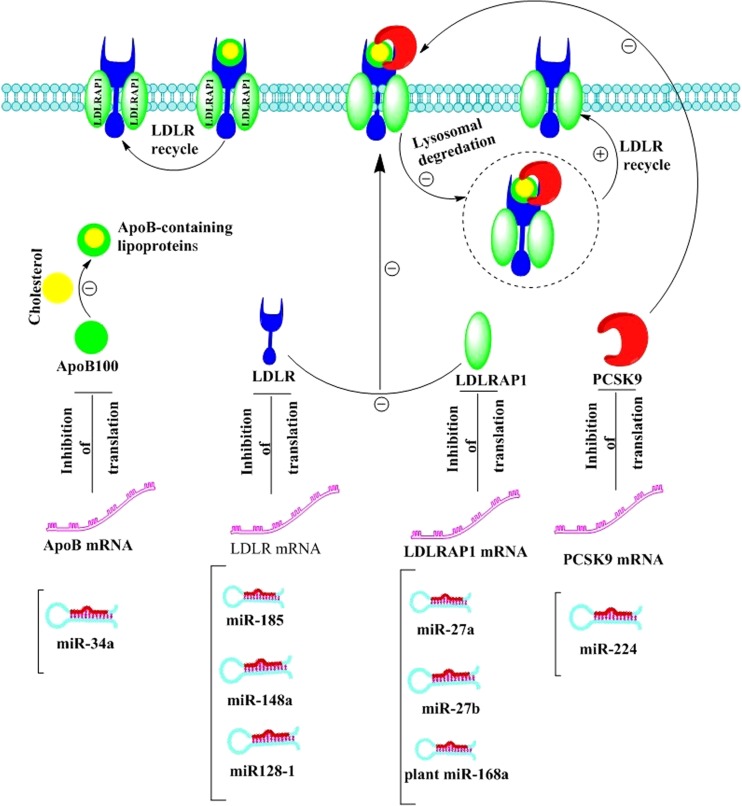
Familial hypercholesterolemia (FH) is the most common inherited form of dyslipidemia and a major cause of premature cardiovascular disease. Management of FH mainly relies on the efficiency of treatments that reduce plasma low-density lipoprotein (LDL) cholesterol (LDL-C) concentrations. MicroRNAs (miRs) have been suggested as emerging regulators of plasma LDL-C concentrations. Notably, there is evidence showing that miRs can regulate the post-transcriptional expression of genes involved in the pathogenesis of FH, including LDLR, APOB, PCSK9, and LDLRAP1. In addition, many miRs are located in genomic loci associated with abnormal levels of circulating lipids and lipoproteins in human plasma. The strong regulatory effects of miRs on the expression of FH-associated genes support of the notion that manipulation of miRs might serve as a potential novel therapeutic approach. The present review describes miRs-targeting FH-associated genes that could be used as potential therapeutic targets in patients with FH or other severe dyslipidemias.
家族性高胆固醇血症(FH)是最常见的遗传性血脂异常形式,也是导致过早心血管疾病的主要原因。FH 的治疗主要依赖于降低血浆低密度脂蛋白(LDL)胆固醇(LDL-C)浓度的治疗方法的效率。 microRNAs(miRs)已被认为是调节血浆 LDL-C 浓度的新兴调节因子。值得注意的是,有证据表明,miRs 可以调节 FH 发病机制中涉及的基因的转录后表达,包括 LDLR、APOB、PCSK9 和 LDLRAP1。此外,许多 miRs 位于与人类血浆中循环脂质和脂蛋白水平异常相关的基因组位置。miRs 对 FH 相关基因表达的强烈调节作用支持这样一种观点,即操纵 miRs 可能成为一种潜在的新型治疗方法。本综述描述了靶向 FH 相关基因的 miRs,它们可作为 FH 或其他严重血脂异常患者的潜在治疗靶点。