Unit of Animal Genomics, GIGA-R, Université de Liège (ULg), Avenue de l'Hôpital 11, B34, Liège 4000, Belgium.
Service d'hématologie, Hôpital Universitaire Necker, Université René Descartes, Assistance publique hôpitaux de Paris, 149-161 rue de Sèvres, Paris 75010, France.
Nat Commun. 2017 May 23;8:15264. doi: 10.1038/ncomms15264.
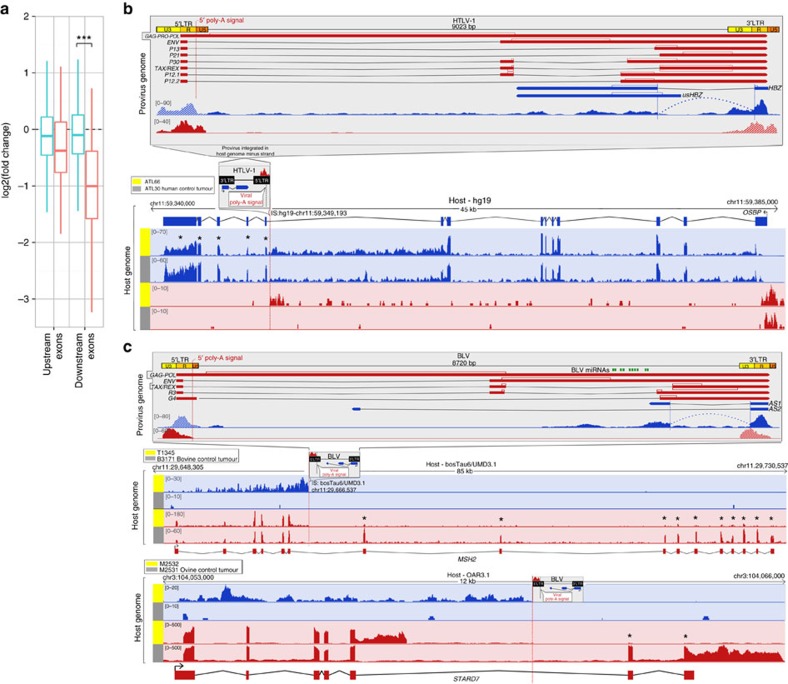
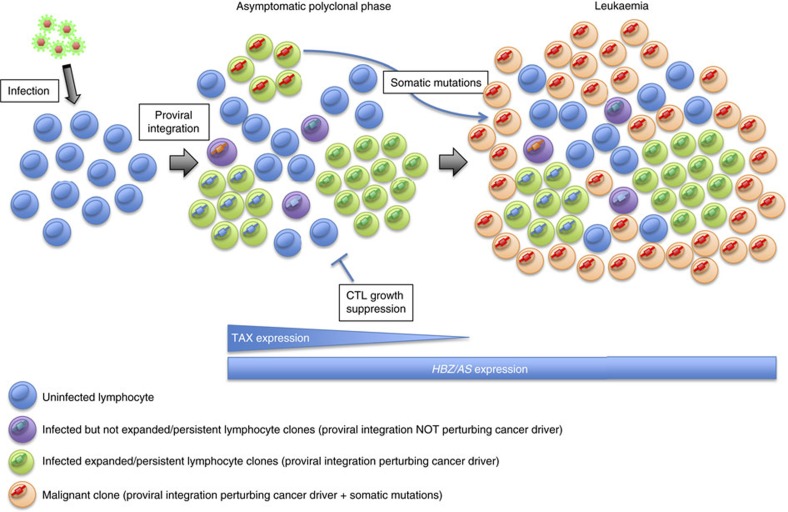
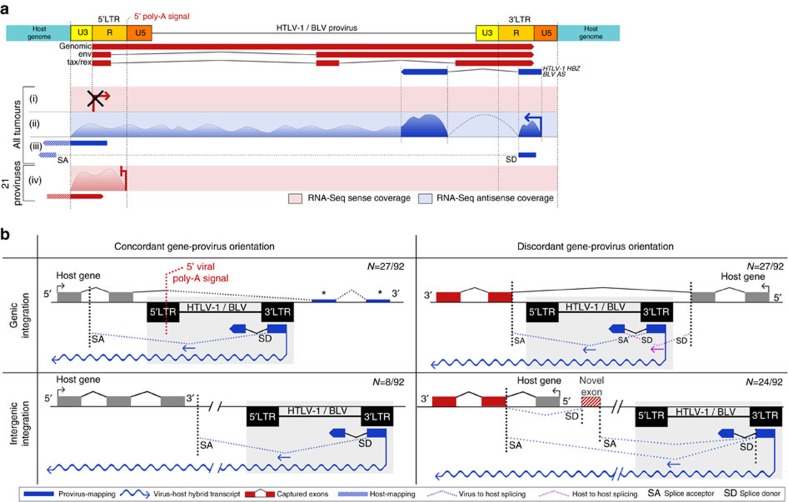
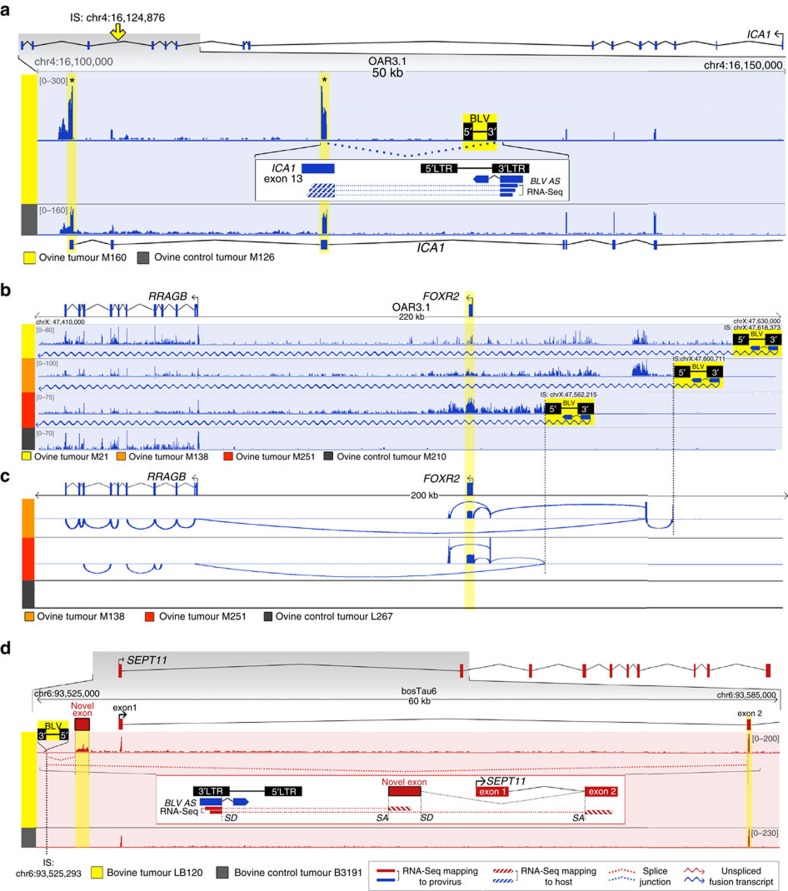
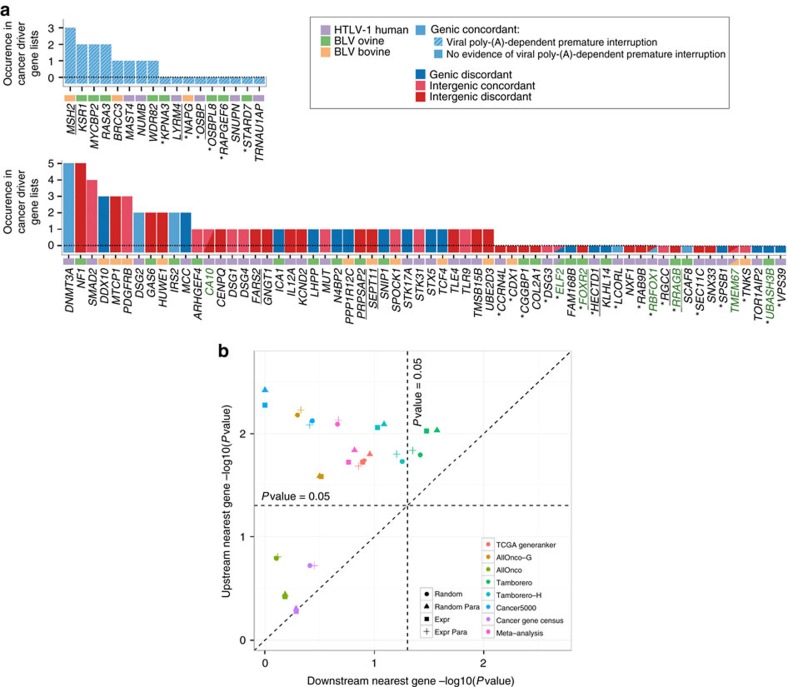
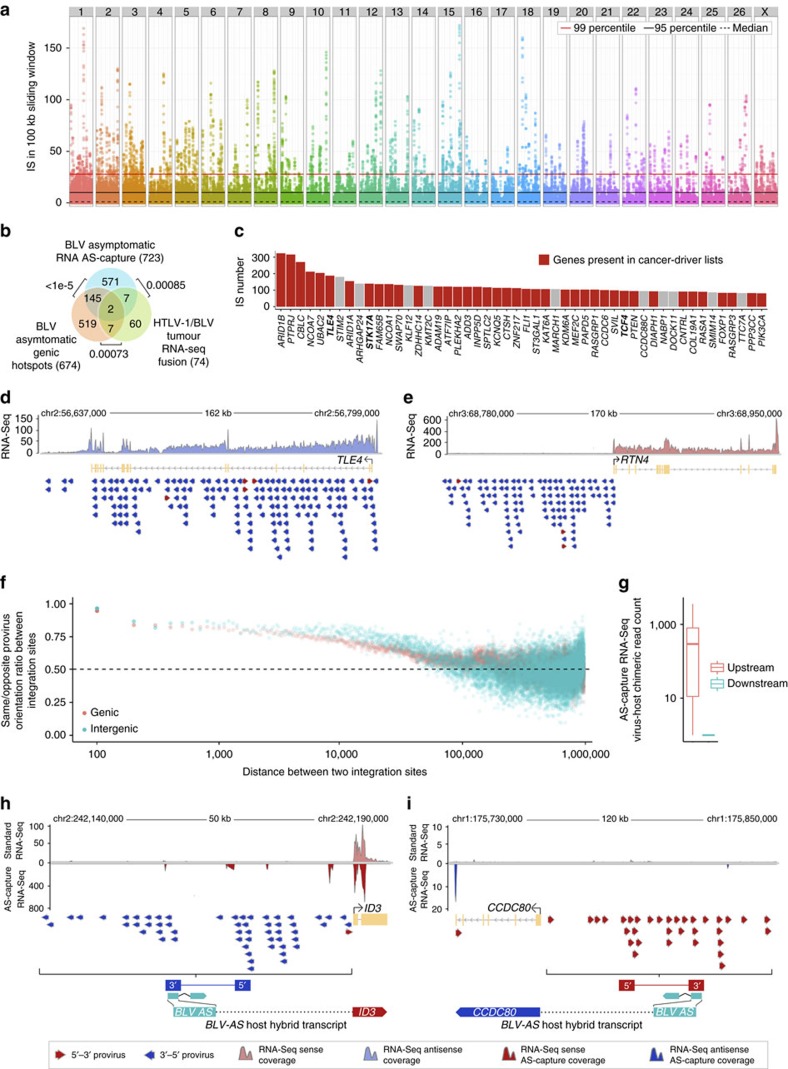
Human T-cell leukaemia virus type-1 (HTLV-1) and bovine leukaemia virus (BLV) infect T- and B-lymphocytes, respectively, provoking a polyclonal expansion that will evolve into an aggressive monoclonal leukaemia in ∼5% of individuals following a protracted latency period. It is generally assumed that early oncogenic changes are largely dependent on virus-encoded products, especially TAX and HBZ, while progression to acute leukaemia/lymphoma involves somatic mutations, yet that both are independent of proviral integration site that has been found to be very variable between tumours. Here, we show that HTLV-1/BLV proviruses are integrated near cancer drivers which they affect either by provirus-dependent transcription termination or as a result of viral antisense RNA-dependent cis-perturbation. The same pattern is observed at polyclonal non-malignant stages, indicating that provirus-dependent host gene perturbation contributes to the initial selection of the multiple clones characterizing the asymptomatic stage, requiring additional alterations in the clone that will evolve into full-blown leukaemia/lymphoma.
人类 T 细胞白血病病毒 1 型(HTLV-1)和牛白血病病毒(BLV)分别感染 T 淋巴细胞和 B 淋巴细胞,引发多克隆扩增,在潜伏后期约 5%的个体中会发展为侵袭性单克隆白血病。一般认为,早期致癌变化在很大程度上依赖于病毒编码产物,特别是 TAX 和 HBZ,而进展为急性白血病/淋巴瘤则涉及体细胞突变,但这两者都与病毒整合位点无关,而在肿瘤之间发现病毒整合位点非常多变。在这里,我们表明 HTLV-1/BLV 前病毒整合在癌症驱动基因附近,它们通过依赖前病毒的转录终止或病毒反义 RNA 依赖性顺式干扰来影响这些基因。在多克隆非恶性阶段也观察到相同的模式,表明依赖前病毒的宿主基因干扰有助于最初选择多个克隆来表征无症状阶段,这需要在该克隆中发生额外的改变,才能发展为完全的白血病/淋巴瘤。