Li W, Hu M, Wang C, Lu H, Chen F, Xu J, Shang Y, Wang F, Qin J, Yan Q, Krueger B J, Renne R, Gao S-J, Lu C
State Key Laboratory of Reproductive Medicine, Nanjing Medical University, Nanjing, China.
Key Laboratory of Pathogen Biology of Jiangsu Province, Nanjing Medical University, Nanjing, China.
Oncogene. 2017 Sep 21;36(38):5407-5420. doi: 10.1038/onc.2017.139. Epub 2017 May 22.
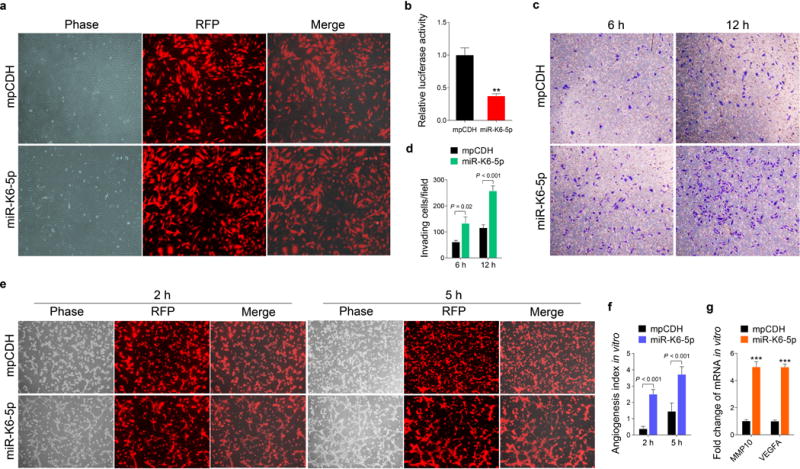
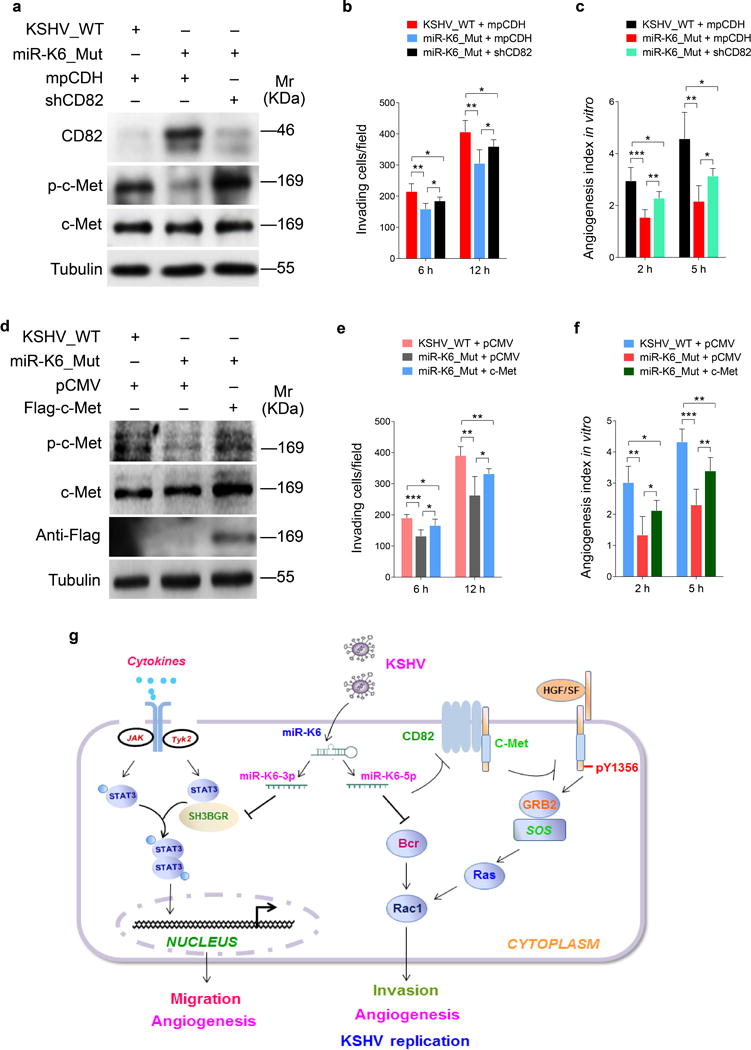
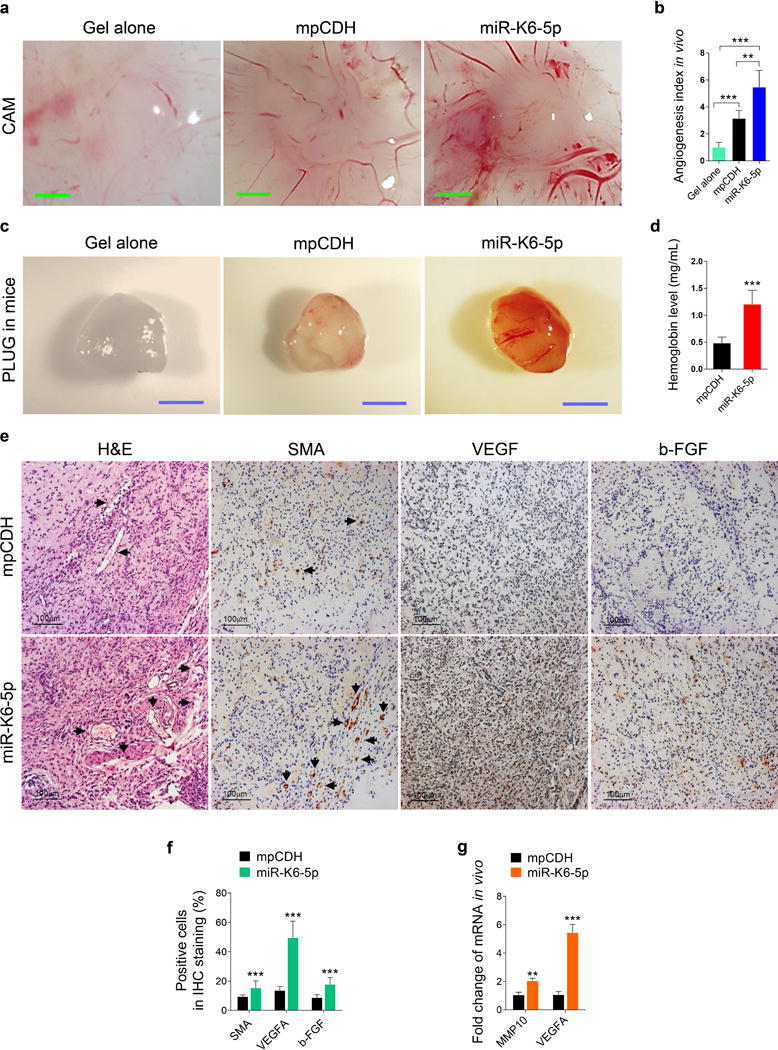
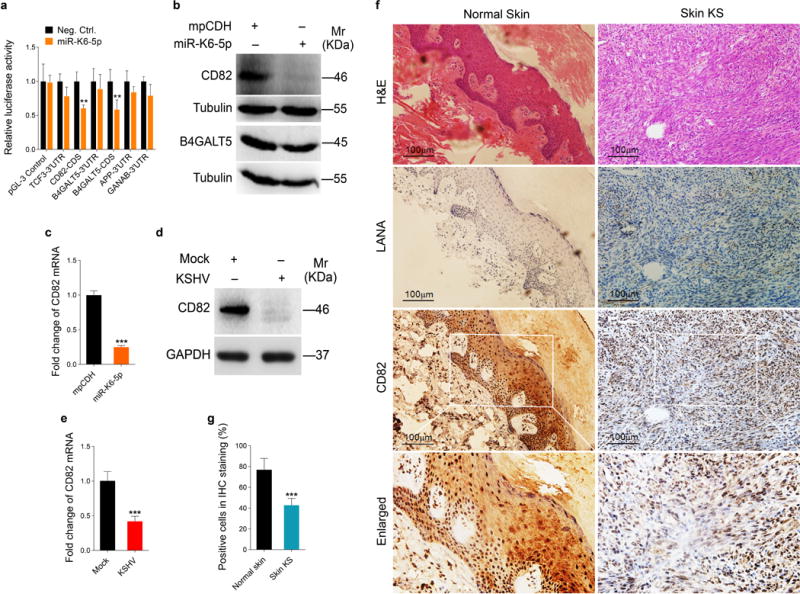
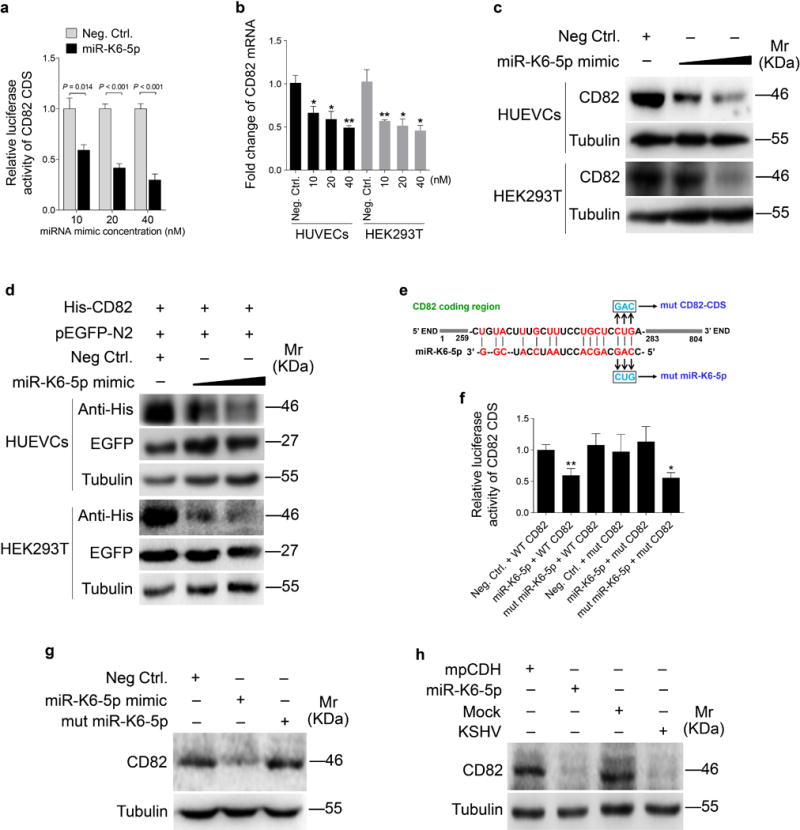
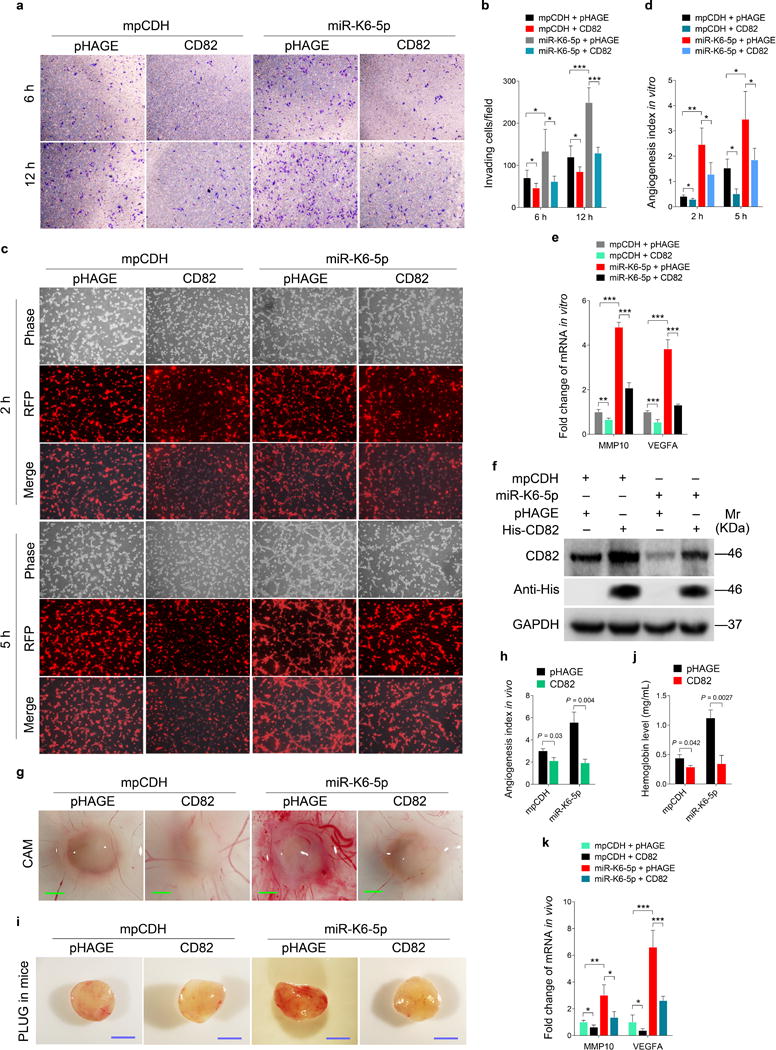
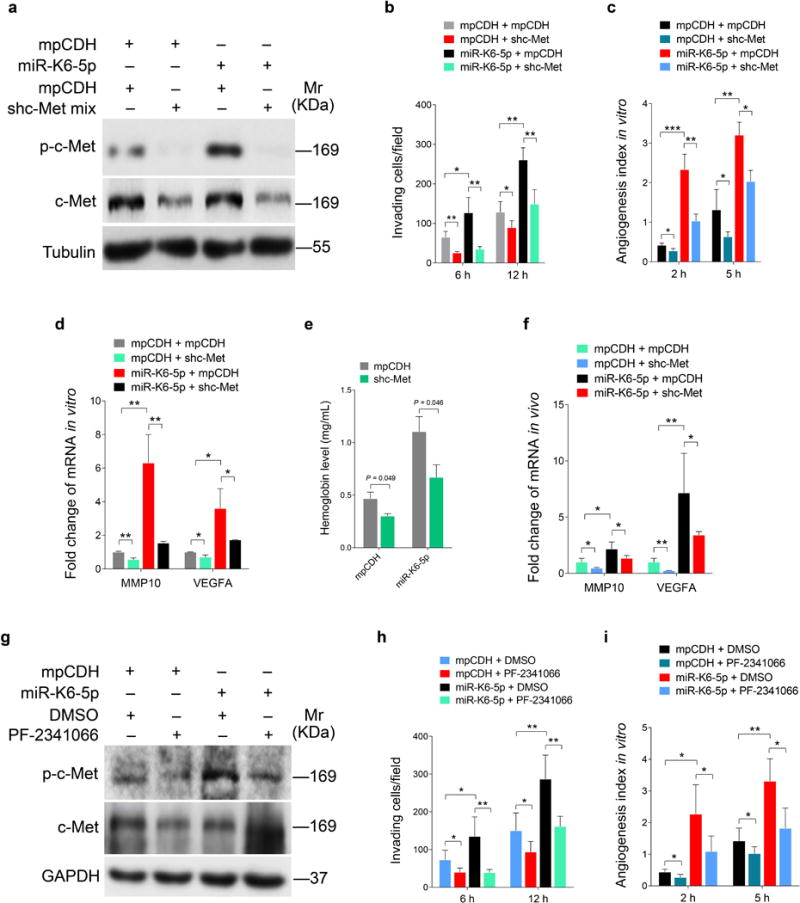
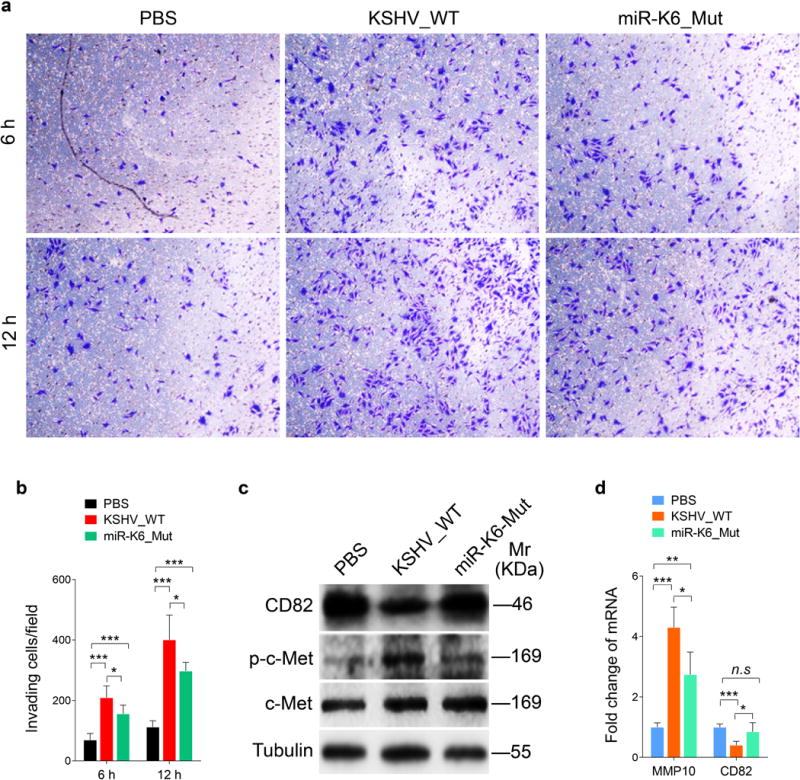
Kaposi's sarcoma (KS) as the most common AIDS-associated malignancy is etiologically caused by KS-associated herpesvirus (KSHV). KS is a highly disseminated and vascularized tumor. KSHV encodes 12 pre-microRNAs that yield 25 mature microRNAs (miRNAs), but their roles in KSHV-induced tumor metastasis and angiogenesis remain largely unclear. KSHV-encoded miR-K12-6 (miR-K6) can generate two mature miRNAs, miR-K6-5p and miR-K6-3p. Recently, we have shown that miR-K6-3p induced cell migration and angiogenesis via directly targeting SH3 domain binding glutamate-rich protein (SH3BGR). Here, by using mass spectrometry, bioinformatics analysis and luciferase reporter assay, we showed that miR-K6-5p directly targeted the coding sequence of CD82 molecule (CD82), a metastasis suppressor. Ectopic expression of miR-K6-5p specifically inhibited the expression of endogenous CD82 and strongly promoted endothelial cells invasion and angiogenesis. Overexpression of CD82 significantly inhibited cell invasion and angiogenesis induced by miR-K6-5p. Mechanistically, CD82 directly interacted with c-Met to inhibit its activation. MiR-K6-5p directly repressed CD82, relieving its inhibition on c-Met activation and inducing cell invasion and angiogenesis. Lack of miR-K6 abrogated KSHV suppression of CD82 resulting in compromised KSHV activation of c-Met pathway, and KSHV induction of cell invasion and angiogenesis. In conclusion, our data show that by reducing CD82, KSHV miR-K6-5p expedites cell invasion and angiogenesis by activating the c-Met pathway. Our findings illustrate that KSHV miRNAs may be critical for the dissemination and angiogenesis of KSHV-induced malignant tumors.
卡波西肉瘤(KS)作为最常见的艾滋病相关恶性肿瘤,其病因是由卡波西肉瘤相关疱疹病毒(KSHV)引起的。KS是一种高度播散且血管化的肿瘤。KSHV编码12种前体微小RNA,可产生25种成熟微小RNA(miRNA),但其在KSHV诱导的肿瘤转移和血管生成中的作用仍不清楚。KSHV编码的miR-K12-6(miR-K6)可产生两种成熟的miRNA,即miR-K6-5p和miR-K6-3p。最近,我们发现miR-K6-3p通过直接靶向富含谷氨酸的SH3结构域结合蛋白(SH3BGR)诱导细胞迁移和血管生成。在此,通过质谱分析、生物信息学分析和荧光素酶报告基因检测,我们发现miR-K6-5p直接靶向转移抑制因子CD82分子(CD82)的编码序列。miR-K6-5p的异位表达特异性抑制内源性CD82的表达,并强烈促进内皮细胞侵袭和血管生成。CD82的过表达显著抑制miR-K6-5p诱导的细胞侵袭和血管生成。机制上,CD82直接与c-Met相互作用以抑制其激活。miR-K6-5p直接抑制CD82,解除其对c-Met激活的抑制,从而诱导细胞侵袭和血管生成。缺乏miR-K6可消除KSHV对CD82的抑制,导致KSHV对c-Met途径的激活受损,以及KSHV诱导的细胞侵袭和血管生成受损。总之,我们的数据表明,KSHV的miR-K6-5p通过减少CD82,激活c-Met途径来加速细胞侵袭和血管生成。我们的研究结果表明,KSHV miRNA可能对KSHV诱导的恶性肿瘤的播散和血管生成至关重要。