Klippenstein Viktoria, Hoppmann Christian, Ye Shixin, Wang Lei, Paoletti Pierre
Institut de Biologie de l'École Normale Supérieure, Ecole Normale Supérieure, CNRS, INSERM, PSL Research University, Paris, France.
Department of Pharmaceutical Chemistry, University of California, San Francisco, San Francisco, United States.
Elife. 2017 May 23;6:e25808. doi: 10.7554/eLife.25808.
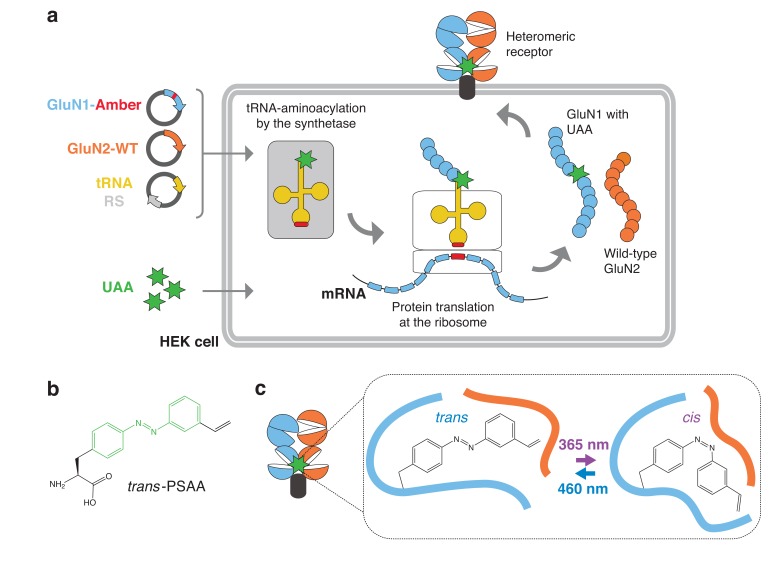
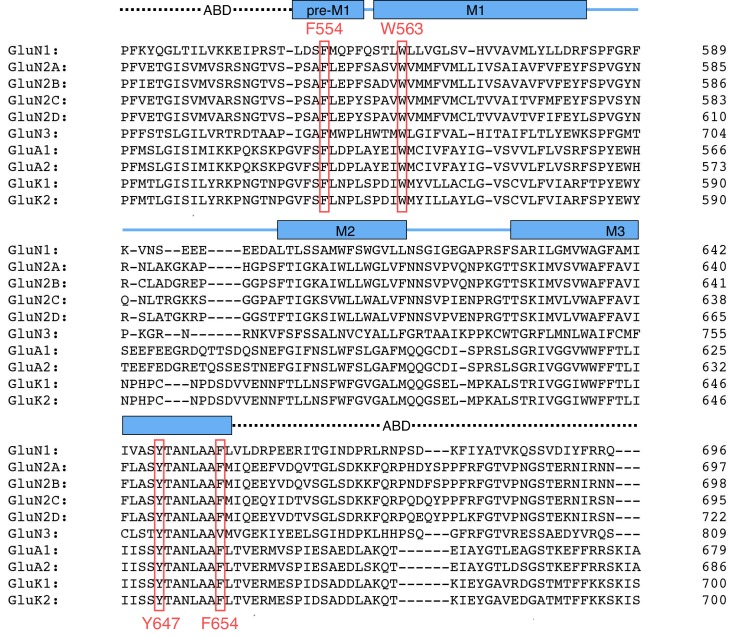
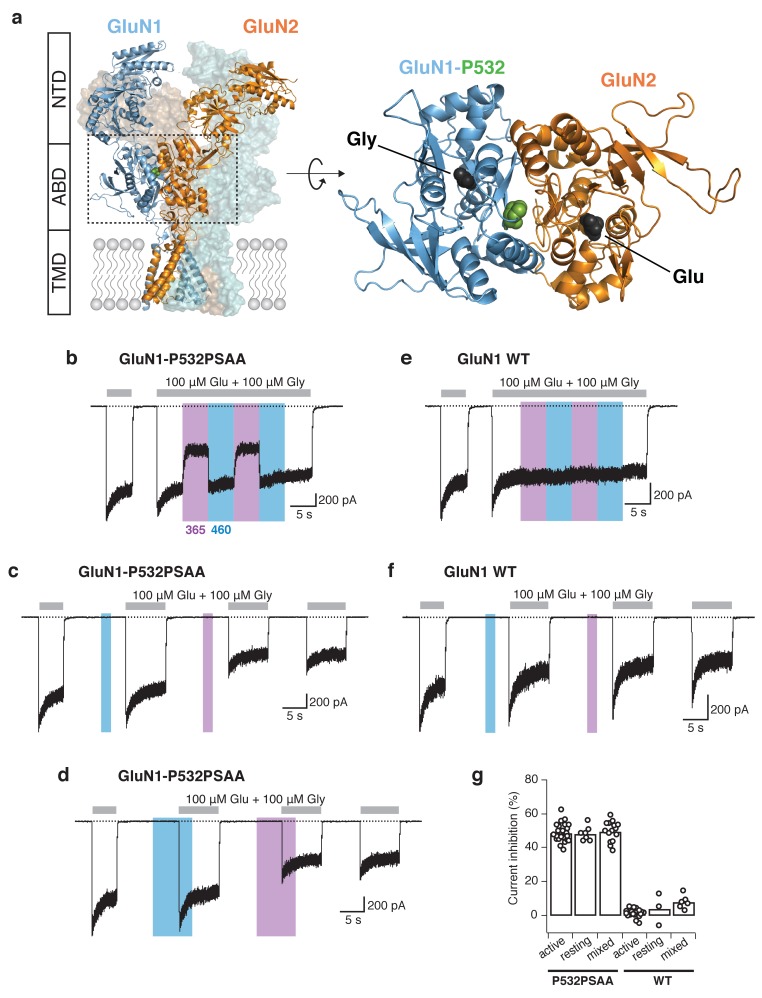
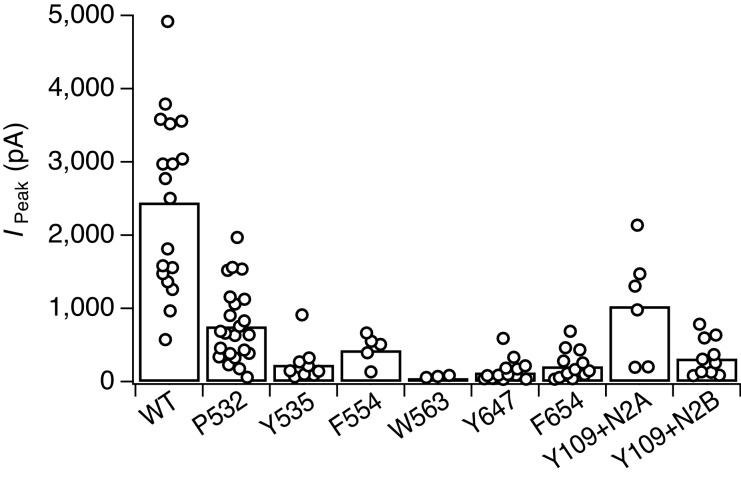
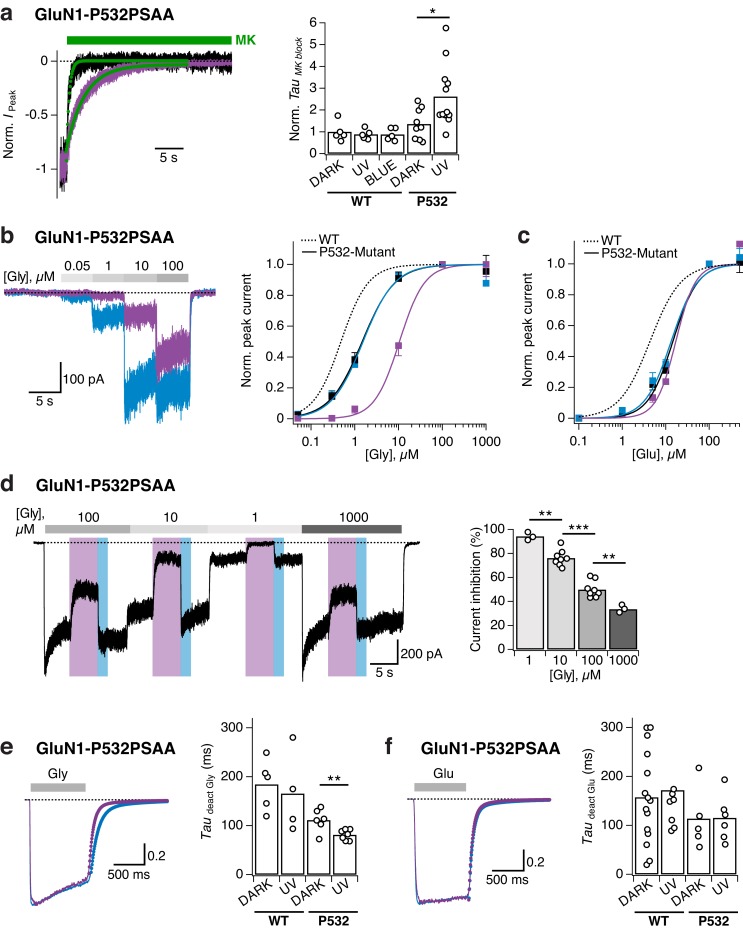
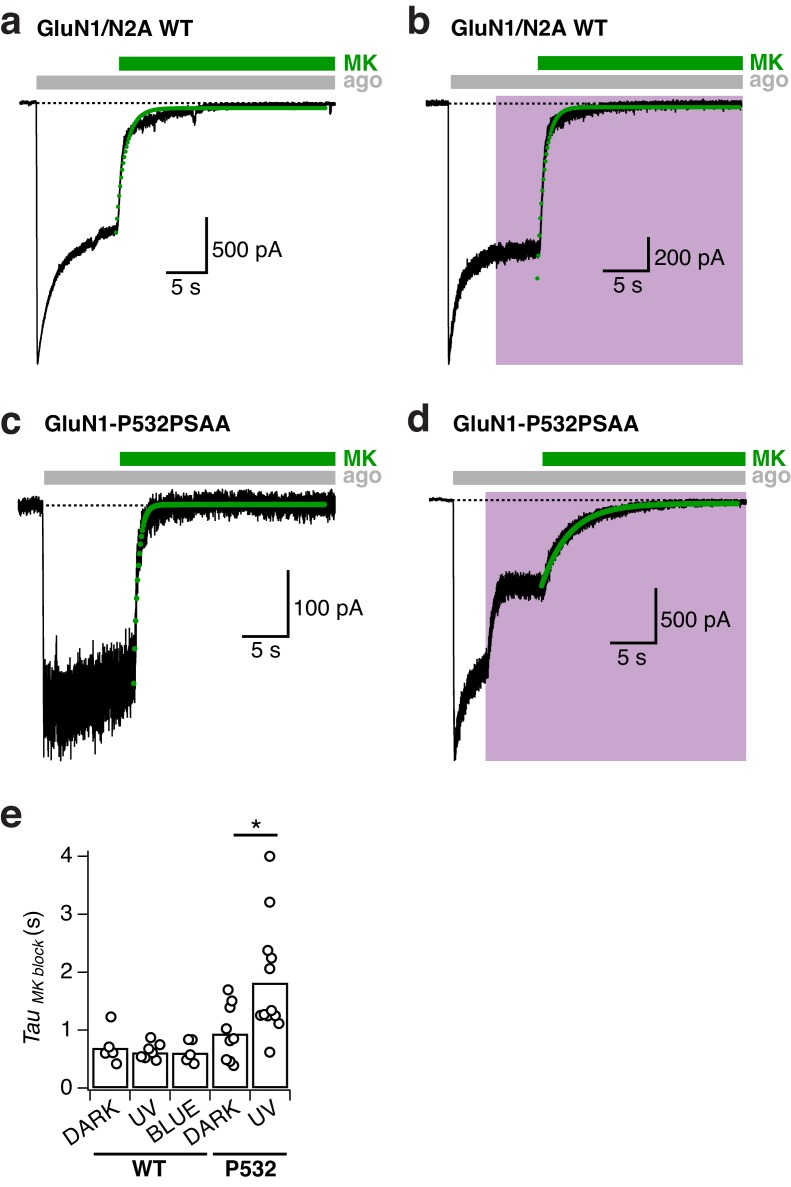
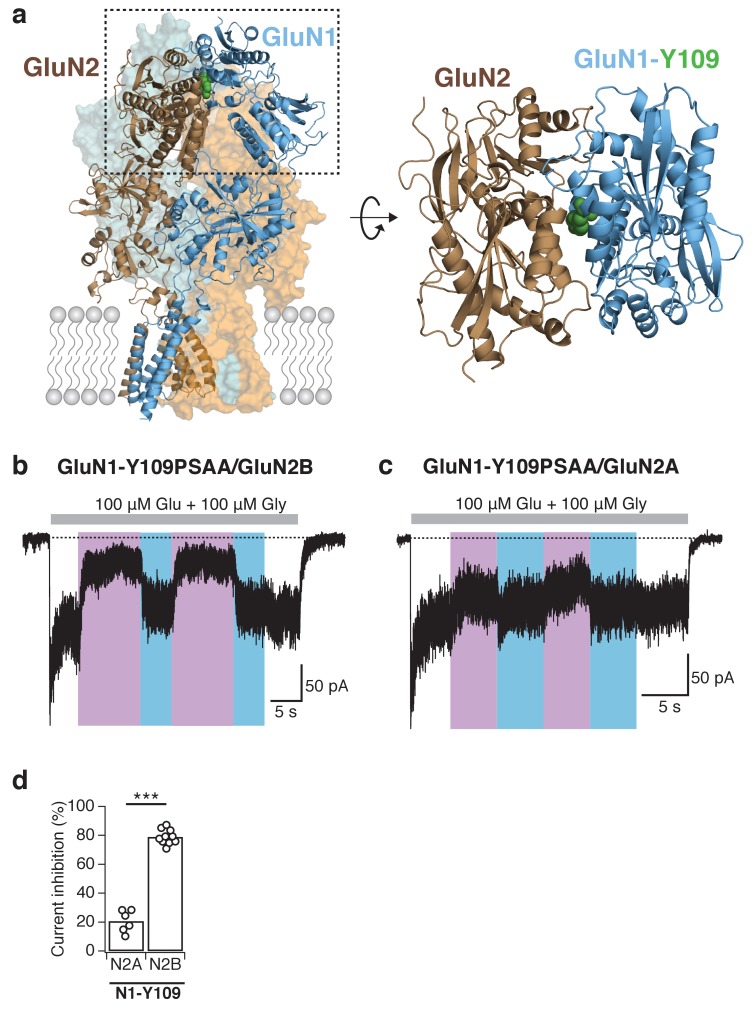
Engineering light-sensitivity into proteins has wide ranging applications in molecular studies and neuroscience. Commonly used tethered photoswitchable ligands, however, require solvent-accessible protein labeling, face structural constrains, and are bulky. Here, we designed a set of optocontrollable NMDA receptors by directly incorporating single photoswitchable amino acids (PSAAs) providing genetic encodability, reversibility, and site tolerance. We identified several positions within the multi-domain receptor endowing robust photomodulation. PSAA photoisomerization at the GluN1 clamshell hinge is sufficient to control glycine sensitivity and activation efficacy. Strikingly, in the pore domain, flipping of a M3 residue within a conserved transmembrane cavity impacts both gating and permeation properties. Our study demonstrates the first detection of molecular rearrangements in real-time due to the reversible light-switching of single amino acid side-chains, adding a dynamic dimension to protein site-directed mutagenesis. This novel approach to interrogate neuronal protein function has general applicability in the fast expanding field of optopharmacology.
将光敏感性引入蛋白质在分子研究和神经科学中具有广泛的应用。然而,常用的 tethered 光开关配体需要可溶剂接触的蛋白质标记,面临结构限制,并且体积庞大。在这里,我们通过直接掺入单个光开关氨基酸(PSAA)设计了一组光控 NMDA 受体,这些氨基酸具有遗传编码性、可逆性和位点耐受性。我们在多结构域受体中确定了几个赋予强大光调制能力的位置。GluN1 蛤壳铰链处的 PSAA 光异构化足以控制甘氨酸敏感性和激活效率。令人惊讶的是,在孔结构域中,保守跨膜腔内 M3 残基的翻转会影响门控和通透特性。我们的研究首次实时检测到由于单个氨基酸侧链的可逆光开关导致的分子重排,为蛋白质定点诱变增加了一个动态维度。这种询问神经元蛋白质功能的新方法在快速发展的光药理学领域具有普遍适用性。