Herum Kate M, Lunde Ida G, McCulloch Andrew D, Christensen Geir
Institute for Experimental Medical Research, Oslo University Hospital and University of Oslo, 0450 Oslo, Norway.
Center for Heart Failure Research, Oslo University Hospital, 0450 Oslo, Norway.
J Clin Med. 2017 May 19;6(5):53. doi: 10.3390/jcm6050053.
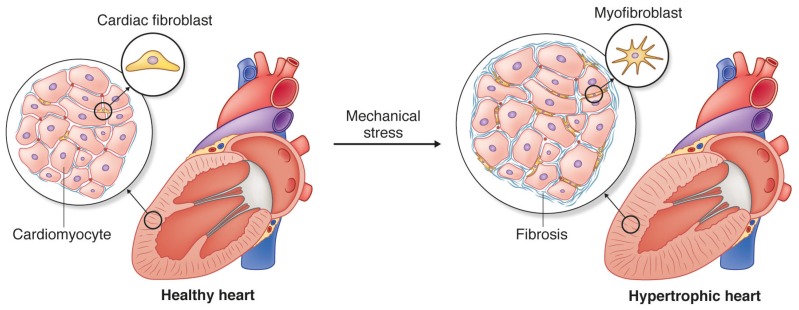
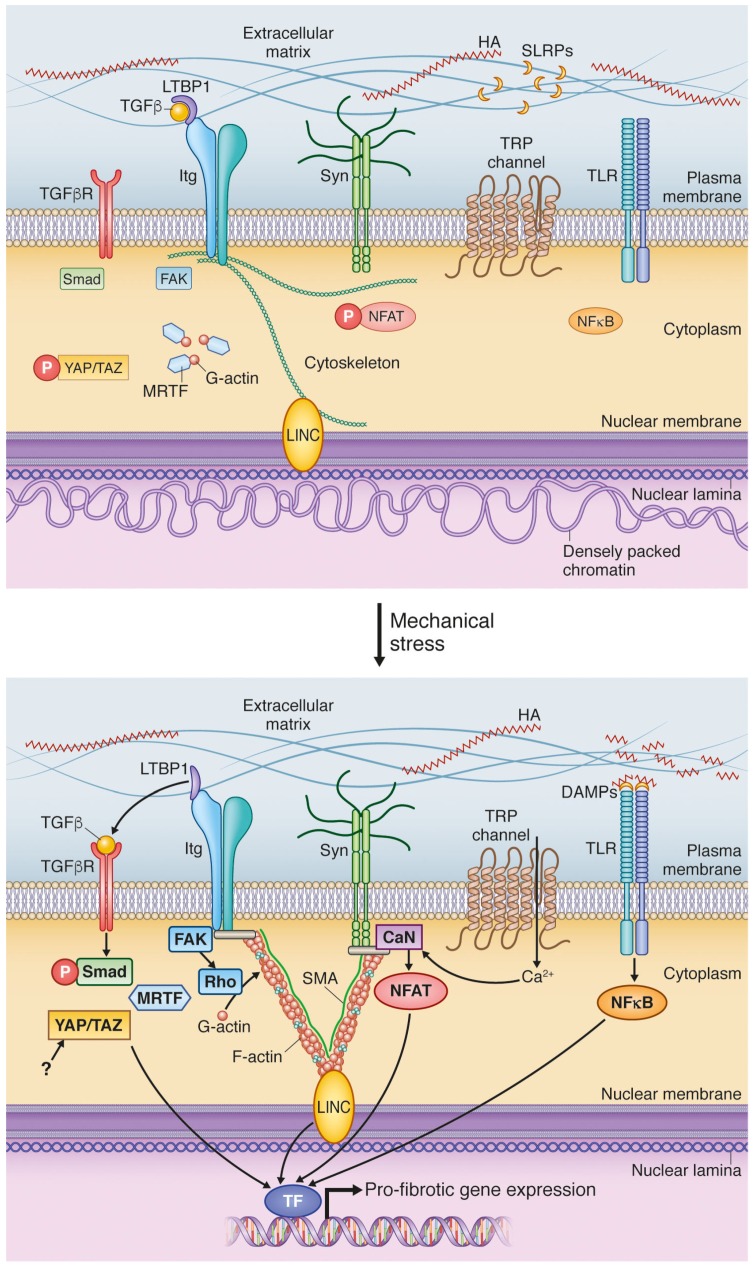
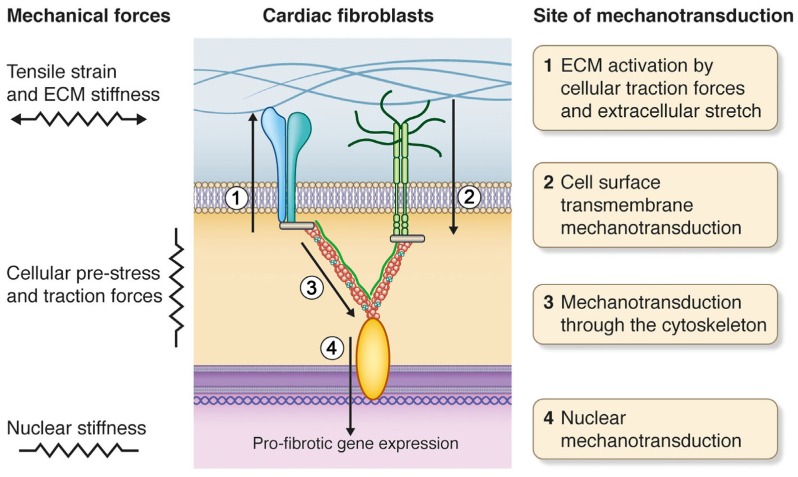
Cardiac fibrosis, the excessive accumulation of extracellular matrix (ECM), remains an unresolved problem in most forms of heart disease. In order to be successful in preventing, attenuating or reversing cardiac fibrosis, it is essential to understand the processes leading to ECM production and accumulation. Cardiac fibroblasts are the main producers of cardiac ECM, and harbor great phenotypic plasticity. They are activated by the disease-associated changes in mechanical properties of the heart, including stretch and increased tissue stiffness. Despite much remaining unknown, an interesting body of evidence exists on how mechanical forces are translated into transcriptional responses important for determination of fibroblast phenotype and production of ECM constituents. Such mechanotransduction can occur at multiple cellular locations including the plasma membrane, cytoskeleton and nucleus. Moreover, the ECM functions as a reservoir of pro-fibrotic signaling molecules that can be released upon mechanical stress. We here review the current status of knowledge of mechanotransduction signaling pathways in cardiac fibroblasts that culminate in pro-fibrotic gene expression.
心脏纤维化,即细胞外基质(ECM)的过度积聚,在大多数形式的心脏病中仍然是一个未解决的问题。为了成功预防、减轻或逆转心脏纤维化,了解导致ECM产生和积聚的过程至关重要。心脏成纤维细胞是心脏ECM的主要产生者,具有很大的表型可塑性。它们被与疾病相关的心脏机械特性变化激活,包括拉伸和组织硬度增加。尽管仍有许多未知之处,但关于机械力如何转化为对成纤维细胞表型确定和ECM成分产生重要的转录反应,存在一批有趣的证据。这种机械转导可以发生在包括质膜、细胞骨架和细胞核在内的多个细胞位置。此外,ECM作为促纤维化信号分子的储存库,可在机械应力作用下释放。我们在此综述了心脏成纤维细胞中最终导致促纤维化基因表达的机械转导信号通路的当前知识状况。