Cheung Hoi Man, Chow Tony Chin Hung, Yew David Tai Wai
School of Chinese Medicine, The Chinese University of Hong Kong, Shatin, Hong Kong, China.
Hong Kong College of Technology, 2 On Shing Street, Ma On Shan, Shatin, Hong Kong, China.
Int J Mol Sci. 2017 May 19;18(5):1098. doi: 10.3390/ijms18051098.
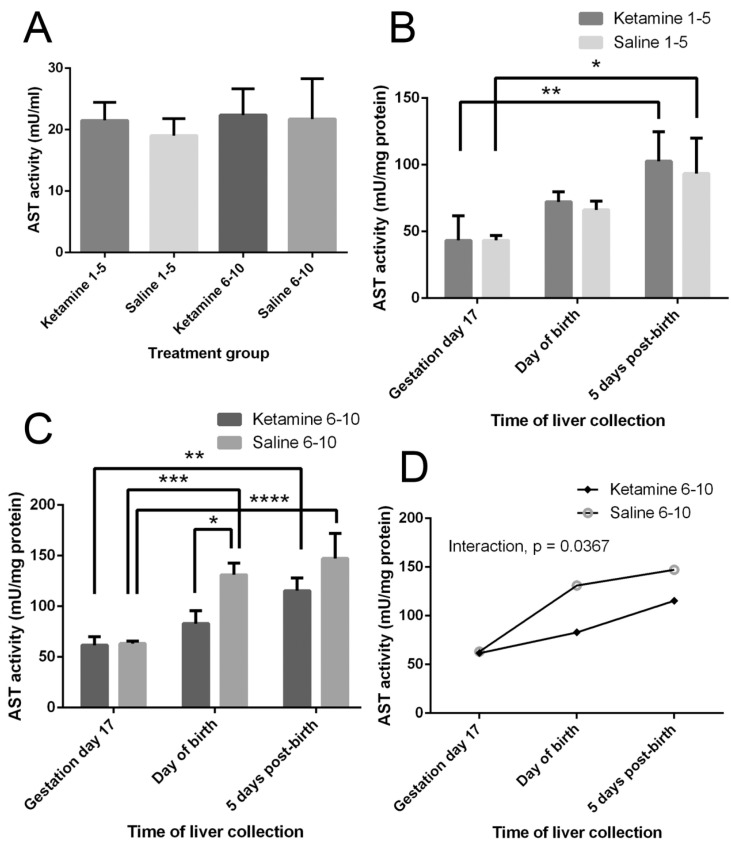
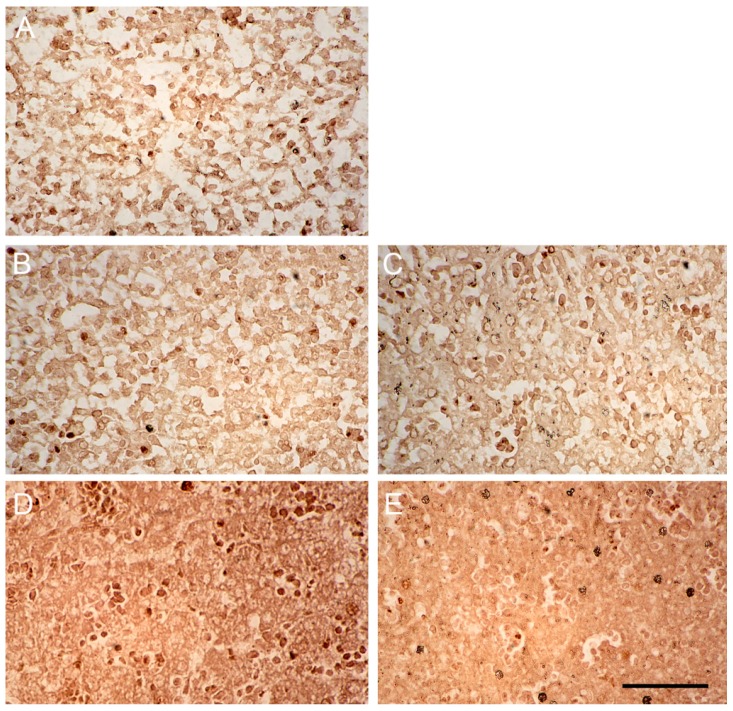
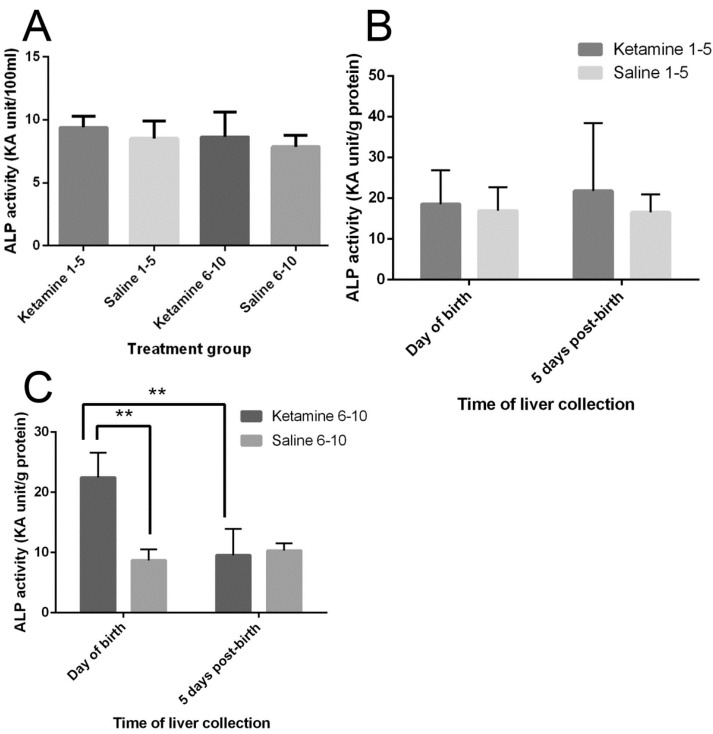
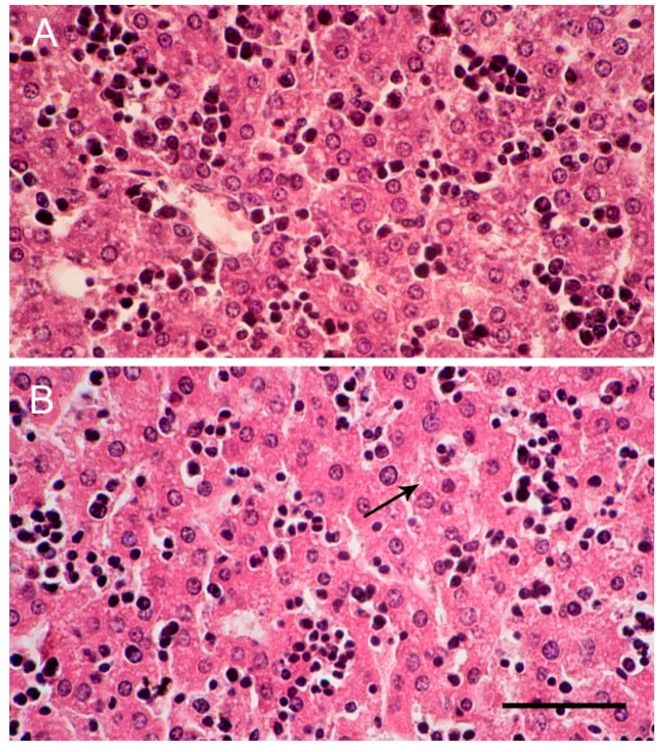
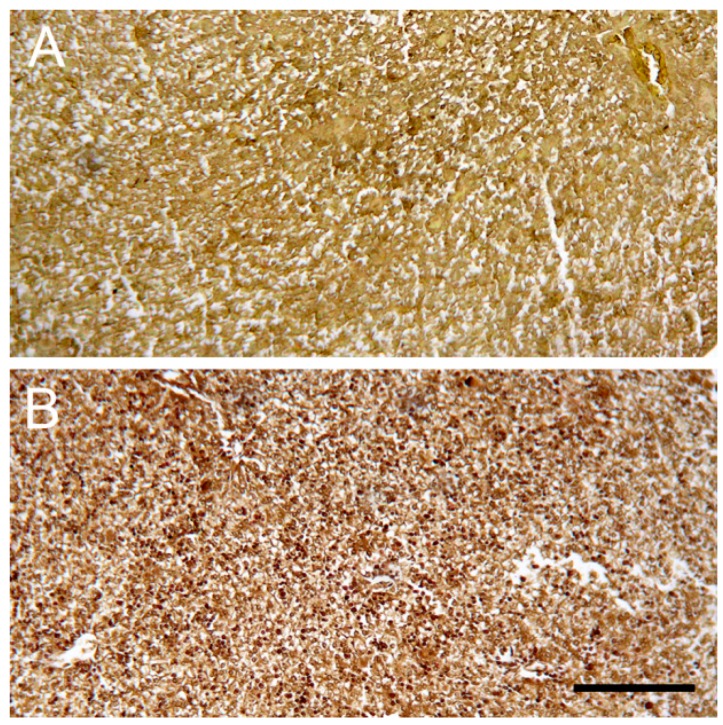
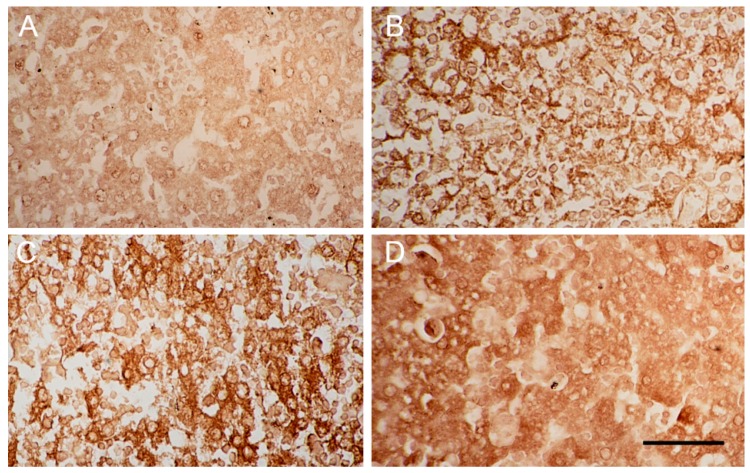
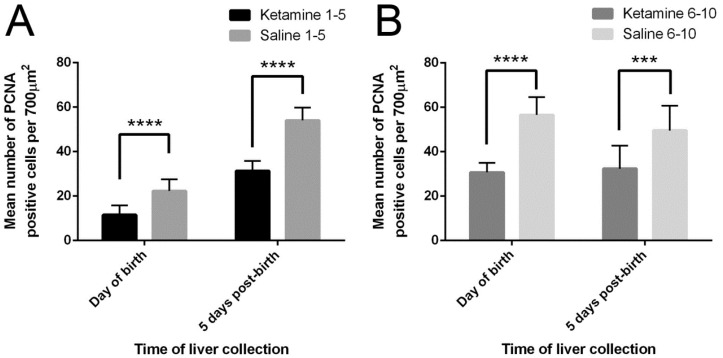
It is well known that ketamine abuse can induce liver damage in adult addicts, but the effects of ketamine abuse in pregnant mothers on their offspring have received less attention. In this study, we investigated the effects of 5-day ketamine injections (30 mg/kg) to pregnant Institute for Cancer Research (ICR) mice during early gestation or mid-gestation on the aspartate aminotransferase (AST) and alkaline phosphatase (ALP) activities of the mothers and the offspring. We also looked into whether administering ketamine treatment to the mothers had any effects on the extent of fibrosis, cell proliferation and cell death in the livers of the newborns. No significant biochemical differences were found between treatment and control groups in the mothers. In the offspring, ketamine treatment mildly suppressed the gradual increase of hepatic AST activity in neonates during liver maturation. Measurements of hepatic ALP activity and lactic acid dehydrogenase (LDH) immunoreactivity revealed that ketamine treatment may lead to increased cell death. Proliferation of liver cells of the newborns was also retarded as shown by reduced proliferative cell nuclear antigen (PCNA) immunoreactivity in the ketamine groups. No obvious fibrosis was evident. Thus, we demonstrated that ketamine administration to pregnant mice suppressed hepatic development and also induced liver cell death of the offspring.
众所周知,氯胺酮滥用会导致成年成瘾者肝脏损伤,但氯胺酮滥用对怀孕母亲后代的影响却较少受到关注。在本研究中,我们调查了在妊娠早期或中期给怀孕的癌症研究所(ICR)小鼠注射5天氯胺酮(30毫克/千克)对母亲及其后代天冬氨酸转氨酶(AST)和碱性磷酸酶(ALP)活性的影响。我们还研究了给母亲进行氯胺酮治疗是否对新生儿肝脏的纤维化程度、细胞增殖和细胞死亡有任何影响。在母亲的治疗组和对照组之间未发现显著的生化差异。在后代中,氯胺酮治疗轻度抑制了新生儿肝脏成熟过程中肝脏AST活性的逐渐增加。肝脏ALP活性和乳酸脱氢酶(LDH)免疫反应性的测量表明,氯胺酮治疗可能导致细胞死亡增加。氯胺酮组中增殖细胞核抗原(PCNA)免疫反应性降低,表明新生儿肝细胞增殖也受到抑制。未发现明显的纤维化。因此,我们证明给怀孕小鼠施用氯胺酮会抑制肝脏发育,并诱导后代肝细胞死亡。