Tadokoro Tomoko, Morishita Asahiro, Sakamoto Teppei, Fujihara Shintaro, Fujita Koji, Mimura Shima, Oura Kyoko, Nomura Takako, Tani Joji, Yoneyama Hirohito, Iwama Hisakazu, Himoto Takashi, Niki Toshiro, Hirashima Mitsuomi, Masaki Tsutomu
Department of Gastroenterology and Neurology, Faculty of Medicine, Kagawa University, Kagawa 761‑0793, Japan.
Life Science Research Center, Faculty of Medicine, Kagawa University, Kagawa 761‑0793, Japan.
Mol Med Rep. 2017 Jul;16(1):36-42. doi: 10.3892/mmr.2017.6606. Epub 2017 May 18.
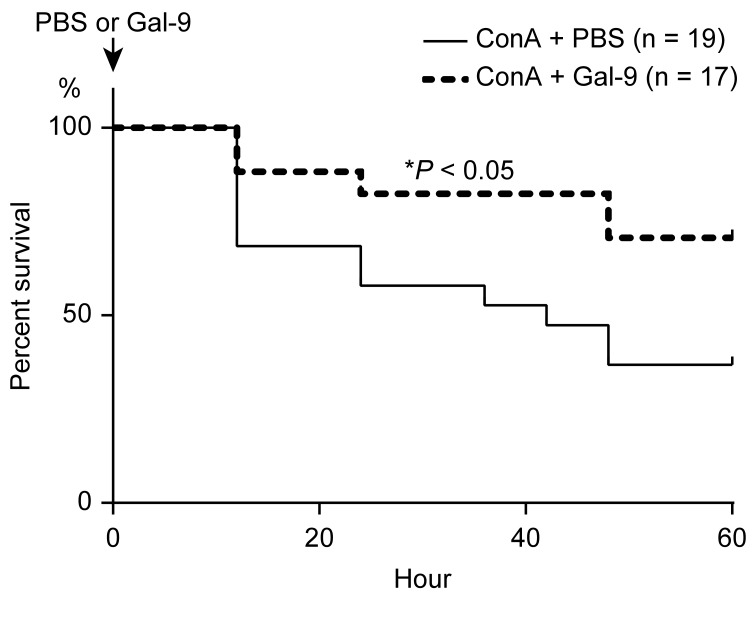
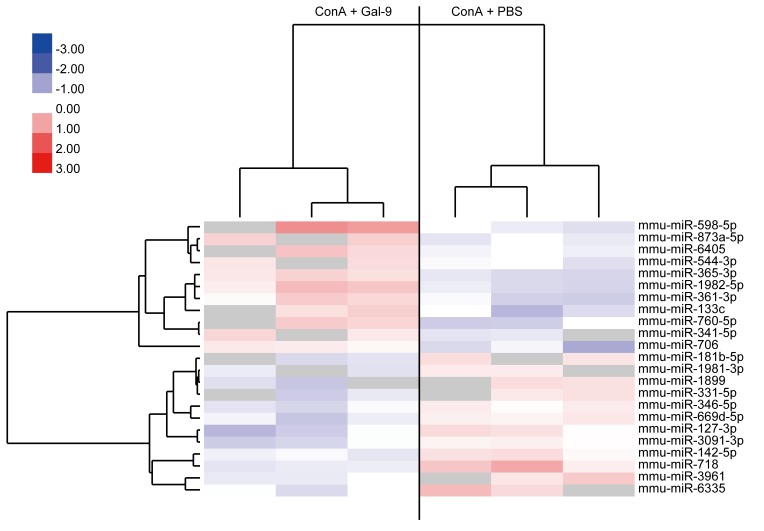
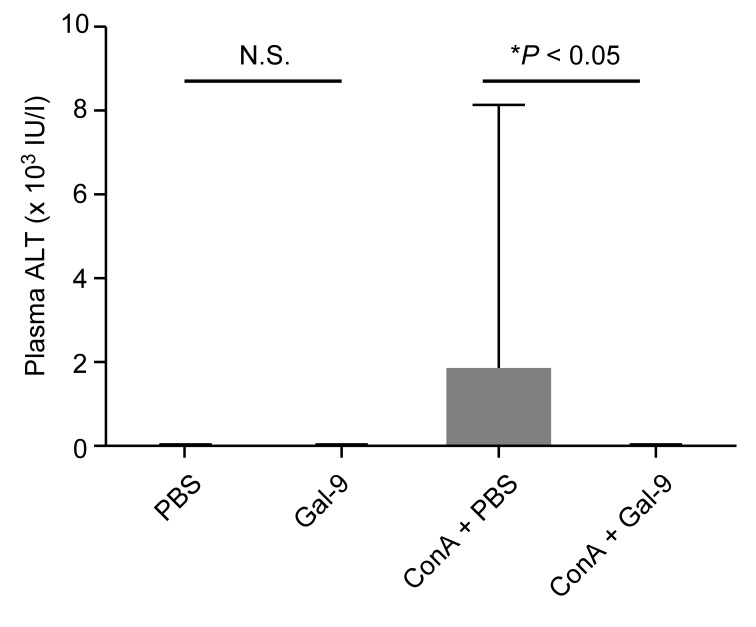
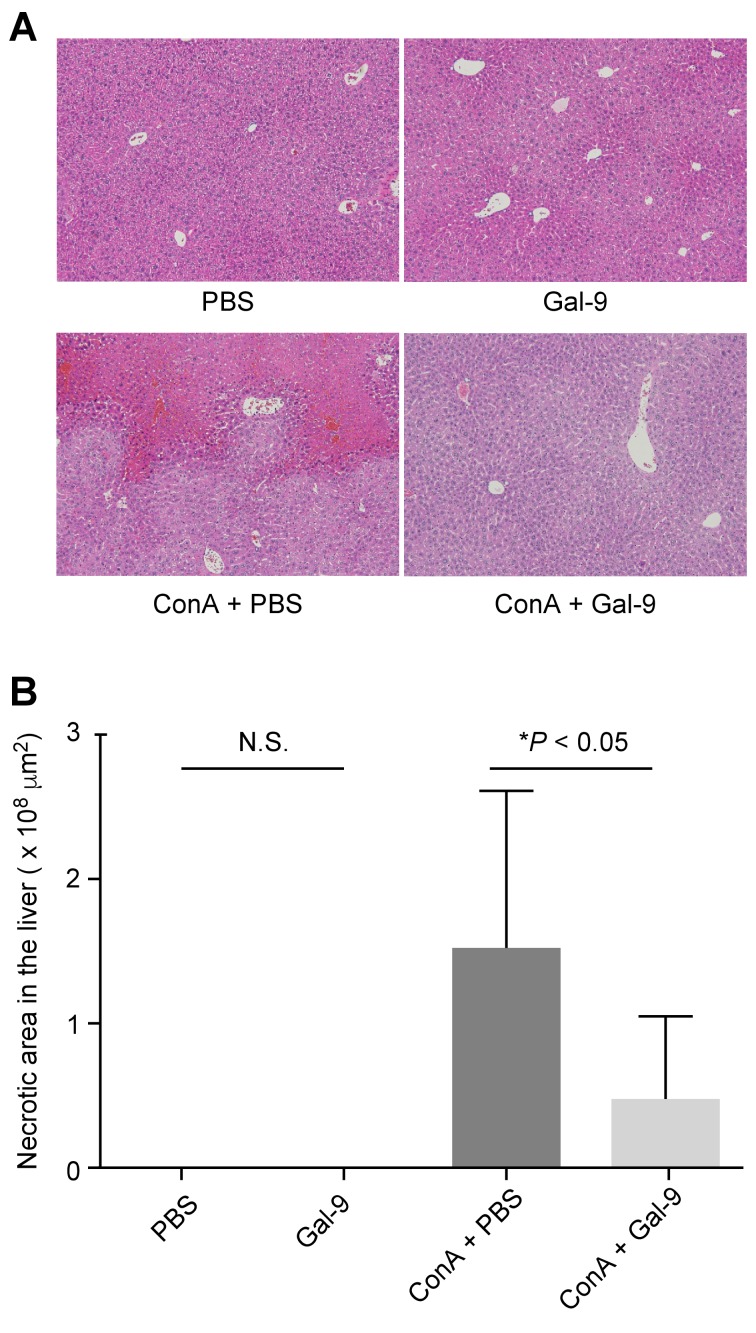
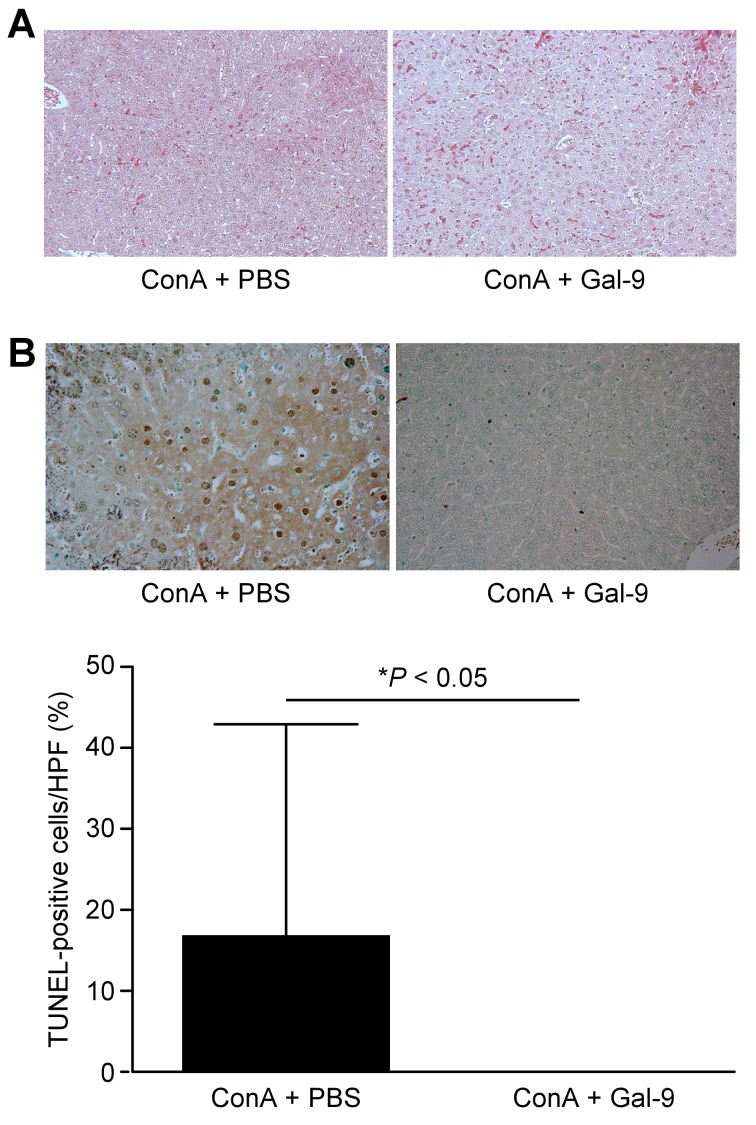
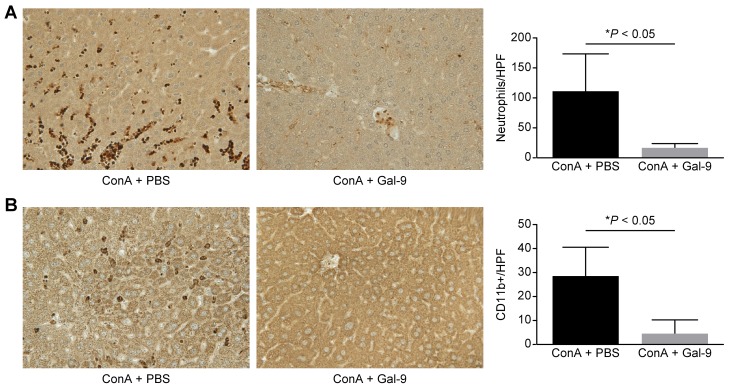
Fulminant hepatitis is a severe liver disease resulting in hepatocyte necrosis. Galectin‑9 (Gal‑9) is a tandem‑repeat‑type galectin that has been evaluated as a potential therapeutic agent for various diseases that regulate the host immune system. Concanavalin A (ConA) injection into mice results in serious, immune‑mediated liver injury similar to human viral, autoimmune and fulminant hepatitis. The present study investigated the effects of Gal‑9 treatment on fulminant hepatitis in vivo and the effect on the expression of microRNAs (miRNAs), in order to identify specific miRNAs associated with the immune effects of Gal‑9. A ConA‑induced mouse hepatitis model was used to investigate the effects of Gal‑9 treatment on overall survival rates, liver enzymes, histopathology and miRNA expression levels. Histological analyses, TUNEL assay, immunohistochemistry and miRNA expression characterization, were used to investigate the degree of necrosis, fibrosis, apoptosis and infiltration of neutrophils and macrophages. Overall survival rates following ConA administration were significantly higher in Gal‑9‑treated mice compared with control mice treated with ConA + PBS. Histological examination revealed that Gal‑9 attenuated hepatocellular damage, reduced local neutrophil infiltration and prevented the local accumulation of macrophages and liver cell apoptosis in ConA‑treated mice. In addition, various miRNAs induced by Gal‑9 may contribute to its anti‑apoptotic, anti‑inflammatory and pro‑proliferative effects on hepatocytes. The results of the present study demonstrate that Gal‑9 may be a candidate therapeutic target for the treatment of fulminant hepatitis.
暴发性肝炎是一种导致肝细胞坏死的严重肝脏疾病。半乳糖凝集素-9(Gal-9)是一种串联重复型半乳糖凝集素,已被评估为调节宿主免疫系统的各种疾病的潜在治疗药物。向小鼠注射伴刀豆球蛋白A(ConA)会导致严重的免疫介导性肝损伤,类似于人类病毒性、自身免疫性和暴发性肝炎。本研究调查了Gal-9治疗对暴发性肝炎的体内影响以及对微小RNA(miRNA)表达的影响,以确定与Gal-9免疫效应相关的特定miRNA。使用ConA诱导的小鼠肝炎模型来研究Gal-9治疗对总体生存率、肝酶、组织病理学和miRNA表达水平的影响。组织学分析、TUNEL检测、免疫组织化学和miRNA表达特征分析,用于研究坏死、纤维化、凋亡以及中性粒细胞和巨噬细胞浸润的程度。与用ConA+PBS处理的对照小鼠相比,Gal-9处理的小鼠在注射ConA后的总体生存率显著更高。组织学检查显示,Gal-9减轻了ConA处理小鼠的肝细胞损伤,减少了局部中性粒细胞浸润,并防止了巨噬细胞的局部聚集和肝细胞凋亡。此外,Gal-9诱导的各种miRNA可能有助于其对肝细胞的抗凋亡、抗炎和促增殖作用。本研究结果表明,Gal-9可能是治疗暴发性肝炎的候选治疗靶点。