Multi-Organ Transplant Program, London Health Sciences Centre, London, Ontario, Canada.
PLoS One. 2012;7(9):e44138. doi: 10.1371/journal.pone.0044138. Epub 2012 Sep 6.
Fulminant hepatitis progresses to acute liver failure (ALF) when the extent of hepatocyte death exceeds the liver's regenerative capacity. Although small interfering RNA (siRNA) appears promising in animal models of hepatitis, the approach is limited by drawbacks associated with systemic administration of siRNA. The aim of this study is to develop a hepatocyte-specific delivery system of siRNA for treatment of fulminant hepatitis.
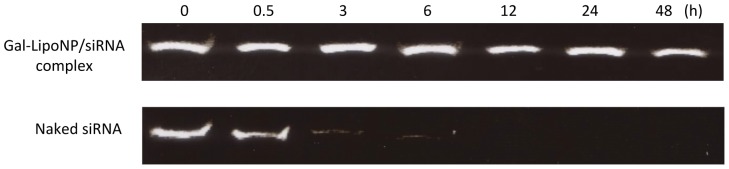
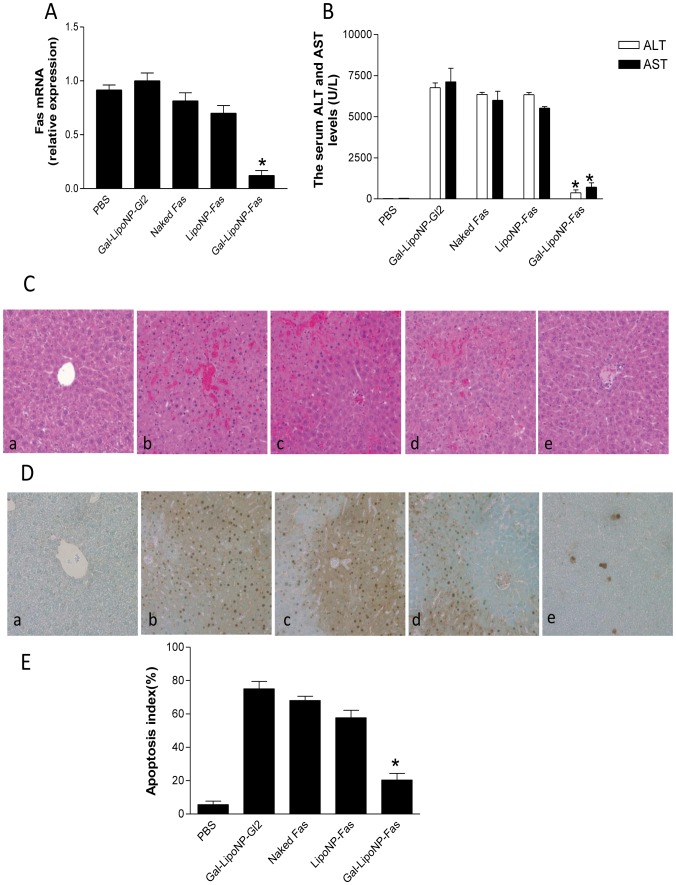
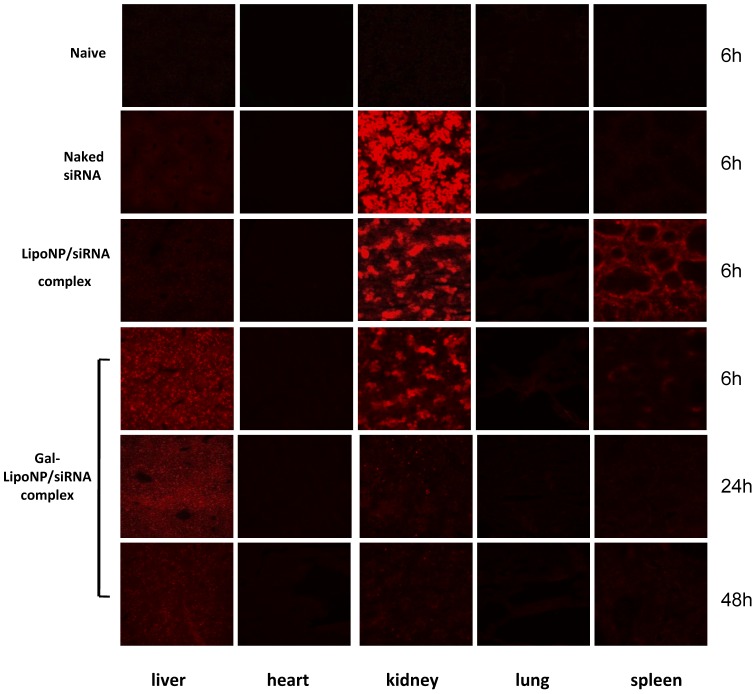
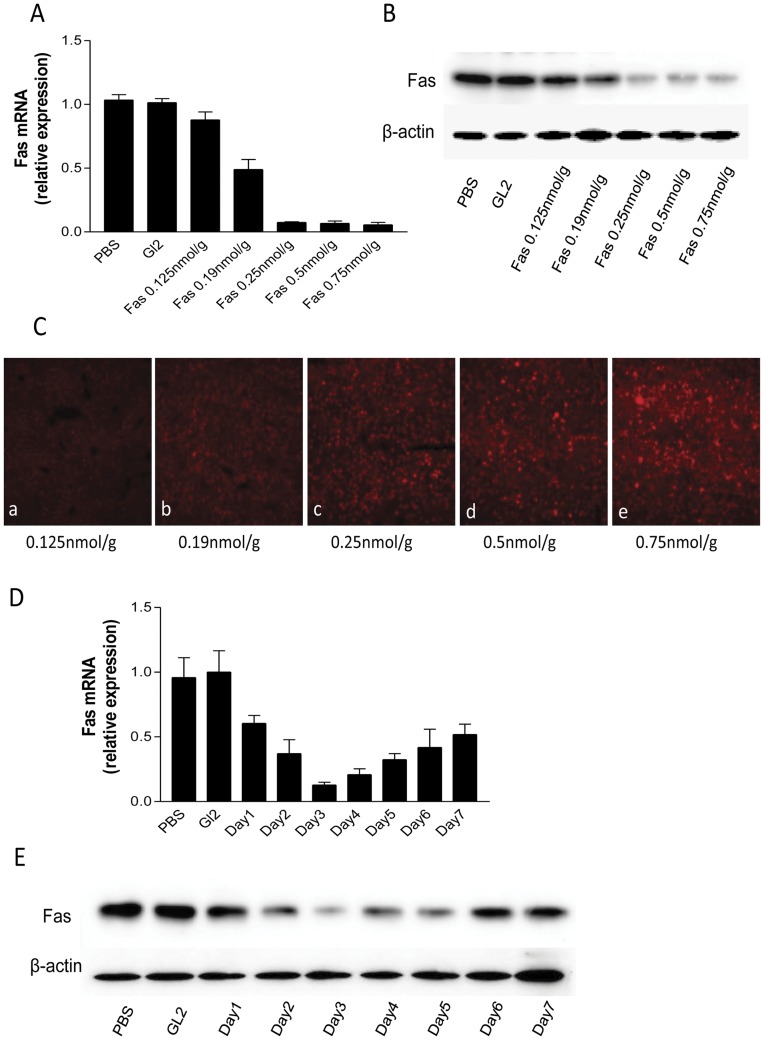
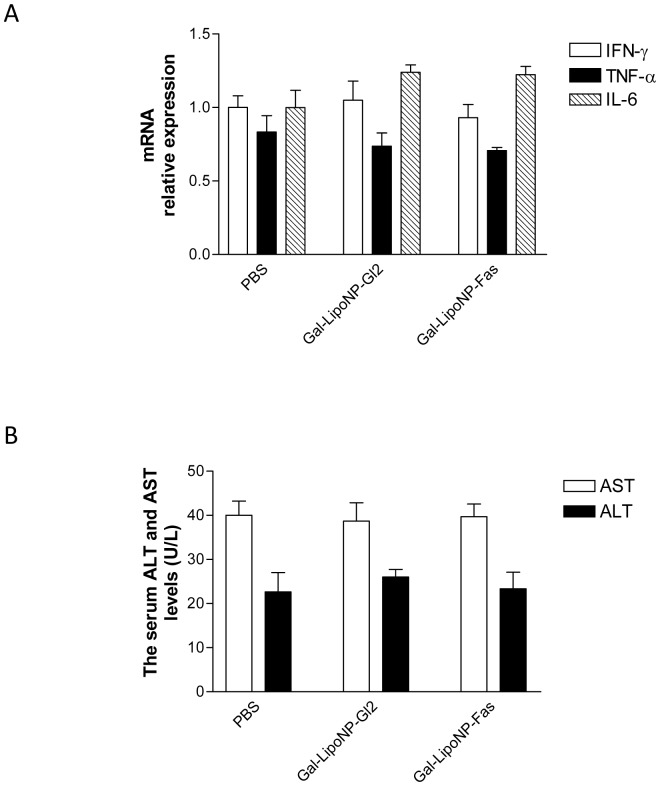
METHODOLOGY/PRINCIPAL FINDINGS: Galactose-conjugated liposome nano-particles (Gal-LipoNP) bearing siRNA was prepared, and the particle size and zeta potential of Gal-LipoNP/siRNA complexes were measured. The distribution, cytotoxicity and gene silence efficiency were studied in vivo in a concanavalin A (ConA)-induced hepatitis model. C57BL/6 mice were treated with Gal-LipoNP Fas siRNA by i.v. injection 72 h before ConA challenge, and hepatocyte injury was evaluated using serum alanine transferase (ALT) and aspartate transaminase (AST) levels, as well as liver histopathology and TUNEL-positive hepatocytes. The galactose-ligated liposomes were capable of encapsulating >96% siRNA and exhibited a higher stability than naked siRNA in plasma. Hepatocyte-specific targeting was confirmed by in vivo delivery experiment, in which the majority of Gal-LipoNP-siRNA evaded nuclease digestion and accumulated in the liver as soon as 6 h after administration. In vivo gene silencing was significant in the liver after treatment of Gal-Lipo-siRNA. In the ConA-induced hepatitis model, serum levels of ALT and AST were significantly reduced in mice treated with Gal-lipoNP-siRNA as compared with control mice. Additionally, tissue histopathology and apoptosis showed an overall reduction of injury in the Gal-LipoNP siRNA-treated mice.
CONCLUSIONS/SIGNIFICANCE: This study is the first to our knowledge to demonstrate reduction of hepatic injury by liver-specific induction of RNA interference using Gal-LipoNP Fas siRNA, highlighting a novel RNAi-based therapeutic potential in many liver diseases.
暴发性肝炎发展为急性肝衰竭(ALF),当肝细胞死亡程度超过肝脏的再生能力时。虽然小干扰 RNA(siRNA)在肝炎动物模型中显示出良好的前景,但该方法受到与 siRNA 全身给药相关的缺点的限制。本研究旨在开发一种用于治疗暴发性肝炎的肝细胞特异性 siRNA 递药系统。
方法/主要发现:制备了携带 siRNA 的半乳糖偶联脂质体纳米颗粒(Gal-LipoNP),并测量了 Gal-LipoNP/siRNA 复合物的粒径和zeta 电位。在刀豆球蛋白 A(ConA)诱导的肝炎模型中研究了体内分布、细胞毒性和基因沉默效率。在 ConA 攻击前 72 小时,通过静脉注射 Gal-LipoNP Fas siRNA 治疗 C57BL/6 小鼠,并使用血清丙氨酸转氨酶(ALT)和天冬氨酸转氨酶(AST)水平以及肝组织病理学和 TUNEL 阳性肝细胞评估肝细胞损伤。半乳糖连接的脂质体能够包裹>96%的 siRNA,并且在血浆中的稳定性高于裸 siRNA。体内递药实验证实了肝细胞的特异性靶向,其中 Gal-LipoNP-siRNA 中的大部分能够逃避核酸酶的消化,并在给药后 6 小时内迅速积聚在肝脏中。Gal-Lipo-siRNA 治疗后在肝脏中观察到明显的基因沉默。在 ConA 诱导的肝炎模型中,与对照组小鼠相比,Gal-lipoNP-siRNA 治疗的小鼠血清 ALT 和 AST 水平显著降低。此外,组织病理学和凋亡显示 Gal-LipoNP siRNA 治疗的小鼠损伤总体减少。
结论/意义:本研究首次证明,使用 Gal-LipoNP Fas siRNA 肝脏特异性诱导 RNA 干扰可减少肝损伤,突出了基于 RNAi 的治疗方法在许多肝脏疾病中的新潜力。