Liu Mingxin, Tao Guizhou, Liu Qifeng, Liu Kun, Yang Xinchun
Cardiovascular Center, Beijing Chaoyang Hospital, Capital Medical University, Beijing 100020, P.R. China.
Department of Cardiology, The First Affiliated Hospital of Jinzhou Medical University, Jinzhou, Liaoning 121001, P.R. China.
Int J Mol Med. 2017 Jul;40(1):57-64. doi: 10.3892/ijmm.2017.2995. Epub 2017 May 18.
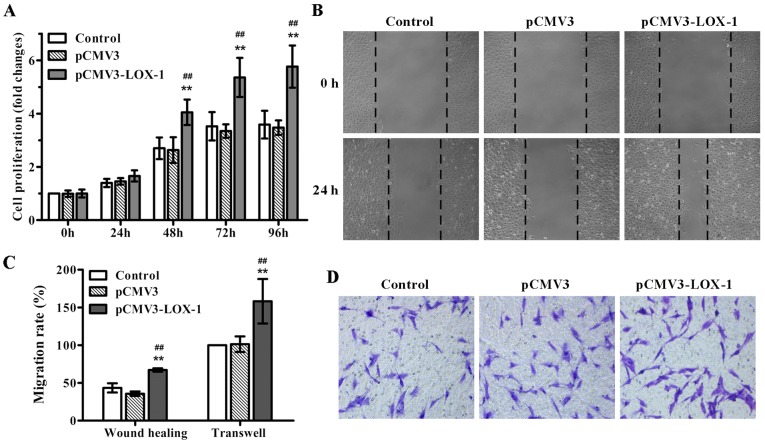
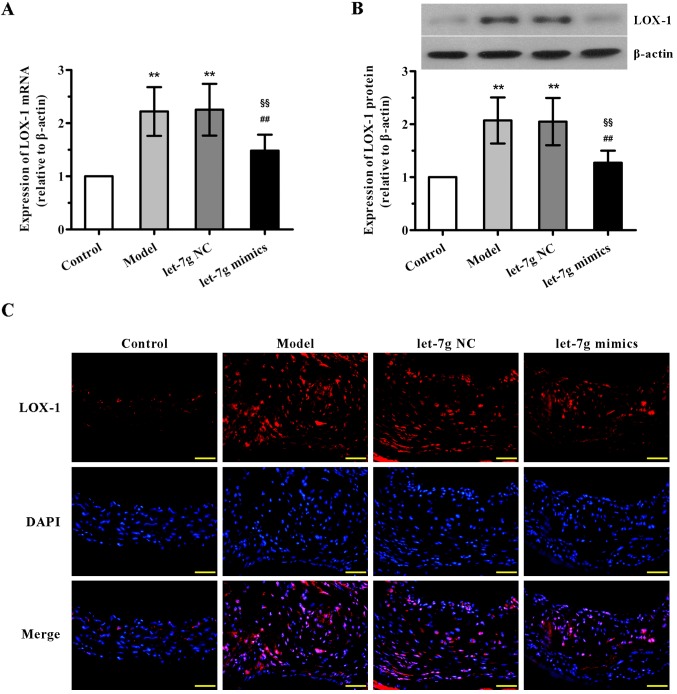
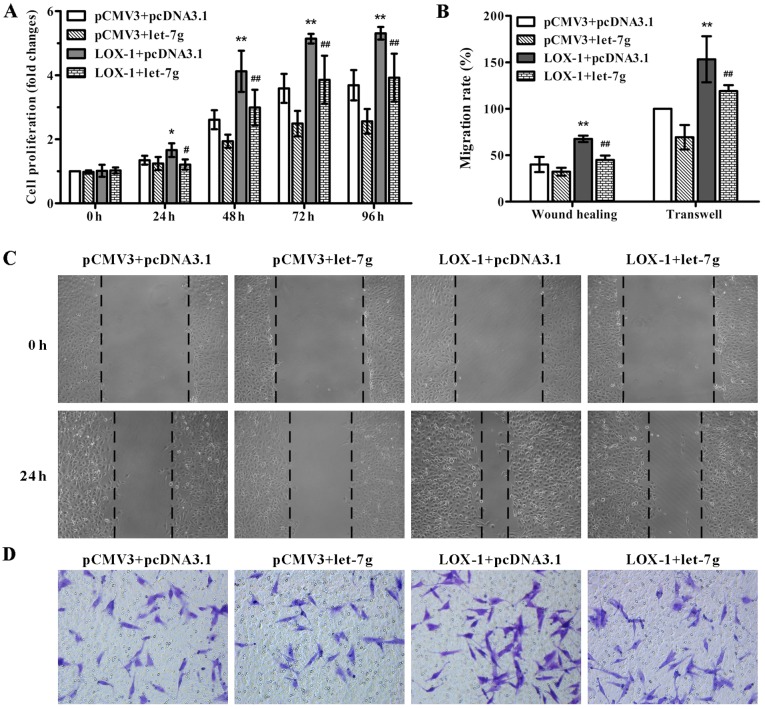
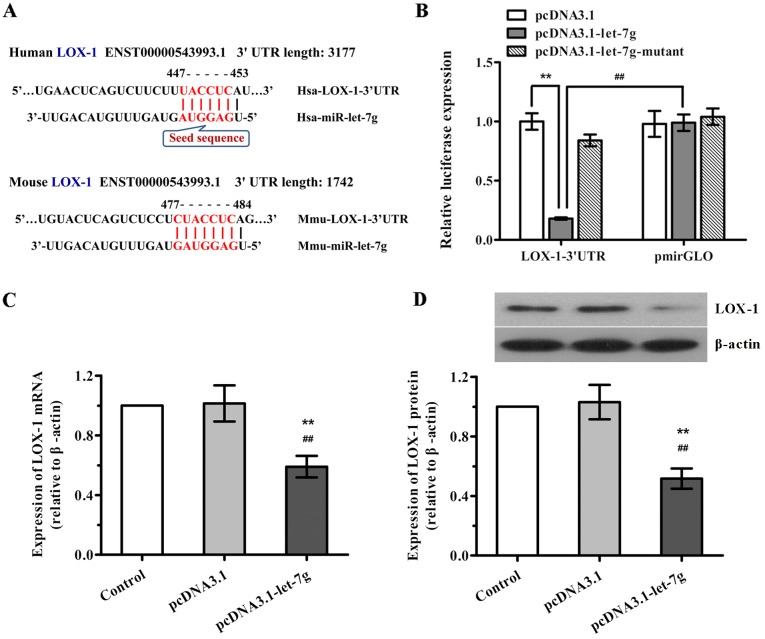
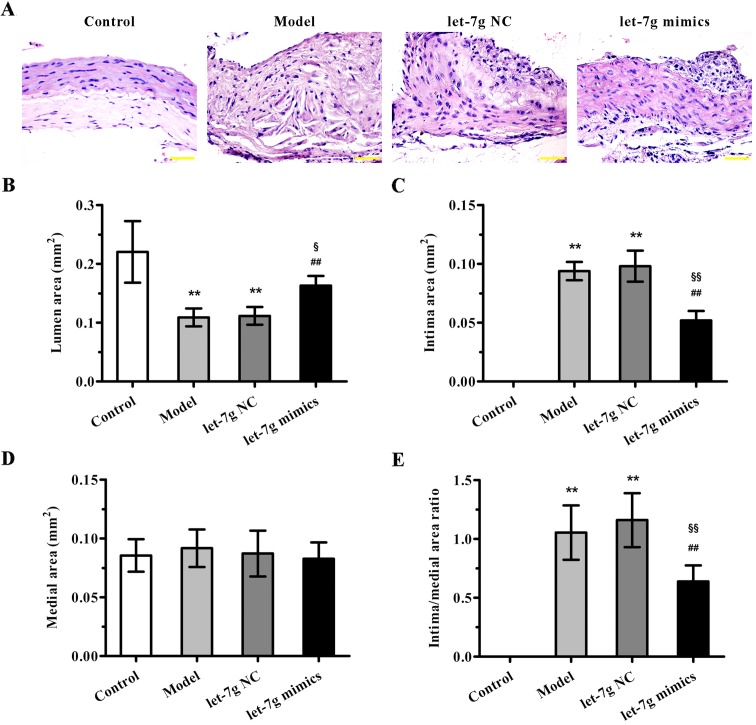
Atherosclerosis is a chronic arterial disease and the leading cause of stroke and myocardial infarction. Micro-RNAs (miRNAs or miRs) have been reported to act as essential modulators during the progression of atherosclerosis. Although miR-let-7g has been demonstrated to contribute to maintaining endothelial function and vascular homeostasis, it is not known whether miR-let-7g exerts a therapeutic effect on experimental atherosclerosis. The aim of this study was to investigate the effects of miR-let-7g on atherosclerosis in vivo and in vitro and to explore its underlying mechanisms. Data from our study showed that exogenous lectin‑like oxidized low‑density lipoprotein receptor‑1 (LOX-1 or OLR1) overexpression resulted in the significant promotion of proliferation and migration of human aortic smooth muscle cells (ASMCs), whereas such changes induced by LOX-1 were obviously suppressed by transfection of miR‑let‑7g. We later confirmed that LOX-1 is a potential target of miR-let-7g, and miR-let-7g markedly inhibited LOX-1 expression in ASMCs by directly binding to the 3' untranslated region of LOX-1. Furthermore, in a hyperlipidemic apolipoprotein E knockout (ApoE-/-) mouse model, intravenous delivery of miR-let-7g mimics obviously attenuated high-fat diet-induced neointima formation and atherosclerotic lesions, accompanied by the significant downregulation of LOX-1, which was consistent with the effect of miR-let-7g on ASMCs. Taken together, our data revealed that miR-let-7g exhibits anti-atherosclerotic activity, at least partially by targeting the LOX-1 signaling pathway. This study suggests that miR-let-7g may be a therapeutic candidate for treating atherosclerosis, and provides novel insight into miRNA-based therapy for this disease.
动脉粥样硬化是一种慢性动脉疾病,是中风和心肌梗死的主要原因。据报道,微小RNA(miRNA或miR)在动脉粥样硬化进展过程中起重要调节作用。尽管已证明miR-let-7g有助于维持内皮功能和血管稳态,但尚不清楚miR-let-7g对实验性动脉粥样硬化是否具有治疗作用。本研究的目的是研究miR-let-7g在体内和体外对动脉粥样硬化的影响,并探讨其潜在机制。我们的研究数据表明,外源性凝集素样氧化低密度脂蛋白受体1(LOX-1或OLR1)的过表达显著促进了人主动脉平滑肌细胞(ASMC)的增殖和迁移,而miR-let-7g转染明显抑制了由LOX-1诱导的这种变化。我们随后证实LOX-1是miR-let-7g的潜在靶点,并且miR-let-7g通过直接结合LOX-1的3'非翻译区显著抑制ASMC中LOX-1的表达。此外,在高脂血症载脂蛋白E基因敲除(ApoE-/-)小鼠模型中,静脉注射miR-let-7g模拟物明显减轻了高脂饮食诱导的内膜增生和动脉粥样硬化病变,同时伴有LOX-1的显著下调,这与miR-let-7g对ASMC的作用一致。综上所述,我们的数据表明miR-let-7g具有抗动脉粥样硬化活性,至少部分是通过靶向LOX-1信号通路实现的。本研究表明,miR-let-7g可能是治疗动脉粥样硬化的候选药物,并为基于miRNA的该疾病治疗提供了新的见解。