Wanzek Katharina, Schwindt Eike, Capra John A, Paeschke Katrin
Department of Biochemistry, Theodor Boveri-Institute, University of Wuerzburg, Am Hubland, D-97074 Würzburg, Germany.
European Research Institute for the Biology of Ageing, University of Groningen, University Medical Center Groningen, 9713 AV Groningen, Netherlands.
Nucleic Acids Res. 2017 Jul 27;45(13):7796-7806. doi: 10.1093/nar/gkx467.
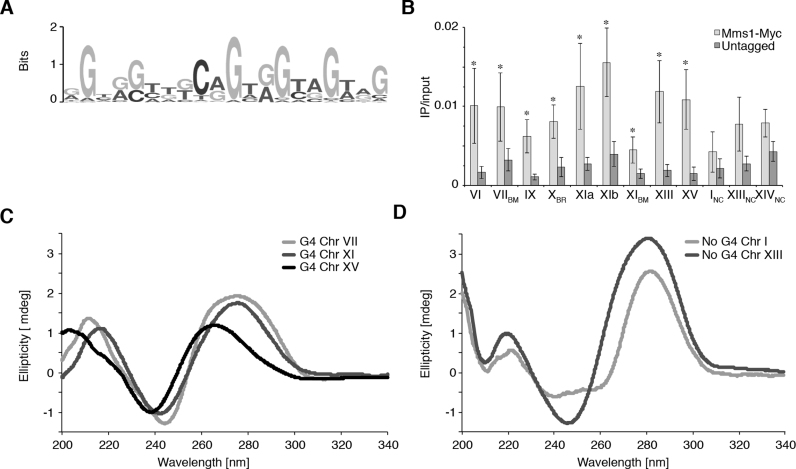
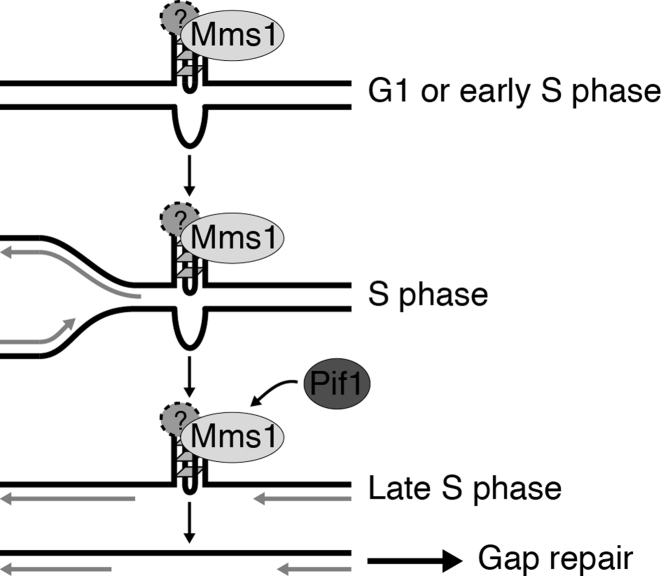
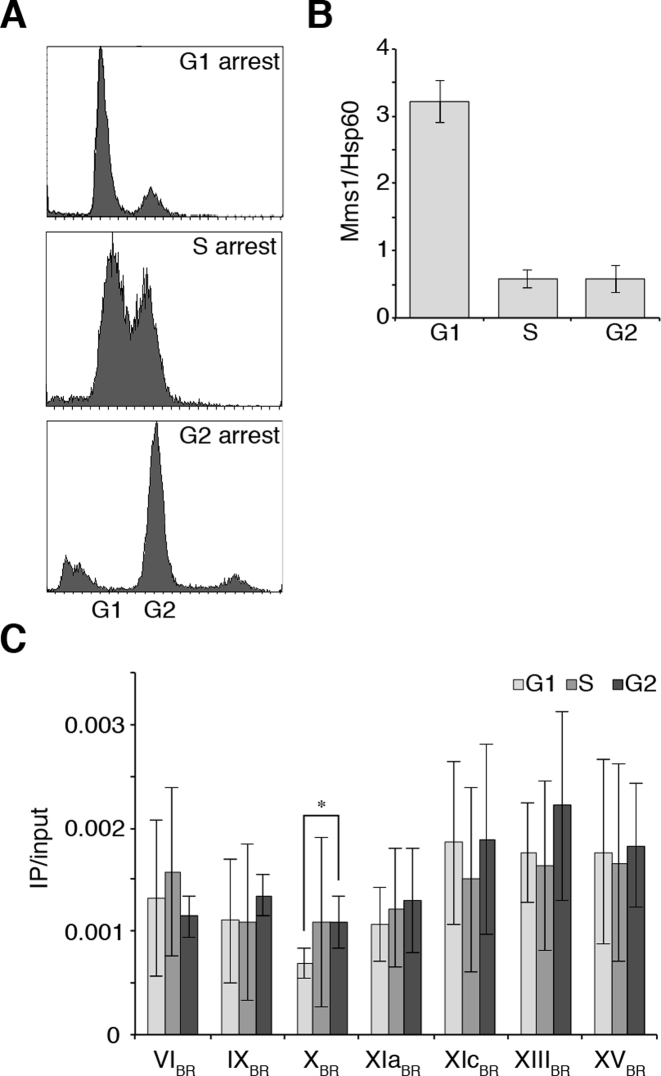
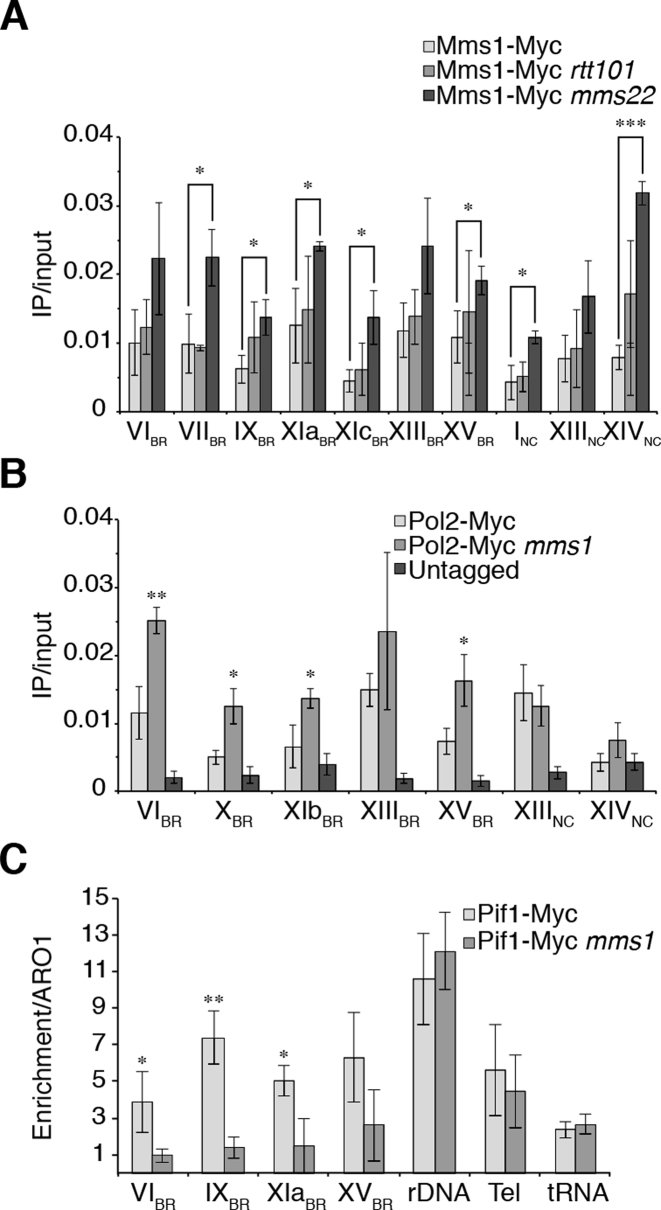
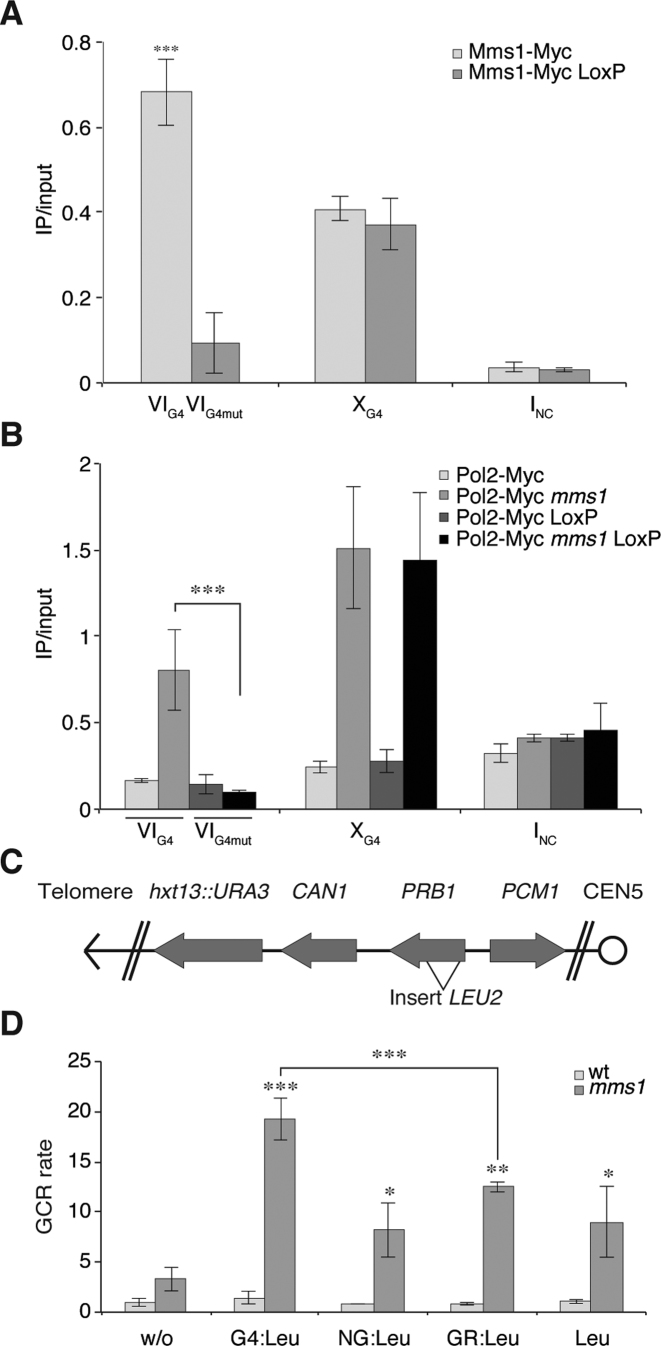
The regulation of replication is essential to preserve genome integrity. Mms1 is part of the E3 ubiquitin ligase complex that is linked to replication fork progression. By identifying Mms1 binding sites genome-wide in Saccharomyces cerevisiae we connected Mms1 function to genome integrity and replication fork progression at particular G-rich motifs. This motif can form G-quadruplex (G4) structures in vitro. G4 are stable DNA structures that are known to impede replication fork progression. In the absence of Mms1, genome stability is at risk at these G-rich/G4 regions as demonstrated by gross chromosomal rearrangement assays. Mms1 binds throughout the cell cycle to these G-rich/G4 regions and supports the binding of Pif1 DNA helicase. Based on these data we propose a mechanistic model in which Mms1 binds to specific G-rich/G4 motif located on the lagging strand template for DNA replication and supports Pif1 function, DNA replication and genome integrity.
复制的调控对于维持基因组完整性至关重要。Mms1是E3泛素连接酶复合物的一部分,该复合物与复制叉的推进相关。通过在酿酒酵母全基因组范围内鉴定Mms1结合位点,我们将Mms1的功能与特定富含G的基序处的基因组完整性和复制叉推进联系起来。这种基序在体外可形成G-四链体(G4)结构。G4是已知会阻碍复制叉推进的稳定DNA结构。如通过染色体大片段重排分析所证明的,在缺乏Mms1的情况下,这些富含G的/G4区域的基因组稳定性面临风险。Mms1在整个细胞周期中都与这些富含G的/G4区域结合,并支持Pif1 DNA解旋酶的结合。基于这些数据,我们提出了一个机制模型,其中Mms1与位于DNA复制滞后链模板上的特定富含G的/G4基序结合,并支持Pif1功能、DNA复制和基因组完整性。