Zimmer Jutta, Tacconi Eliana M C, Folio Cecilia, Badie Sophie, Porru Manuela, Klare Kerstin, Tumiati Manuela, Markkanen Enni, Halder Swagata, Ryan Anderson, Jackson Stephen P, Ramadan Kristijan, Kuznetsov Sergey G, Biroccio Annamaria, Sale Julian E, Tarsounas Madalena
Genome Stability and Tumourigenesis Group, CRUK/MRC Oxford Institute for Radiation Oncology, Department of Oncology, University of Oxford, Old Road Campus Research Building, Oxford OX3 7DQ, UK.
Area of Translational Research, Regina Elena National Cancer Institute, 00144 Rome, Italy.
Mol Cell. 2016 Feb 4;61(3):449-460. doi: 10.1016/j.molcel.2015.12.004. Epub 2015 Dec 31.
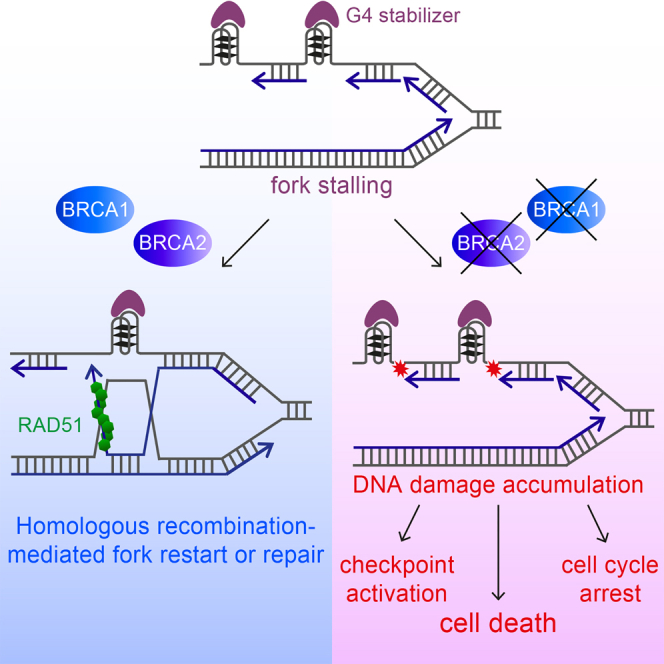
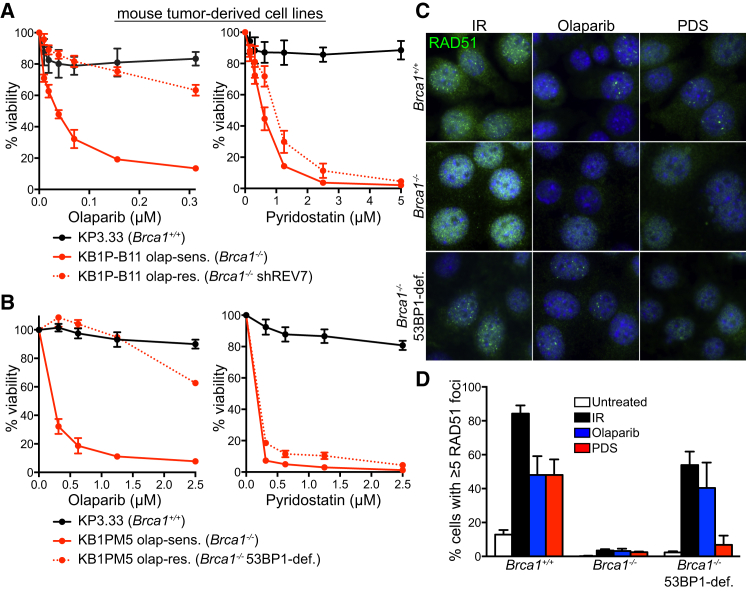
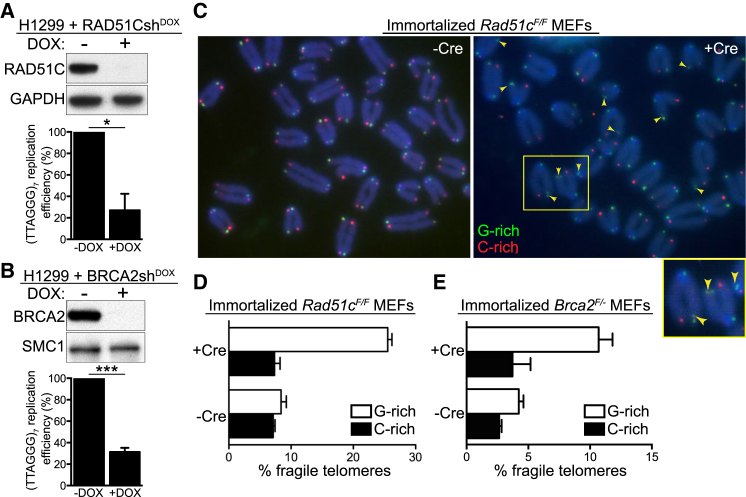
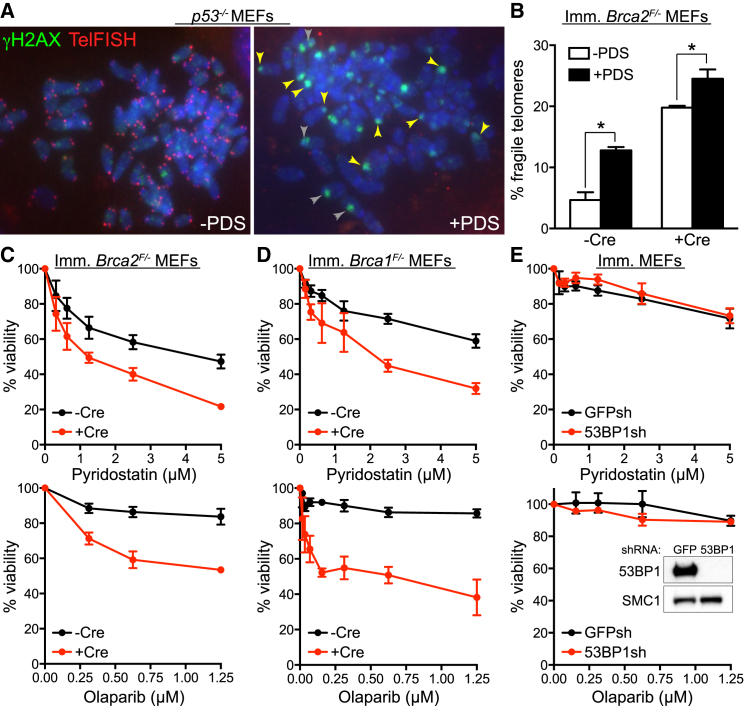
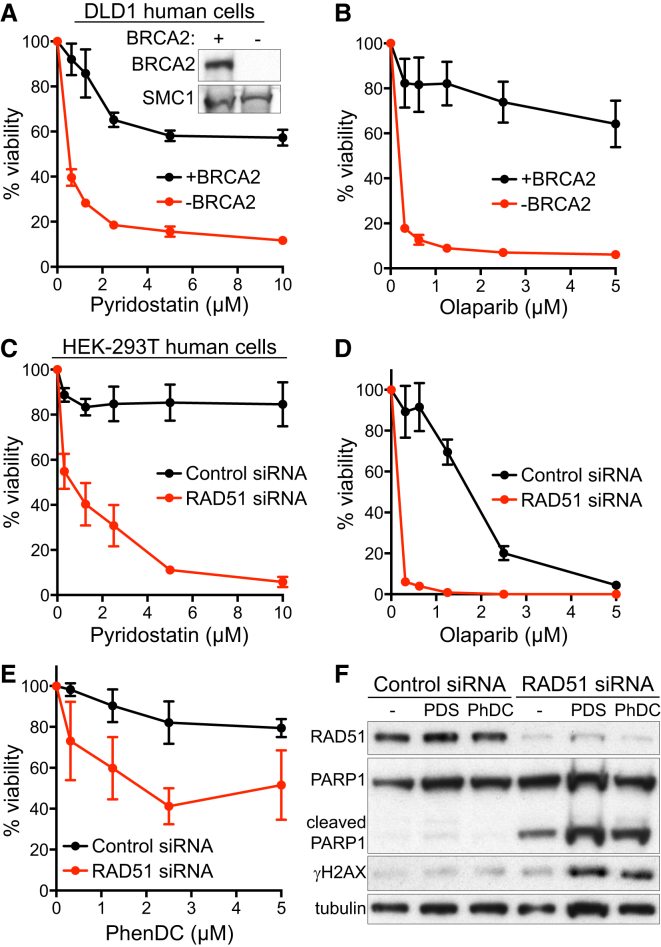
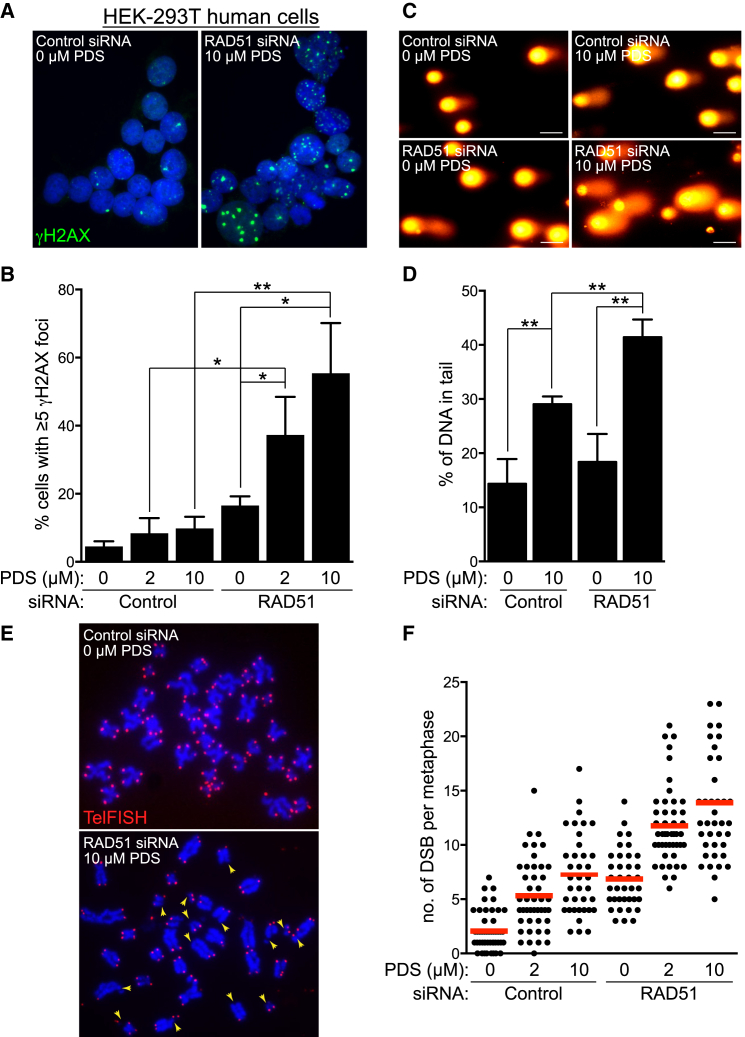
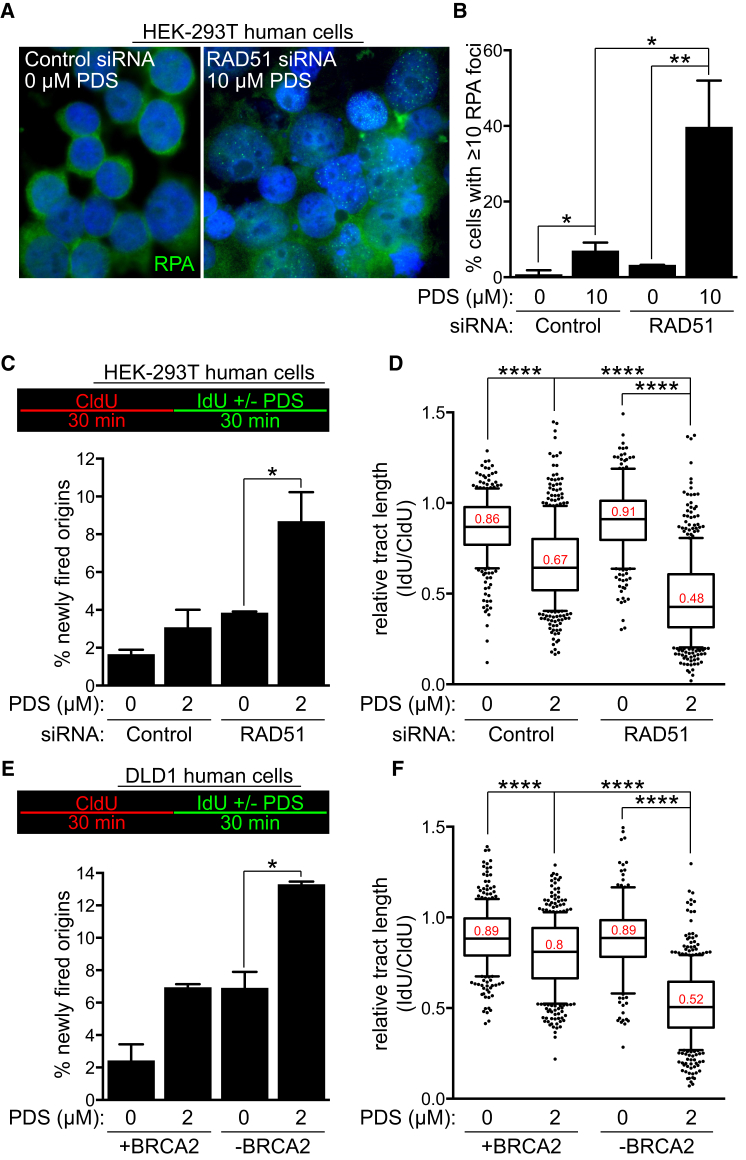
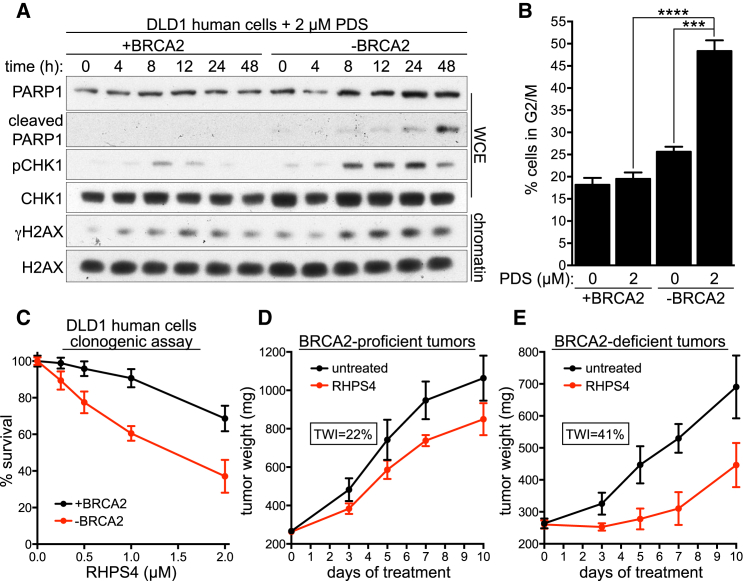
G-quadruplex (G4)-forming genomic sequences, including telomeres, represent natural replication fork barriers. Stalled replication forks can be stabilized and restarted by homologous recombination (HR), which also repairs DNA double-strand breaks (DSBs) arising at collapsed forks. We have previously shown that HR facilitates telomere replication. Here, we demonstrate that the replication efficiency of guanine-rich (G-rich) telomeric repeats is decreased significantly in cells lacking HR. Treatment with the G4-stabilizing compound pyridostatin (PDS) increases telomere fragility in BRCA2-deficient cells, suggesting that G4 formation drives telomere instability. Remarkably, PDS reduces proliferation of HR-defective cells by inducing DSB accumulation, checkpoint activation, and deregulated G2/M progression and by enhancing the replication defect intrinsic to HR deficiency. PDS toxicity extends to HR-defective cells that have acquired olaparib resistance through loss of 53BP1 or REV7. Altogether, these results highlight the therapeutic potential of G4-stabilizing drugs to selectively eliminate HR-compromised cells and tumors, including those resistant to PARP inhibition.
包括端粒在内的形成G-四链体(G4)的基因组序列是天然的复制叉障碍。停滞的复制叉可以通过同源重组(HR)来稳定和重新启动,HR还能修复在崩溃的复制叉处产生的DNA双链断裂(DSB)。我们之前已经表明HR促进端粒复制。在这里,我们证明在缺乏HR的细胞中,富含鸟嘌呤(富含G)的端粒重复序列的复制效率显著降低。用G4稳定化合物吡啶抑制素(PDS)处理会增加BRCA2缺陷细胞中的端粒脆性,这表明G4的形成会导致端粒不稳定。值得注意的是,PDS通过诱导DSB积累、检查点激活和失调的G2/M进程,并通过增强HR缺陷固有的复制缺陷来降低HR缺陷细胞的增殖。PDS毒性扩展到通过缺失53BP1或REV7而获得奥拉帕尼抗性的HR缺陷细胞。总之,这些结果突出了G4稳定药物选择性消除HR受损细胞和肿瘤(包括那些对PARP抑制有抗性的细胞和肿瘤)的治疗潜力。