Svensson Sarah L, Behroozian Shekooh, Xu Wanjing, Surette Michael G, Li Loretta, Davies Julian
Department of Microbiology and Immunology, University of British Columbia, Vancouver, British Columbia, Canada.
Department of Civil Engineering, University of British Columbia, Vancouver, British Columbia, Canada.
mBio. 2017 May 23;8(3):e00590-17. doi: 10.1128/mBio.00590-17.
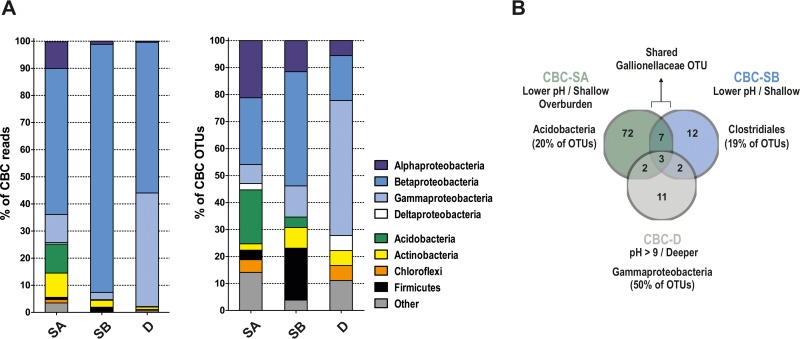
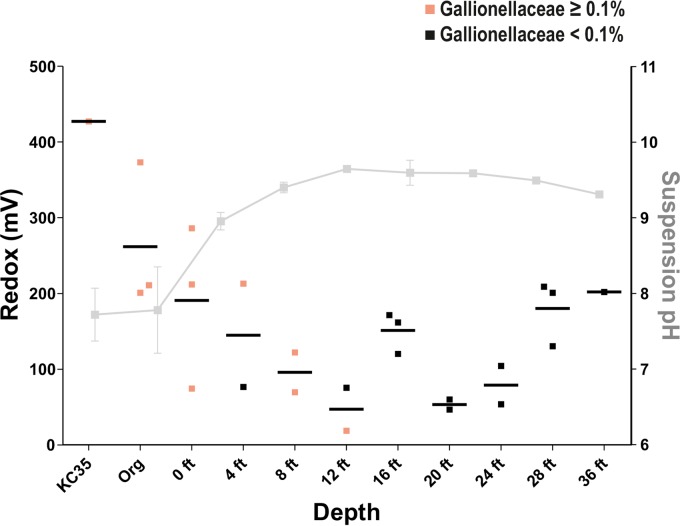
Widespread antibiotic resistance among bacterial pathogens is providing the impetus to explore novel sources of antimicrobial agents. Recently, the potent antibacterial activity of certain clay minerals has stimulated scientific interest in these materials. One such example is Kisameet glacial clay (KC), an antibacterial clay from a deposit on the central coast of British Columbia, Canada. However, our understanding of the active principles of these complex natural substances is incomplete. Like soils, clays may possess complex mixtures of bacterial taxa, including the , a clade known to be rich in antibiotic-producing organisms. Here, we present the first characterization of both the microbial and geochemical characteristics of a glacial clay deposit. KC harbors surprising bacterial species richness, with at least three distinct community types. We show that the deposit has clines of inorganic elements that can be leached by pH, which may be drivers of community structure. We also note the prevalence of in samples recovered near the surface, as well as taxa that include medically or economically important bacteria such as and These results provide insight into the microbial taxa that may be the source of KC antibacterial activity and suggest that natural clays may be rich sources of microbial and molecular diversity. Identifying and characterizing the resident microbial populations (bacteria, viruses, protozoa, and fungi) is key to understanding the ecology, chemistry, and homeostasis of virtually all sites on Earth. The Kisameet Bay deposit in British Columbia, Canada, holds a novel glacial clay with a history of medicinal use by local indigenous people. We previously showed that it has potent activity against a variety of antibiotic-resistant bacteria, suggesting it could complement our dwindling arsenal of antibiotics. Here, we have characterized the microbiome of this deposit to gain insight into what might make the clay antibacterial. Our analyses suggest that the deposit contains a surprising diversity of bacteria, which live in at least three distinct environments. In addition, the clay harbors bacteria that may have interesting potential as biocontrol/bioremediation agents or producers of novel bioactive compounds.
细菌病原体中广泛存在的抗生素耐药性促使人们探索新型抗菌剂来源。最近,某些粘土矿物的强大抗菌活性激发了科学界对这些材料的兴趣。其中一个例子是基萨米特冰川粘土(KC),这是一种来自加拿大不列颠哥伦比亚省中部海岸一处矿床的抗菌粘土。然而,我们对这些复杂天然物质的活性成分的了解并不完整。与土壤一样,粘土可能含有复杂的细菌类群混合物,包括 ,这是一个已知富含抗生素产生菌的进化枝。在这里,我们首次对冰川粘土矿床的微生物和地球化学特征进行了表征。KC拥有惊人的细菌物种丰富度,至少有三种不同的群落类型。我们表明,该矿床存在可被pH值淋溶的无机元素梯度,这可能是群落结构的驱动因素。我们还注意到在靠近地表采集的样本中 很普遍,以及包括具有医学或经济重要性的细菌如 和 在内的分类群。这些结果为可能是KC抗菌活性来源的微生物分类群提供了见解,并表明天然粘土可能是微生物和分子多样性的丰富来源。识别和表征常驻微生物种群(细菌、病毒、原生动物和真菌)是理解地球上几乎所有地点的生态、化学和内稳态的关键。加拿大不列颠哥伦比亚省的基萨米特湾矿床拥有一种新型冰川粘土,当地原住民有使用其治病的历史。我们之前表明它对多种抗生素耐药细菌具有强大活性,表明它可以补充我们日益减少的抗生素库。在这里,我们对该矿床的微生物群落进行了表征,以深入了解使粘土具有抗菌性的因素。我们的分析表明,该矿床含有惊人的细菌多样性,它们生活在至少三种不同的环境中。此外,这种粘土含有可能作为生物防治/生物修复剂或新型生物活性化合物生产者具有有趣潜力的细菌。