Dash Alexander S, Patel Manish R
Department of Biology, Macalester College, St. Paul, MN 55105, USA.
Division of Hematology, Oncology, and Transplantation, University of Minnesota Medical School, Minneapolis, MN 55455, USA.
Biomedicines. 2017 Jan 4;5(1):2. doi: 10.3390/biomedicines5010002.
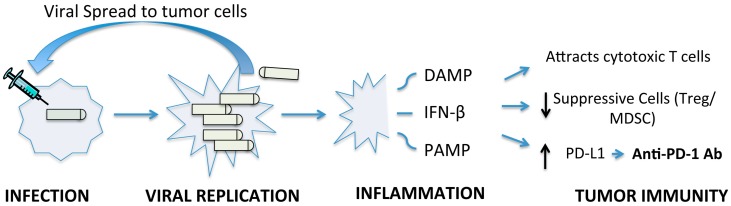
Thoracic cancers, including non-small cell lung cancer (NSCLC), small cell lung cancer (SCLC), and malignant pleural mesothelioma (MM), cause the highest rate of cancer mortality worldwide. Most of these deaths are as a result of NSCLC; however, prognoses for the other two diseases remain as some of the poorest of any cancers. Recent advances in immunotherapy, specifically immune checkpoint inhibitors, have begun to help a small population of patients with advanced lung cancer. People who respond to these immune therapies generally have a durable response and many see dramatic decreases in their disease. However, response to immune therapies remains relatively low. Therefore, intense research is now underway to rationally develop combination therapies to expand the range of patients who will respond to and benefit from immune therapy. One promising approach is with oncolytic viruses. These oncolytic viruses (OVs) have been found to be selective for or have been engineered to preferentially infect and kill cancer cells. In pre-clinical models of different thoracic cancers, it has been found that these viruses can induce immunogenic cell death, increase the number of immune mediators brought into the tumor microenvironment and broaden the neoantigen-specific T cell response. We will review here the literature regarding the application of virotherapy toward augmenting immune responses in thoracic cancers.
胸段癌症,包括非小细胞肺癌(NSCLC)、小细胞肺癌(SCLC)和恶性胸膜间皮瘤(MM),是全球癌症死亡率最高的癌症类型。这些死亡大多是由非小细胞肺癌导致的;然而,另外两种疾病的预后在所有癌症中仍然是最差的。免疫疗法,特别是免疫检查点抑制剂的最新进展,已开始帮助一小部分晚期肺癌患者。对这些免疫疗法有反应的人通常会有持久的反应,许多人的病情会显著减轻。然而,免疫疗法的反应率仍然相对较低。因此,目前正在进行深入研究,以合理开发联合疗法,扩大能够对免疫疗法产生反应并从中受益的患者范围。一种有前景的方法是使用溶瘤病毒。这些溶瘤病毒(OVs)已被发现对癌细胞具有选择性,或者经过改造后能优先感染并杀死癌细胞。在不同胸段癌症的临床前模型中,已发现这些病毒可诱导免疫原性细胞死亡,增加进入肿瘤微环境的免疫介质数量,并扩大新抗原特异性T细胞反应。我们将在此回顾关于病毒疗法在增强胸段癌症免疫反应方面应用的文献。