Department of Structural Biology, University of Pittsburgh School of Medicine, 3501 Fifth Avenue, Pittsburgh, Pennsylvania 15213, USA.
Department of Molecular Pharmacology, Groningen Research Institute of Pharmacy, University of Groningen, Antonius Deusinglaan 1, 9713 AV Groningen, The Netherlands.
Nat Commun. 2017 May 24;8:15462. doi: 10.1038/ncomms15462.
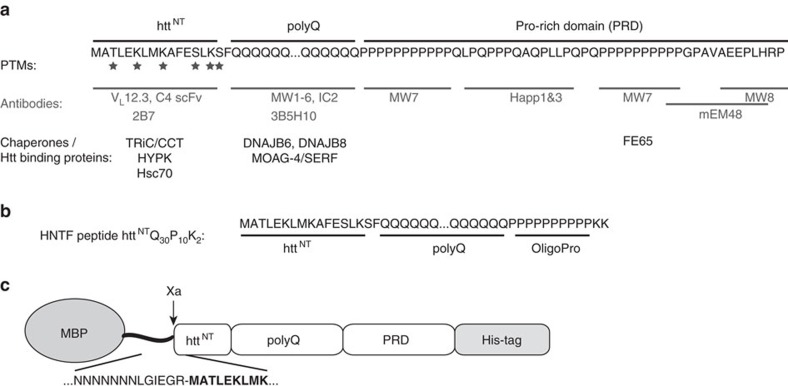
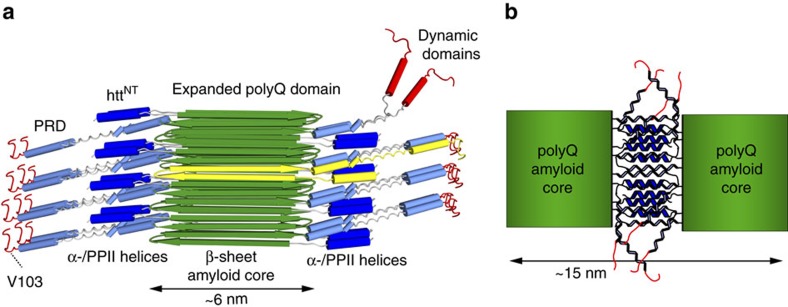
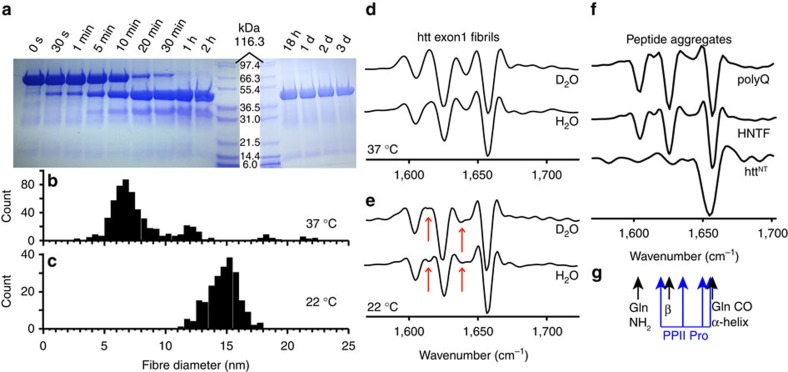
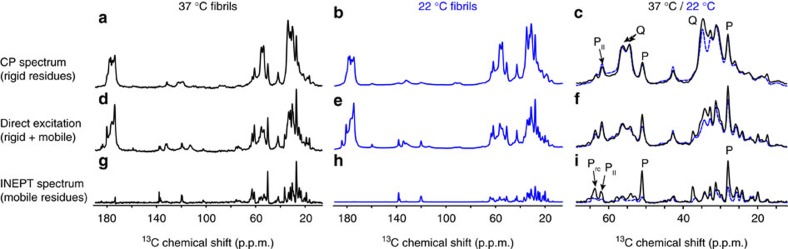
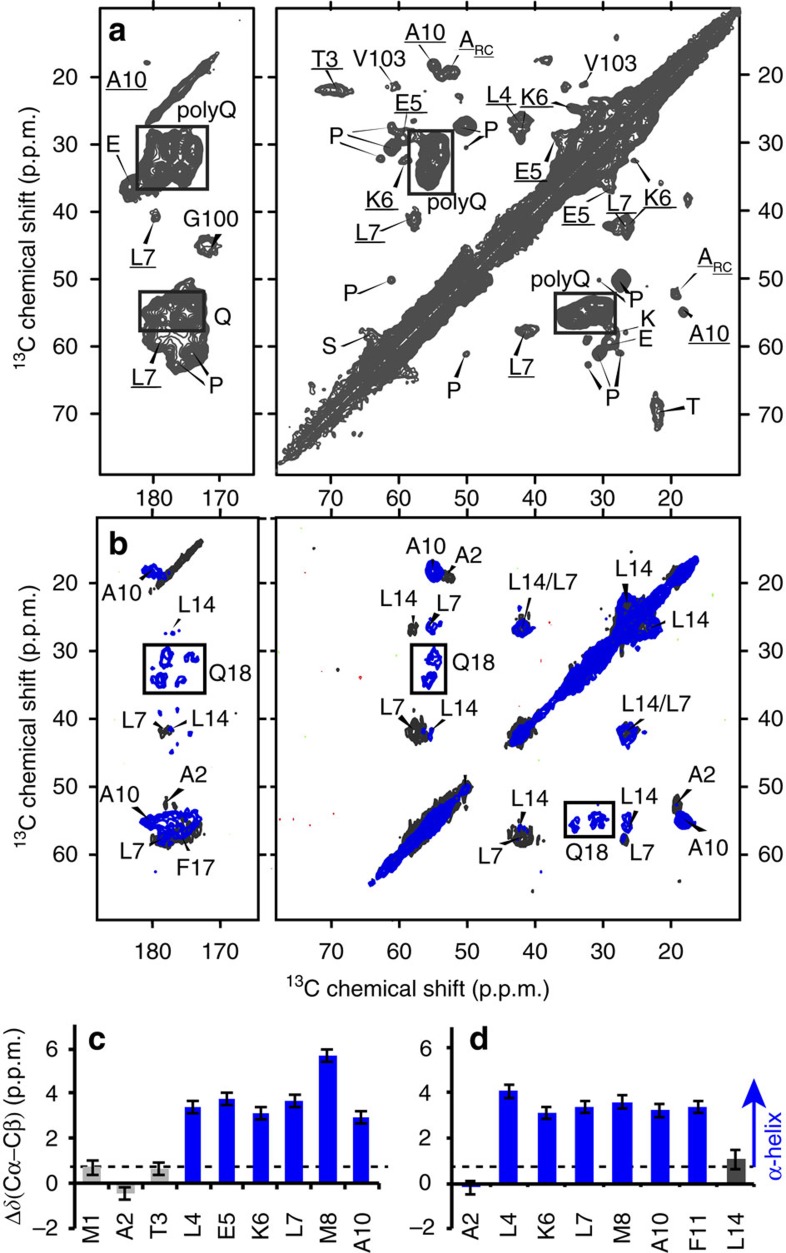
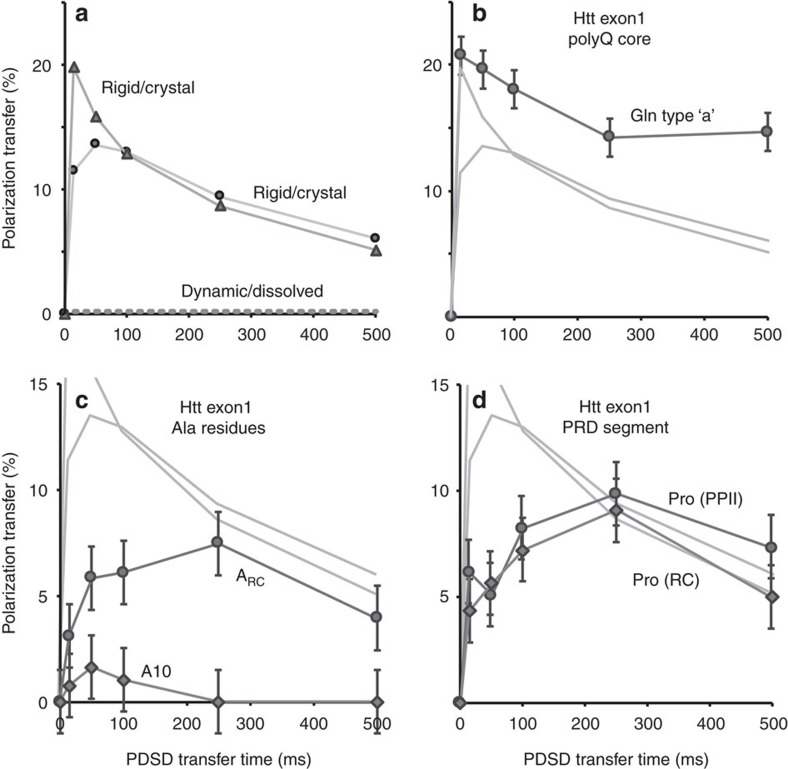
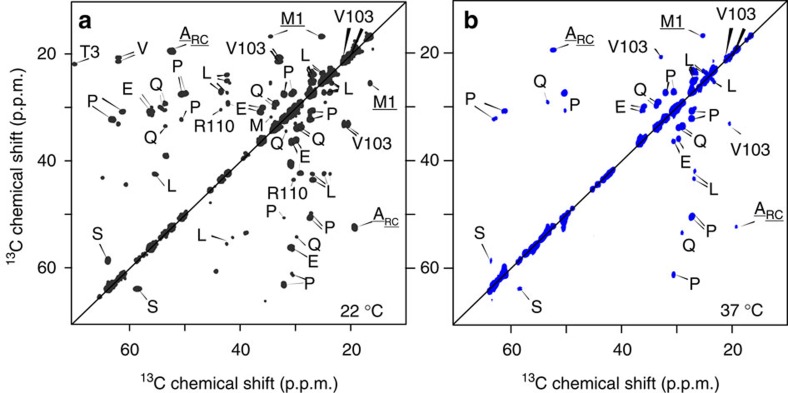
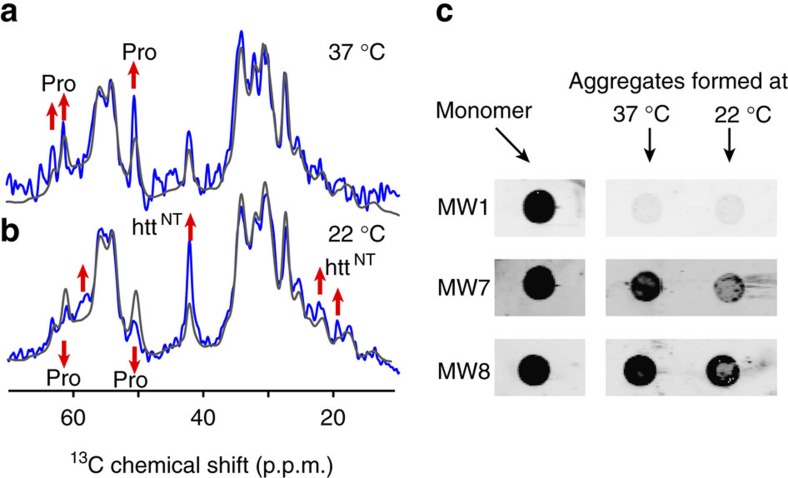
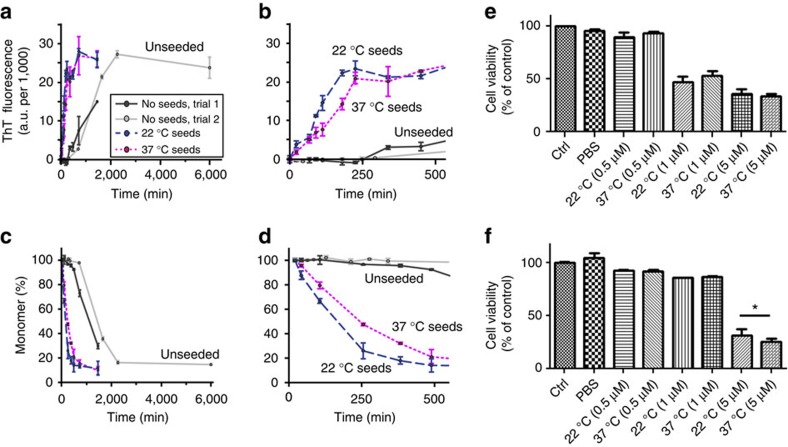
Polyglutamine expansion in the huntingtin protein is the primary genetic cause of Huntington's disease (HD). Fragments coinciding with mutant huntingtin exon1 aggregate in vivo and induce HD-like pathology in mouse models. The resulting aggregates can have different structures that affect their biochemical behaviour and cytotoxic activity. Here we report our studies of the structure and functional characteristics of multiple mutant htt exon1 fibrils by complementary techniques, including infrared and solid-state NMR spectroscopies. Magic-angle-spinning NMR reveals that fibrillar exon1 has a partly mobile α-helix in its aggregation-accelerating N terminus, and semi-rigid polyproline II helices in the proline-rich flanking domain (PRD). The polyglutamine-proximal portions of these domains are immobilized and clustered, limiting access to aggregation-modulating antibodies. The polymorphic fibrils differ in their flanking domains rather than the polyglutamine amyloid structure. They are effective at seeding polyglutamine aggregation and exhibit cytotoxic effects when applied to neuronal cells.
亨廷顿病(HD)的主要遗传病因是亨廷顿蛋白中的多聚谷氨酰胺扩展。与突变亨廷顿外显子 1 相吻合的片段在体内聚集,并在小鼠模型中诱导类似 HD 的病理学。由此产生的聚集体可以具有不同的结构,从而影响其生化行为和细胞毒性活性。在这里,我们通过互补技术,包括红外和固态 NMR 光谱法,报告了我们对多种突变 htt exon1 原纤维的结构和功能特性的研究。魔角旋转 NMR 表明,纤维状 exon1 在其加速聚集的 N 端具有部分可移动的α-螺旋,以及富含脯氨酸的侧翼结构域(PRD)中的半刚性多脯氨酸 II 螺旋。这些结构域的多聚谷氨酰胺近端部分被固定并聚集,限制了对聚集调节抗体的进入。多态性纤维在侧翼结构域而不是多聚谷氨酰胺淀粉样结构上存在差异。它们有效地引发多聚谷氨酰胺聚集,并在应用于神经元细胞时表现出细胞毒性作用。