Liang Jin-Yan, Tong Fan, Gu Fei-Fei, Liu Yang-Yang, Zeng Yu-Lan, Hong Xiao-Hua, Zhang Kai, Liu Li
Cancer Center, Union Hospital, Tongji Medical College, Huazhong University of Science and Technology, Wuhan, China.
Medicine (Baltimore). 2017 May;96(21):e6985. doi: 10.1097/MD.0000000000006985.
Lung cancer is the leading cause of cancer-related death in the world. Tyrosine kinase inhibitors (TKIs), which target mutated epidermal growth factor receptor (EGFR), have been the first-line treatment of late-stage lung adenocarcinoma harboring EGFR mutation. EGFR mutations are mostly identified in lung adenocarcinoma. However, it is rarely seen in lung neuroendocrine carcinoma, and treatment strategies remain under reported.
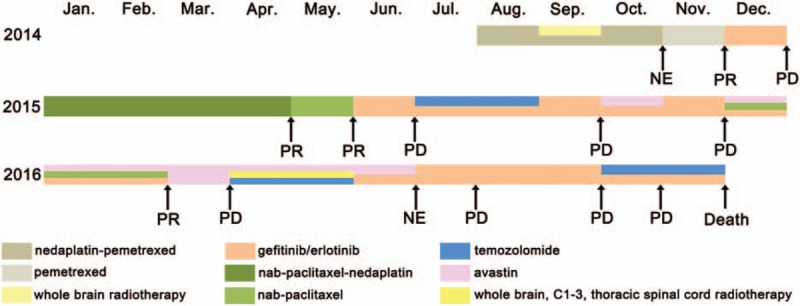
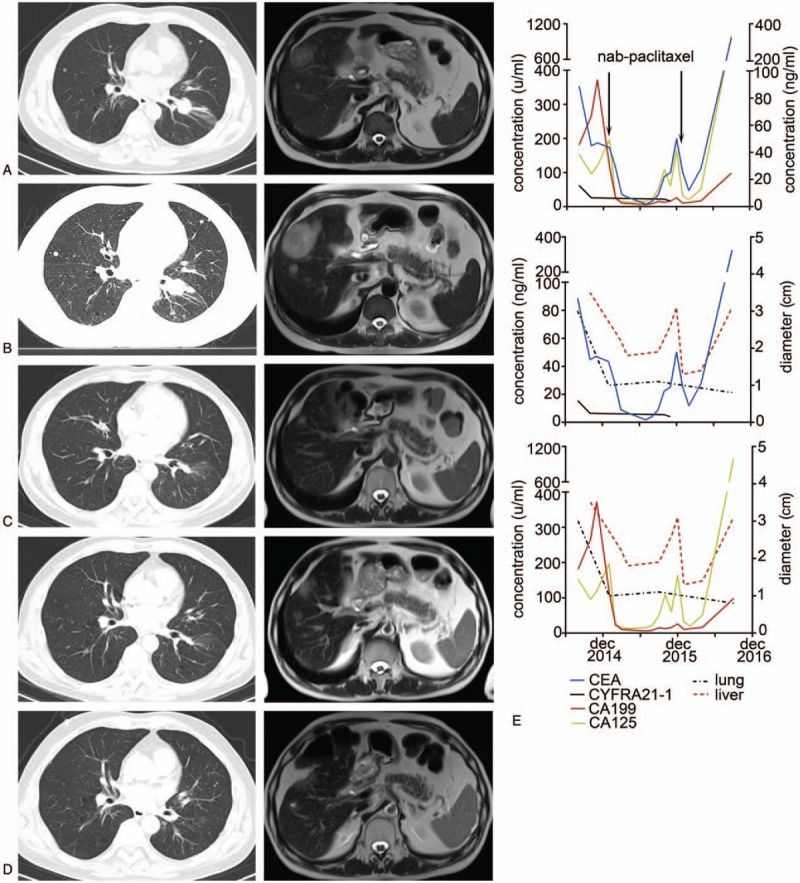
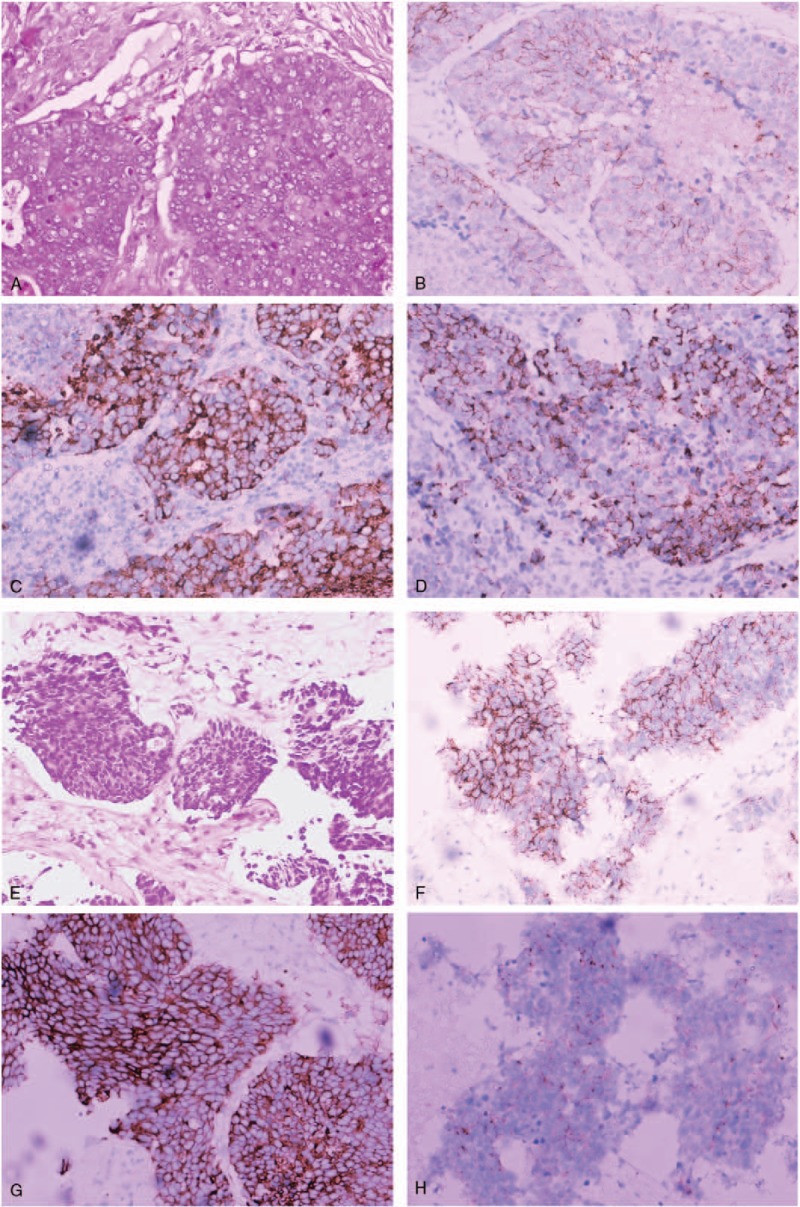
Here, we describe a 54-year-old Chinese man diagnosed with lung adenocarcinoma (cT4N3M1b, stage IV) with neuroendocrine differentiation and L858R mutation on exon 21. He developed progressive disease in liver 4 months later, and the biopsy of liver metastases showed neuroendocrine carcinoma maintained the same EGFR mutation.
Lung adenocarcinoma and neuroendocrine carcinoma were identified by biopsy.
After a combined treatment with nab-paclitaxel and erlotinib, the patient achieved partial remission.
The patient's overall survival was 27 months.
This case highlights that EGFR mutated lung neuroendocrine carcinoma is not responsive to single-agent EGFR-TKI. However, combined application with nab-paclitaxel can improve its efficacy and prolong the patient's survival.
肺癌是全球癌症相关死亡的主要原因。靶向突变表皮生长因子受体(EGFR)的酪氨酸激酶抑制剂(TKIs)一直是晚期EGFR突变肺腺癌的一线治疗方法。EGFR突变大多在肺腺癌中被发现。然而,在肺神经内分泌癌中很少见,且治疗策略仍报道不足。
在此,我们描述一名54岁的中国男性,被诊断为伴有神经内分泌分化且外显子21上有L858R突变的肺腺癌(cT4N3M1b,IV期)。4个月后他肝脏出现疾病进展,肝转移灶活检显示神经内分泌癌维持相同的EGFR突变。
通过活检确诊为肺腺癌和神经内分泌癌。
在接受纳武单抗联合厄洛替尼治疗后,患者达到部分缓解。
患者的总生存期为27个月。
该病例表明,EGFR突变的肺神经内分泌癌对单药EGFR-TKI无反应。然而,联合应用纳武单抗可提高其疗效并延长患者生存期。