He Yuanlin, Peng Xiaoxu, Wu Tinghe, Yang Weijie, Liu Wenwen, Zhang Jing, Su Yiping, Kong Feifei, Dou Xiaowei, Li Jing
State Key Laboratory of Reproductive Medicine, Nanjing Medical University, Nanjing, China.
Department of Biotechnology and Biomedicine, Yangtze Delta Region Institutes of Tsinghua University, Jiaxing, China.
Cell Death Dis. 2017 May 25;8(5):e2817. doi: 10.1038/cddis.2017.168.
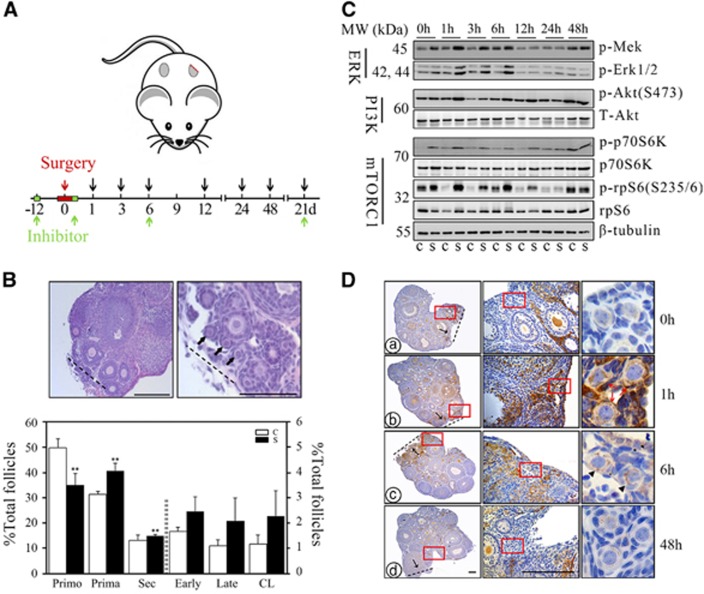
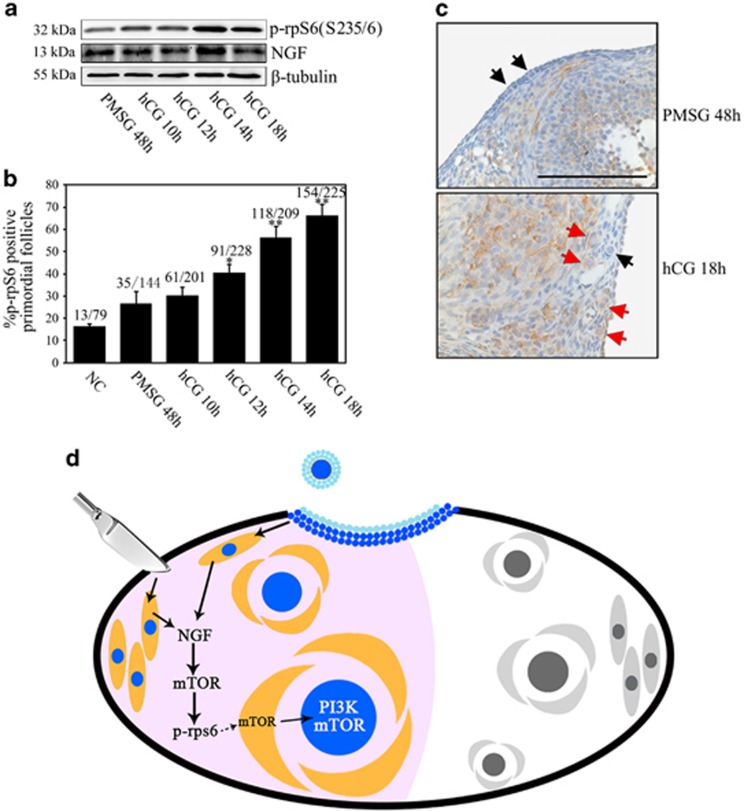
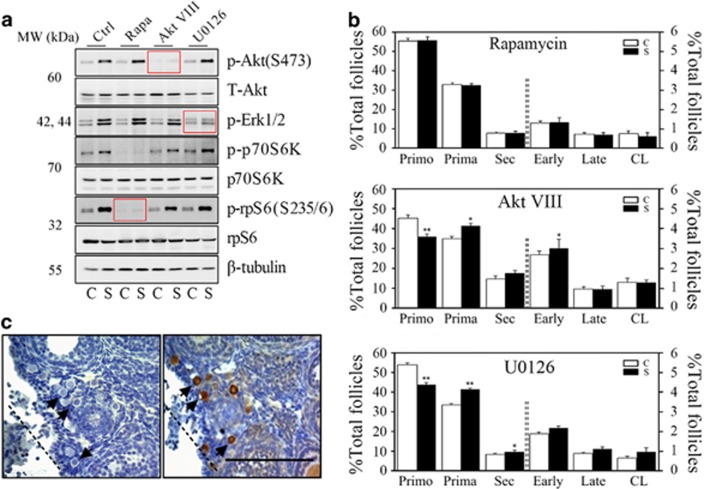
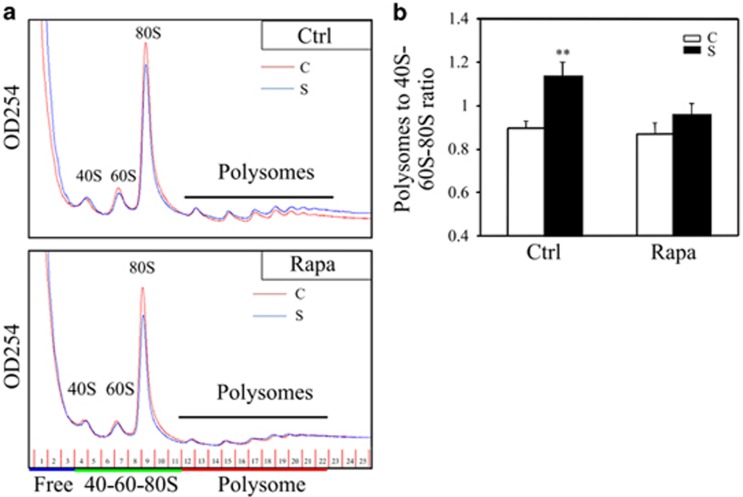
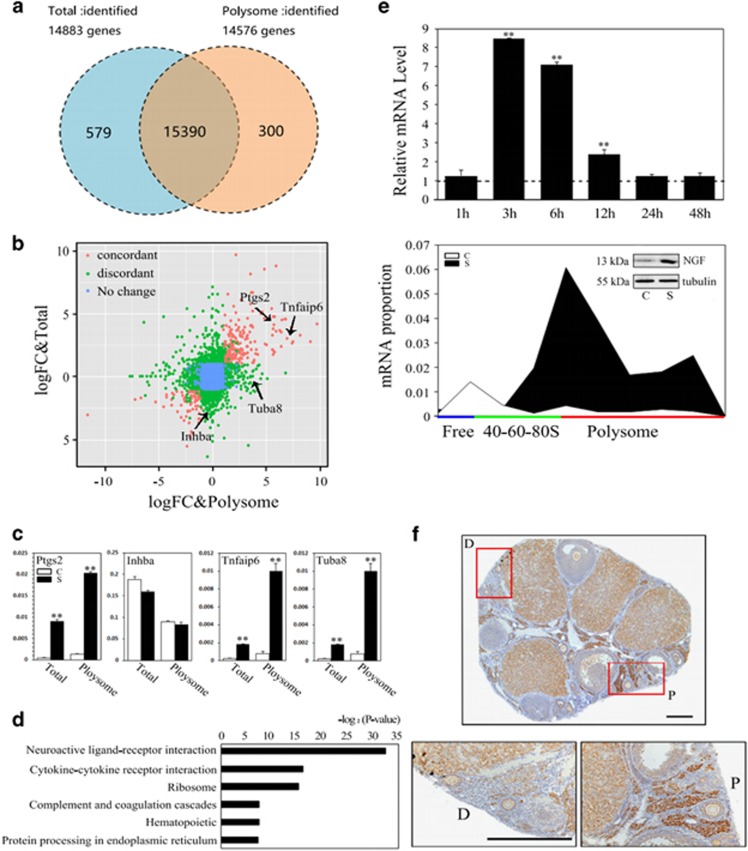
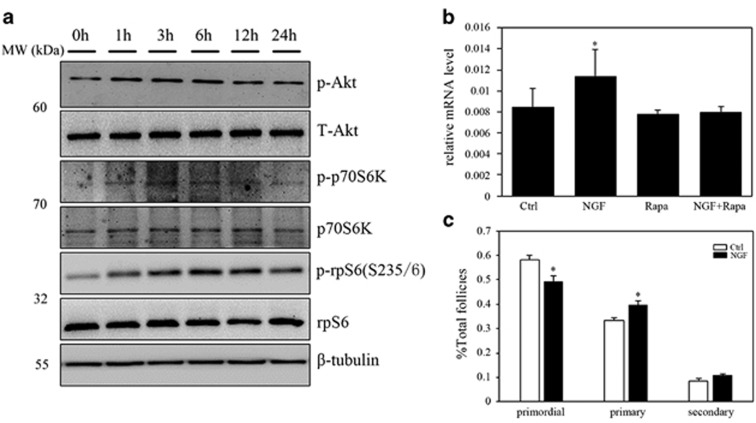
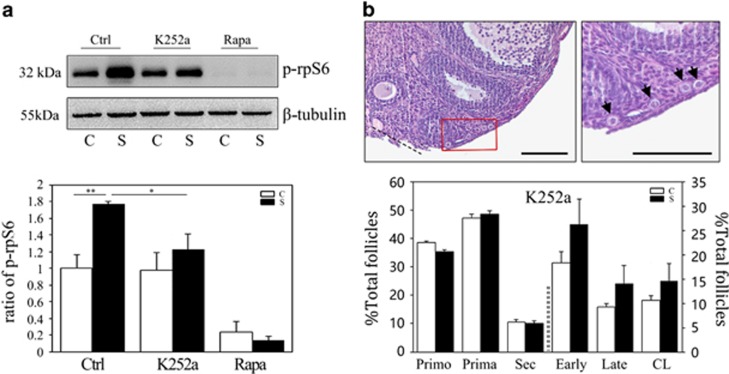
In mammalian ovaries, primordial follicles remain in a quiescent state until activation by the surrounding microenvironment. Ovarian intervention, for example, ovarian cystectomy, ovarian wedge resection or laser drilling therapies for polycystic ovarian syndrome, has long been reported to change follicular development by an unknown mechanism(s). Herein, we established a murine model with partial ovarian resection of one ovary unilaterally, with the contralateral ovary undamaged. We found the injury accelerated follicular activation and development through the mTORC1 signaling pathway. Moreover, the stimulation of primordial follicles was restricted near the incision site where the mTORC1 pathway showed sequential activation beginning at the interstitial cells and proceeding to the primordial follicles. Total and polysome-associated RNA-seq revealed the increase of the nerve growth factor (NGF) family member, in both two fractions and immunostaining showed the restricted induction of NGF near the incision site. In cultured newborn ovaries, NGF demonstrated increase of follicular activation, and moreover, the NGF inhibitor K252a effectively blocked activation of primordial follicles stimulated by the surgery. We liken ovulation in mammals to minor tissue trauma, which happens naturally and cyclically in the body. As the increase in NGF accompanied the accumulation of activated primordial follicles after ovulation, our study may represent a common mechanism for selective follicular activation induced by a localized increase in NGF in interstitial cells and mediated via the mTOR signaling pathway. In addition, the NGF inhibitor K252a and the mTOR inhibitor rapamycin constitute good candidates for protecting follicular reserve against over exhaustion after ovarian surgery.
在哺乳动物卵巢中,原始卵泡处于静止状态,直到被周围微环境激活。长期以来,人们一直报道卵巢干预,例如卵巢囊肿切除术、卵巢楔形切除术或针对多囊卵巢综合征的激光打孔疗法,会通过未知机制改变卵泡发育。在此,我们建立了一种小鼠模型,单侧部分切除一侧卵巢,对侧卵巢未受损。我们发现这种损伤通过mTORC1信号通路加速了卵泡的激活和发育。此外,原始卵泡的刺激局限于切口部位附近,在该部位mTORC1通路从间质细胞开始依次激活并延伸至原始卵泡。总RNA测序和多核糖体相关RNA测序显示,神经生长因子(NGF)家族成员在两个部分均增加,免疫染色显示切口部位附近NGF的诱导受限。在培养的新生卵巢中,NGF显示卵泡激活增加,此外,NGF抑制剂K252a有效阻断了手术刺激引起的原始卵泡激活。我们将哺乳动物的排卵比作轻微的组织损伤,这种损伤在体内自然且周期性地发生。由于排卵后NGF的增加伴随着激活的原始卵泡的积累,我们的研究可能代表了一种由间质细胞中NGF局部增加并通过mTOR信号通路介导的选择性卵泡激活的共同机制。此外,NGF抑制剂K252a和mTOR抑制剂雷帕霉素是保护卵泡储备免受卵巢手术后过度消耗的良好候选药物。