Micalizzi Douglas S, Haber Daniel A, Maheswaran Shyamala
Massachusetts General Hospital Cancer Center, Harvard Medical School, Charlestown, MA, USA.
Department of Medicine, Harvard Medical School, Charlestown, MA, USA.
Mol Oncol. 2017 Jul;11(7):770-780. doi: 10.1002/1878-0261.12081. Epub 2017 Jun 9.
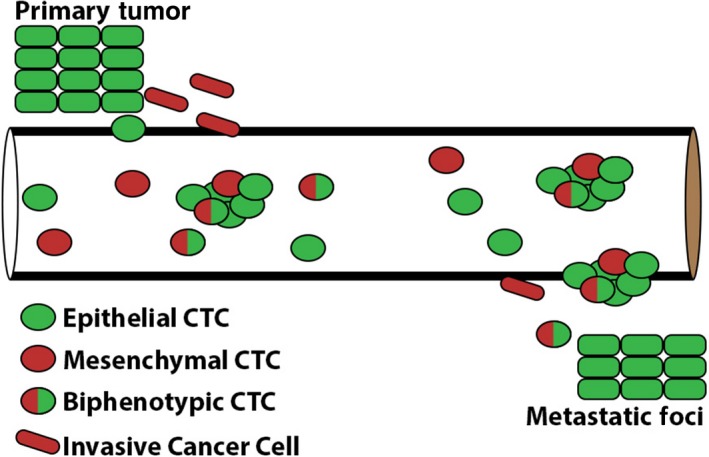
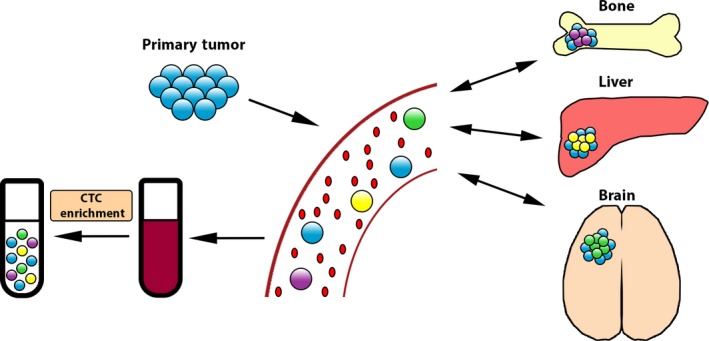
Metastasis of epithelial cancer cells to distant sites is a particularly critical stage of cancer progression that typically marks the incurability of the disease. It is governed by a complex series of events including invasion and intravasation of tumor cells into the stroma and blood, respectively. Epithelial-to-mesenchymal transition (EMT), a phenotypic change marked by the loss of epithelial characteristics and the acquisition of invasive mesenchymal properties, is implicated in the dissemination of tumor cells. Circulating tumor cells (CTCs), the precursors of metastasis, can be used to interrogate the contribution of EMT in metastasis and therapeutic responses. The analysis of these CTCs and in particular the presence of inter- and intrapatient heterogeneity for markers of EMT has provided new insights into the metastatic process. This review will focus on epithelial-mesenchymal plasticity in CTCs and its potential clinical implications.
上皮癌细胞转移至远处是癌症进展过程中一个尤为关键的阶段,通常标志着疾病已无法治愈。这一过程受一系列复杂事件的支配,包括肿瘤细胞分别侵袭并进入基质和血液。上皮-间质转化(EMT)是一种表型变化,其特征是上皮特性丧失并获得侵袭性间质特性,与肿瘤细胞的播散有关。循环肿瘤细胞(CTC)作为转移的前体,可用于探究EMT在转移和治疗反应中的作用。对这些CTC的分析,尤其是对EMT标志物在患者间和患者内异质性的分析,为转移过程提供了新的见解。本综述将聚焦于CTC中的上皮-间质可塑性及其潜在的临床意义。