Brain Tumor Center & Neuro-Oncology Unit, Beth Israel Deaconess Medical Center, Harvard Medical School, Boston, Massachusetts.
Department of Physics and Applied Physics, University of Massachusetts in Lowell, Lowell, Massachusetts.
Cancer Med. 2017 Jun;6(6):1286-1300. doi: 10.1002/cam4.1095. Epub 2017 May 23.
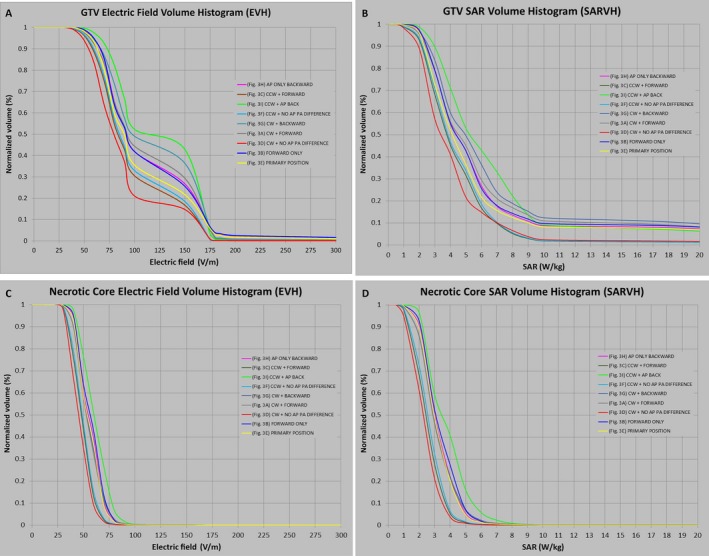
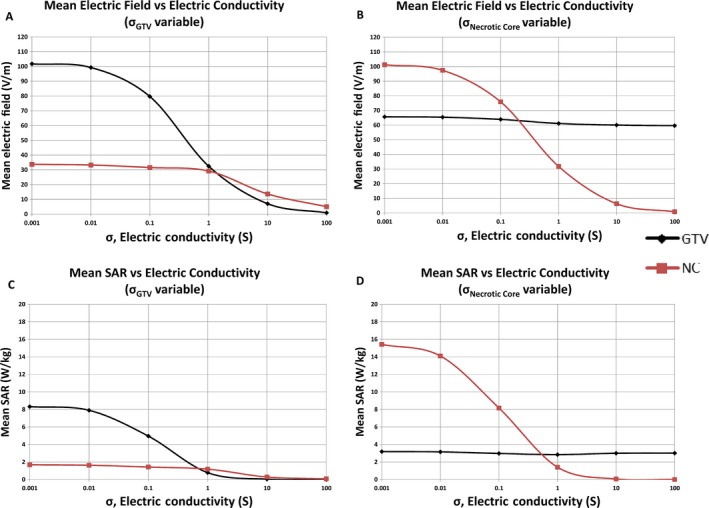
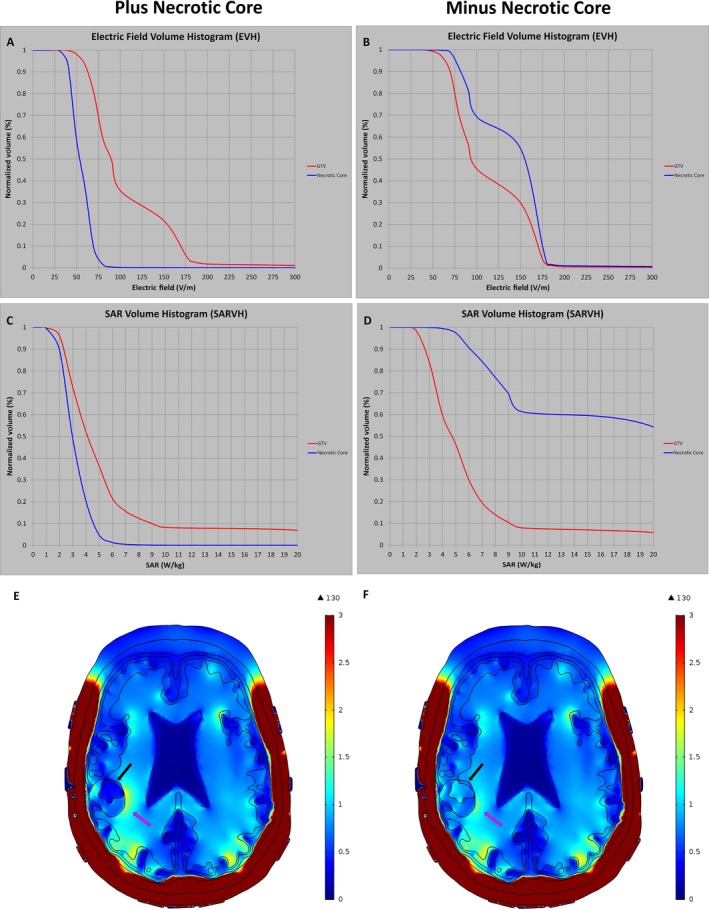
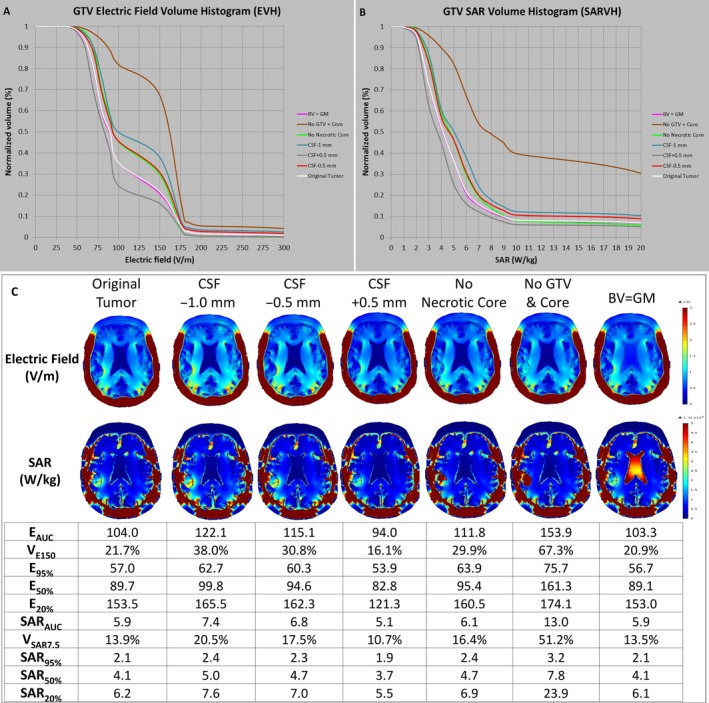
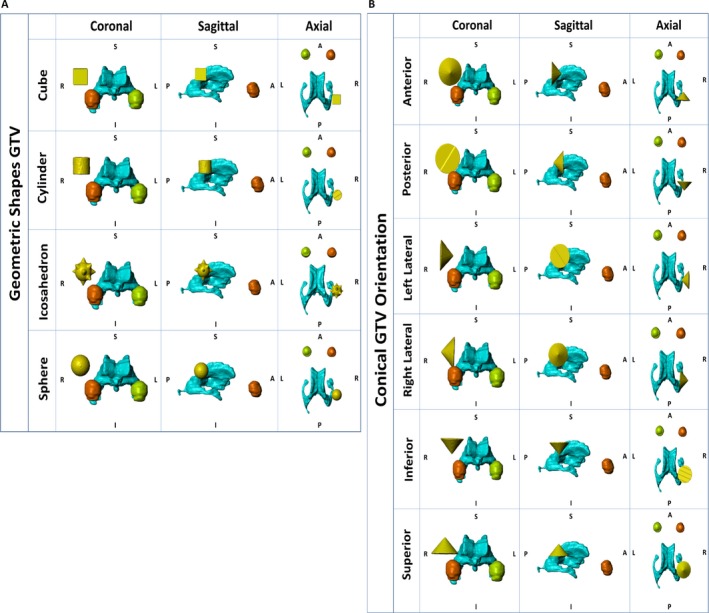
Tumor Treating Fields (TTFields) therapy is an approved treatment that has known clinical efficacy against recurrent and newly diagnosed glioblastoma. However, the distribution of the electric fields and the corresponding pattern of energy deposition in the brain are poorly understood. To evaluate the physical parameters that may influence TTFields, postacquisition MP-RAGE, T1 and T2 MRI sequences from a responder with a right parietal glioblastoma were anatomically segmented and then solved using finite-element method to determine the distribution of the electric fields and rate of energy deposition at the gross tumor volume (GTV) and other intracranial structures. Electric field-volume histograms (EVH) and specific absorption rate-volume histograms (SARVH) were constructed to numerically evaluate the relative and/or absolute magnitude volumetric differences between models. The electric field parameters E , V , E , E , and E , as well as the SAR parameters SAR , V , SAR , SAR , and SAR , facilitated comparisons between models derived from various conditions. Specifically, TTFields at the GTV were influenced by the dielectric characteristics of the adjacent tissues as well as the GTV itself, particularly the presence or absence of a necrotic core. The thickness of the cerebrospinal fluid on the convexity of the brain and the geometry of the tumor were also relevant factors. Finally, the position of the arrays also influenced the electric field distribution and rate of energy deposition in the GTV. Using EVH and SARVH, a personalized approach for TTFields treatment can be developed when various patient-related and tumor-related factors are incorporated into the planning procedure.
肿瘤治疗电场(TTFields)疗法是一种已被批准的治疗方法,对复发性和新诊断的胶质母细胞瘤具有已知的临床疗效。然而,电场的分布和大脑中相应的能量沉积模式知之甚少。为了评估可能影响 TTFields 的物理参数,对一名右侧顶叶胶质母细胞瘤患者的磁共振成像(MRI)后采集的 MP-RAGE、T1 和 T2 序列进行解剖分割,然后使用有限元方法进行求解,以确定电场的分布和在大体肿瘤体积(GTV)和其他颅内结构中的能量沉积率。构建了电场体积直方图(EVH)和比吸收率体积直方图(SARVH),以数值评估模型之间的相对和/或绝对体积差异。电场参数 E 、 V 、 E 、 E 、和 E ,以及比吸收率参数 SAR 、 V 、 SAR 、 SAR 、和 SAR ,有助于比较来自不同条件的模型。具体而言,GTV 中的 TTFields 受到相邻组织的介电特性以及 GTV 本身的影响,特别是是否存在坏死核心。大脑凸面脑积液的厚度和肿瘤的几何形状也是相关因素。最后,阵列的位置也会影响 GTV 中的电场分布和能量沉积率。使用 EVH 和 SARVH,可以在将各种与患者相关和肿瘤相关的因素纳入规划过程时,为 TTFields 治疗开发个性化方法。