Hoque Enamul, Fritscher Johannes
Helmholtz Zentrum München GmbH - German Research Center for Environmental Health, Institute of Groundwater Ecology, Neuherberg, Germany.
Microbiologyopen. 2017 Aug;6(4). doi: 10.1002/mbo3.483. Epub 2017 May 24.
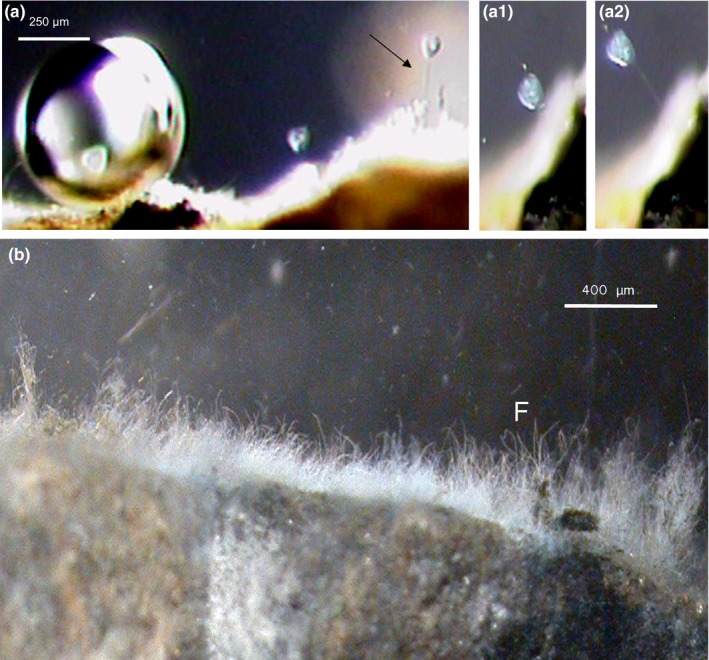
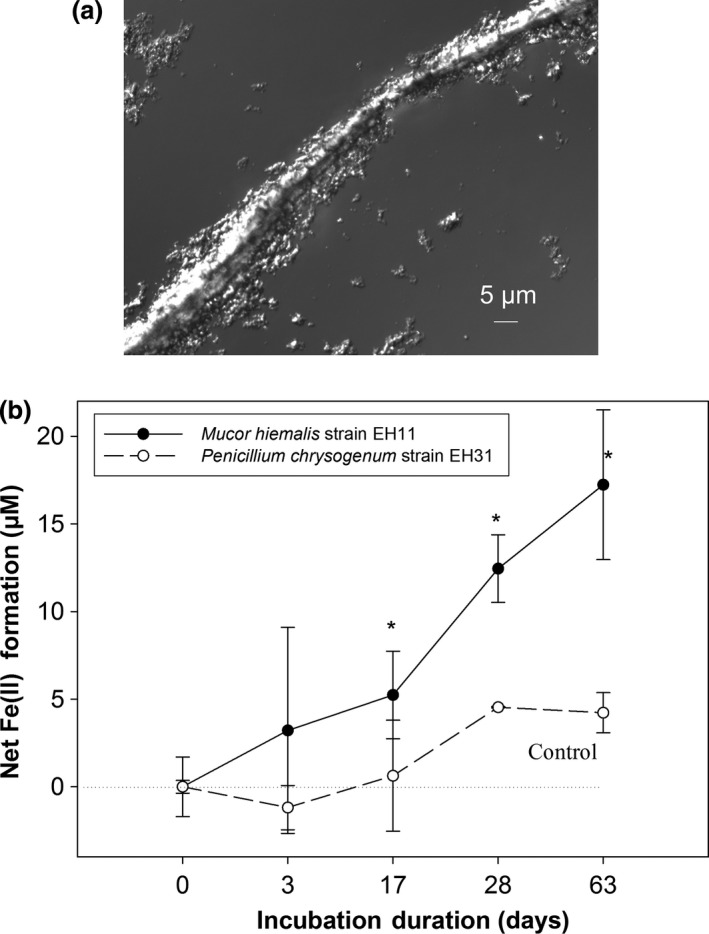
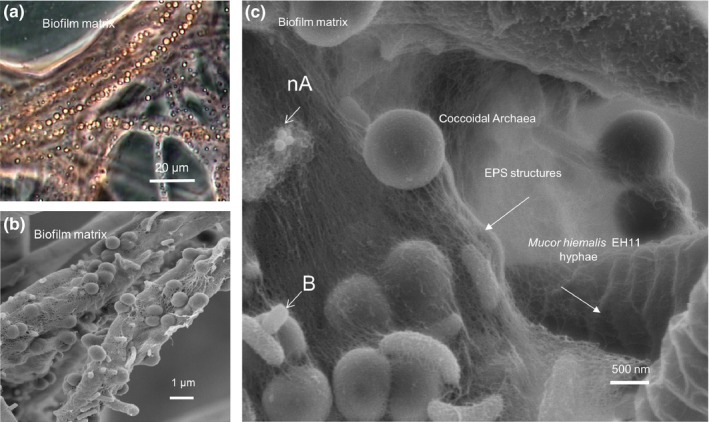
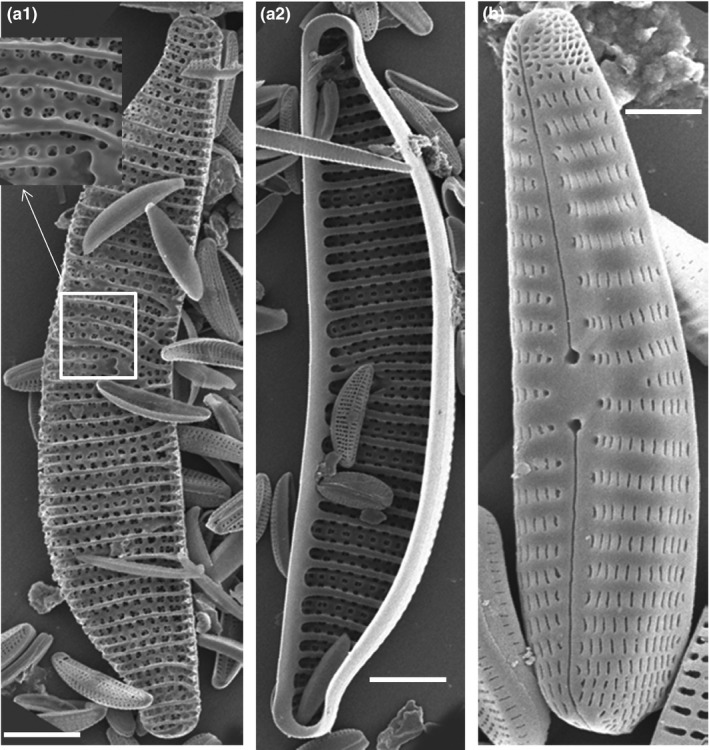
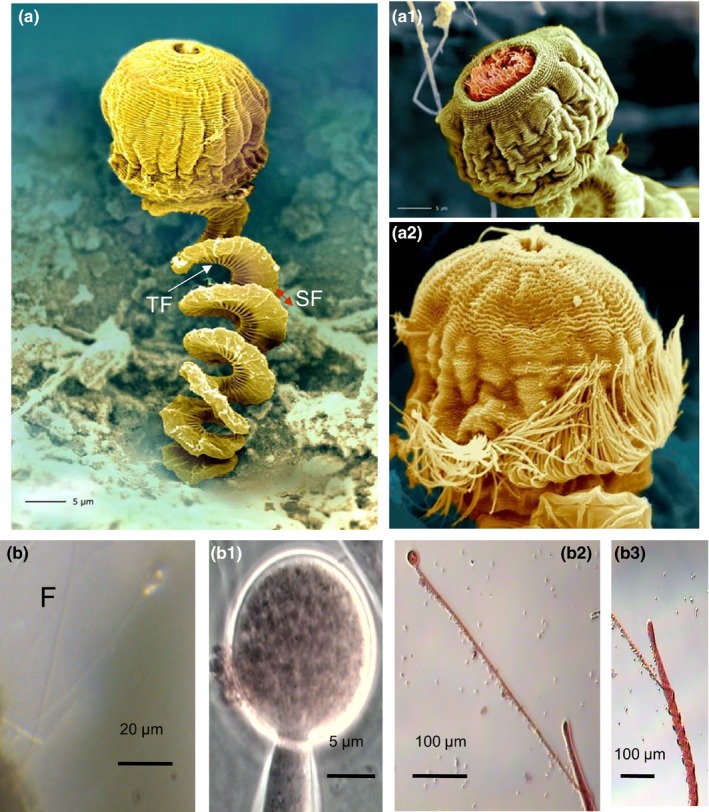
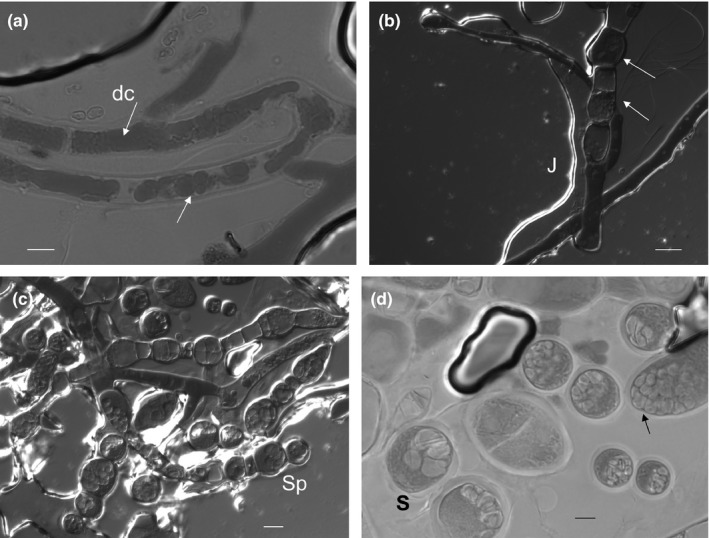
Ecological aspects, adaptation, and some functions of a special biofilm and its unique key anaerobic fungus Mucor hiemalis strain EH11 isolated from a pristine spring (Künzing, Bavaria, Germany) are described. The spring's pure nature is characterized by, for example, bubbling methane, marine-salinity, mild hydrothermal (~19.1°C), sulfidic, and reductive-anoxic (E : -241 to -253 mV, O : ≤ 0.1 mg/L) conditions. It is geoecologically located at the border zone between Bavarian Forest (crystalline rocky mountains) and the moor-like Danube River valley, where geological displacements bring the spring's water from the deeper layers of former marine sources up to the surface. In the spring's outflow, a special biofilm with selective microorganisms consisting of archaea, bacteria, protozoa (ciliate), and fungus was found. Typical sulfidic-spring bryophyta and macrozoobenthos were missing, but many halo- and anaerotolerant diatoms and ciliate Vorticella microstoma beside EH11 were identified. Phase contrast and scanning electron microscopy revealed the existence of a stabilizing matrix in the biofilm formed by the sessile fungal hyphae and the exopolysaccharide substance (EPS) structures, which harbors other microorganisms. In response to ecological adaptation pressure caused by methane bubbles, EH11 developed an atypical spring-like hyphal morphology, similar to the spiral stalk of ciliate V. microstoma, to rise up with methane bubbles. For the first time, it was also demonstrated that under strict anaerobic conditions EH11 changes its asexual reproduction process by forming pseudosporangia via hyphal cell divisions as well as switching its metabolism to chemoautotrophic bacteria-like anaerobic life using acetate as an e-donor and ferrihydrite as an e-acceptor, all without fermentation. EH11 can be suggested to be useful for the microbial community in the Künzing biofilm not only due to its physical stabilization of the biofilm's matrix but also due to its ecological functions in element recycling as well as a remover of toxic metals.
本文描述了从德国巴伐利亚州昆青的一处原始泉水中分离出的一种特殊生物膜及其独特的关键厌氧真菌——冬毛霉EH11菌株的生态特征、适应性和一些功能。该泉水的纯净特性表现为,例如有冒泡的甲烷、海水盐度、温和的热液环境(约19.1°C)、含硫以及还原缺氧(E:-241至-253 mV,O:≤0.1 mg/L)的条件。从地质生态学角度看,它位于巴伐利亚森林(结晶岩山脉)和沼泽状的多瑙河谷之间的边界地带,地质位移使泉水从以前海洋来源的较深层上升到地表。在泉水流出处,发现了一种由古菌、细菌、原生动物(纤毛虫)和真菌组成的具有选择性微生物的特殊生物膜。典型的含硫泉苔藓植物和大型底栖动物缺失,但除了EH11之外,还鉴定出许多嗜盐和耐厌氧硅藻以及纤毛虫小口钟虫。相差显微镜和扫描电子显微镜显示,由固着真菌菌丝和胞外多糖物质(EPS)结构形成的生物膜中存在一种稳定基质,其中容纳着其他微生物。为响应甲烷气泡引起的生态适应压力,EH11形成了一种非典型的类似泉水的菌丝形态,类似于纤毛虫小口钟虫的螺旋柄,以便随甲烷气泡上升。首次还证明,在严格厌氧条件下,EH11通过菌丝细胞分裂形成假孢子囊来改变其无性繁殖过程,并将其代谢转换为类似化学自养细菌的厌氧生活,以醋酸盐作为电子供体,水铁矿作为电子受体,且均不进行发酵。EH11不仅因其对生物膜基质的物理稳定作用,还因其在元素循环以及有毒金属去除方面的生态功能,而被认为对昆青生物膜中的微生物群落有益。