Li Na, Zhou Zhihua, Li Fang, Sang Jiao, Han Qunying, Lv Yi, Zhao Wenxuan, Li Chunyan, Liu Zhengwen
Department of Infectious Diseases, First Affiliated Hospital of Xi'an Jiaotong University, Xi' an 710061, Shaanxi, China.
Department of Hepatobiliary Surgery, First Affiliated Hospital of Xi'an Jiaotong University, Xi'an 710061, Shaanxi, China.
Oncotarget. 2017 Jul 11;8(28):46020-46033. doi: 10.18632/oncotarget.17546.
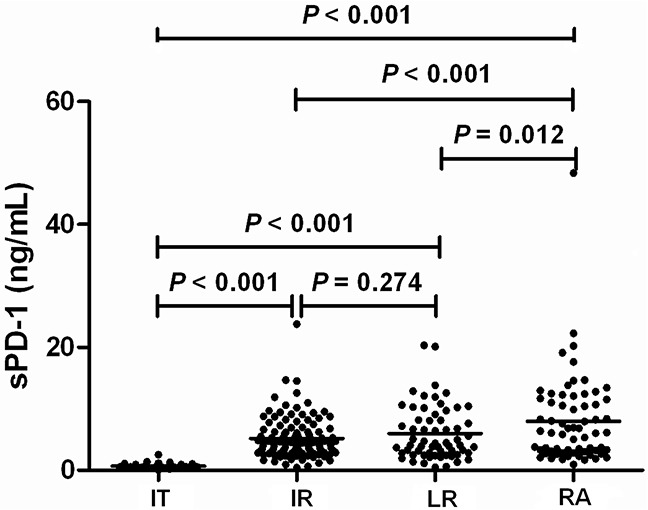
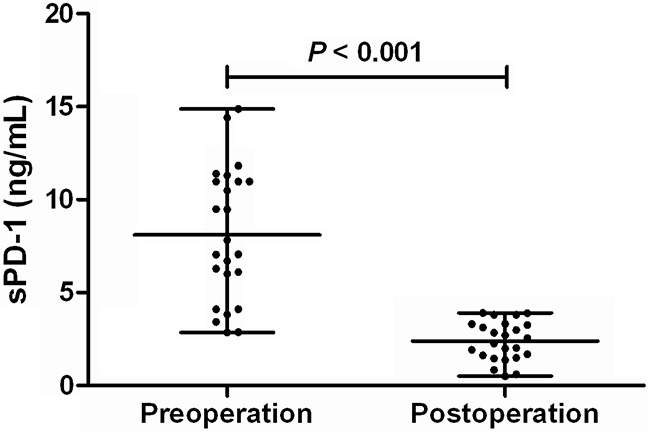
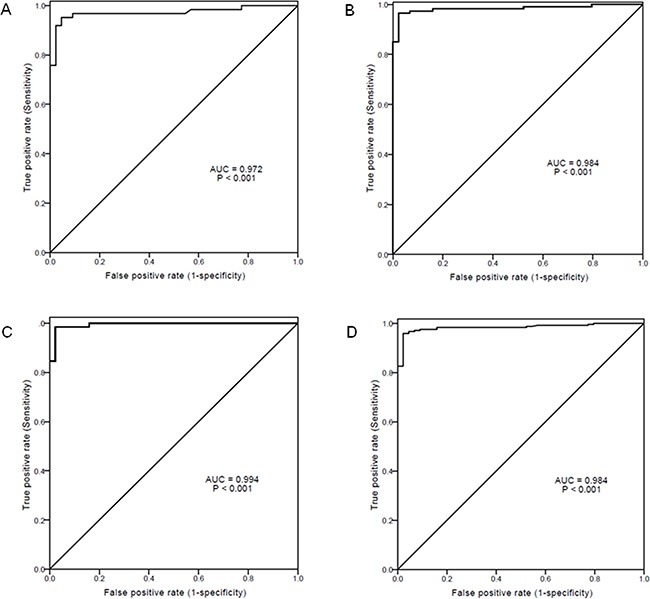
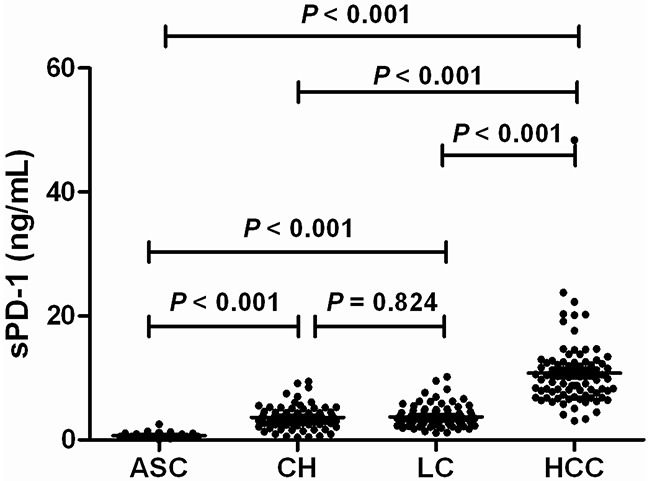
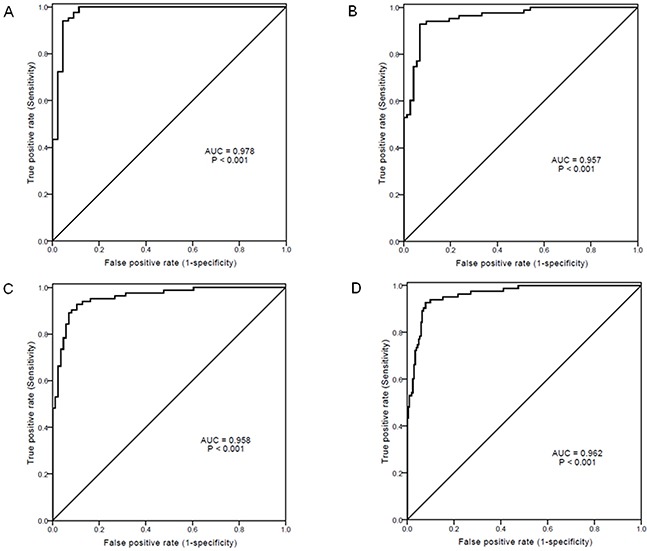
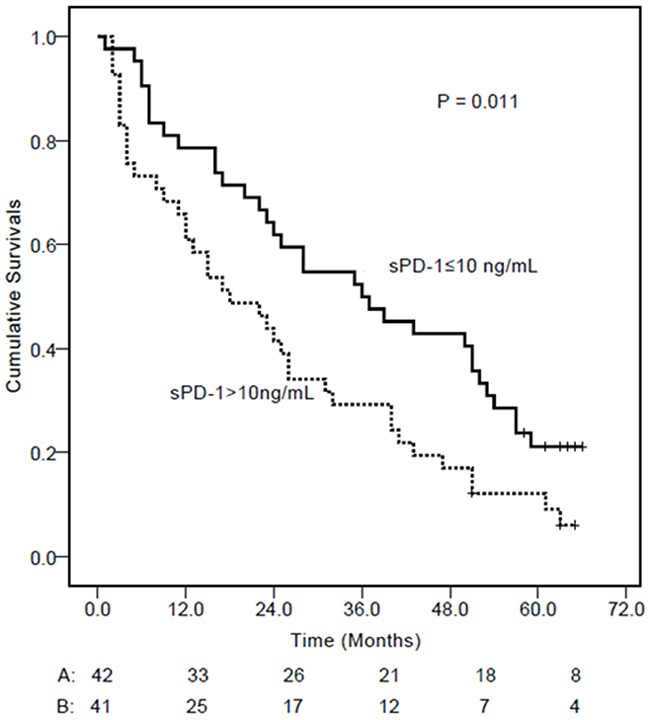
Programmed death-1 (PD-1) is involved in the immune dysfunction of hepatitis B virus (HBV) infection and hepatocellular carcinoma (HCC). This study analyzed the association of circulating soluble PD-1 (sPD-1) levels with the phases and clinical diseases in chronic HBV infection. Serum sPD-1 levels were determined by enzyme linked immunosorbent assay in patients with different phases and liver diseases of chronic HBV infection. The sPD-1 levels in patients with chronic HBV infection were significantly elevated compared with HBV infection resolvers or healthy controls. According to phases, sPD-1 level in immune-tolerant phase (IT) was significantly lower than in other phases. Multivariate analysis showed that sPD-1 was an independent factor associated with IT. Area under the receiver operating characteristic (ROC) curves (AUC) showed that sPD-1 was significantly discriminative of IT from other phases with a cut-off of 1.535 ng/mL (AUC, 0.984; P<0.001). According to clinical diseases, sPD-1 level in HBV-related HCC was significantly higher than in other clinical diseases. Multivariate analysis showed that sPD-1 was an independent factor associated with HCC. The sPD-1 was significantly discriminative of HCC from other clinical diseases with a cut-off of 6.058 ng/mL (AUC, 0.962; P<0.001). The sPD-1 levels were significantly associated with HCC patients' overall survival. HCC resection resulted in remarkable reduction in sPD-1 levels. These results demonstrate the involvement of sPD-1 in the disease course of chronic HBV infection and indicate the potential to apply sPD-1 as a biomarker for differentiating IT from other phases and HCC from other disease conditions in chronic HBV infection.
程序性死亡蛋白 1(PD-1)参与乙型肝炎病毒(HBV)感染和肝细胞癌(HCC)的免疫功能障碍。本研究分析了循环可溶性 PD-1(sPD-1)水平与慢性 HBV 感染各阶段及临床疾病的相关性。采用酶联免疫吸附测定法测定慢性 HBV 感染不同阶段及肝脏疾病患者的血清 sPD-1 水平。与 HBV 感染康复者或健康对照相比,慢性 HBV 感染患者的 sPD-1 水平显著升高。根据阶段划分,免疫耐受期(IT)的 sPD-1 水平显著低于其他阶段。多因素分析显示,sPD-1 是与 IT 相关的独立因素。受试者工作特征(ROC)曲线下面积(AUC)显示,sPD-1 对 IT 与其他阶段具有显著的鉴别能力,截断值为 1.535 ng/mL(AUC,0.984;P<0.001)。根据临床疾病,HBV 相关 HCC 患者的 sPD-1 水平显著高于其他临床疾病。多因素分析显示,sPD-1 是与 HCC 相关的独立因素。sPD-1 对 HCC 与其他临床疾病具有显著的鉴别能力,截断值为 6.058 ng/mL(AUC,0.962;P<0.001)。sPD-1 水平与 HCC 患者的总生存期显著相关。HCC 切除术后 sPD-1 水平显著降低。这些结果表明 sPD-1 参与了慢性 HBV 感染的病程,并提示 sPD-1 有可能作为一种生物标志物,用于区分慢性 HBV 感染中 IT 与其他阶段以及 HCC 与其他疾病状态。