Jang Hyun Sik, Shin Woo Jung, Lee Jeong Eon, Do Jeong Tae
Department of Stem Cell and Regenerative Biotechnology, KU Institute of Science and Technology, Konkuk University, Seoul 143-701, Korea.
Genes (Basel). 2017 May 23;8(6):148. doi: 10.3390/genes8060148.
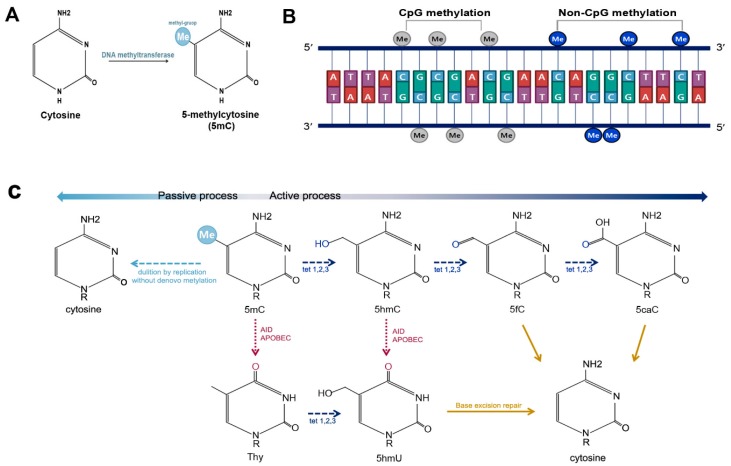
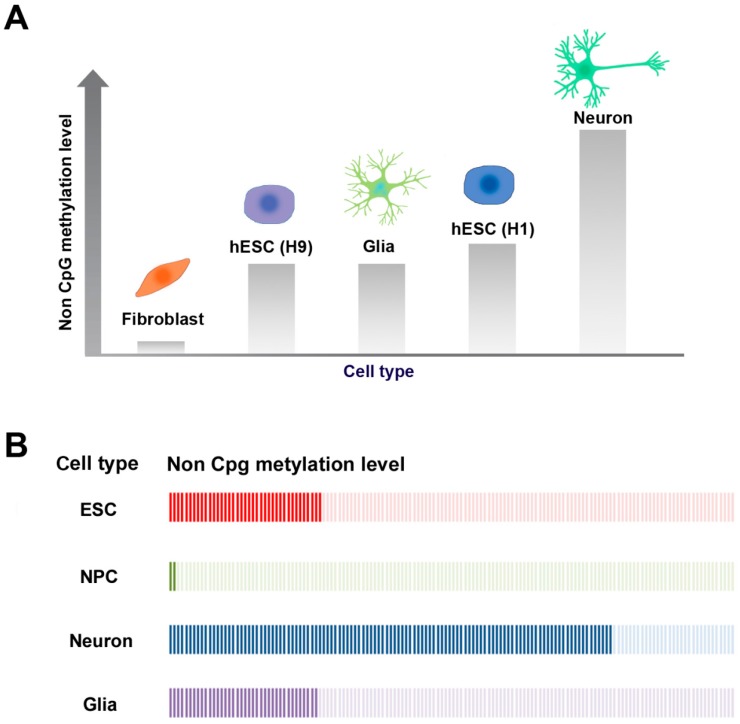
DNA methylation is a major epigenetic mark with important roles in genetic regulation. Methylated cytosines are found primarily at CpG dinucleotides, but are also found at non-CpG sites (CpA, CpT, and CpC). The general functions of CpG and non-CpG methylation include gene silencing or activation depending on the methylated regions. CpG and non-CpG methylation are found throughout the whole genome, including repetitive sequences, enhancers, promoters, and gene bodies. Interestingly, however, non-CpG methylation is restricted to specific cell types, such as pluripotent stem cells, oocytes, neurons, and glial cells. Thus, accumulation of methylation at non-CpG sites and CpG sites in neurons seems to be involved in development and disease etiology. Here, we provide an overview of CpG and non-CpG methylation and their roles in neurological diseases.
DNA甲基化是一种主要的表观遗传标记,在基因调控中发挥着重要作用。甲基化的胞嘧啶主要存在于CpG二核苷酸处,但也存在于非CpG位点(CpA、CpT和CpC)。CpG和非CpG甲基化的一般功能包括根据甲基化区域进行基因沉默或激活。CpG和非CpG甲基化存在于整个基因组中,包括重复序列、增强子、启动子和基因体。然而,有趣的是,非CpG甲基化仅限于特定的细胞类型,如多能干细胞、卵母细胞、神经元和神经胶质细胞。因此,神经元中非CpG位点和CpG位点的甲基化积累似乎与发育和疾病病因有关。在这里,我们概述了CpG和非CpG甲基化及其在神经疾病中的作用。