Serroni Anna, Magistrali Chiara Francesca, Pezzotti Giovanni, Bano Luca, Pellegrini Martina, Severi Giulio, Di Pancrazio Chiara, Luciani Mirella, Tittarelli Manuela, Tofani Silvia, De Giuseppe Antonio
Istituto Zooprofilattico Sperimentale dell'Umbria e delle Marche, Via G. Salvemini 1, 06126, Perugia, Italy.
Scuola di Specializzazione "Biochimica Clinica" G. d'Annunzio, University Chieti-Pescara, Chieti, Italy.
Microb Cell Fact. 2017 May 25;16(1):94. doi: 10.1186/s12934-017-0707-8.
Clostridium perfringens is an important animal and human pathogen that can produce more than 16 different major and minor toxins. The beta-2 minor toxin (CPB2), comprising atypical and consensus variants, appears to be involved in both human and animal enterotoxaemia syndrome. The exact role of CPB2 in pathogenesis is poorly investigated, and its mechanism of action at the molecular level is still unknown because of the lack of specific reagents such as monoclonal antibodies against the CPB2 protein and/or the availability of a highly purified antigen. Previous studies have reported that purified wild-type or recombinant CPB2 toxin, expressed in a heterologous system, presented cytotoxic effects on human intestinal cell lines. Undoubtedly, for this reason, to date, these purified proteins have not yet been used for the production of monoclonal antibodies (MAbs). Recently, monoclonal antibodies against CPB2 were generated using peptides designed on predicted antigenic epitopes of this toxin.
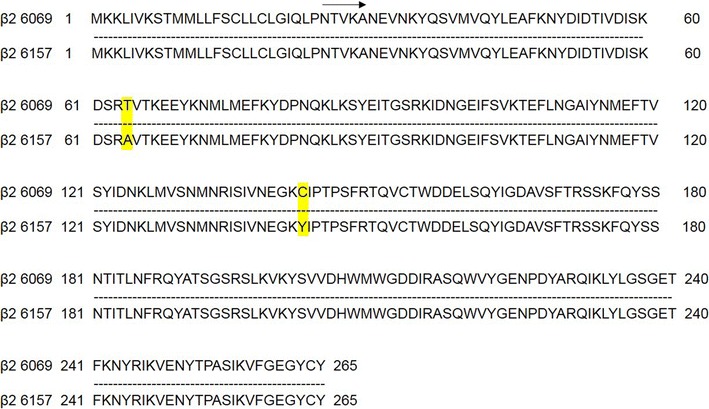
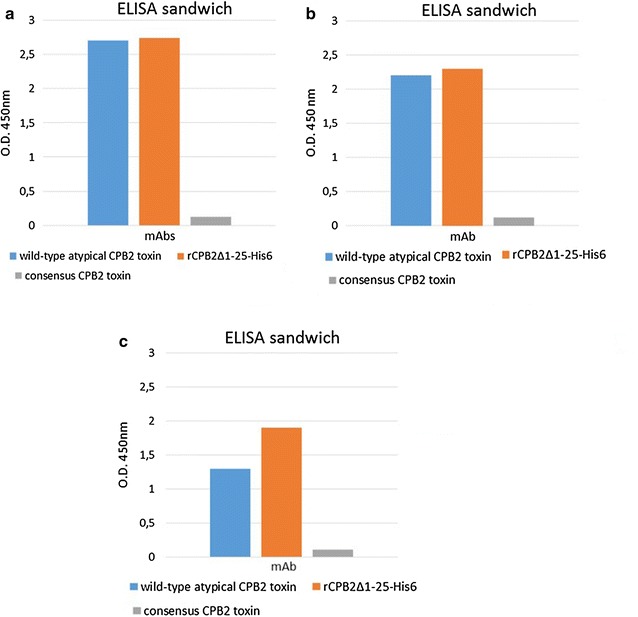
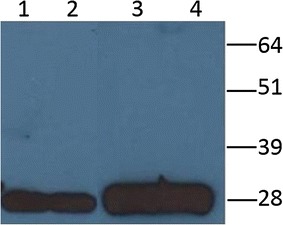
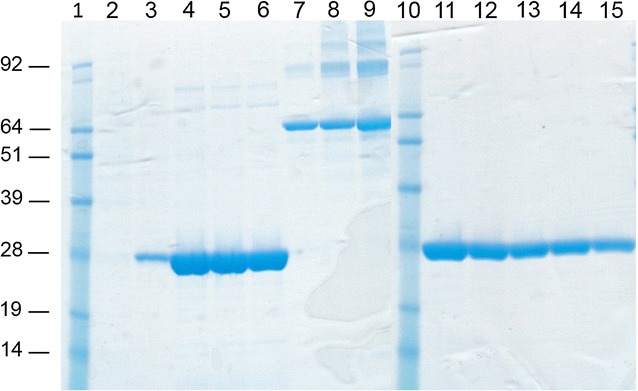
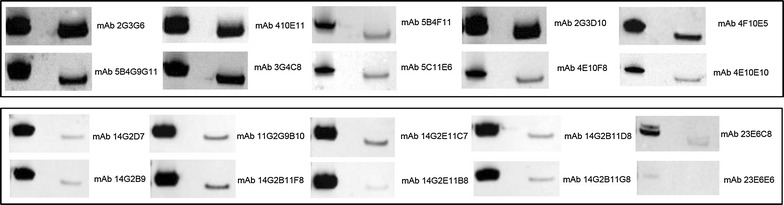
In this paper we report, for the first time, the expression in a baculovirus system of a deleted recombinant C-terminal 6xHis-tagged atypical CPB2 toxin (rCPB2-His) lacking the 25 amino acids (aa) of the N-terminal putative signal sequence. A high level of purified recombinant rCPB2-His was obtained after purification by Ni affinity chromatography. The purified product showed no in vitro and in vivo toxicity. Polyclonal antibodies and twenty hybridoma-secreting Mabs were generated using purified rCPB2-His. Finally, the reactivity and specificity of the new antibodies were tested against both recombinant and wild-type CPB2 toxins.
The high-throughput of purified atoxic recombinant CPB2 produced in insect cells, allowed to obtain monoclonal and polyclonal antibodies. The availability of these molecules could contribute to develop immunoenzymatic methods and/or to perform studies about the biological activity of CPB2 toxin.
产气荚膜梭菌是一种重要的动物和人类病原体,可产生16种以上不同的主要和次要毒素。β-2次要毒素(CPB2)包括非典型和共有变体,似乎与人和动物的肠毒血症综合征有关。CPB2在发病机制中的确切作用研究较少,由于缺乏针对CPB2蛋白的单克隆抗体等特异性试剂和/或高纯度抗原,其在分子水平的作用机制仍然未知。先前的研究报道,在异源系统中表达的纯化野生型或重组CPB2毒素对人肠道细胞系具有细胞毒性作用。毫无疑问,出于这个原因,迄今为止,这些纯化蛋白尚未用于生产单克隆抗体(MAbs)。最近,利用基于该毒素预测抗原表位设计的肽产生了针对CPB2的单克隆抗体。
在本文中,我们首次报道了在杆状病毒系统中表达缺失N端推定信号序列25个氨基酸(aa)的缺失型重组C端6xHis标记的非典型CPB2毒素(rCPB2-His)。通过镍亲和层析纯化后获得了高纯度的重组rCPB2-His。纯化产物在体外和体内均无毒性。使用纯化的rCPB2-His产生了多克隆抗体和20种分泌杂交瘤的单克隆抗体。最后,针对重组和野生型CPB2毒素测试了新抗体的反应性和特异性。
昆虫细胞中产生的高产量纯化无毒重组CPB2使得获得单克隆和多克隆抗体成为可能。这些分子的可用性有助于开发免疫酶法和/或开展关于CPB2毒素生物活性的研究。