
通过基因内缺失产生二分外显子。
A birth of bipartite exon by intragenic deletion.
作者信息
Nozu Kandai, Iijima Kazumoto, Igarashi Toru, Yamada Shiro, Kralovicova Jana, Nozu Yoshimi, Yamamura Tomohiko, Minamikawa Shogo, Morioka Ichiro, Ninchoji Takeshi, Kaito Hiroshi, Nakanishi Koichi, Vorechovsky Igor
机构信息
Department of PediatricsKobe University Graduate School of MedicineKobeJapan.
Department of PediatricsNippon Medical School HospitalTokyoJapan.
出版信息
Mol Genet Genomic Med. 2017 Mar 1;5(3):287-294. doi: 10.1002/mgg3.277. eCollection 2017 May.
BACKGROUND
Disease-causing mutations that activate transposon-derived exons without creating a new splice-site consensus have been reported rarely, but they provided unique insights into our understanding of structural motifs required for inclusion of intronic sequences in mature transcripts.
METHODS
We employ a combination of experimental and computational techniques to characterize the first de novo bipartite exon activation in genetic disease.
RESULTS
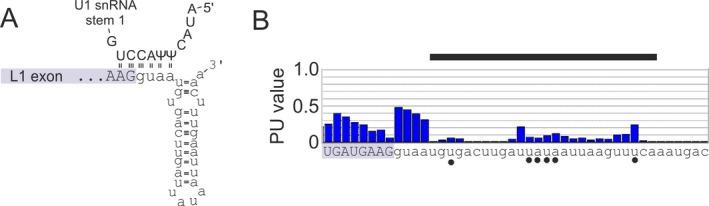
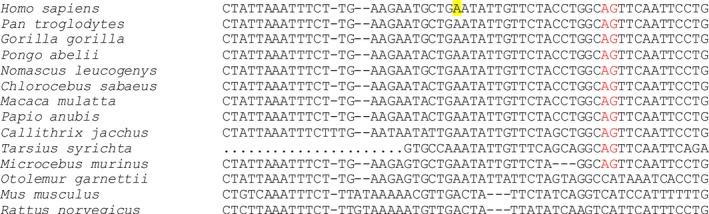
The exon originated from two separate introns as a result of an in-frame deletion associated with a typical Alport syndrome. The deletion encompassed exons 38 through 41 and activated a cryptic 3' and 5' splice site that were derived from intron 37 and intron 41, respectively. The deletion breakpoint was in the middle of the new exon, with considerable complementarity between the two exonic parts, potentially bringing the cryptic 3' and 5' splice site into proximity. The 3' splice site, polypyrimidine tract and the branch site of the new exon were derived from an inactive, 5' truncated LINE-1 retrotransposon. This ancient LINE-1 copy sustained a series of mutations that created the highly conserved AG dinucleotide at the 3' splice site early in primate development. The exon was fully included in mature transcripts and introduced a stop codon in the shortened mRNA, illustrating pitfalls of inferring disease severity from DNA mutation alone.
CONCLUSION
These results expand the repertoire of mutational mechanisms that alter RNA processing in genetic disease and illustrate the extraordinary versatility of transposed elements in shaping the new exon-intron structure and the phenotypic variability.
背景
激活转座子衍生外显子却未产生新的剪接位点共有序列的致病突变鲜有报道,但它们为我们理解成熟转录本中内含子序列包含所需的结构基序提供了独特见解。
方法
我们采用实验和计算技术相结合的方法来表征遗传疾病中首例从头出现的二分体外显子激活。
结果
该外显子源于两个单独的内含子,是由与典型阿尔波特综合征相关的框内缺失导致的。该缺失涵盖外显子38至41,并激活了分别源自内含子37和内含子41的隐蔽3'和5'剪接位点。缺失断点位于新外显子中间,两个外显子部分之间具有相当的互补性,可能使隐蔽的3'和5'剪接位点靠近。新外显子的3'剪接位点、多嘧啶序列和分支位点源自一个无活性的、5'端截短的LINE-1逆转录转座子。这个古老的LINE-1拷贝发生了一系列突变,在灵长类动物发育早期就在3'剪接位点产生了高度保守的AG二核苷酸。该外显子完全包含在成熟转录本中,并在缩短的mRNA中引入了一个终止密码子,说明了仅从DNA突变推断疾病严重程度的缺陷。
结论
这些结果扩展了改变遗传疾病中RNA加工的突变机制库,并说明了转座元件在塑造新的外显子-内含子结构和表型变异性方面的非凡通用性。

 Zotero 插件