Department of Ultrasound, China-Japan Union Hospital of Jilin University, Changchun, Jilin, P.R. China.
Department of Nephrology, The Second Hospital of Jilin University, Changchun, Jilin, P.R. China.
Oncol Res. 2018 Mar 5;26(2):249-259. doi: 10.3727/096504017X14953948675430. Epub 2017 May 21.
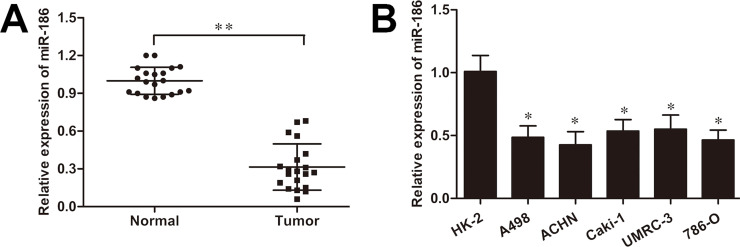
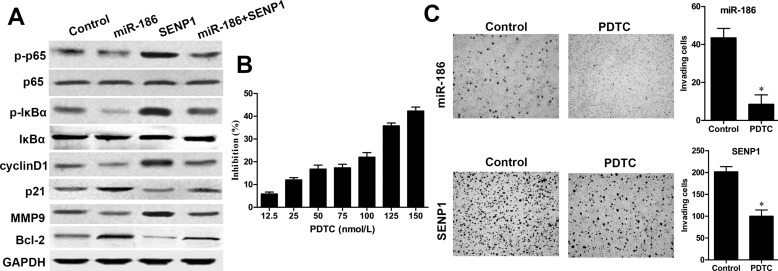
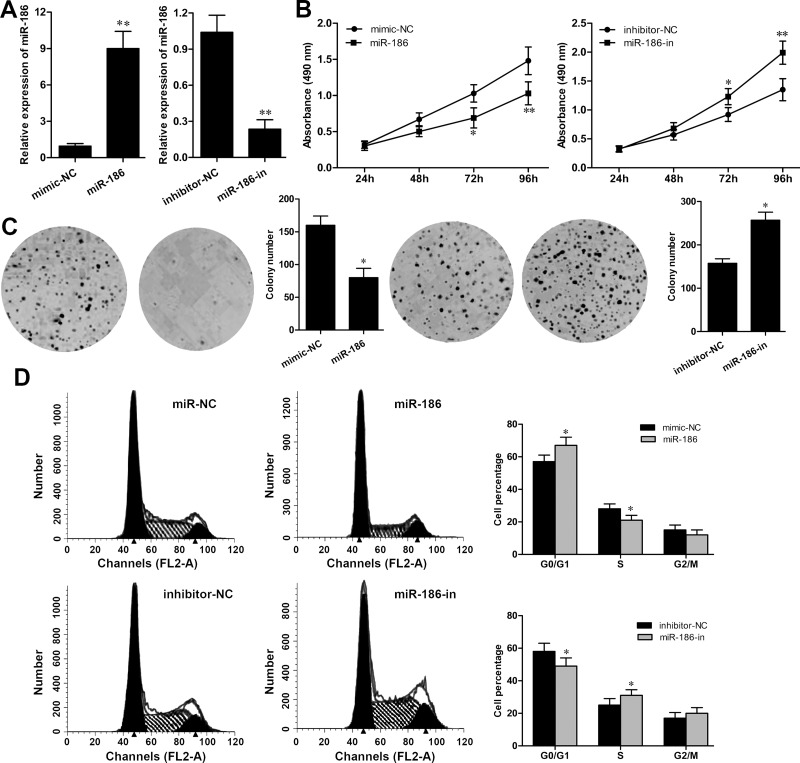
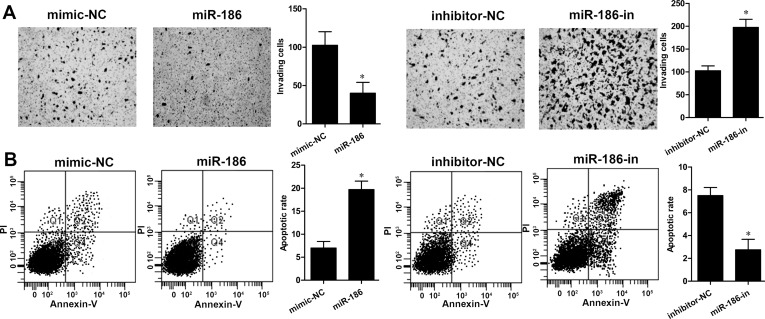
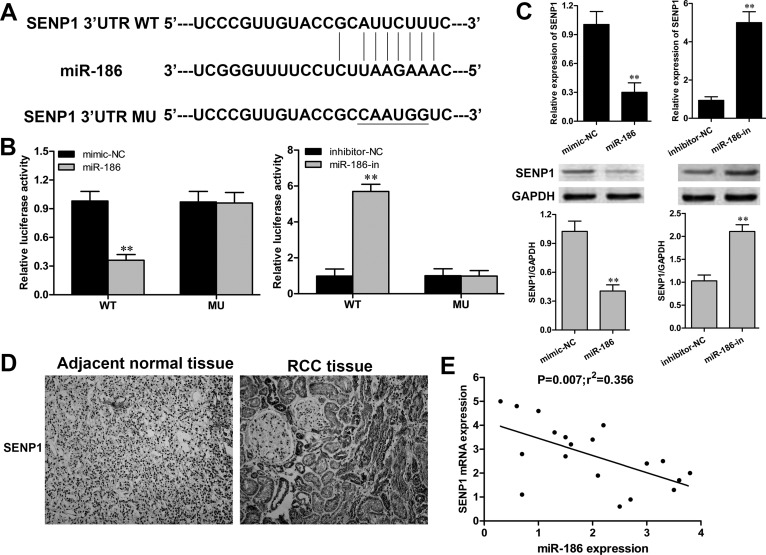
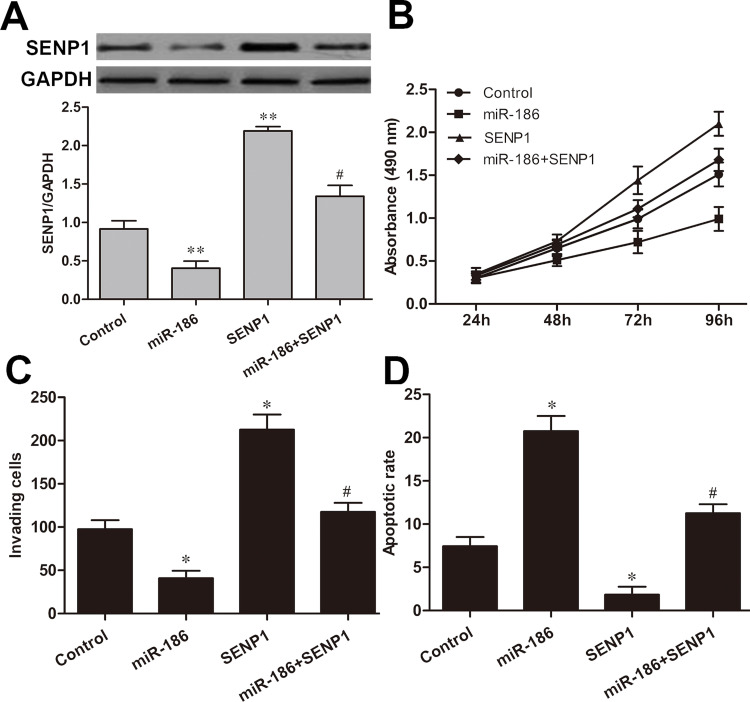
Recent evidence suggests that dysregulation of microRNAs is associated with the development of multiple malignancies. miR-186 has been reported as a critical cancer regulator in several types of cancers. However, its functional significance and molecular mechanism underlying renal cell carcinoma (RCC) remain unknown. In this study, our results showed that miR-186 expression was dramatically downregulated in RCC tissues and cell lines compared to that in adjacent normal tissues and cell lines. Overexpression of miR-186 significantly inhibited cell growth, colony formation, and cell invasion; caused cell cycle arrest at the G0/G1 phase; and induced cell apoptosis as detected by MTT, colony formation, Transwell assay, and flow cytometry assays in RCC cells. In addition, inhibition of miR-186 expression promoted RCC cell proliferation, invasion, and cell cycle progression and reduced apoptosis. Bioinformatics analysis and luciferase reporter assay confirmed that the 3'-UTR of sentrin-specific protease 1 (SENP1) was a direct target of miR-186. A remarkably reverse correlation was observed between miR-186 and SENP1 mRNA in RCC tissues. Furthermore, immunohistochemical staining revealed that SENP1 was positively expressed in RCC specimens. Restoration of SENP1 expression could partially abrogate the inhibitory effect of miR-186 overexpression on RCC cell proliferation through activating NF-κB signaling and its downstream proteins. These data demonstrated that miR-186 acted as a novel tumor suppressor and potential therapeutic biomarker in the progression of RCC by directly targeting SENP1.
最近的证据表明,miRNA 的失调与多种恶性肿瘤的发生有关。miR-186 已被报道为几种类型癌症的关键癌症调控因子。然而,其在肾细胞癌(RCC)中的功能意义和分子机制尚不清楚。在这项研究中,我们的结果表明,与相邻正常组织和细胞系相比,miR-186 在 RCC 组织和细胞系中的表达显著下调。miR-186 的过表达显著抑制了 RCC 细胞的生长、集落形成和细胞侵袭;通过 MTT、集落形成、Transwell 分析和流式细胞术检测,导致细胞周期停滞在 G0/G1 期;并诱导细胞凋亡。此外,抑制 miR-186 的表达促进了 RCC 细胞的增殖、侵袭和细胞周期进程,并减少了细胞凋亡。生物信息学分析和荧光素酶报告基因实验证实,SENP1 的 3'-UTR 是 miR-186 的直接靶标。在 RCC 组织中观察到 miR-186 和 SENP1 mRNA 之间存在显著的反向相关性。此外,免疫组织化学染色显示 SENP1 在 RCC 标本中呈阳性表达。恢复 SENP1 的表达可以部分消除 miR-186 过表达对 RCC 细胞增殖的抑制作用,通过激活 NF-κB 信号及其下游蛋白。这些数据表明,miR-186 通过直接靶向 SENP1,作为 RCC 进展中的一种新型肿瘤抑制因子和潜在的治疗生物标志物。