Hsieh Tsung-Hsun, Kang Jing-Wei, Lai Jing-Huei, Huang Ying-Zu, Rotenberg Alexander, Chen Kai-Yun, Wang Jia-Yi, Chan Shu-Yen, Chen Shih-Ching, Chiang Yung-Hsiao, Peng Chih-Wei
Department of Physical Therapy and Graduate Institute of Rehabilitation Science, College of Medicine, Chang Gung University, Taoyuan, Taiwan.
Neuroscience Research Center, Chang Gung Memorial Hospital, Linkou, Taiwan.
PLoS One. 2017 May 26;12(5):e0178186. doi: 10.1371/journal.pone.0178186. eCollection 2017.
Traumatic brain injury (TBI) is a major brain injury type commonly caused by traffic accidents, falls, violence, or sports injuries. To obtain mechanistic insights about TBI, experimental animal models such as weight-drop-induced TBI in rats have been developed to mimic closed-head injury in humans. However, the relationship between the mechanical impact level and neurological severity following weight-drop-induced TBI remains uncertain. In this study, we comprehensively investigated the relationship between physical impact and graded severity at various weight-drop heights.
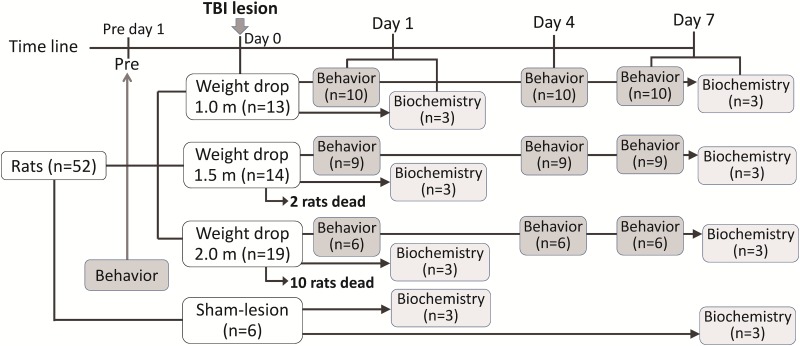
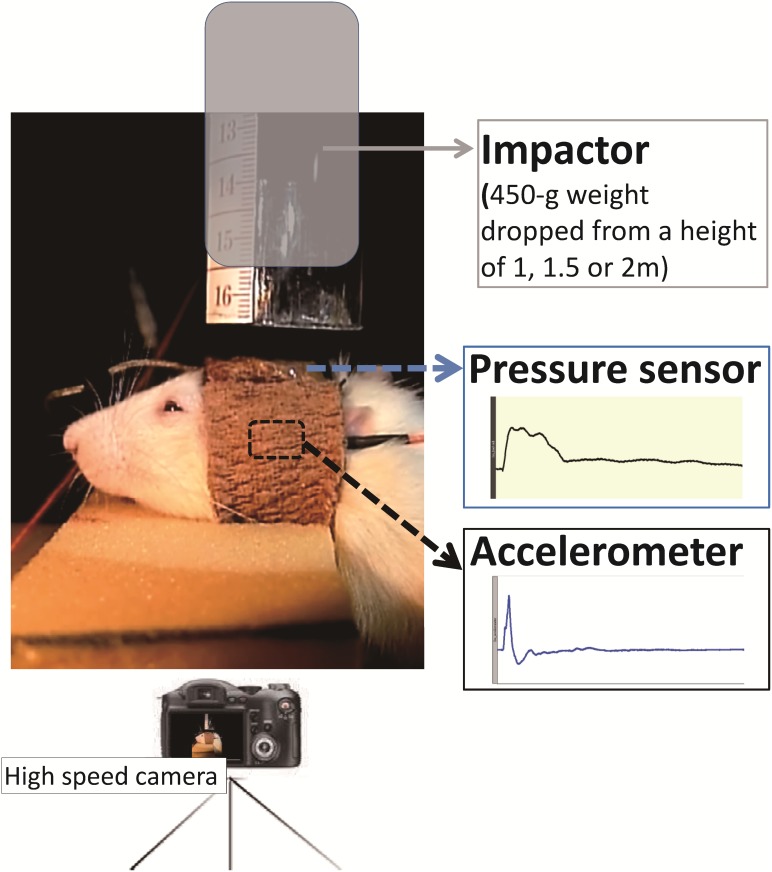
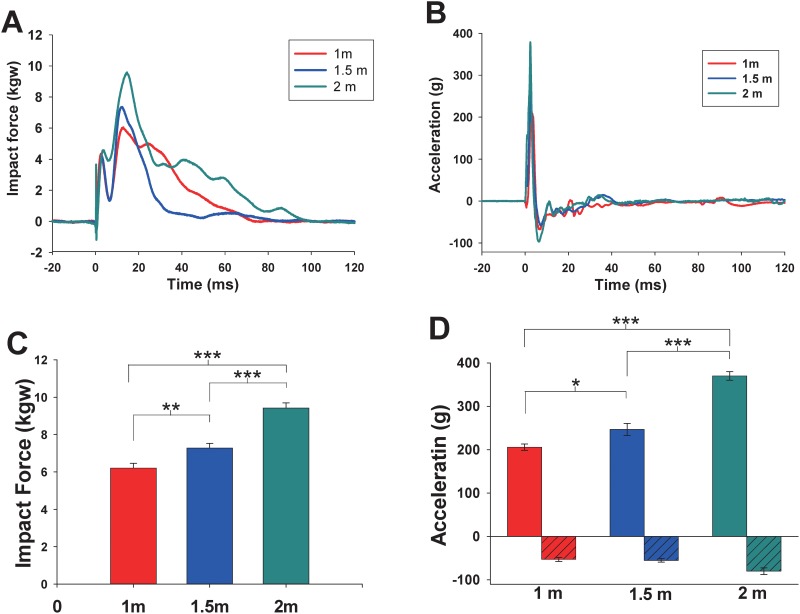
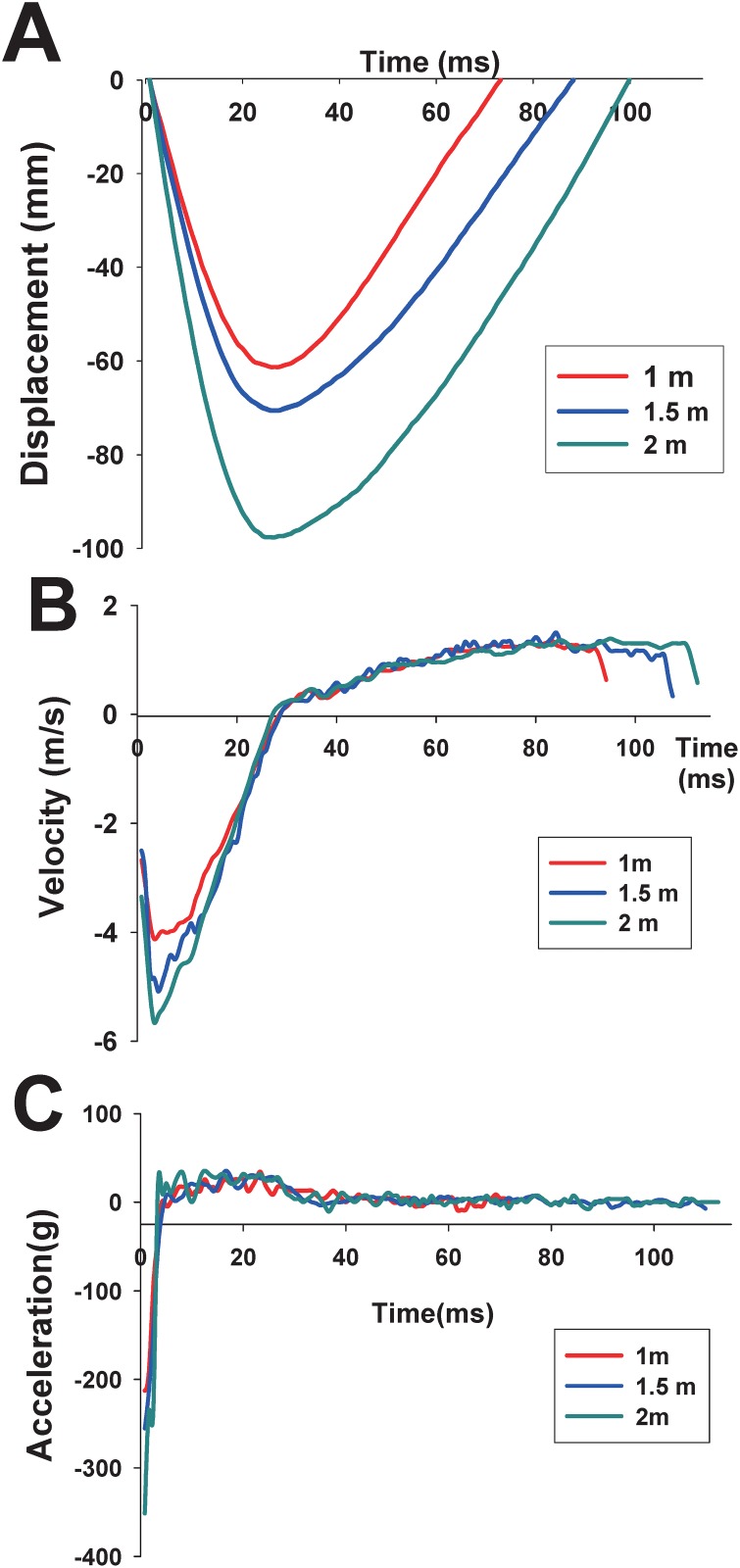
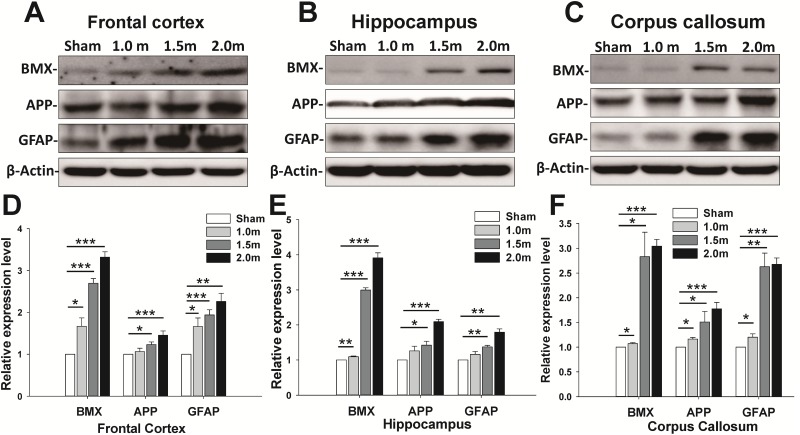
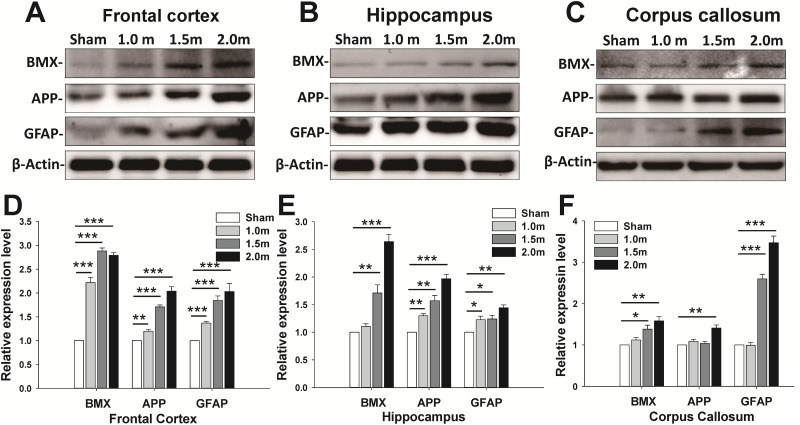
The acceleration, impact force, and displacement during the impact were accurately measured using an accelerometer, a pressure sensor, and a high-speed camera, respectively. In addition, the longitudinal changes in neurological deficits and balance function were investigated at 1, 4, and 7 days post TBI lesion. The inflammatory expression markers tested by Western blot analysis, including glial fibrillary acidic protein, beta-amyloid precursor protein, and bone marrow tyrosine kinase gene in chromosome X, in the frontal cortex, hippocampus, and corpus callosum were investigated at 1 and 7 days post-lesion.
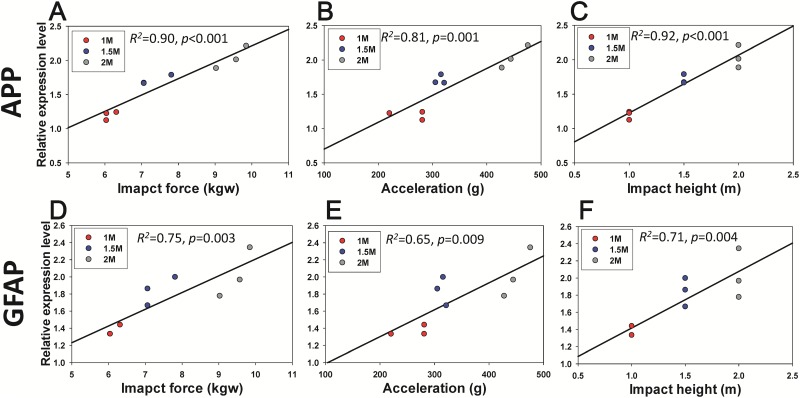
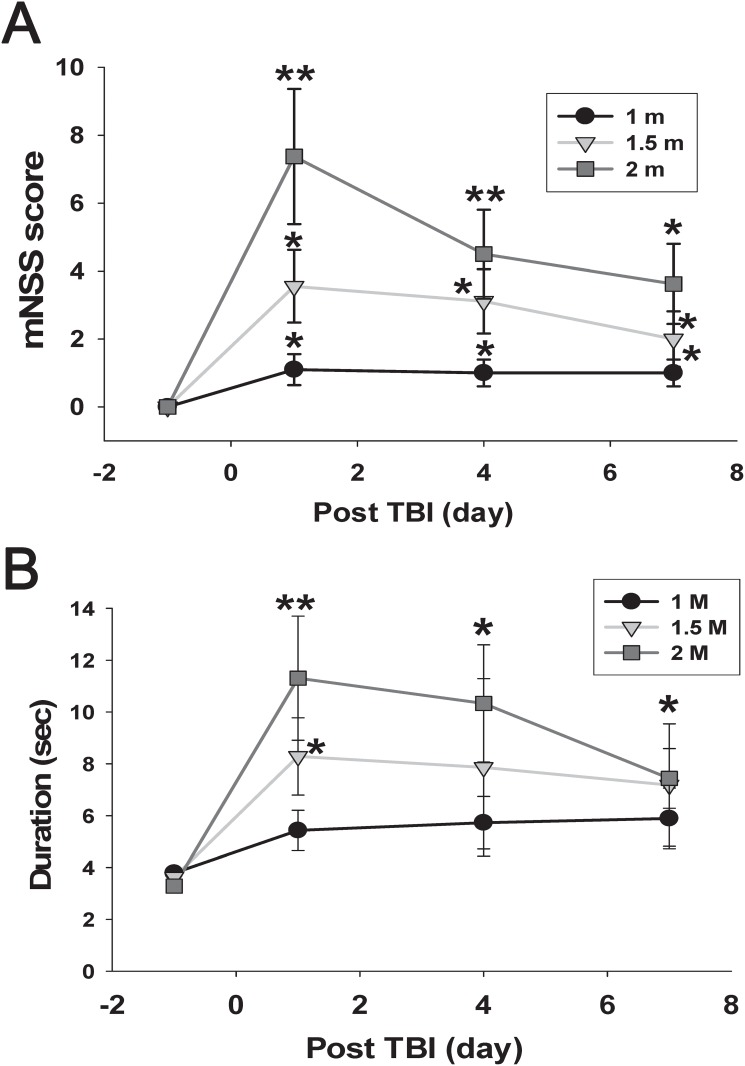
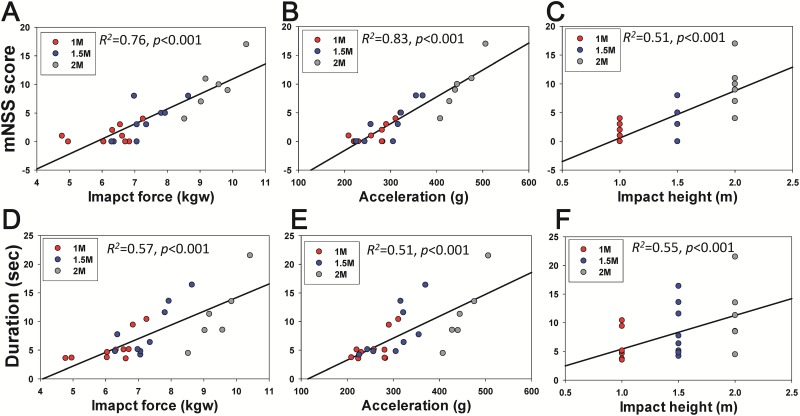
Gradations in impact pressure produced progressive degrees of injury severity in the neurological score and balance function. Western blot analysis demonstrated that all inflammatory expression markers were increased at 1 and 7 days post-impact injury when compared to the sham control rats. The severity of neurologic dysfunction and induction in inflammatory markers strongly correlated with the graded mechanical impact levels.
We conclude that the weight-drop-induced TBI model can produce graded brain injury and induction of neurobehavioral deficits and may have translational relevance to developing therapeutic strategies for TBI.
创伤性脑损伤(TBI)是一种主要的脑损伤类型,通常由交通事故、跌倒、暴力或运动损伤引起。为了深入了解TBI的发病机制,已开发出实验动物模型,如大鼠体重下降诱导的TBI,以模拟人类的闭合性颅脑损伤。然而,体重下降诱导的TBI后机械冲击水平与神经严重程度之间的关系仍不明确。在本研究中,我们全面研究了不同体重下降高度下物理冲击与分级严重程度之间的关系。
分别使用加速度计、压力传感器和高速摄像机准确测量冲击过程中的加速度、冲击力和位移。此外,在TBI损伤后1、4和7天研究神经功能缺损和平衡功能的纵向变化。在损伤后1天和7天,通过蛋白质免疫印迹分析检测额叶皮质、海马体和胼胝体中包括胶质纤维酸性蛋白、β-淀粉样前体蛋白和X染色体上的骨髓酪氨酸激酶基因在内的炎症表达标志物。
冲击压力的分级在神经评分和平衡功能方面产生了渐进性的损伤严重程度。蛋白质免疫印迹分析表明,与假手术对照组大鼠相比,所有炎症表达标志物在冲击损伤后1天和7天均增加。神经功能障碍的严重程度和炎症标志物的诱导与分级机械冲击水平密切相关。
我们得出结论,体重下降诱导的TBI模型可产生分级脑损伤并诱导神经行为缺陷,可能与开发TBI治疗策略具有转化相关性。