Department of Neurosurgery, E&R Building, Room 3096, Henry Ford Health System, 2799 West Grand Boulevard, Detroit, Michigan 48202, USA.
Nat Rev Neurosci. 2013 Feb;14(2):128-42. doi: 10.1038/nrn3407.
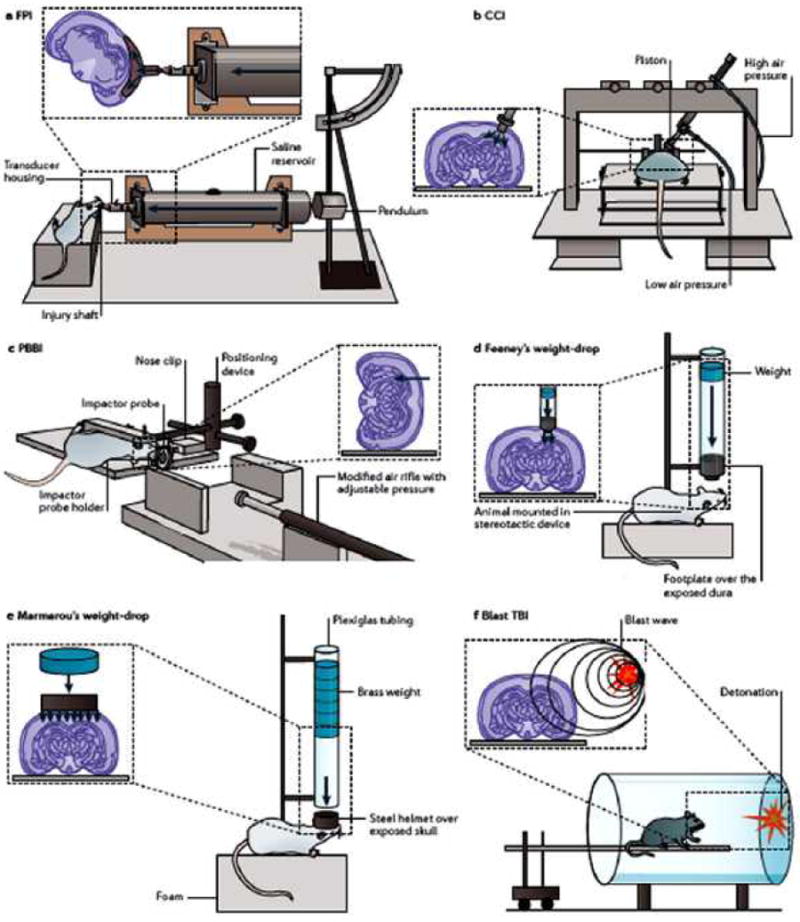
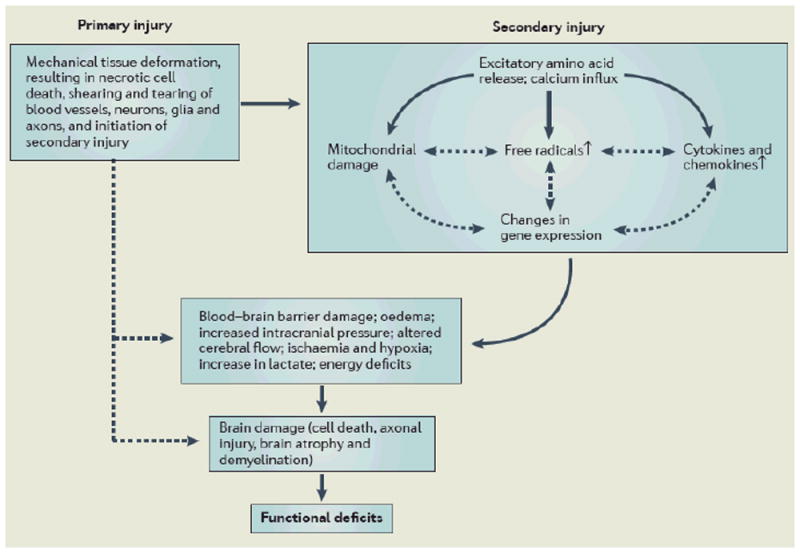
Traumatic brain injury (TBI) is a leading cause of mortality and morbidity both in civilian life and on the battlefield worldwide. Survivors of TBI frequently experience long-term disabling changes in cognition, sensorimotor function and personality. Over the past three decades, animal models have been developed to replicate the various aspects of human TBI, to better understand the underlying pathophysiology and to explore potential treatments. Nevertheless, promising neuroprotective drugs that were identified as being effective in animal TBI models have all failed in Phase II or Phase III clinical trials. This failure in clinical translation of preclinical studies highlights a compelling need to revisit the current status of animal models of TBI and therapeutic strategies.
创伤性脑损伤(TBI)是全球范围内平民和战场上导致死亡率和发病率的主要原因。TBI 的幸存者经常经历认知、感觉运动功能和人格的长期致残变化。在过去的三十年中,已经开发出动物模型来复制人类 TBI 的各个方面,以更好地了解潜在的病理生理学并探索潜在的治疗方法。然而,在动物 TBI 模型中被确定为有效的有前景的神经保护药物在 II 期或 III 期临床试验中均失败。临床前研究的临床转化失败突出表明需要重新审视 TBI 动物模型和治疗策略的现状。