Farrugia Mark, Baron Byron
Centre for Molecular Medicine and Biobanking, Faculty of Medicine and Surgery, University of Malta, Msida MSD 2080, Malta.
Int J Inflam. 2017;2017:8391230. doi: 10.1155/2017/8391230. Epub 2017 May 3.
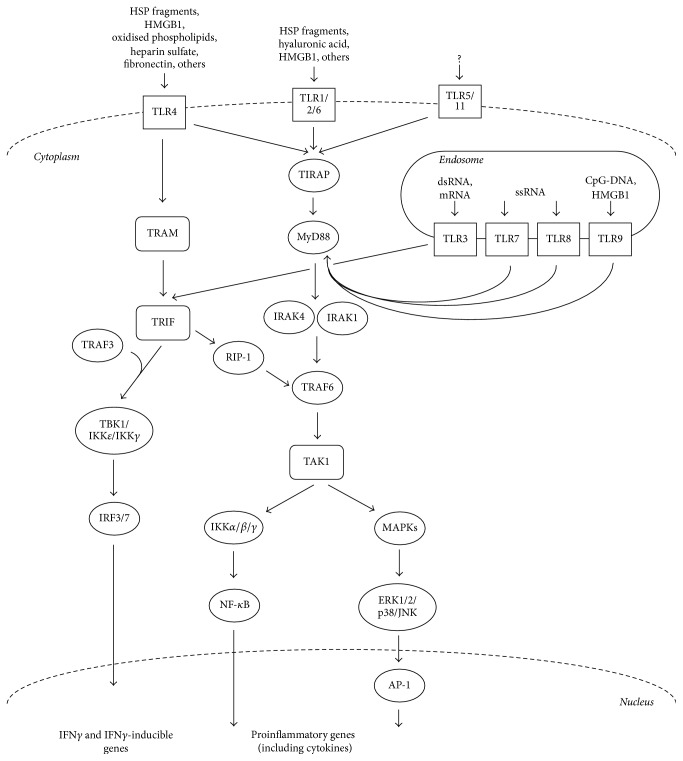
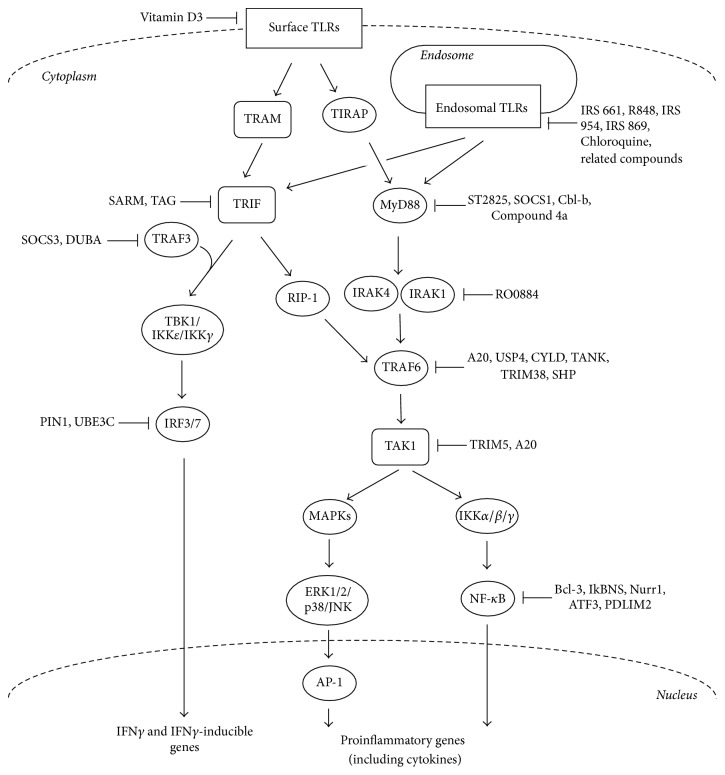
Toll-like receptors (TLRs), part of the innate immune system that recognises molecular signatures, are important in the recognition of pathogenic components. However, when specific cellular contexts develop in which TLRs are inappropriately activated by self-components, this may lead to sterile inflammation and result in the occurrence of autoimmunity. This review analyses the available data regarding TLR biochemistry, the specific mechanisms which are brought about by TLR activation, and the importance of these mechanisms in the light of any existing and potential therapies in the field of autoimmunity.
Toll样受体(TLRs)是先天性免疫系统的一部分,可识别分子特征,在识别病原体成分方面发挥重要作用。然而,当特定细胞环境出现时,TLRs会被自身成分不适当激活,这可能导致无菌性炎症并引发自身免疫性疾病。本综述分析了有关TLR生物化学的现有数据、TLR激活所引发的具体机制,以及鉴于自身免疫领域现有的和潜在的治疗方法,这些机制的重要性。