Qiao Yuan, Srisuknimit Veerasak, Rubino Frederick, Schaefer Kaitlin, Ruiz Natividad, Walker Suzanne, Kahne Daniel
Department of Microbiology and Immunology, Harvard Medical School, Boston, Massachusetts, USA.
Department of Chemistry and Chemical Biology, Harvard University, Cambridge, Massachusetts, USA.
Nat Chem Biol. 2017 Jul;13(7):793-798. doi: 10.1038/nchembio.2388. Epub 2017 May 29.
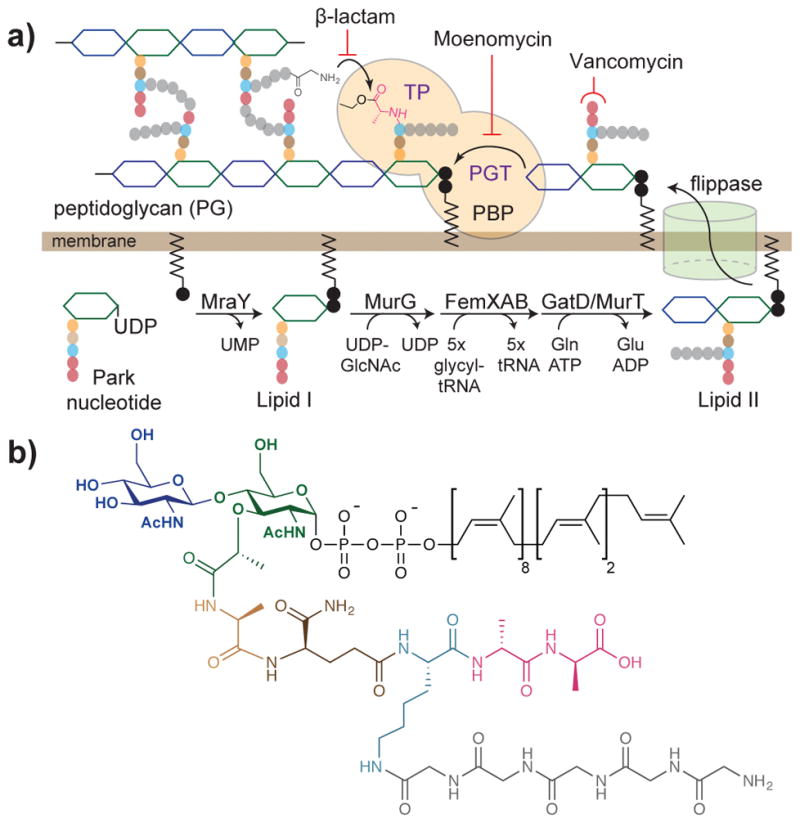
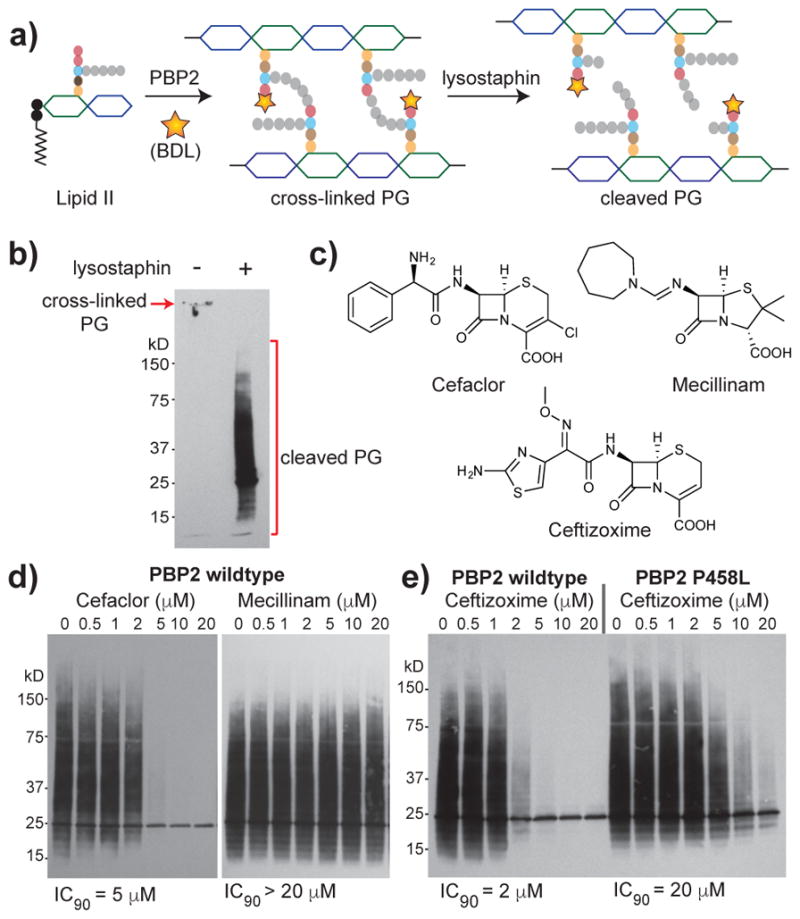
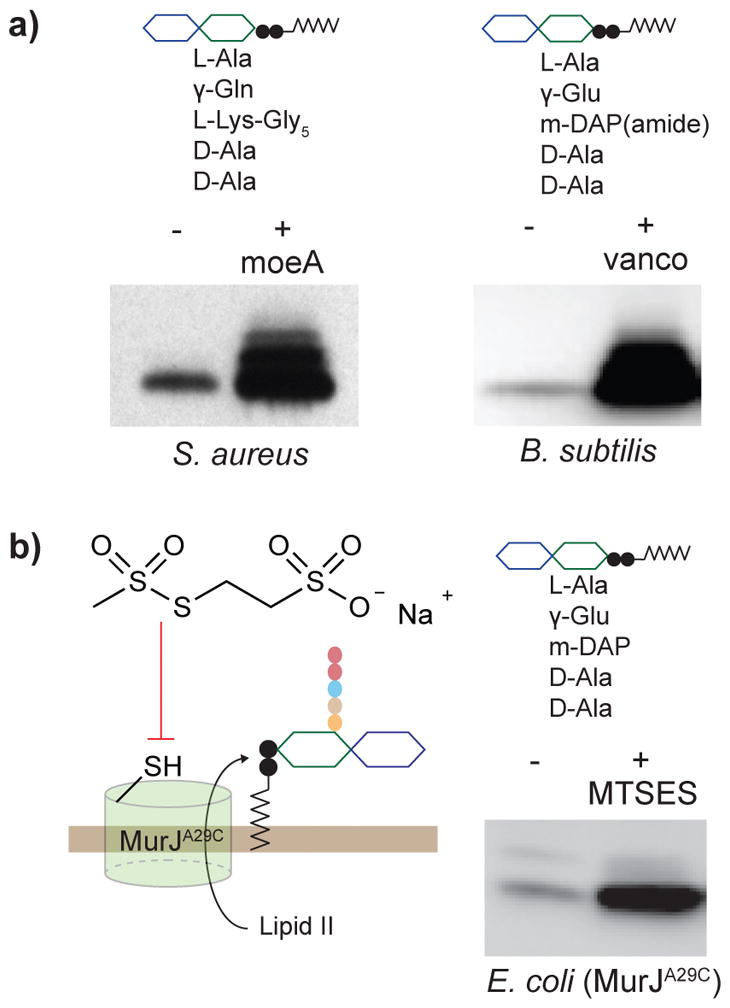
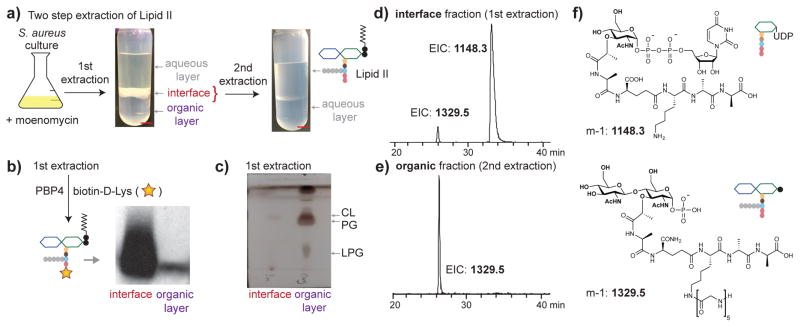
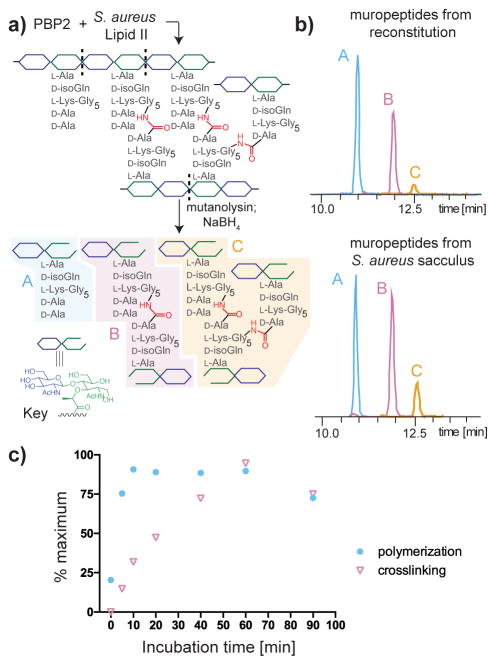
Peptidoglycan is an essential crosslinked polymer that surrounds bacteria and protects them from osmotic lysis. β-lactam antibiotics target the final stages of peptidoglycan biosynthesis by inhibiting the transpeptidases that crosslink glycan strands to complete cell wall assembly. Characterization of transpeptidases and their inhibition by β-lactams have been hampered by lack of access to a suitable substrate. We describe a general approach to accumulate Lipid II in bacteria and to obtain large quantities of this cell wall precursor. We demonstrate the utility of this strategy by isolating Staphylococcus aureus Lipid II and reconstituting the synthesis of crosslinked peptidoglycan by the essential penicillin-binding protein 2 (PBP2), which catalyzes both glycan polymerization and transpeptidation. We also show that we can compare the potencies of different β-lactams by directly monitoring transpeptidase inhibition. The methods reported here will enable a better understanding of cell wall biosynthesis and facilitate studies of next-generation transpeptidase inhibitors.
肽聚糖是一种必需的交联聚合物,它环绕着细菌并保护它们免受渗透裂解。β-内酰胺抗生素通过抑制将聚糖链交联以完成细胞壁组装的转肽酶,靶向肽聚糖生物合成的最后阶段。由于缺乏合适的底物,转肽酶的表征及其被β-内酰胺的抑制作用一直受到阻碍。我们描述了一种在细菌中积累脂质II并获得大量这种细胞壁前体的通用方法。我们通过分离金黄色葡萄球菌脂质II并通过必需的青霉素结合蛋白2(PBP2)重建交联肽聚糖的合成来证明该策略的实用性,PBP2催化聚糖聚合和转肽反应。我们还表明,我们可以通过直接监测转肽酶抑制来比较不同β-内酰胺的效力。本文报道的方法将有助于更好地理解细胞壁生物合成,并促进下一代转肽酶抑制剂的研究。