Grotenhuis Heynric B, Nyns Emile C A, Kantor Paul F, Dipchand Anne I, Greenway Steven C, Yoo Shi-Joon, Tomlinson George, Chaturvedi Rajiv R, Grosse-Wortmann Lars
Department of Paediatrics, Labatt Family Heart Centre, The Hospital for Sick Children, University of Toronto, 555 University Avenue, Toronto, ON, M5G 1X8, Canada.
Department of Pediatric Cardiology, Stollery Children's Hospital, Edmonton, AB, Canada.
Pediatr Cardiol. 2017 Aug;38(6):1198-1205. doi: 10.1007/s00246-017-1642-5. Epub 2017 May 30.
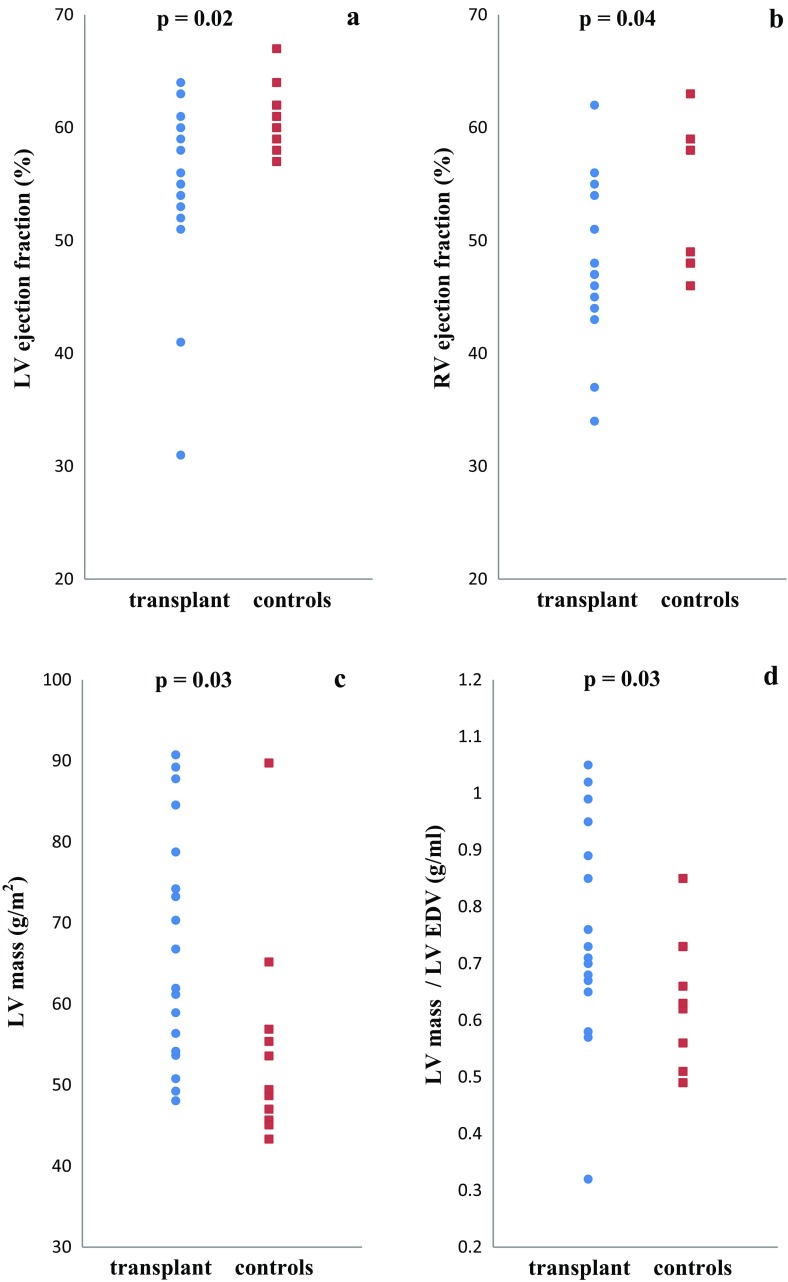
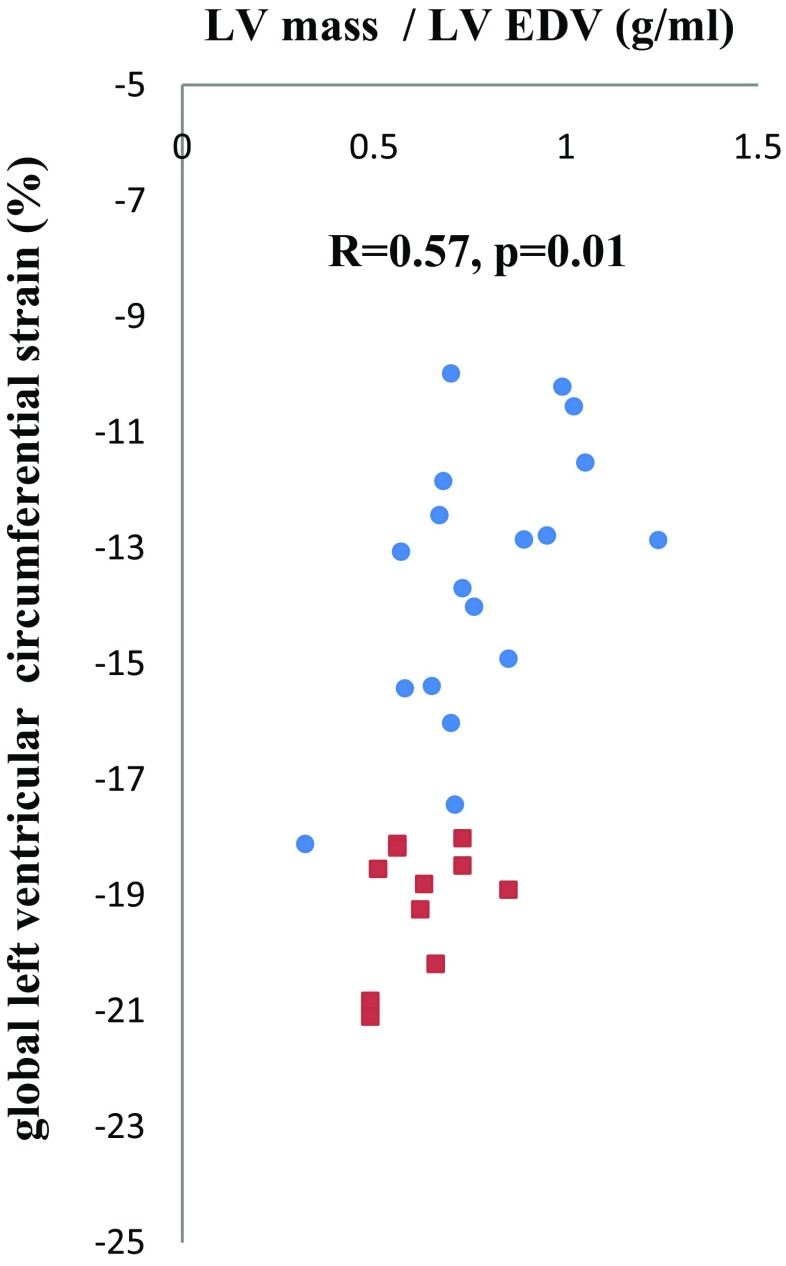
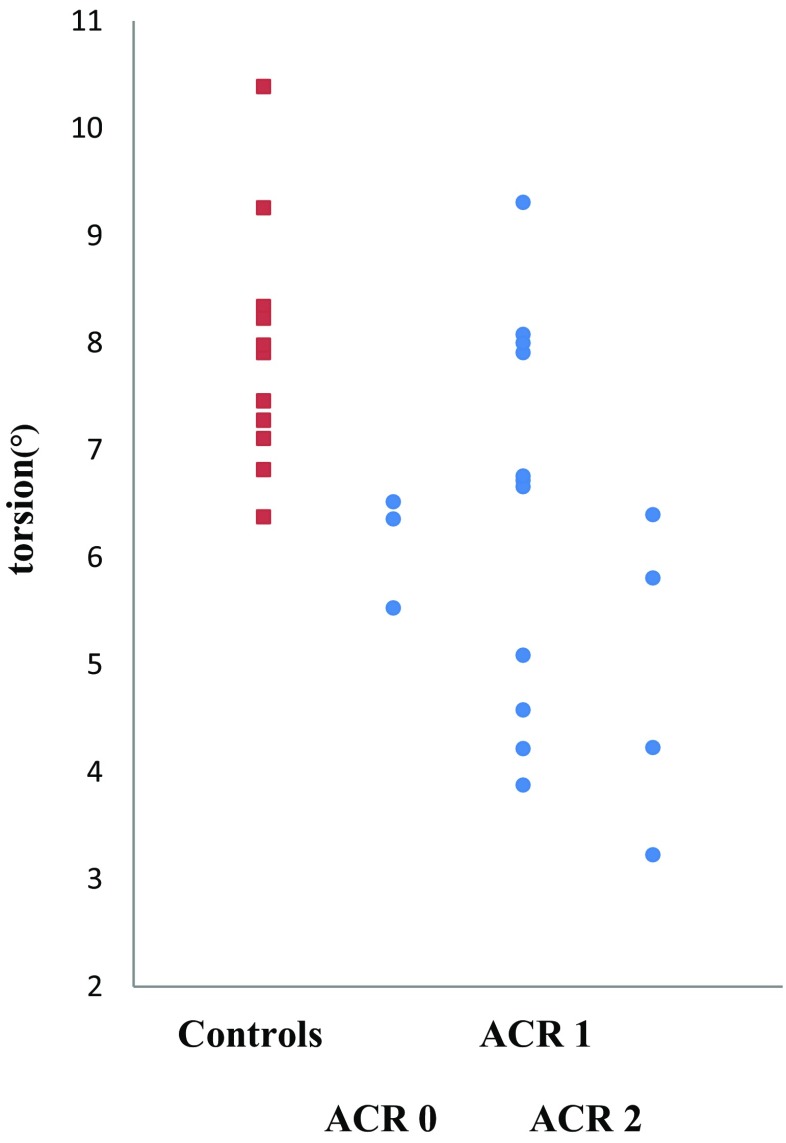
Acute cellular rejection (ACR) compromises graft function after heart transplantation (HTX). The purpose of this study was to describe systolic myocardial deformation in pediatric HTX and to determine whether it is impaired during ACR. Eighteen combined cardiac magnetic resonance imaging (CMR)/endomyocardial biopsy (EMBx) examinations were performed in 14 HTX patients (11 male, age 13.9 ± 4.7 years; 1.2 ± 1.3 years after HTX). Biventricular function and left ventricular (LV) circumferential strain, rotation, and torsion by myocardial tagging CMR were compared to 11 controls as well as between patients with and without clinically significant ACR. HTX patients showed mildly reduced biventricular systolic function when compared to controls [LV ejection fraction (EF): 55 ± 8% vs. 61 ± 3, p = 0.02; right ventricular (RV) EF: 48 ± 7% vs. 53 ± 6, p = 0.04]. Indexed LV mass was mildly increased in HTX patients (67 ± 14 g/m vs. 55 ± 13, p = 0.03). LV myocardial deformation indices were all significantly reduced, expressed by global circumferential strain (-13.5 ± 2.3% vs. -19.1 ± 1.1%, p < 0.01), basal strain (-13.7 ± 3.0% vs. -17.5 ± 2.4%, p < 0.01), mid-ventricular strain (-13.4 ± 2.7% vs. -19.3 ± 2.2%, p < 0.01), apical strain (-13.5 ± 2.8% vs. -19.9 ± 2.0%, p < 0.01), basal rotation (-2.0 ± 2.1° vs. -5.0 ± 2.0°, p < 0.01), and torsion (6.1 ± 1.7° vs. 7.8 ± 1.1°, p < 0.01). EMBx demonstrated ACR grade 0 R in 3 HTX cases, ACR grade 1 R in 11 HTX cases and ACR grade 2 R in 4 HTX cases. When comparing clinically non-significant ACR (grades 0-1 R vs. ACR 2 R), basal rotation, and apical rotation were worse in ACR 2 R patients (-1.4 ± 1.8° vs. -4.2 ± 1.4°, p = 0.01 and 10.2 ± 2.9° vs. 2.8 ± 1.9°, p < 0.01, respectively). Pediatric HTX recipients demonstrate reduced biventricular systolic function and decreased myocardial contractility. Myocardial deformation indices by CMR may serve as non-invasive markers of graft function and, perhaps, rejection in pediatric HTX patients.
急性细胞性排斥反应(ACR)会损害心脏移植(HTX)后的移植物功能。本研究的目的是描述小儿心脏移植中的收缩期心肌变形,并确定其在急性细胞性排斥反应期间是否受损。对14例心脏移植患者(11例男性,年龄13.9±4.7岁;心脏移植后1.2±1.3年)进行了18次心脏磁共振成像(CMR)/心内膜心肌活检(EMBx)检查。通过心肌标记CMR比较双心室功能以及左心室(LV)圆周应变、旋转和扭转,并与11名对照者以及有和无临床显著急性细胞性排斥反应的患者进行比较。与对照者相比,心脏移植患者双心室收缩功能轻度降低[左心室射血分数(EF):55±8%对61±3,p=0.02;右心室(RV)EF:48±7%对53±6,p=0.04]。心脏移植患者的左心室质量指数轻度增加(67±14g/m对55±13,p=0.03)。左心室心肌变形指数均显著降低,表现为整体圆周应变(-13.5±2.3%对-19.1±1.1%,p<0.01)、基底应变(-13.7±3.0%对-17.5±2.4%,p<0.01)、心室中部应变(-13.4±2.7%对-19.3±2.2%,p<0.01)、心尖应变(-13.5±2.8%对-19.9±2.0%,p<0.01)、基底旋转(-2.0±2.1°对-5.0±2.0°,p<0.01)和扭转(6.1±1.7°对7.8±1.1°,p<0.01)。心内膜心肌活检显示3例心脏移植病例为ACR 0R级,11例心脏移植病例为ACR 1R级,4例心脏移植病例为ACR 2R级。在比较临床无显著意义的急性细胞性排斥反应(0-1R级对ACR 2R级)时,ACR 2R级患者的基底旋转和心尖旋转更差(分别为-1.4±1.8°对-4.2±1.4°,p=0.01和10.2±2.9°对2.8±1.9°,p<0.01)。小儿心脏移植受者表现出双心室收缩功能降低和心肌收缩力下降。通过CMR测量的心肌变形指数可作为小儿心脏移植患者移植物功能甚至排斥反应的非侵入性标志物。