Ahmed Shahana, Olsen John E, Herrero-Fresno Ana
Department of Veterinary and Animal Sciences, Faculty of Health and Medical Sciences, University of Copenhagen, Frederiksberg, Denmark.
PLoS One. 2017 May 30;12(5):e0178623. doi: 10.1371/journal.pone.0178623. eCollection 2017.
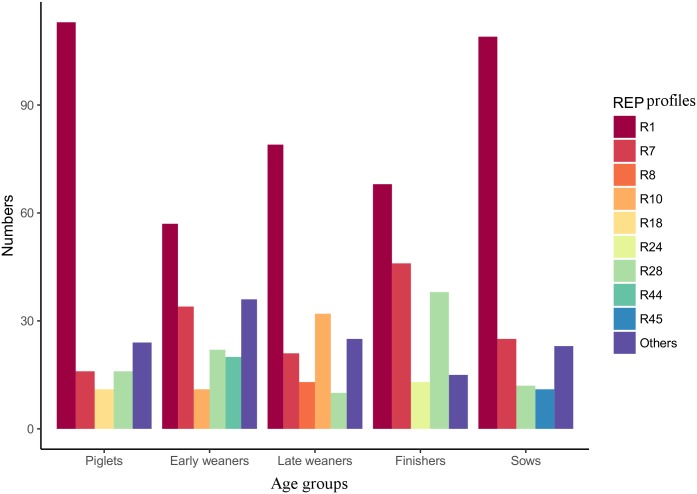
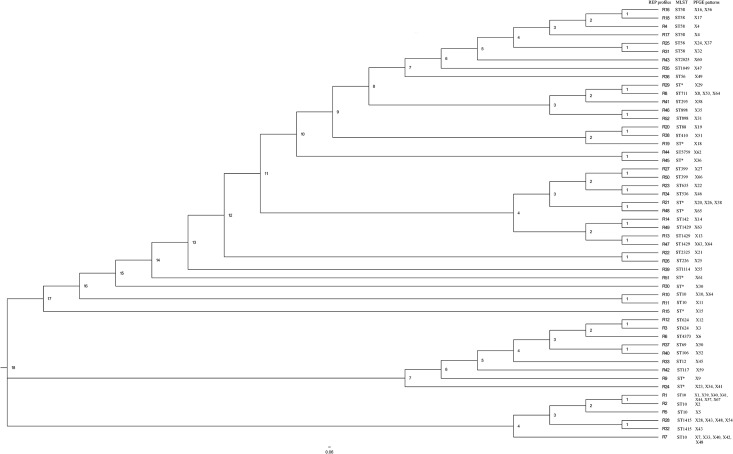
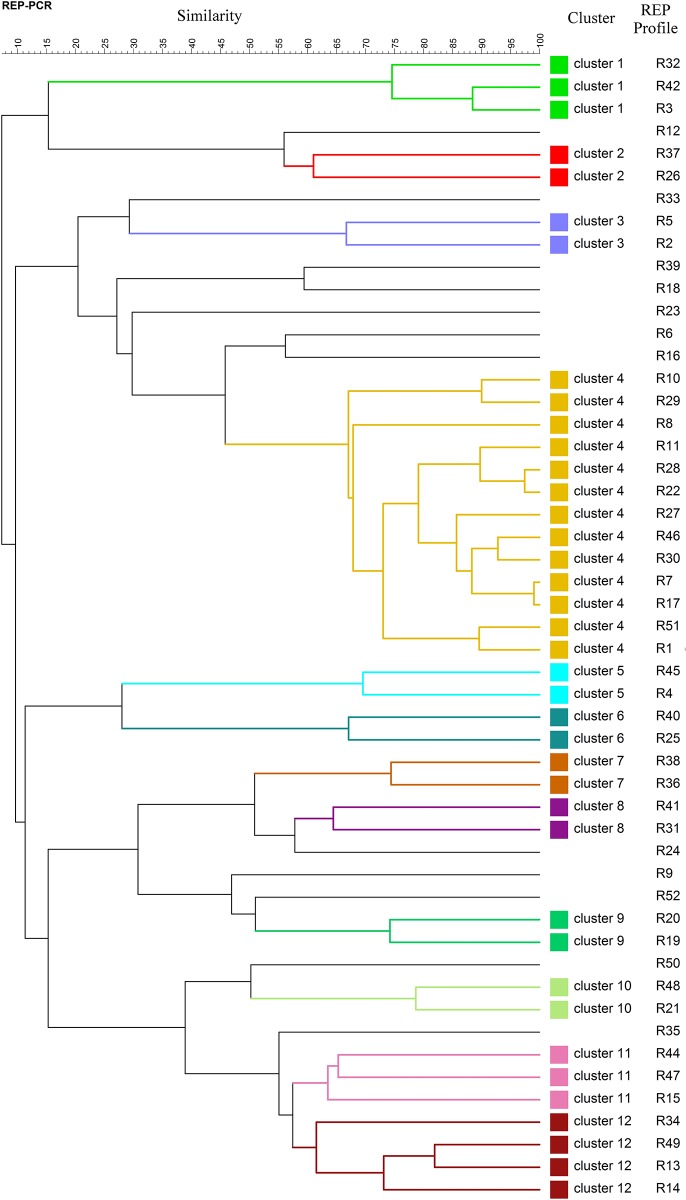
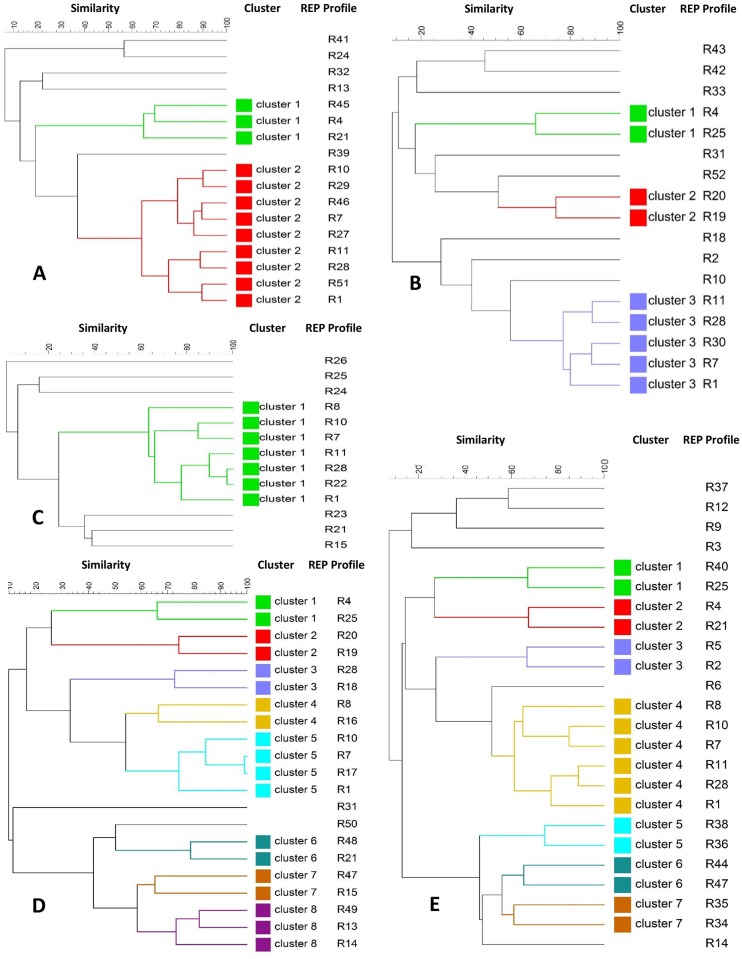
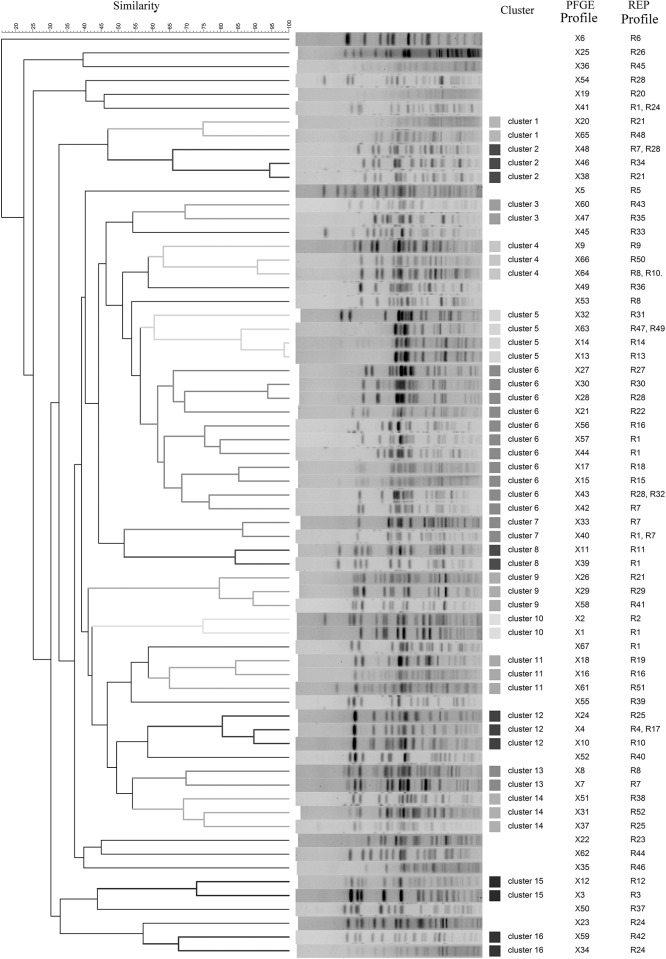
This is the first report on the genetic diversity of commensal E. coli from pigs reared in an antibiotic free production system and belonging to different age groups. The study investigated the genetic diversity and relationship of 900 randomly collected commensal E. coli strains from non-antimicrobial treated pigs assigned to five different age groups in a Danish farm. Fifty-two unique REP profiles were detected suggesting a high degree of diversity. The number of strains per pig ranged from two to 13. The highest and the lowest degree of diversity were found in the early weaners group (Shannon diversity index, H' of 2.22) and piglets (H' of 1.46) respectively. The REP profiles, R1, R7 and R28, were the most frequently observed in all age groups. E. coli strains representing each REP profile and additional strains associated with the dominant profiles were subjected to PFGE and were assigned to 67 different genotypes. Whole genome sequence analysis of 52 isolates leading to unique REP profiles identified a high level of sequence variation. Six and six strains were assigned to sequence type ST10 and sequence type ST58, respectively. Virulence and antimicrobial resistance genes, as well as, genes associated with mobile genetic elements were commonly found among these commensal E. coli strains. Interestingly, strains yielding the three most common REP profiles clustered together in the SNPs phylogenetic tree, and such strains may represent the archetypal commensal E. coli in Danish pigs.
这是关于来自无抗生素生产系统中不同年龄组饲养猪的共生大肠杆菌遗传多样性的首份报告。该研究调查了丹麦一个农场中随机收集的900株来自未接受抗菌治疗的猪的共生大肠杆菌菌株的遗传多样性及亲缘关系,这些猪被分为五个不同年龄组。检测到52种独特的重复序列引物(REP)图谱,表明具有高度的多样性。每头猪的菌株数量从2株到13株不等。断奶早期仔猪组(香农多样性指数H'为2.22)和仔猪(H'为1.46)分别发现了最高和最低程度的多样性。REP图谱R1、R7和R28在所有年龄组中最常出现。代表每种REP图谱的大肠杆菌菌株以及与优势图谱相关的其他菌株进行了脉冲场凝胶电泳(PFGE)分析,并被分为67种不同的基因型。对52株产生独特REP图谱的分离株进行全基因组序列分析,发现了高水平的序列变异。分别有6株和6株被归为序列型ST10和序列型ST58。在这些共生大肠杆菌菌株中普遍发现了毒力基因、抗菌抗性基因以及与可移动遗传元件相关的基因。有趣的是,产生三种最常见REP图谱的菌株在单核苷酸多态性(SNP)系统发育树中聚集在一起,这类菌株可能代表丹麦猪中的典型共生大肠杆菌。